Dropshipping is a great way to test products without holding large amounts of inventory.
But as a Shopify brand grows, the same dropshipping setup that worked at the beginning can start creating new problems.
Orders increase.
More SKUs are added.
Customers expect faster delivery.
Inventory becomes harder to manage.
Shipping costs become more important.
At some point, the question is no longer:
“Can my dropshipping agent fulfill my orders?”
It becomes:
“Can my supply chain support the next stage of my growth?”
Here are 7 signs that it may be time to upgrade your dropshipping agent and build a more scalable supply chain.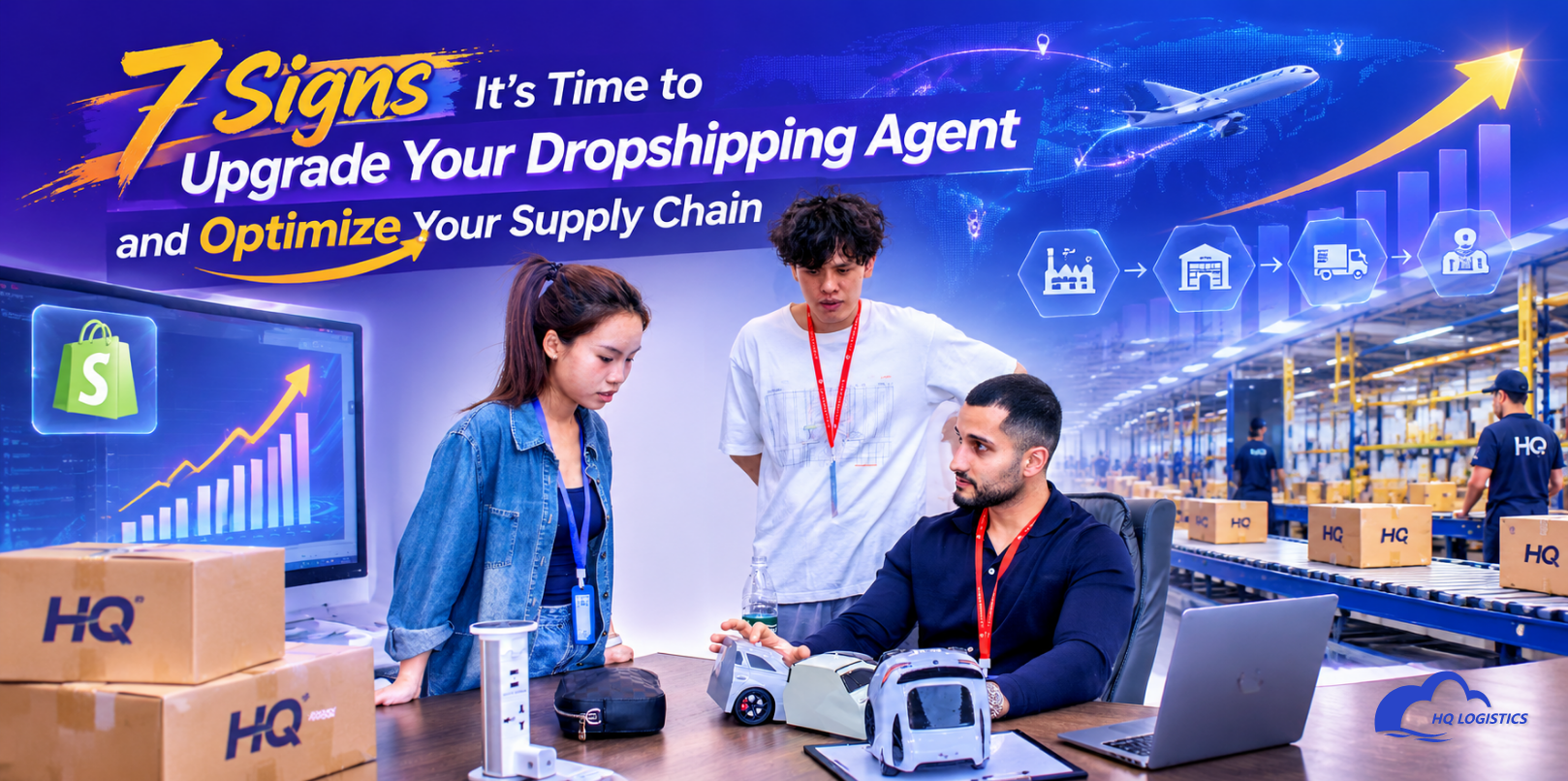
When your store goes from a few orders per day to hundreds, manual fulfillment processes can quickly become a bottleneck.
You may start experiencing:
Order Delays | Manual Processing | Inventory Errors | Tracking Issues | Slow Customer Support
A growing brand needs more than someone who can process individual orders.
It needs a fulfillment system that can handle increasing order volume without creating more operational work.
A more scalable partner should provide:
Automated Order Sync | WMS Integration | Batch Processing | Real-Time Inventory | Tracking Sync
The goal is simple:
More Orders ≠ More Manual Work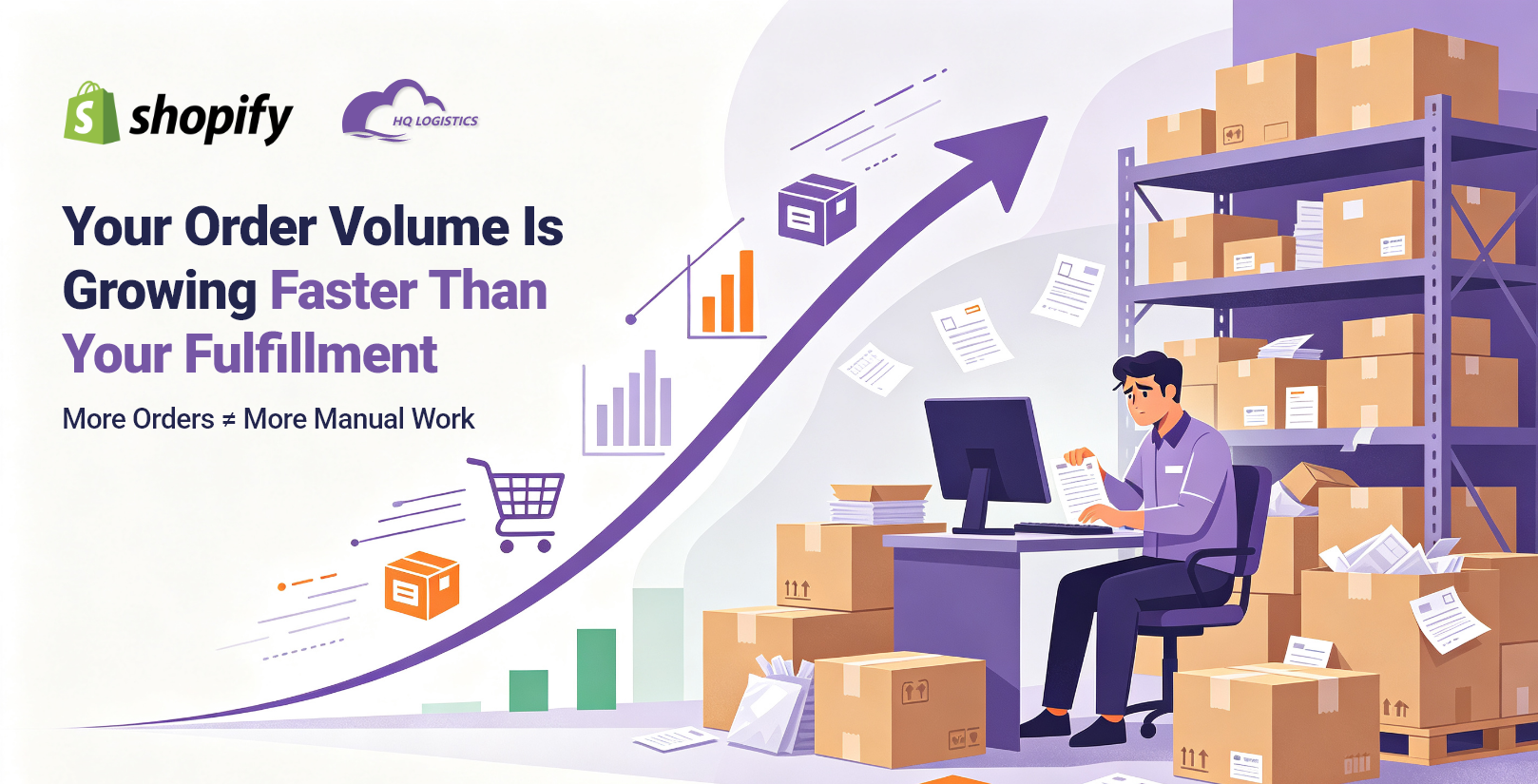
Early-stage dropshipping often relies on shipping products directly from the sourcing country to customers.
This can work when customers are willing to wait.
But as your brand grows, delivery speed becomes part of the customer experience.
Customers increasingly expect:
Fast Shipping | Reliable Tracking | Predictable Delivery
If your competitors can deliver within a few days while your orders take significantly longer, shipping speed can become a competitive disadvantage.
Instead of shipping every order internationally, consider moving your best-selling products to an overseas warehouse.
For a US-focused brand:
China Sourcing → Bulk Transportation → US Warehouse → Domestic Fulfillment → Customer
This can help reduce the distance between inventory and customers and create a more predictable fulfillment process.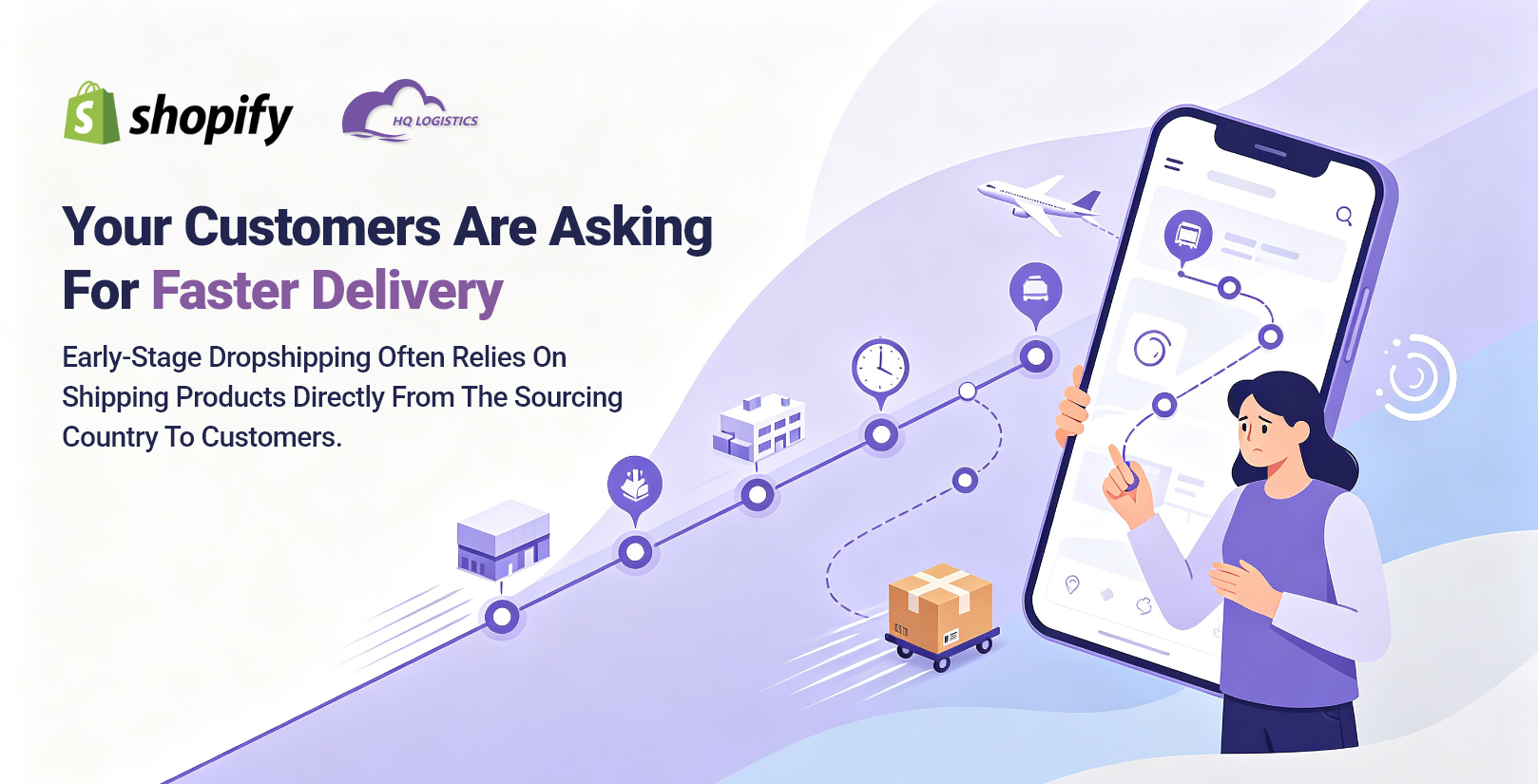
Stockouts are one of the clearest signs that your supply chain needs improvement.
If your agent only reacts after inventory runs low, you may repeatedly experience:
Stockouts → Lost Sales → Emergency Replenishment → Higher Shipping Costs
A scalable supply chain should be proactive.
Instead of asking:
“How much inventory do we have today?”
you should be asking:
“How much inventory will we need next month?”
Use:
Sales Data → Demand Forecast → Inventory Planning → Replenishment → Warehouse Allocation
Your best-selling products can then be prioritized for bulk inventory and overseas warehousing.
Shipping costs can become a major problem as order volume grows.
At the beginning, sending products individually may seem simple.
But when order volume reaches hundreds or thousands of orders, the economics can change.
Instead of:
Supplier → Individual International Shipment → Customer
you can evaluate:
Supplier → Bulk Shipment → Overseas Warehouse → Local Fulfillment
This allows the international transportation stage to be handled in bulk while customer orders are fulfilled locally.
Look at your total logistics cost:
Product Cost + International Freight + Customs + Warehouse Fees + Pick & Pack + Last-Mile Delivery + Returns
A slightly more expensive service may still be more profitable if it improves delivery speed and reduces operational complexity.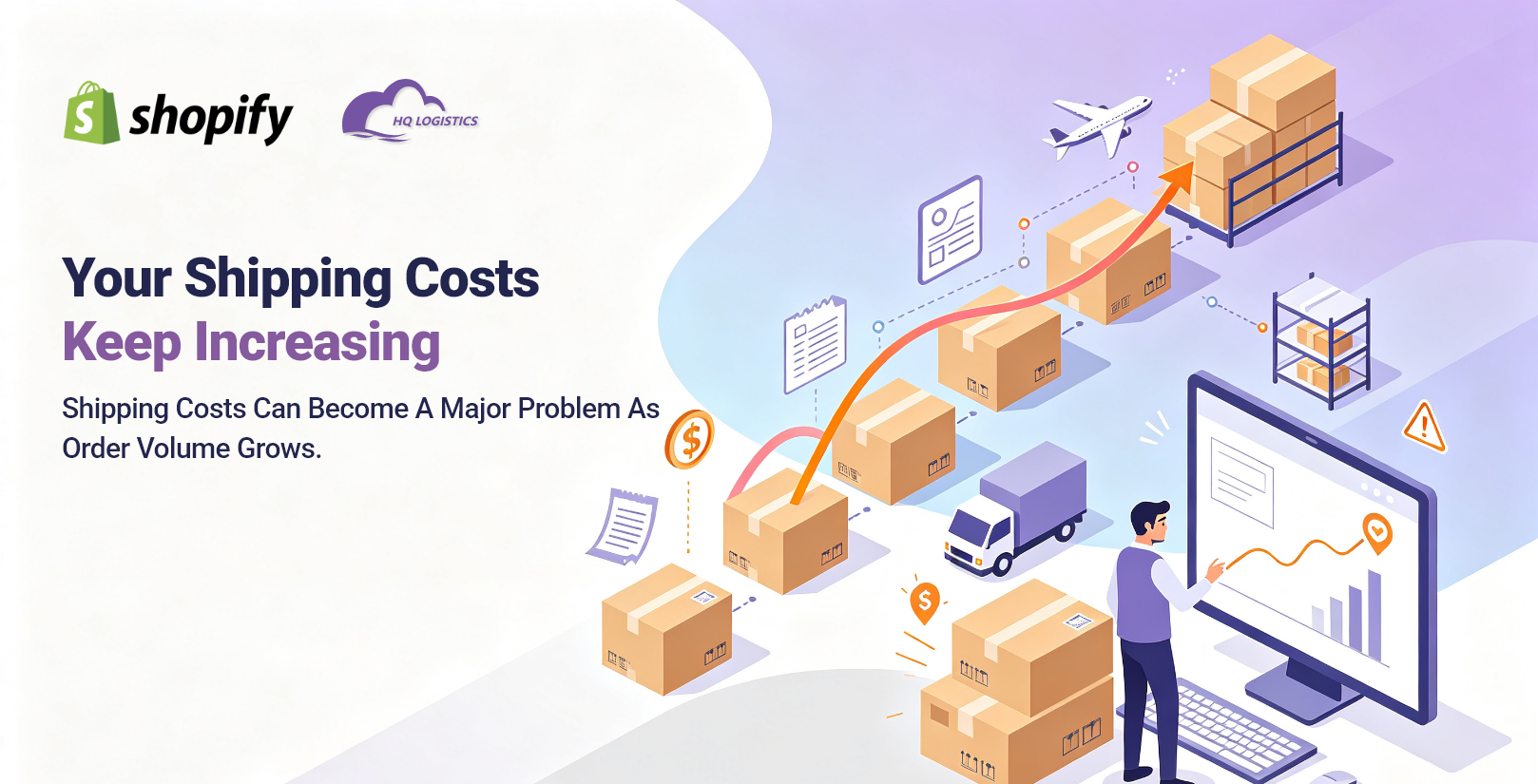
This is a major difference between a traditional dropshipping agent and a more advanced 4PL partner.
A traditional agent may primarily help with:
Product Sourcing | Order Processing | Packing | Shipping
But growing brands may need support much further upstream.
A 4PL approach can connect:
Sourcing → Supplier Management → Inventory Planning → Quality Control → International Logistics → Overseas Warehousing → Fulfillment
This means the focus shifts from:
“How do we fulfill this order?”
to:
“How do we build the most efficient supply chain for this brand?”
That is a fundamentally different way of managing ecommerce logistics.
Your supply chain becomes more complicated when your customers are spread across multiple countries.
For example:
US | UK | Germany | France | Netherlands | Australia
Shipping every order from one location may not always be the most efficient strategy.
As sales grow, you may need to consider:
Regional Warehouses | Local Fulfillment | Multi-Country Inventory | Different Shipping Routes
For example:
China Sourcing → US Warehouse → US Customers
China Sourcing → EU Warehouse → European Customers
China Sourcing → Australia Warehouse → Australian Customers
The right warehouse location should be based on actual demand rather than simply placing inventory everywhere.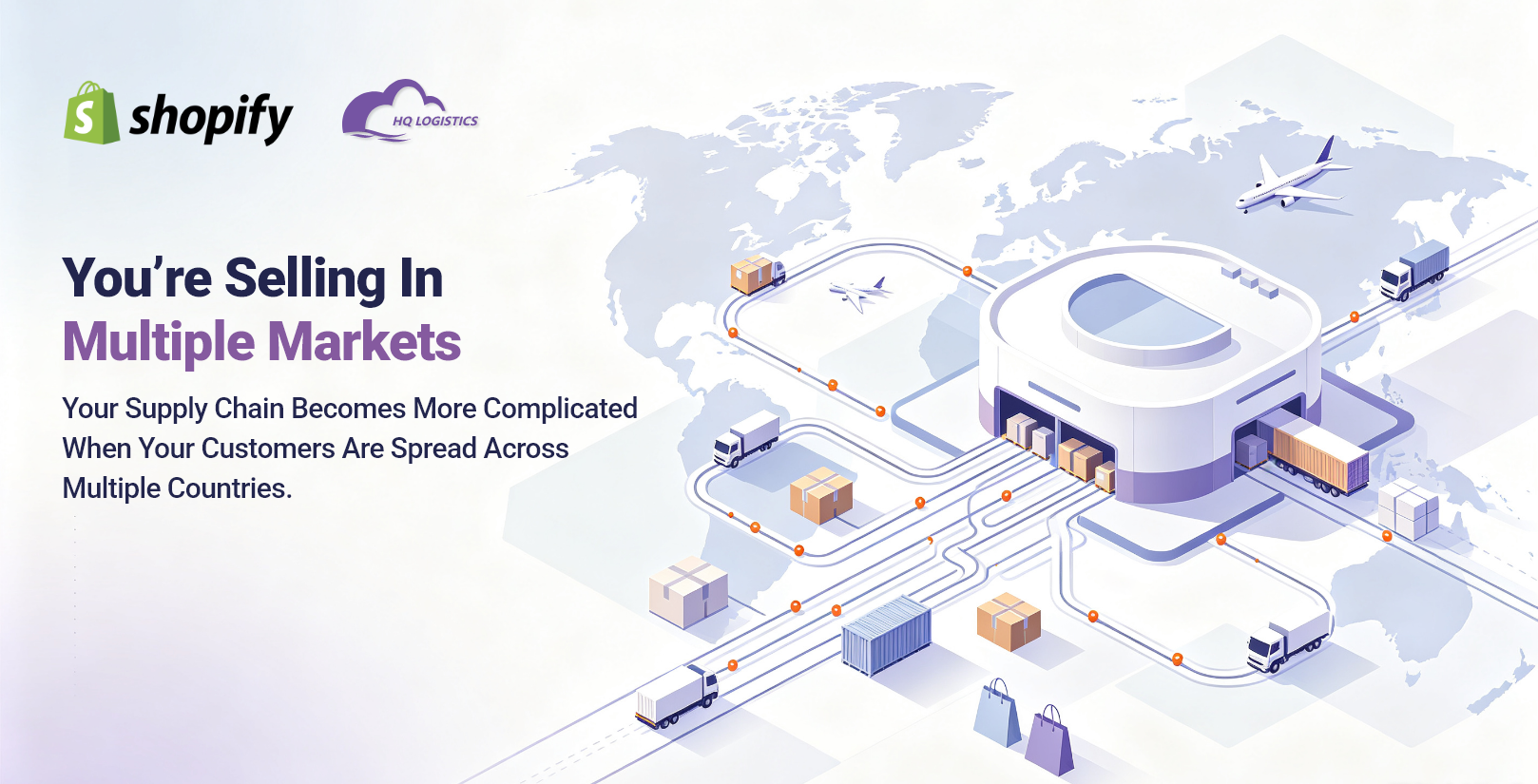
This may be the biggest sign of all.
Dropshipping is often used to test products and validate demand.
But once you identify winning products, your business model can evolve.
You may want:
Custom Packaging | Private Label | Better Quality Control | Local Inventory | Faster Delivery | Better Customer Experience
At this stage, your supply chain needs to evolve with your brand.
The progression can look like:
Product Testing
↓
Dropshipping
↓
Winning Product Identification
↓
Bulk Sourcing
↓
Overseas Warehousing
↓
Local Fulfillment
↓
Branded Ecommerce Supply Chain
This doesn't mean you have to abandon dropshipping completely.
Instead, you can use different models for different products.
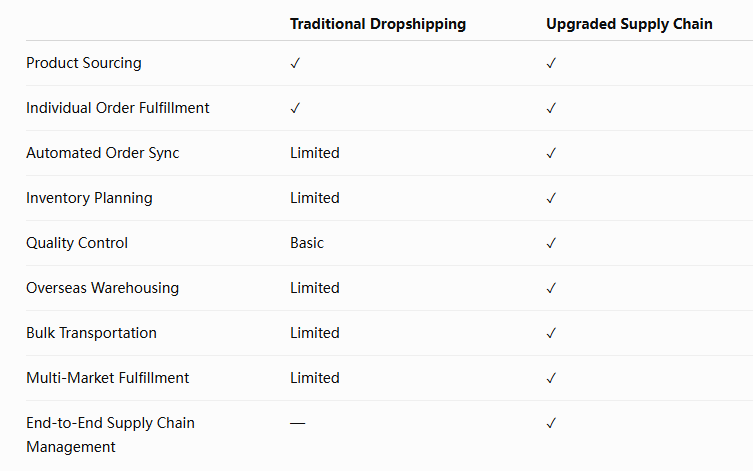
The goal isn't necessarily to replace dropshipping.
It's to upgrade the parts of your supply chain that are limiting growth.
A 4PL partner can become valuable when your business has multiple moving parts.
For example:
Multiple Suppliers
Multiple Products
Growing Order Volume
International Customers
Overseas Inventory
Multiple Shipping Channels
Complex Replenishment
Managing all of these independently can consume significant time.
A 4PL partner can coordinate these areas and provide a more centralized supply chain strategy.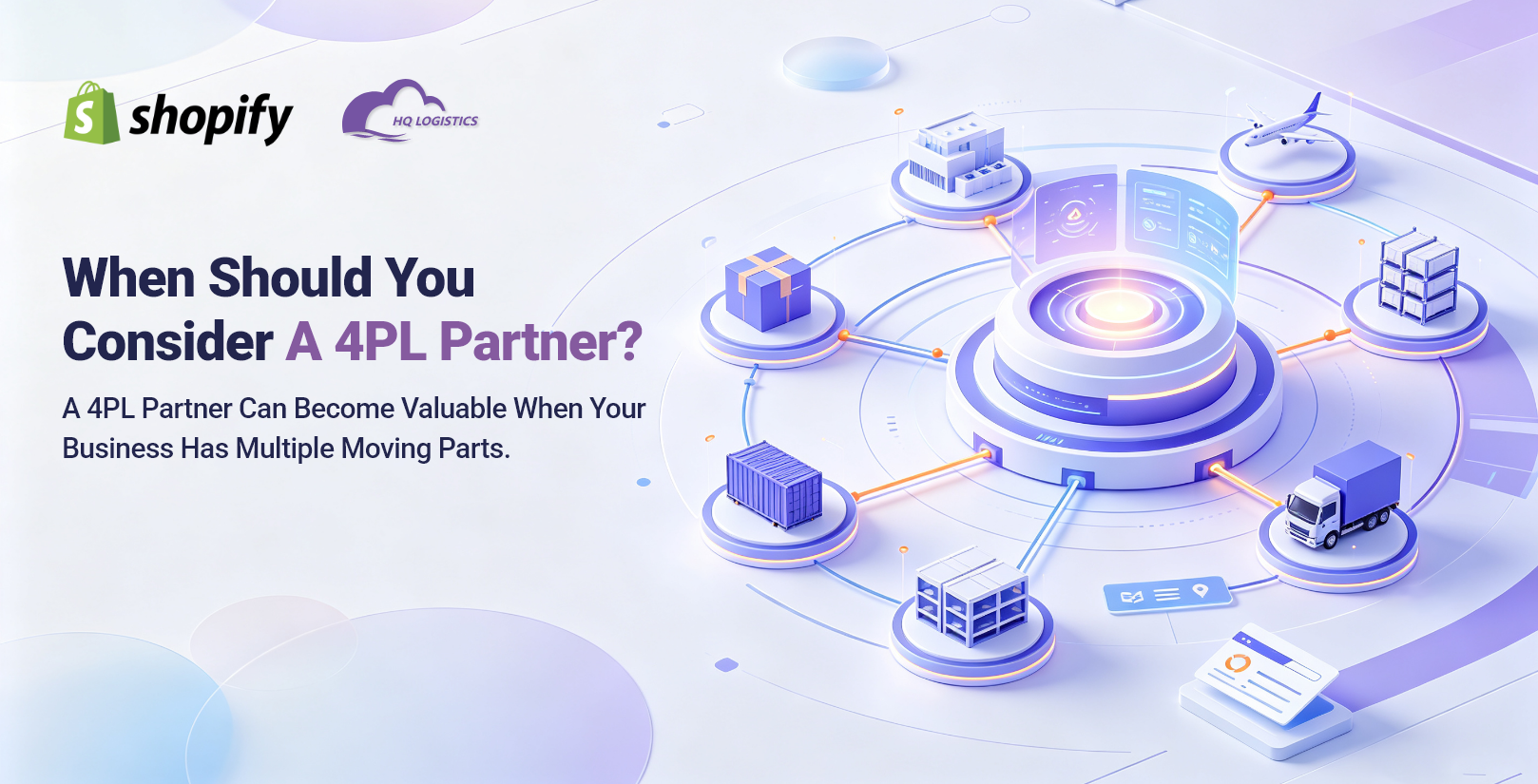
HQ 4PL goes beyond traditional order fulfillment by connecting the upstream and downstream parts of the supply chain.
The model can include:
China Sourcing
↓
Supplier Coordination
↓
Quality Control
↓
Inventory Planning
↓
Bulk Transportation
↓
US / EU Overseas Warehousing
↓
Shopify Order Integration
↓
Local Fulfillment
↓
Global Last-Mile Delivery
This allows brands to build a supply chain around their growth instead of managing each logistics step separately.
For fast-growing Shopify brands, the biggest advantage is visibility.
You can understand:
What to Stock | When to Stock | Where to Stock | How Much to Stock | How to Ship | When to Replenish
Ask yourself these seven questions:
1. Are orders growing faster than your current fulfillment process can handle?
2. Are customers demanding faster delivery?
3. Are your best sellers frequently out of stock?
4. Are shipping costs becoming harder to control?
5. Does your current agent only process orders rather than manage your supply chain?
6. Are you expanding into multiple markets?
7. Are you ready to build a long-term ecommerce brand instead of simply testing products?
If you answered “yes” to several of these questions, your business may have outgrown a basic dropshipping model.
Dropshipping is an excellent starting point.
But your logistics strategy should evolve as your business grows.
The next stage may not be about finding another dropshipping agent.
It may be about building a smarter supply chain.
That can mean combining:
China Sourcing + Inventory Planning + Overseas Warehousing + Local Fulfillment + Global Logistics
with a 4PL partner that manages the bigger picture.
For growing Shopify brands, the goal is no longer simply to fulfill orders.
It's to build a supply chain that can support the brand's next stage of growth.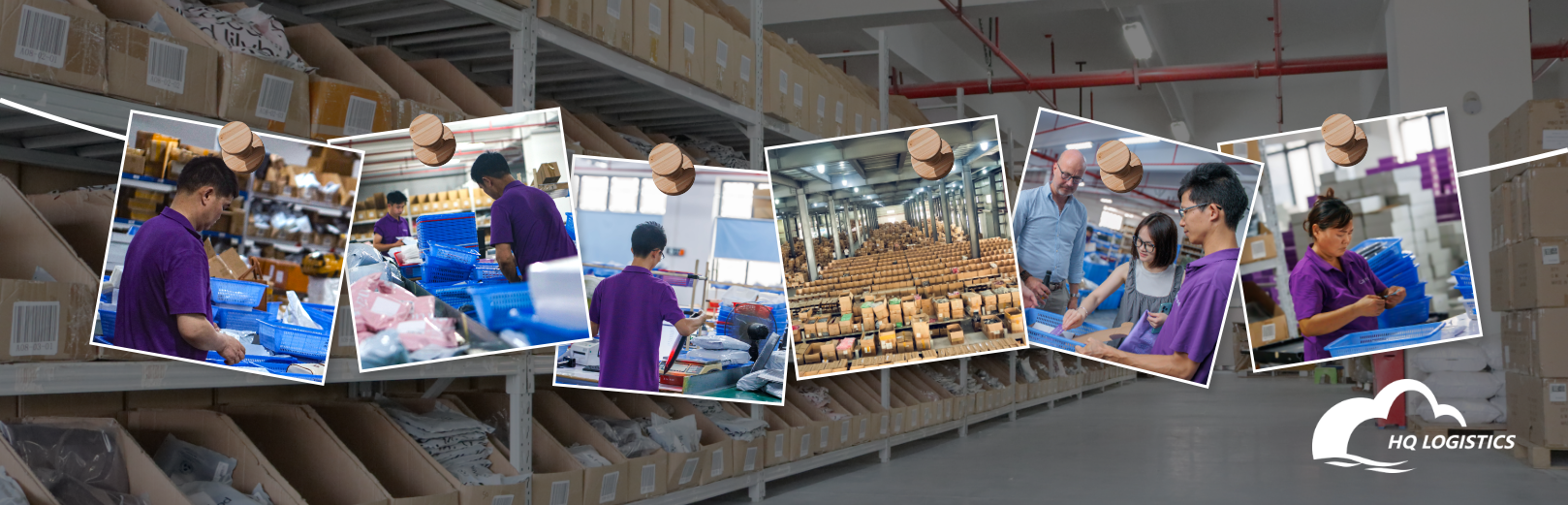
If you are experiencing frequent stockouts, slow fulfillment, rising shipping costs, limited inventory visibility, or poor delivery performance, it may be time to evaluate a new logistics partner.
Not necessarily for every product. Overseas warehousing is particularly useful for proven best sellers and markets with consistent demand. Brands can continue using dropshipping for product testing while stocking winning products overseas.
A dropshipping agent typically focuses on sourcing, order processing, packing, and shipping. A 4PL partner takes a broader approach, coordinating sourcing, inventory, transportation, warehousing, fulfillment, and supply chain planning.
No. Start with products that have stable demand, strong sales velocity, and sufficient margins. Inventory should be positioned based on demand forecasts and replenishment lead times.
Yes. This can be a useful hybrid model. New or untested products can remain in dropshipping, while proven best sellers are stocked in a US, EU, or other regional warehouse for faster fulfillment.
📩Email: zoye@fulfllment-cn.com
PREVIOUS RECOMMENDATIONS


dropshipping agent | dropshipping fulfillment | overseas warehouse | US warehouse | 4PL supply chain | ecommerce supply chain | Shopify fulfillment | dropshipping fulfillment service | supply chain optimization | when to change dropshipping agent | how to upgrade dropshipping business | dropshipping to overseas warehouse | dropshipping agent vs 4PL | US warehouse for dropshipping | how to optimize dropshipping supply chain | Shopify dropshipping fulfillment | 4PL for ecommerce brands | overseas fulfillment for Shopify brands



Customer's favorable comments is our eternal motivation. We feel grateful for all the support and company.

Lorem ipsum dolor sit amet, consetetur sadipscing elitr, sed diam nonumy eirmod tempor invidunt ut labore et dolore magna aliquyam erat, sed diam voluptua.