
France is one of Europe's most attractive markets for beauty and cosmetics brands.
For Shopify sellers, the opportunity is significant—but selling cosmetics in France requires more than finding a supplier and shipping products to customers.
Brands need to manage product compliance, labeling, inventory, packaging, warehousing, shipping, and customer delivery as one connected process.
For brands sourcing from China, the supply chain can become even more complex:
China Sourcing → Quality Control → Compliance → Inventory Planning → EU Warehousing → French Fulfillment → Last-Mile Delivery
This is where a smarter 4PL fulfillment strategy can help.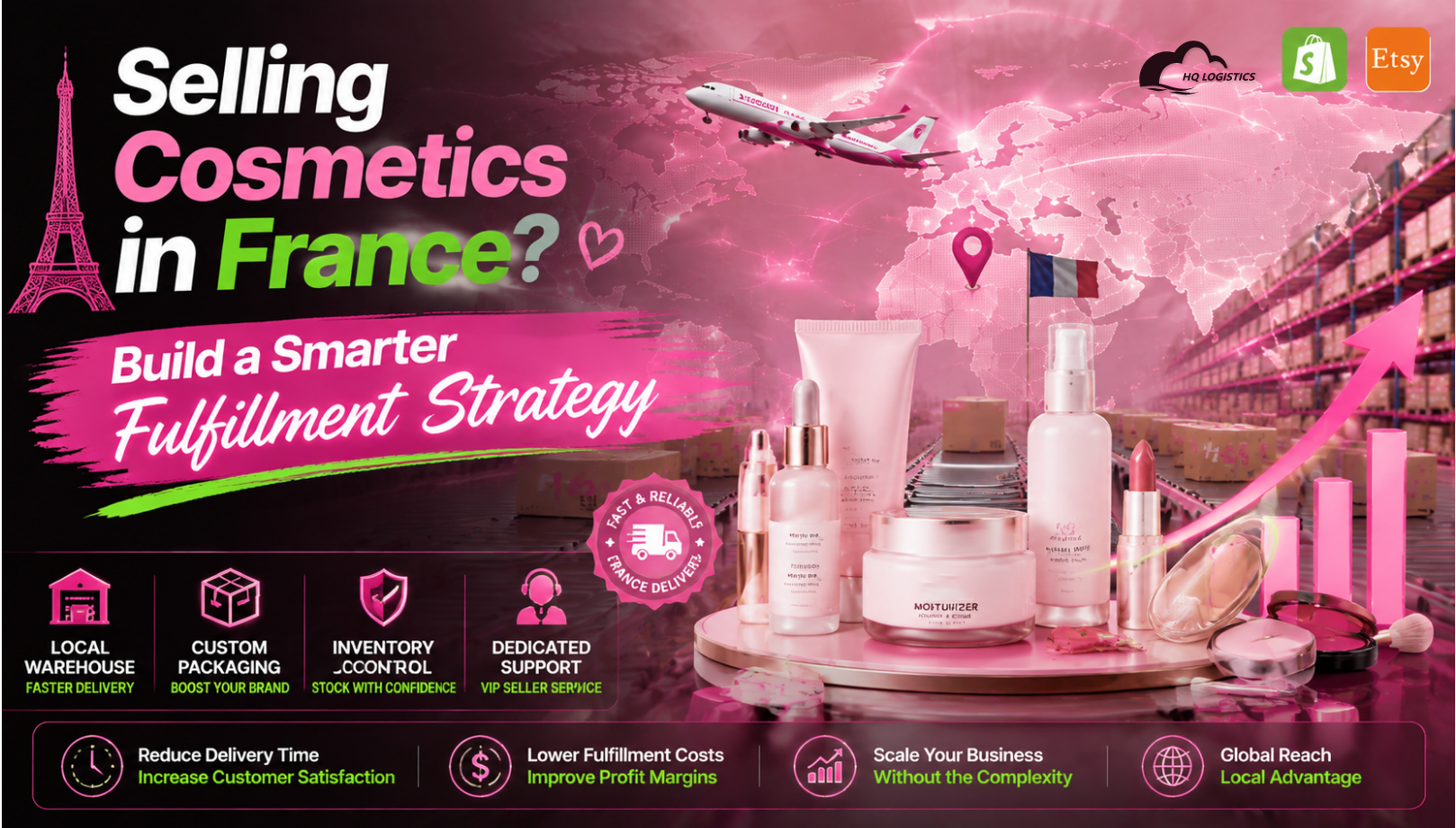
France has a strong beauty culture and a mature ecommerce market, making it an appealing destination for skincare, makeup, haircare, beauty tools, and other personal-care products.
For ecommerce brands, cosmetics also offer several attractive characteristics:
Repeat Purchases | Multiple Product Categories | Product Bundling | Subscription Potential | Strong Branding Opportunities
However, entering the French market successfully requires more than product demand.
A brand also needs to answer:
Can the product legally be sold in France?
Can inventory be delivered quickly?
Can the brand maintain consistent product quality?
Can the supply chain scale when orders increase?
Cosmetics sold in France are subject to the EU Cosmetics Regulation, Regulation (EC) No 1223/2009. The framework includes requirements covering product safety, responsible persons, labeling, product information, and notification.
For an ecommerce brand sourcing products from outside the EU, one important consideration is the EU Responsible Person.
For imported cosmetics, the regulation establishes responsibilities around the importer or an EU-established person designated to act as the Responsible Person.
Before launching a product, brands should therefore review:
Product Formula | Safety Assessment | Product Information File | Responsible Person | CPNP Notification | Labeling | Claims
The logistics provider can support the operational side, but the brand should ensure that its products meet the applicable regulatory requirements.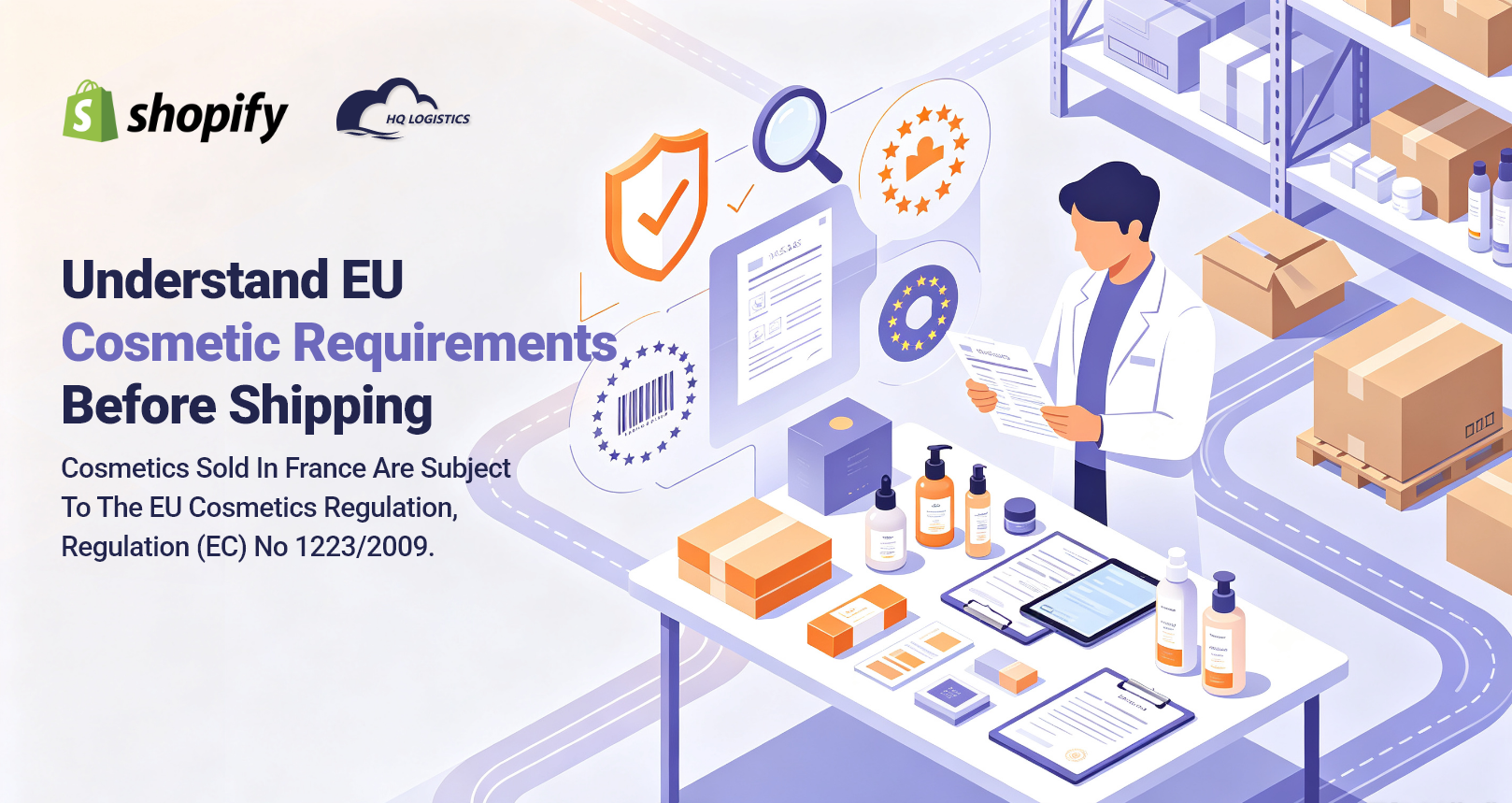
Cosmetic labeling is another important part of the fulfillment process.
Before inventory is shipped to France, check that the required information is correctly presented on the product and packaging.
Depending on the product, this can include:
Ingredients | Net Quantity | Durability Information | Precautions | Responsible Person | Batch Number | Product Function
EU rules also include language requirements for certain mandatory information, while France has specific consumer-information requirements for cosmetics sold in certain formats.
For beauty brands, this means labeling should be reviewed before bulk inventory is produced, rather than after products arrive in Europe.
Beauty marketing often uses claims such as:
Anti-Aging | Hydrating | Brightening | Skin Repair | Sensitive Skin | Natural | Organic
But brands should not assume that every marketing claim can be used freely.
The EU Cosmetics Regulation includes requirements around claims and product information, while cosmetic ingredients and safety are subject to EU regulatory controls.
A better workflow is:
Formula Review → Safety Assessment → Claims Review → Packaging Design → Compliance Check → Production
This can reduce the risk of discovering a labeling or marketing issue after inventory has already been manufactured.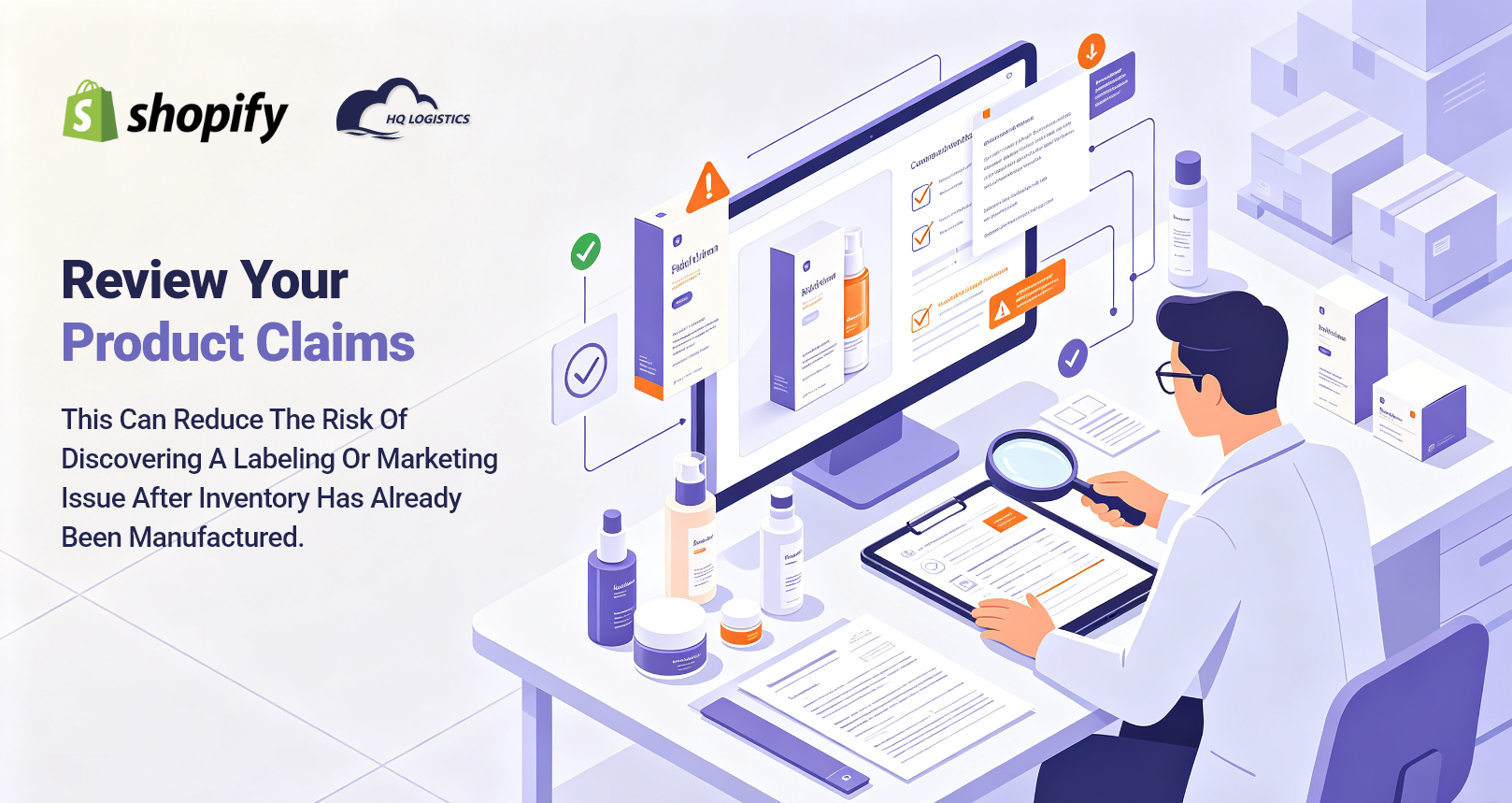
This is particularly important for:
Perfume | Body Mist | Scented Skincare | Hair Products | Fragranced Cosmetics
The EU has updated fragrance-allergen labeling requirements.
As of July 31, 2026, cosmetics that do not comply with the new fragrance-allergen labeling requirements may no longer be placed on the EU market, while certain products already placed on the market before that date can remain available during the transition period until July 31, 2028.
For brands selling fragranced products in France, this makes product and packaging review especially important.
One of the biggest decisions for a growing cosmetics brand is:
Should you ship every order directly from China, or stock products in Europe?
For early-stage products, direct fulfillment can help brands test demand without committing to large inventory quantities.
But once a product becomes a proven best seller, European inventory can make more sense.
A typical model could be:
China Supplier → HQ China Warehouse → Quality Inspection → Bulk Shipping → EU Warehouse → French Customer
Instead of:
China Supplier → Individual International Shipment → French Customer
The first model allows the international transportation step to happen before individual customer orders arrive.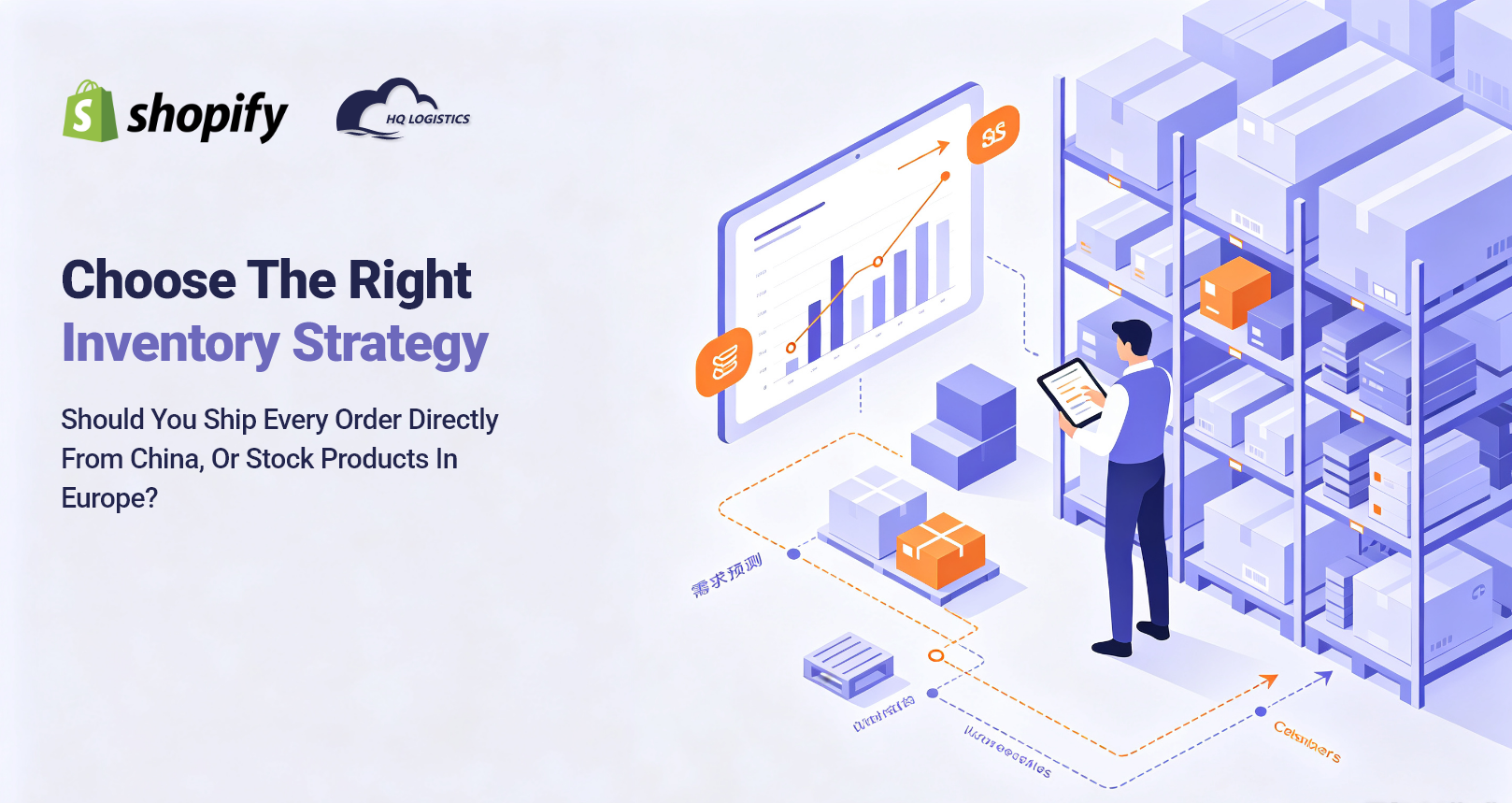
Not every SKU needs to be stored in Europe.
A smarter strategy is to prioritize:
Best Sellers | High-Volume SKUs | Stable Demand | Seasonal Products | High-Margin Products
For example, a skincare brand might test 20 products through direct fulfillment.
After identifying five consistent best sellers, the brand can move those five products into an EU warehouse.
This creates a hybrid model:
New Products → Dropshipping / Direct Fulfillment
Winning Products → EU Warehousing + Local Fulfillment
This reduces inventory risk while allowing proven products to move closer to customers.
Cosmetics often have relatively small product sizes, but packaging can significantly affect shipping costs.
Common issues include:
Excessive Packaging | Glass Bottles | Leakage | Product Damage | Large Gift Boxes
Packaging should provide enough protection without creating unnecessary shipping volume.
For example:
Product → Protective Insert → Suitable Outer Packaging → Shipping Label
For premium cosmetics, packaging also plays an important role in the customer experience.
The objective is to balance:
Protection + Branding + Package Size + Shipping Cost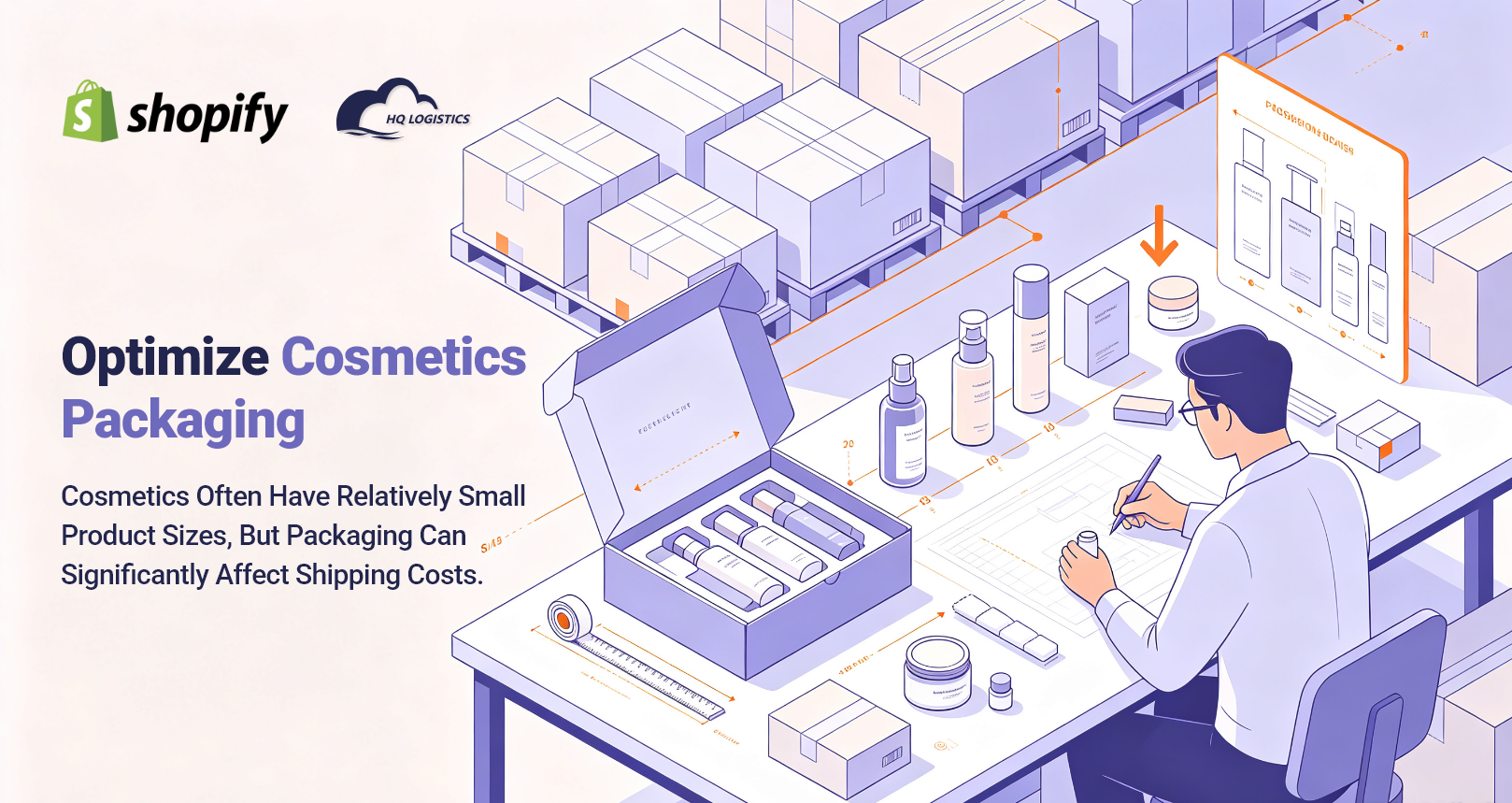
Unlike many general ecommerce products, cosmetics can require more careful inventory rotation.
Brands should track:
Batch Number | Production Date | Expiry / PAO Information | Warehouse Location | Inventory Quantity
A warehouse management system can help brands understand which batch should be shipped first.
A simple approach is:
First Expiring → First Out
This becomes particularly important when products have multiple production batches stored in the same warehouse.
France has specific environmental and extended producer responsibility requirements.
For products covered by France's EPR framework, producers may have obligations involving an eco-organization and reporting or contributions. France also requires the Triman sorting symbol and related sorting information for products covered by the relevant rules.
For cosmetics brands, packaging planning should therefore consider more than appearance.
Before launching, review:
Packaging Materials | Recycling Information | EPR Obligations | Triman / Info-tri Requirements
These requirements can affect the packaging you manufacture and the information presented to French consumers.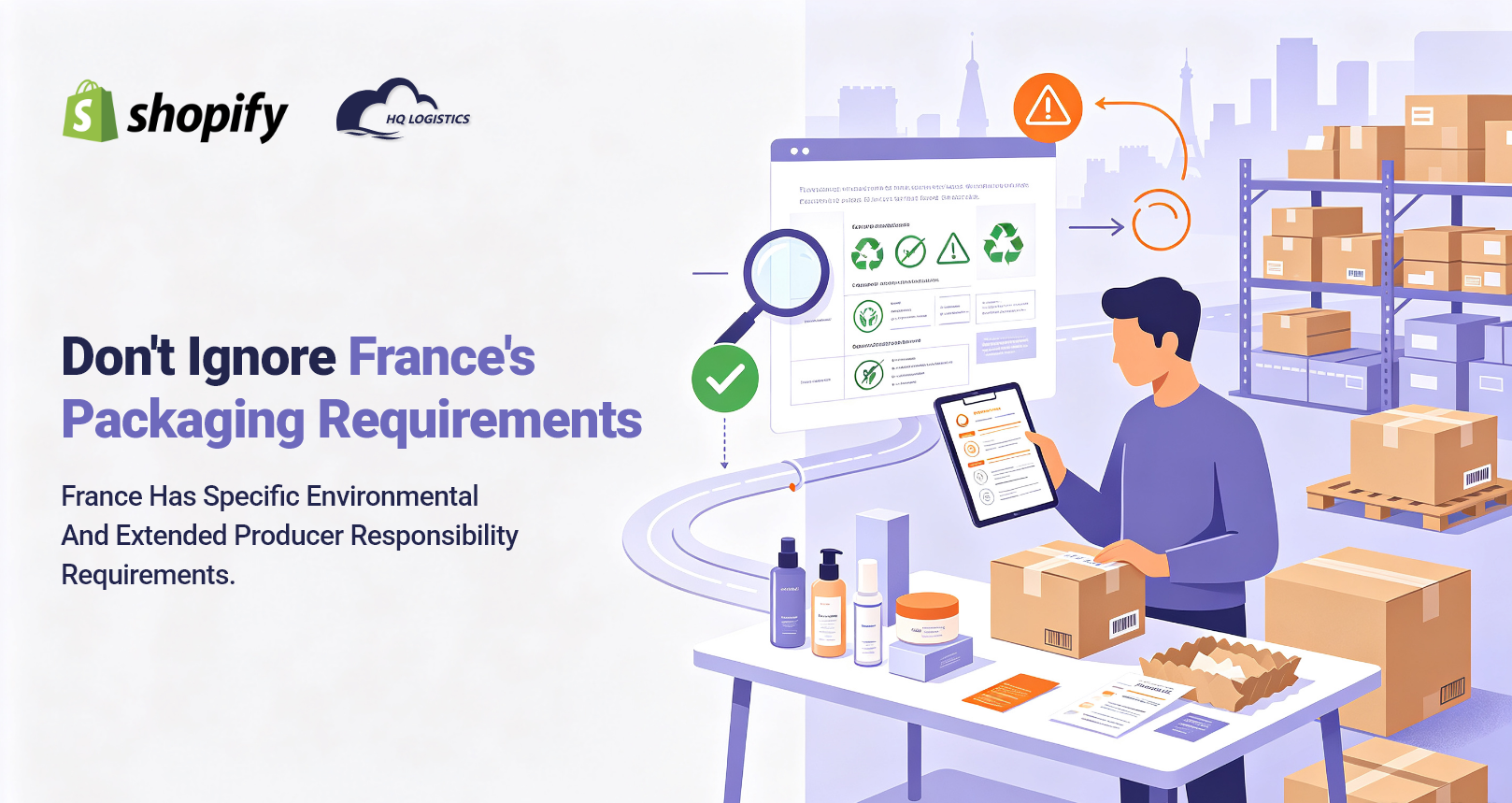
This is where the biggest difference can appear as a brand grows.
A traditional fulfillment provider may focus on:
Storage → Pick → Pack → Ship
A 4PL approach looks at the larger supply chain:
Sourcing → Supplier Coordination → Quality Control → Inventory Planning → International Logistics → EU Warehousing → Fulfillment → Last Mile
Instead of managing every supplier and logistics provider separately, the brand gets a more coordinated supply chain.
For a cosmetics brand, this can mean better alignment between:
What You Sell
↓
What You Stock
↓
Where You Store It
↓
How You Ship It
↓
How Quickly Customers Receive It
For brands sourcing cosmetics from China, a scalable fulfillment model can look like this:
Identify reliable manufacturers and verify product specifications.
Check:
Appearance | Packaging | Quantity | Batch Information | Product Specifications
Review applicable EU requirements before bulk production and shipment.
Identify which products should be:
Dropshipped | Bulk Imported | Stored in EU
Move proven products into an EU warehouse.
When a French customer places an order:
Shopify → WMS → Pick & Pack → Local/Regional Shipping → Customer
This creates a much more scalable model than managing every order as an individual cross-border shipment.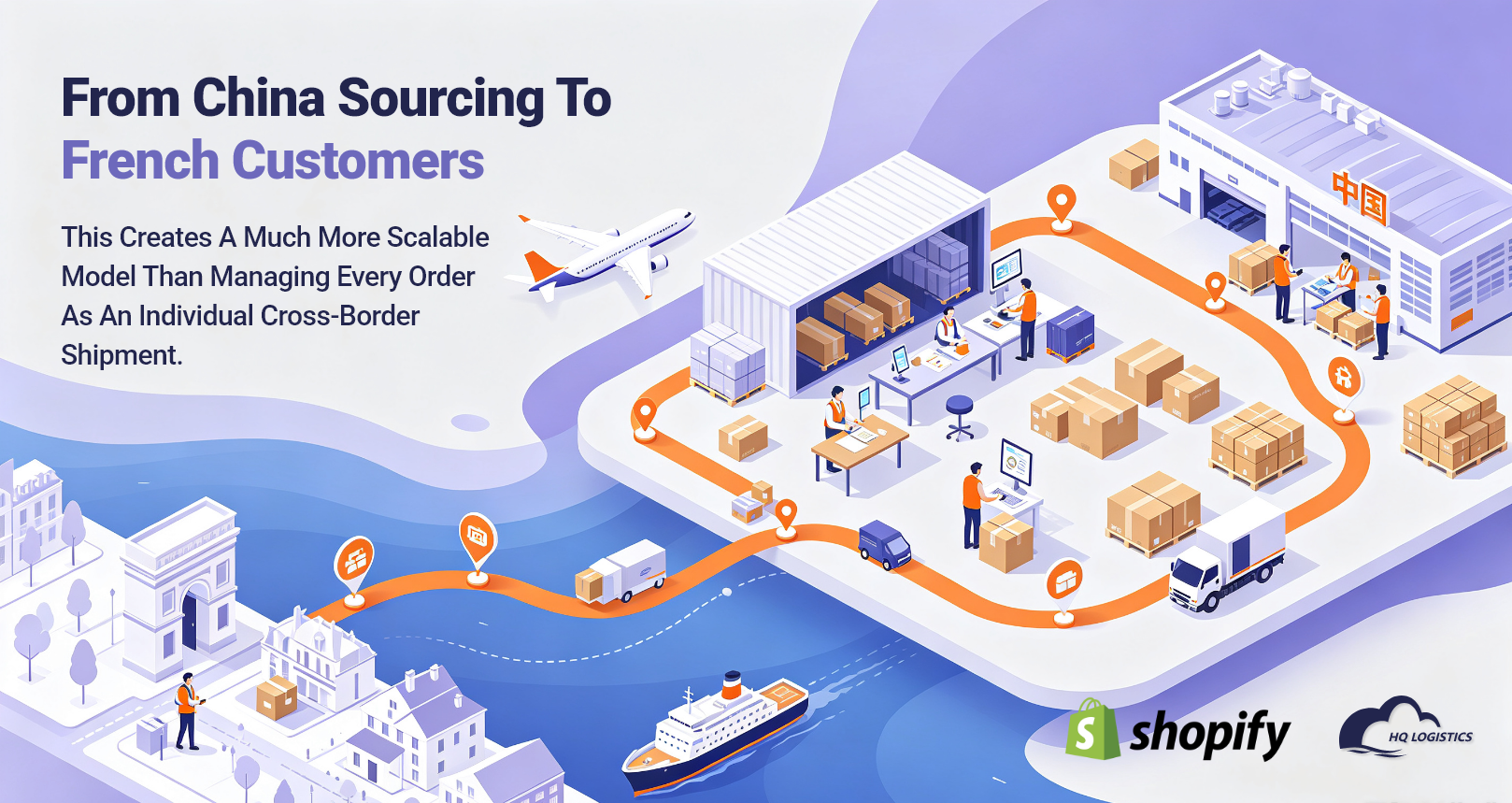
A simple rule is:
Low Volume → Direct Fulfillment
Use smaller quantities to validate demand.
Stable Sales → Bulk Sourcing
Increase purchasing efficiency for proven products.
High Volume → EU Warehouse
Position inventory closer to your customers.
Demand Forecast → Multi-SKU Inventory Planning → Replenishment
Use sales data to determine how much inventory should be stored in Europe.
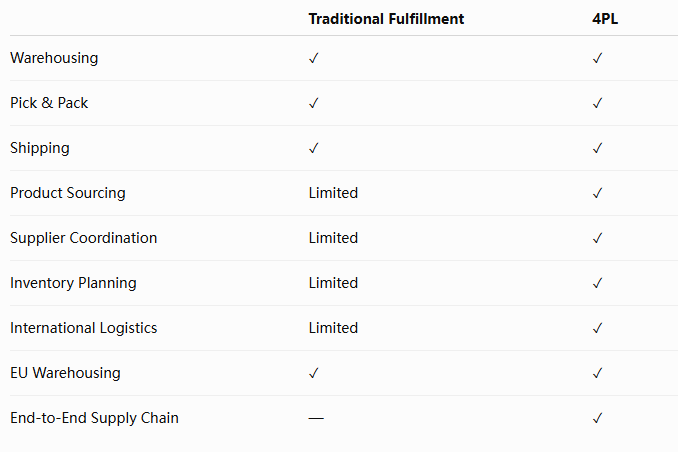
The difference is not simply where the products are stored.
It's about who coordinates the entire supply chain.
For brands sourcing from China and selling in France, HQ 4PL can connect the different stages of the supply chain:
China Sourcing
↓
Supplier Coordination
↓
Quality Inspection
↓
Inventory Planning
↓
International Transportation
↓
EU Overseas Warehouse
↓
Shopify Integration
↓
French / EU Fulfillment
↓
Last-Mile Delivery
This allows brands to scale their logistics strategy as sales grow.
Instead of asking:
“How do we ship this order?”
the focus becomes:
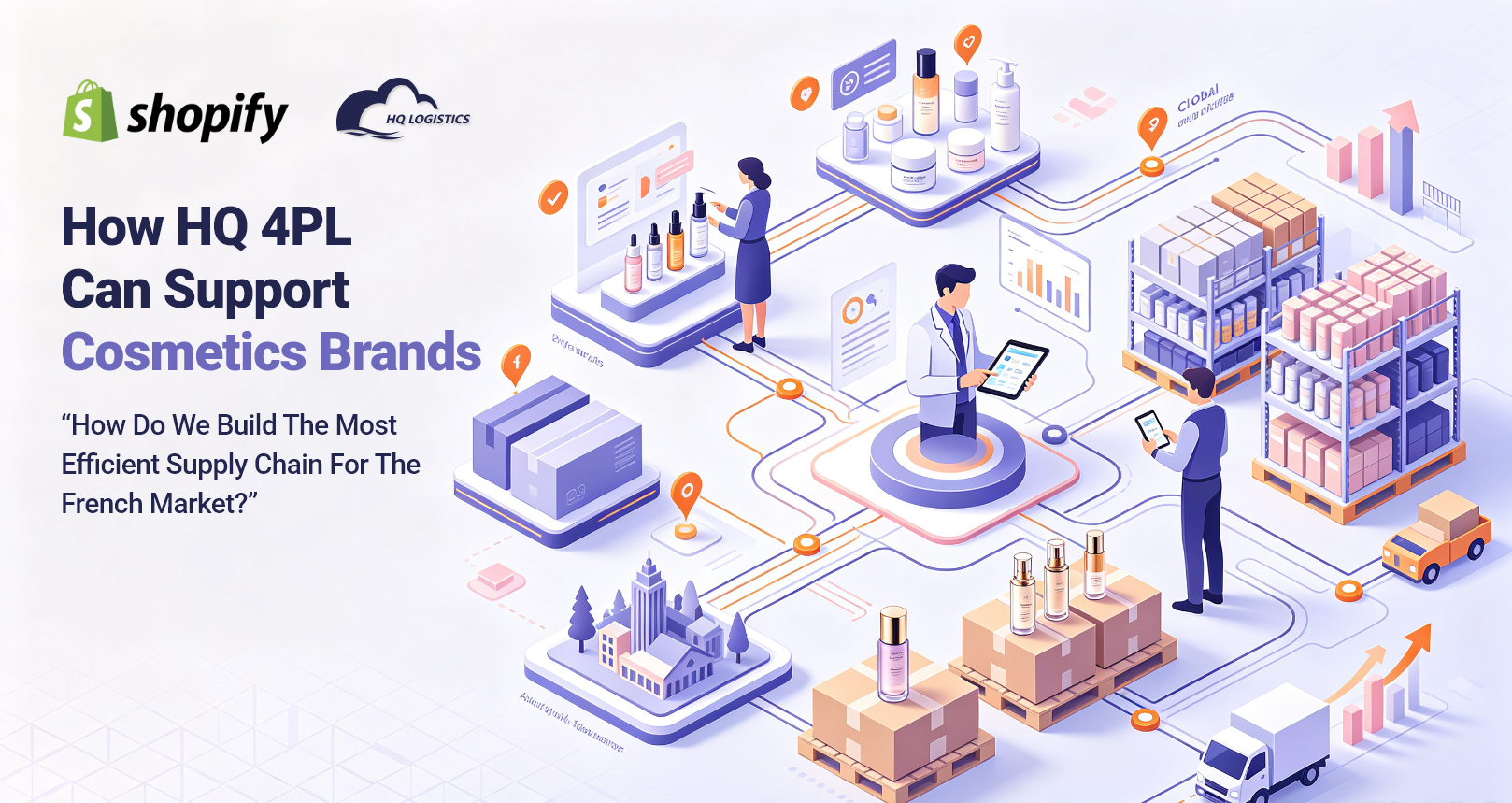
“How do we build the most efficient supply chain for the French market?”
Selling cosmetics in France can be a strong opportunity for ecommerce brands, but success requires more than finding popular beauty products.
Brands need to think about:
Compliance | Labeling | Product Quality | Inventory | Packaging | Warehousing | Fulfillment | Delivery
For brands sourcing from China, a hybrid strategy can be especially effective:
Test Products Through Dropshipping → Identify Winners → Bulk Source → Move Inventory to an EU Warehouse → Fulfill Locally
As the business grows, a 4PL supply chain can connect these steps and help the brand manage the transition from individual order fulfillment to a more scalable operation.
The goal is simple:
Source smarter. Stock closer. Fulfill faster. Scale with confidence.
Yes, but cosmetics placed on the EU market must comply with applicable EU cosmetic requirements. Imported products also require appropriate responsibility arrangements, and products must meet requirements concerning safety, notification, labeling, and other obligations.
If you have stable demand in France or other European markets, an EU warehouse can be worth considering. It is particularly useful for best-selling products that require faster and more predictable fulfillment.
Start with proven best sellers, stable-demand products, and products with suitable shelf life. Avoid moving your entire catalog into Europe before demand is validated.
Review product formulation, safety documentation, Responsible Person arrangements, CPNP notification, labeling, claims, batch information, shelf life, packaging, and applicable French/EU requirements.
It depends on your needs. A 3PL can be sufficient if you mainly need storage and fulfillment. A 4PL becomes more valuable when you need coordination across sourcing, inventory planning, international logistics, EU warehousing, and fulfillment.
📩Email: zoye@fulfllment-cn.com
PREVIOUS RECOMMENDATIONS


selling cosmetics in France | cosmetics fulfillment France | cosmetics shipping France | cosmetics warehouse Europe | EU cosmetics fulfillment | France beauty ecommerce | cosmetic product fulfillment | EU warehouse for cosmetics | cosmetics logistics | 4PL fulfillment | Shopify cosmetics fulfillment | how to sell cosmetics in France | how to ship cosmetics from China to France | cosmetics fulfillment service in Europe | EU warehouse for Shopify cosmetics brands | France cosmetics logistics | cosmetics dropshipping France | 4PL supply chain for beauty brands | how to fulfill cosmetics orders in France | China to France cosmetics fulfillment | European fulfillment for cosmetics brands




Customer's favorable comments is our eternal motivation. We feel grateful for all the support and company.

Lorem ipsum dolor sit amet, consetetur sadipscing elitr, sed diam nonumy eirmod tempor invidunt ut labore et dolore magna aliquyam erat, sed diam voluptua.