
Q4 is one of the biggest opportunities for Shopify tech brands.
From Black Friday and Cyber Monday to Christmas, electronics and tech accessories can see a sharp increase in demand. But higher order volume also means higher fulfillment costs.
For tech brands, the challenge is even greater because products can be:
Fragile | High-Value | Battery-Powered | Multi-SKU | Packaging-Intensive
A poor fulfillment strategy can quickly lead to higher shipping costs, stockouts, damaged products, and delayed deliveries.
The solution isn't simply finding the cheapest shipping carrier.
Instead, successful Shopify tech brands optimize the entire supply chain before Q4 demand peaks.
Here are 8 practical ways to reduce fulfillment costs while maintaining fast and reliable delivery.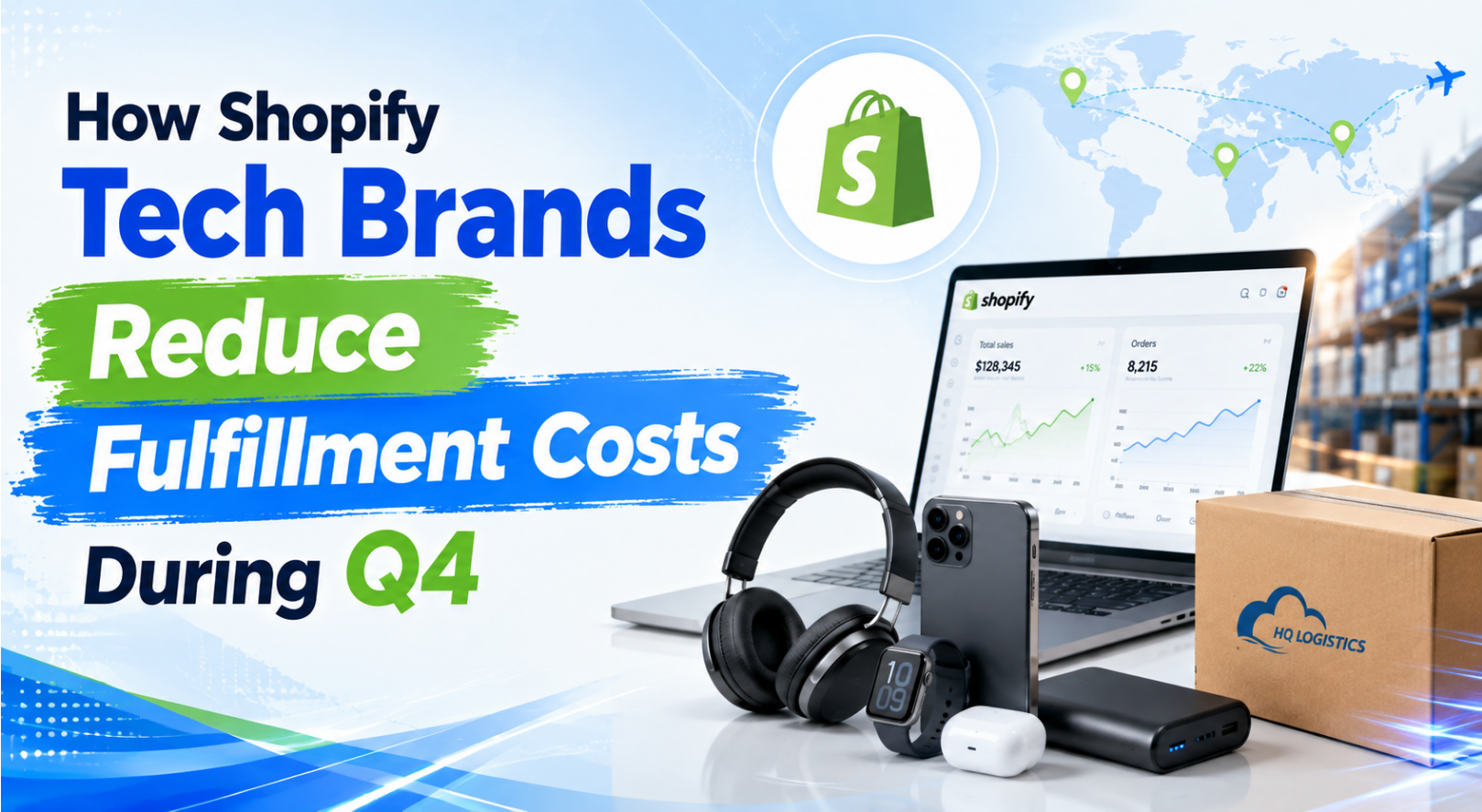
The easiest way to increase fulfillment costs is to wait until Q4 demand arrives before preparing inventory.
Start by analyzing:
Previous Q4 Sales | Current Sales Growth | Best-Selling SKUs | Promotional Plans | Seasonal Demand
Then estimate:
Expected Q4 Demand + Safety Stock − Available Inventory = Replenishment Requirement
Don't treat every product equally.
A popular wireless accessory may require significantly more inventory than a slow-moving tech gadget.
A-SKUs: Best sellers and high-volume products → highest inventory priority
B-SKUs: Stable products → moderate inventory
C-SKUs: Slow-moving or new products → limited inventory
This helps brands avoid overstocking while protecting their most important products.
Shipping individual orders from China during peak season can become expensive and unpredictable.
Instead, consider moving proven products in bulk before demand peaks.
A typical model is:
China Supplier → China Warehouse → Quality Inspection → Consolidation → Bulk Transportation → US/EU Warehouse
Then:
Shopify Order → Local Fulfillment → Customer
This separates international transportation from individual customer delivery.
Instead of paying for hundreds or thousands of individual cross-border shipments during Q4, brands can position inventory closer to their customers before the peak.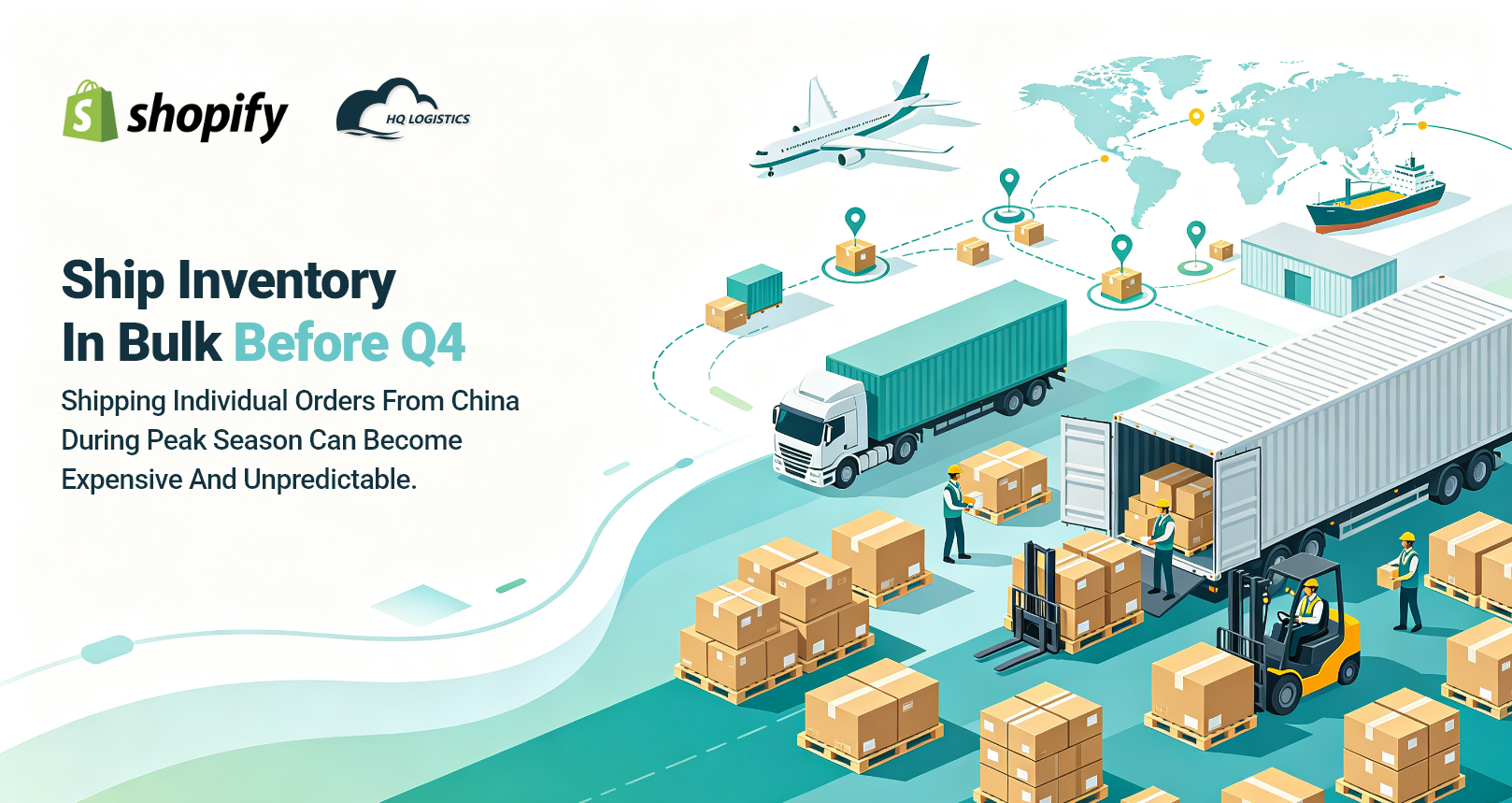
Not every SKU needs overseas inventory.
The goal is to put the right products in the right warehouse.
For Shopify tech brands with strong US demand, this could mean:
China Sourcing → Bulk Shipment → US Warehouse → Domestic Fulfillment
For European demand:
China Sourcing → EU Warehouse → Regional Fulfillment
This can help improve:
Delivery Speed | Shipping Stability | Inventory Availability | Fulfillment Efficiency
For Q4, prioritize products with:
High Sales Velocity | Stable Demand | Strong Margins | Proven Market Demand
Electronics often require protective packaging, but too much packaging can increase fulfillment costs.
Tech brands should review:
Box Size | Product Weight | Protective Materials | Package Dimensions | Fragility
For example:
Large Box + Excessive Padding → More Volume → Higher Shipping Cost
while:
Right-Sized Packaging + Appropriate Protection → Lower Volume + Better Shipping Efficiency
The goal isn't to remove protection.
It's to find the minimum effective packaging that protects the product throughout transportation.
For fragile products, test packaging before Q4 rather than discovering weaknesses after order volume increases.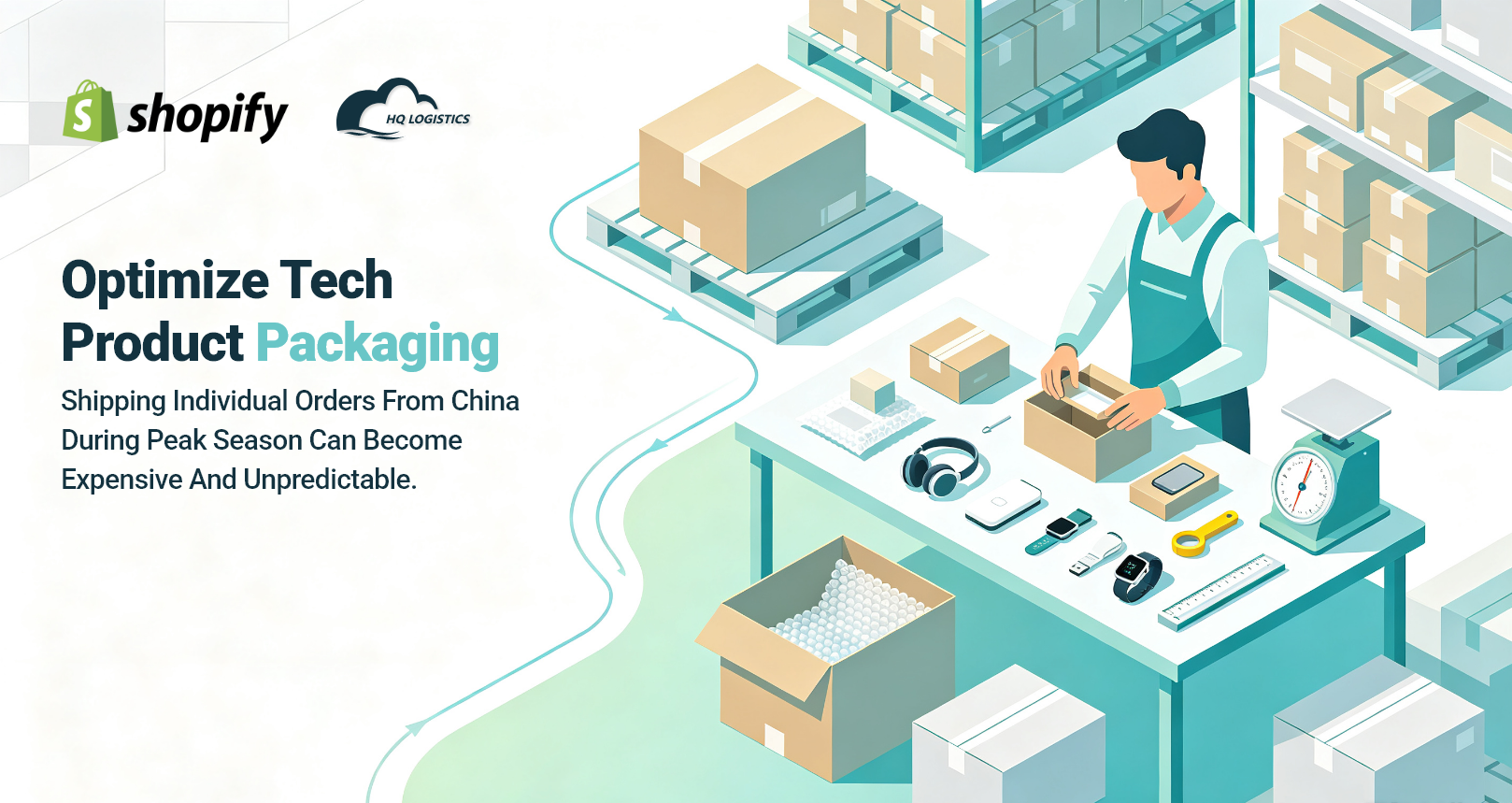
A small electronic product can still have a high shipping cost if its package is oversized.
This is particularly important for:
Headphones | Smart Accessories | Chargers | Small Devices | Tech Kits
Monitor both:
Actual Weight
and
Dimensional Weight
Packaging optimization can therefore have a direct impact on fulfillment costs.
A simple process is:
Measure → Test → Reduce Empty Space → Recalculate Shipping Cost
Even a small reduction in package dimensions can become significant when multiplied across thousands of Q4 orders.
Tech brands often source different products from different factories.
For example:
Supplier A → Chargers
Supplier B → Phone Accessories
Supplier C → Smart Devices
Shipping everything separately can increase transportation costs and create more complicated inventory management.
A China warehouse can consolidate products before international shipment:
Multiple Suppliers → China Warehouse → QC → Consolidation → Bulk Shipment
This also creates an opportunity to perform:
Quantity Checks | Packaging Checks | SKU Verification | Product Inspection
before inventory is sent overseas.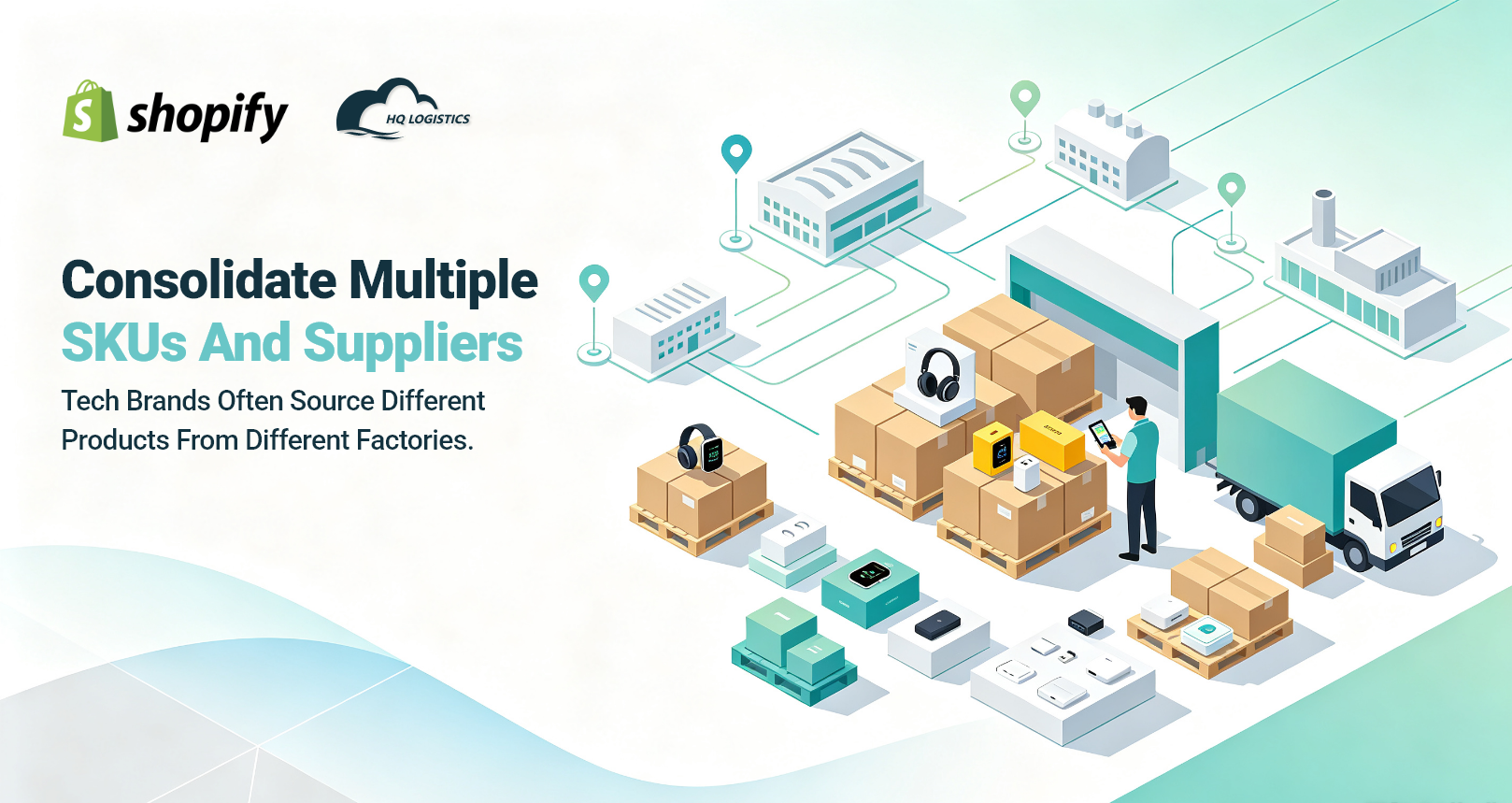
A stockout can be more expensive than a slightly higher fulfillment rate.
When inventory runs out during Black Friday or Cyber Monday, brands may need to use emergency transportation to replenish stock.
That can create:
Stockout → Lost Sales → Emergency Freight → Higher Cost
Instead, create replenishment triggers based on:
Sales Velocity | Inventory Remaining | Supplier Lead Time | Transit Time | Safety Stock
For example:
If a product is selling 100 units per day and your replenishment cycle takes 20 days, you need to plan for at least 2,000 units of expected demand during that period, plus an appropriate safety buffer.
The exact buffer should depend on demand volatility and supplier reliability.
Manual order processing becomes expensive during Q4.
A Shopify tech brand may receive hundreds or thousands of orders within a short period.
Without automation, teams may spend significant time on:
Order Exporting | SKU Matching | Warehouse Allocation | Tracking Updates | Inventory Updates
An integrated fulfillment system can connect:
Shopify → Order Management → WMS → Pick & Pack → Shipping → Tracking
Automation helps reduce manual work and minimize fulfillment errors.
For brands with many product variants, real-time inventory synchronization is especially important.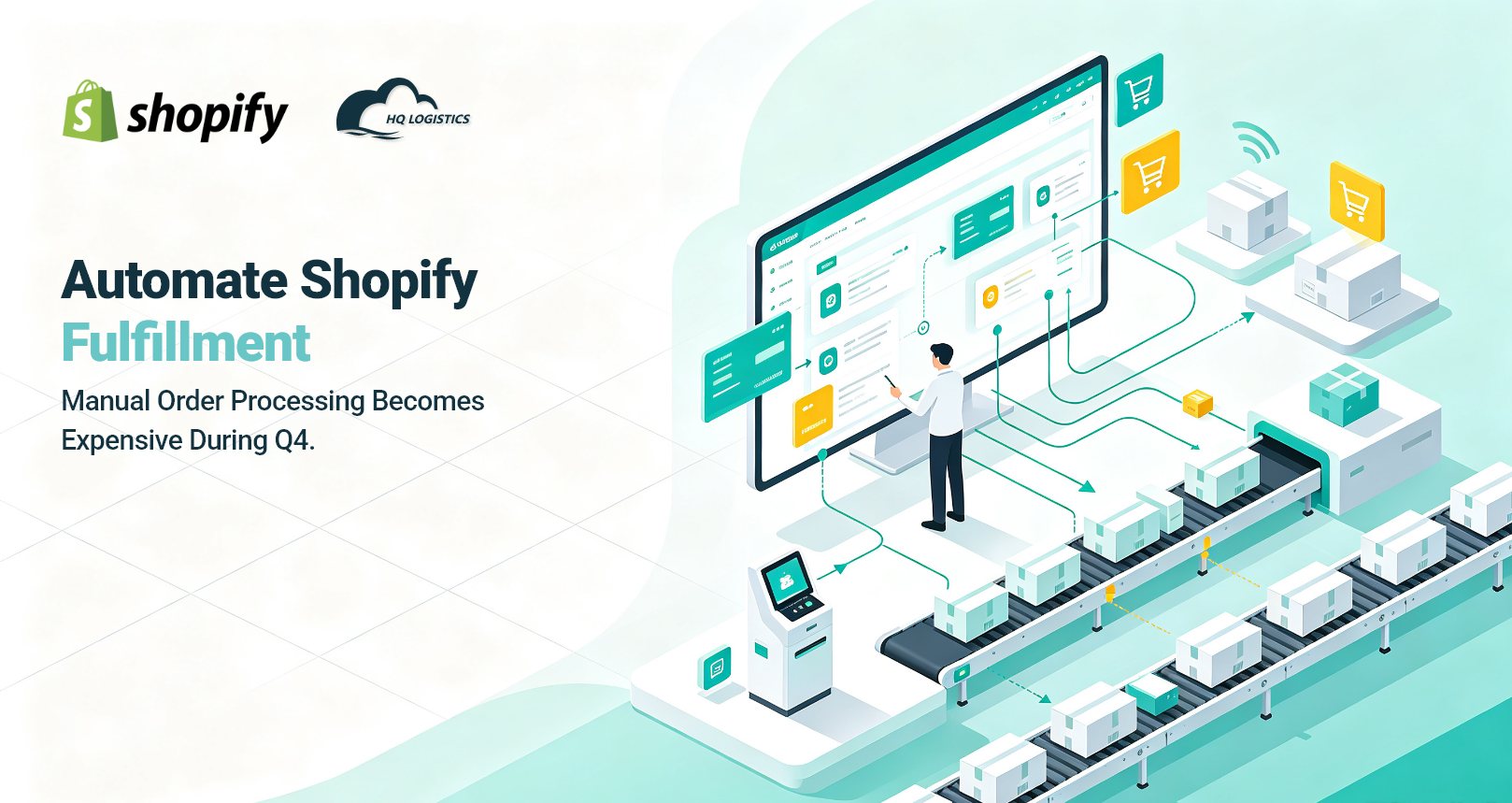
One common mistake is comparing logistics providers based only on the shipping price.
A lower shipping rate doesn't necessarily mean lower total fulfillment costs.
Consider:
Product Cost + Packaging + International Freight + Customs + Warehousing + Pick & Pack + Last-Mile Delivery + Returns
For example, a cheaper shipping route may have:
Longer Transit Time → More Customer Complaints → More Support Costs → More Refunds
Similarly, poor packaging may create:
Lower Shipping Cost → Higher Damage Rate → More Returns → Higher Total Cost
The real objective is:
Reduce total fulfillment cost without sacrificing delivery reliability.
For tech brands, a hybrid fulfillment model can work particularly well.
Small Inventory → Direct Shipping
Use this stage to test demand.
Stable Sales → Bulk Sourcing
Increase purchasing efficiency.
Bulk Inventory → US/EU Warehouse
Move inventory closer to customers.
Local Fulfillment → Fast Last-Mile Delivery
Fulfill customer orders from regional inventory.
This model helps brands balance flexibility and cost efficiency.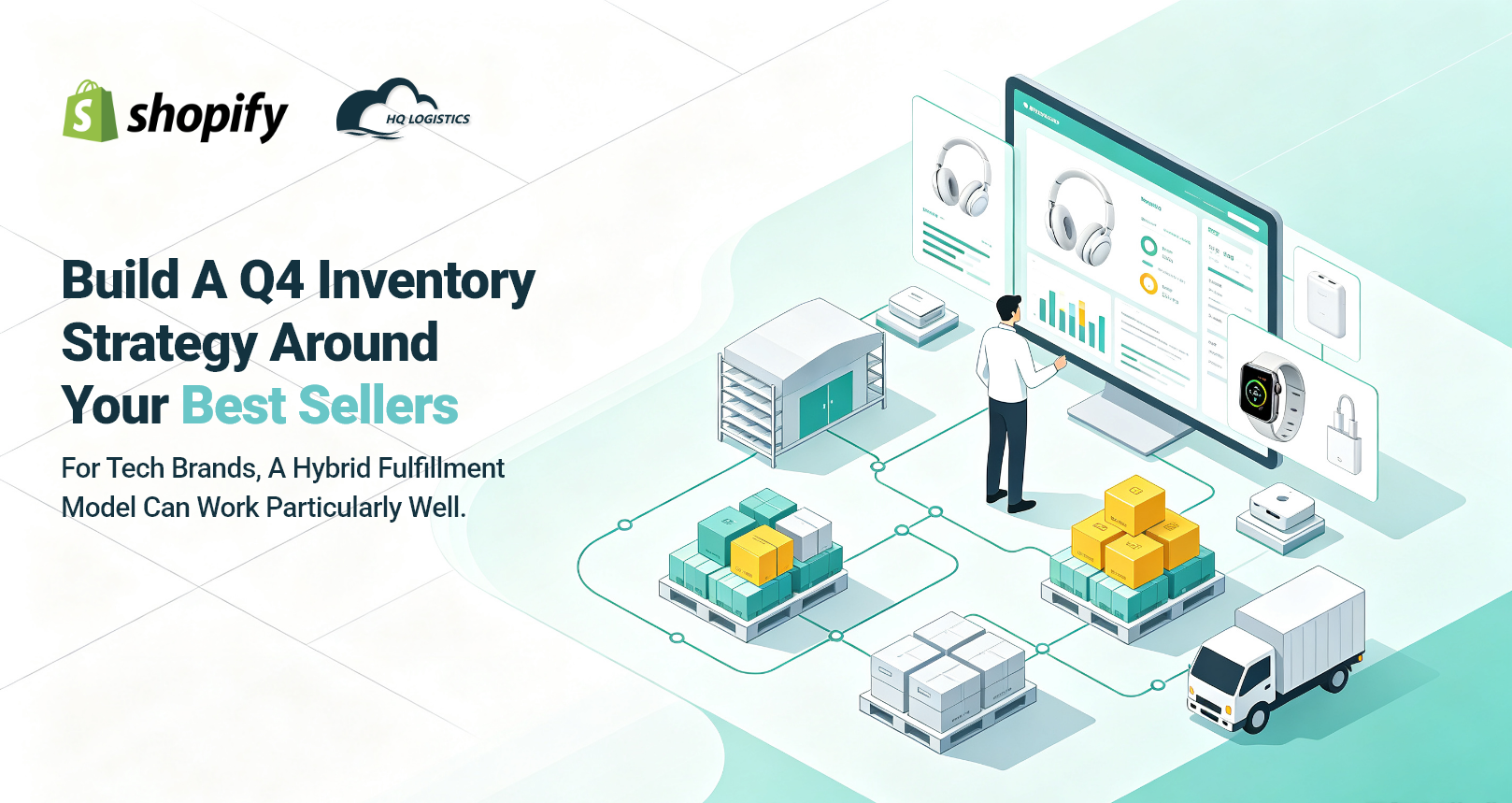
Traditional fulfillment typically focuses on:
Storage → Pick → Pack → Ship
But Q4 cost optimization starts much earlier.
A 4PL approach can coordinate:
Sourcing → Supplier Management → Quality Control → Inventory Planning → Transportation → Overseas Warehousing → Fulfillment
This gives brands a more complete view of their logistics costs.
For example, instead of simply asking:
“Which carrier has the cheapest rate?”
a 4PL strategy considers:
“Where should we source, how much should we buy, where should we store it, and which fulfillment route minimizes total cost?”
That's a much broader approach to Q4 planning.
For Shopify tech brands sourcing from China, a scalable model can look like:
China Sourcing → Supplier Coordination → Quality Inspection → Inventory Consolidation → Bulk Transportation → US / EU Overseas Warehouse → Shopify Order Sync → Local Fulfillment → Last-Mile Delivery
This model allows brands to prepare inventory before the peak instead of reacting after orders arrive.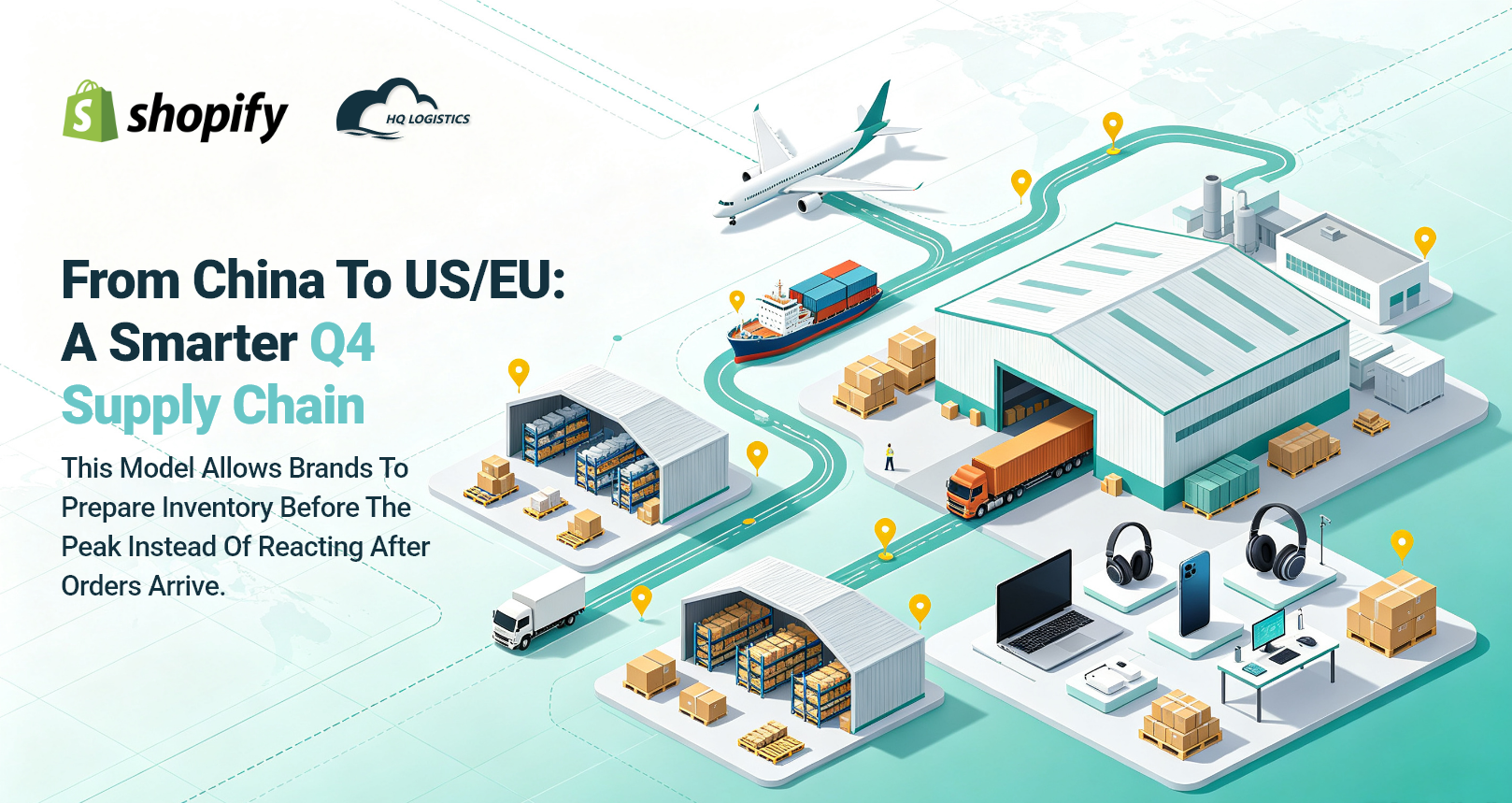
Before Q4 starts, ask:
✓ Have we identified our best-selling SKUs?
✓ Have we forecast Q4 demand?
✓ Have we calculated safety stock?
✓ Can we consolidate supplier shipments?
✓ Is our packaging properly optimized?
✓ Should our best sellers be moved to a US/EU warehouse?
✓ Do we have enough warehouse processing capacity?
✓ Is Shopify inventory synchronized in real time?
✓ Do we have a replenishment plan?
✓ Have we prepared for returns and damaged products?
If several answers are “no,” your fulfillment costs may be higher than necessary during Q4.
Demand Forecast → Product Selection → Supplier Planning → Inventory Preparation
Quality Control → Consolidation → Bulk Transportation → US/EU Warehouse Receiving
Inventory Check → Fulfillment Testing → Packaging Optimization → Warehouse Capacity Planning
Black Friday + Cyber Monday → Daily Inventory Monitoring → Fast Replenishment
Christmas Fulfillment → Delivery Monitoring → Returns Management
The exact timeline depends on supplier lead times and destination markets, but the principle remains:
Prepare before the peak, not during the peak.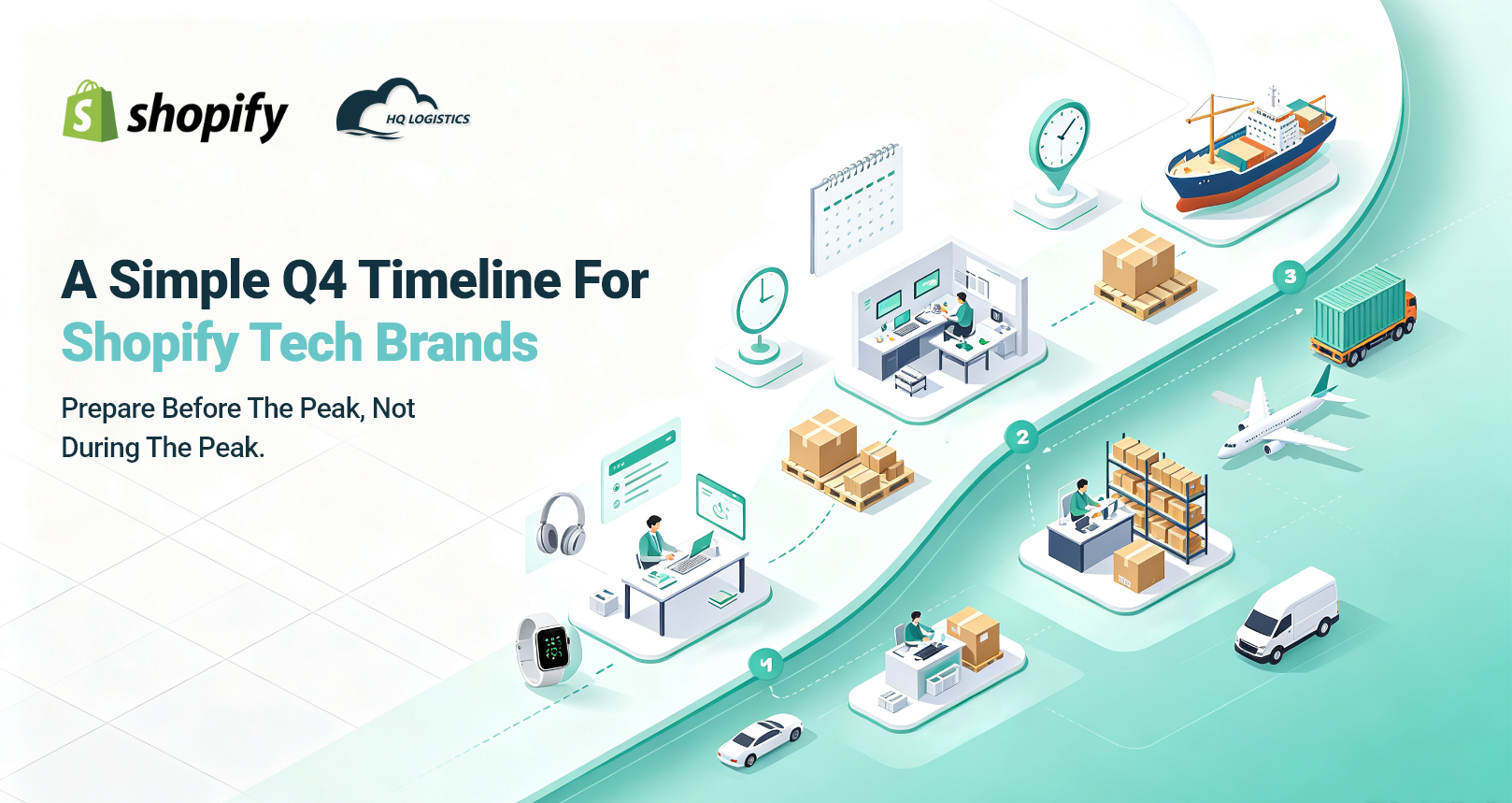
For Shopify tech brands, reducing Q4 fulfillment costs isn't about cutting corners.
It's about making smarter decisions earlier.
Focus on:
Demand Forecasting | Bulk Sourcing | Shipment Consolidation | Packaging Optimization | Overseas Warehousing | Inventory Planning | Fulfillment Automation | 4PL Supply Chain Management
The most effective model for a growing tech brand can be:
Source Smarter → Consolidate Inventory → Ship in Bulk → Stock Best Sellers Overseas → Fulfill Locally → Replenish Before Stockouts
With the right supply chain strategy, Q4 can become more than a busy sales period.
It can become an opportunity to reduce fulfillment costs, improve delivery performance, and build a more scalable Shopify brand.
The biggest opportunities usually come from early inventory planning, bulk transportation, packaging optimization, shipment consolidation, overseas warehousing, and fulfillment automation.
No. Prioritize best-selling and high-demand SKUs with predictable sales. New or slow-moving products can remain in direct fulfillment until demand is validated.
Not automatically. The benefits depend on order volume, product characteristics, transportation routes, warehouse fees, and inventory turnover. Calculate the total landed and fulfillment cost before making the decision.
Electronics may require additional protection against impact, vibration, and other transportation risks. At the same time, oversized packaging can increase dimensional shipping costs. The goal is efficient protection, not simply less packaging.
A 4PL partner can coordinate sourcing, supplier management, inventory planning, quality control, transportation, overseas warehousing, and fulfillment, helping brands optimize the entire supply chain instead of only the final shipping step.
📩Email: zoye@fulfllment-cn.com
PREVIOUS RECOMMENDATIONS


reduce fulfillment costs during Q4 | Q4 fulfillment | Shopify tech fulfillment | electronics fulfillment | tech product fulfillment | Q4 inventory planning | electronics shipping | overseas warehouse | US fulfillment | 4PL fulfillment | Shopify fulfillment | how Shopify brands reduce fulfillment costs | how to reduce Q4 fulfillment costs | Q4 fulfillment for electronics brands | Shopify electronics fulfillment USA | tech product fulfillment from China | US warehouse for tech brands | Q4 inventory planning for Shopify | electronics fulfillment service | 4PL for Shopify brands | overseas warehousing for electronics brands




Customer's favorable comments is our eternal motivation. We feel grateful for all the support and company.

Lorem ipsum dolor sit amet, consetetur sadipscing elitr, sed diam nonumy eirmod tempor invidunt ut labore et dolore magna aliquyam erat, sed diam voluptua.