
CJ Dropshipping can be a great starting point for Shopify sellers.
It offers product sourcing, Shopify integration, automated order fulfillment, inventory synchronization, global warehouses, and shipping solutions—all of which can help new stores get started without building their own supply chain.
But what works for a growing store may not always be the best setup for a scaling brand.
As order volume increases, product requirements become more complex, and Q4 approaches, Shopify sellers often start asking different questions:
Can my supplier handle larger volumes?
Can I get more control over product quality and packaging?
Can I switch suppliers without disrupting fulfillment?
Can I reduce my total fulfillment costs?
Can one partner manage sourcing, warehousing, branding, and shipping?
If you're asking these questions, you may not need another dropshipping platform.
You may need a more integrated supply chain partner.
That's where HQ comes in.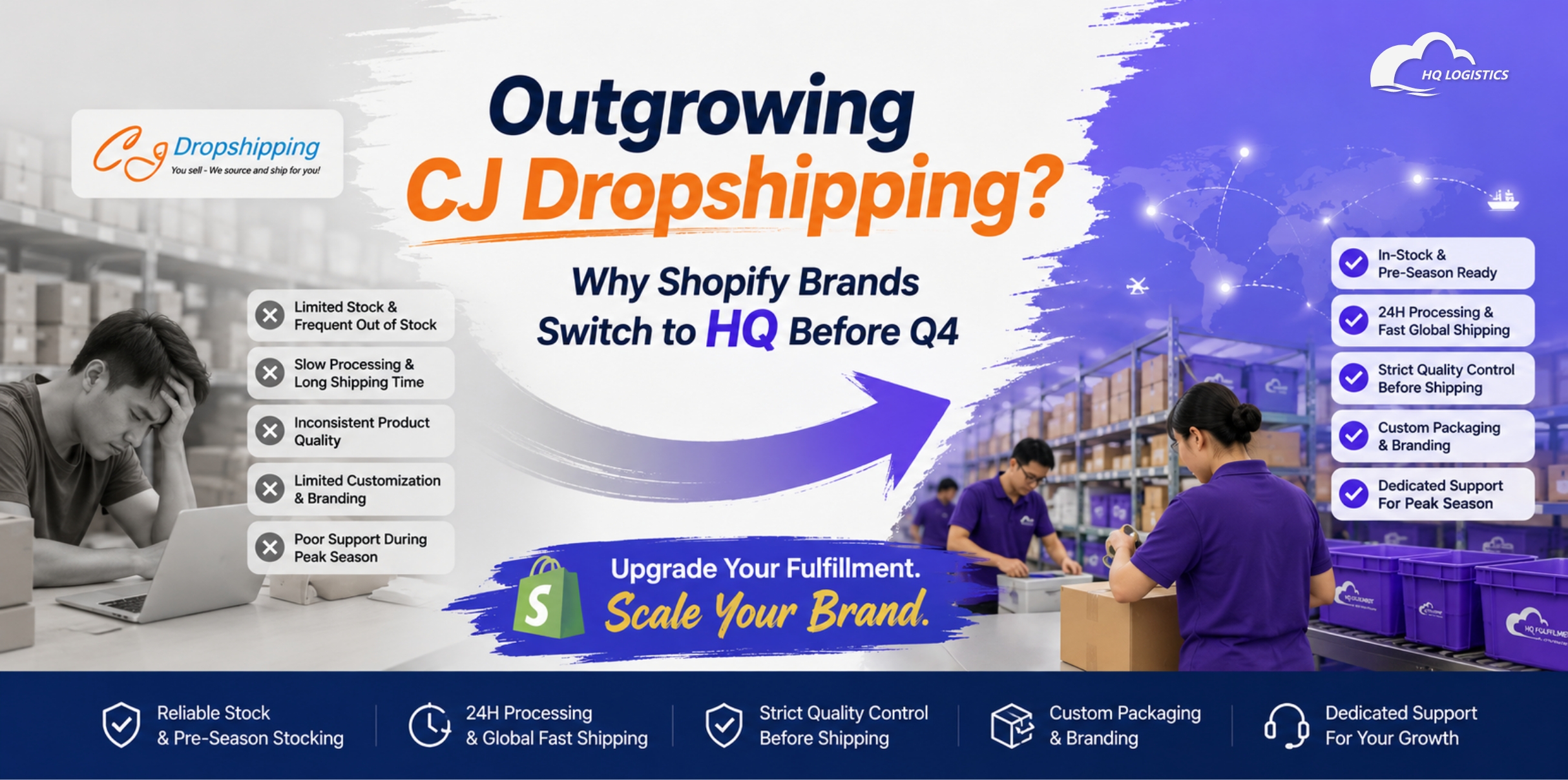
Dropshipping is an excellent way to test products without committing to large inventory.
But once you identify winning products, your priorities change.
Instead of simply asking:
“Can I ship this product to my customer?”
You start asking:
Can I improve the product?
Can I negotiate better factory pricing?
Can I customize the packaging?
Can I control quality?
Can I build a recognizable brand?
Can I maintain stable inventory during Q4?
This is the point where many Shopify sellers begin looking beyond basic dropshipping.
HQ combines product sourcing, quality inspection, warehousing, fulfillment, customization, and global shipping in one workflow.
The goal is not just to fulfill today's order.
It's to build a supply chain that can support tomorrow's growth.
When you're testing products, convenience matters.
When you're scaling, control matters more.
A growing Shopify brand needs visibility across the entire product journey:
Factory → Quality Control → Warehouse → Fulfillment → Shipping → Customer
If one part of this chain becomes unstable, your customer experience can suffer.
HQ helps bring these operations together, including product sourcing, quality inspection, inventory management, fulfillment, and shipping.
This integrated model gives sellers greater visibility instead of forcing them to coordinate multiple suppliers and service providers separately.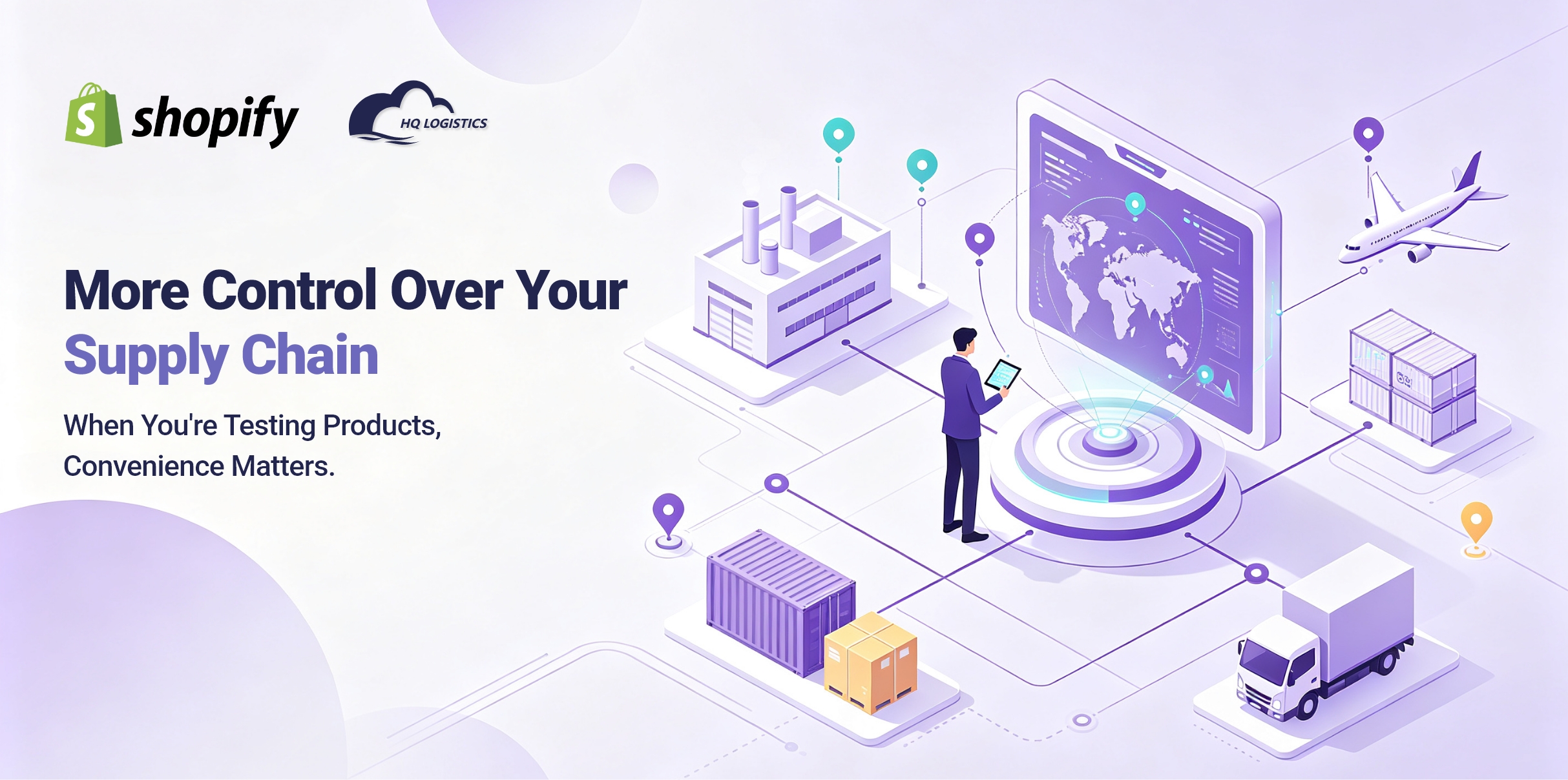
Once a product starts generating consistent sales, sourcing becomes much more important.
A small difference in product cost can become significant when you're processing hundreds or thousands of orders.
HQ offers sourcing support where sellers can provide a product image or reference, allowing the sourcing team to look for suitable factory options.
This creates an opportunity to move from:
“Find me this product.”
to:
“Help me build a better supply solution for this product.”
That difference becomes increasingly important as your Shopify store grows.
When you're fulfilling a few orders a day, a product issue may affect only a small number of customers.
When you're processing hundreds of orders, the same issue can quickly become a large customer-service problem.
A quality issue can lead to:
Returns
Refunds
Negative reviews
Customer complaints
Higher support costs
Lost repeat purchases
HQ provides quality inspection before products enter fulfillment, helping sellers identify potential problems earlier.
For brands scaling into Q4, this extra layer of quality control can be especially valuable.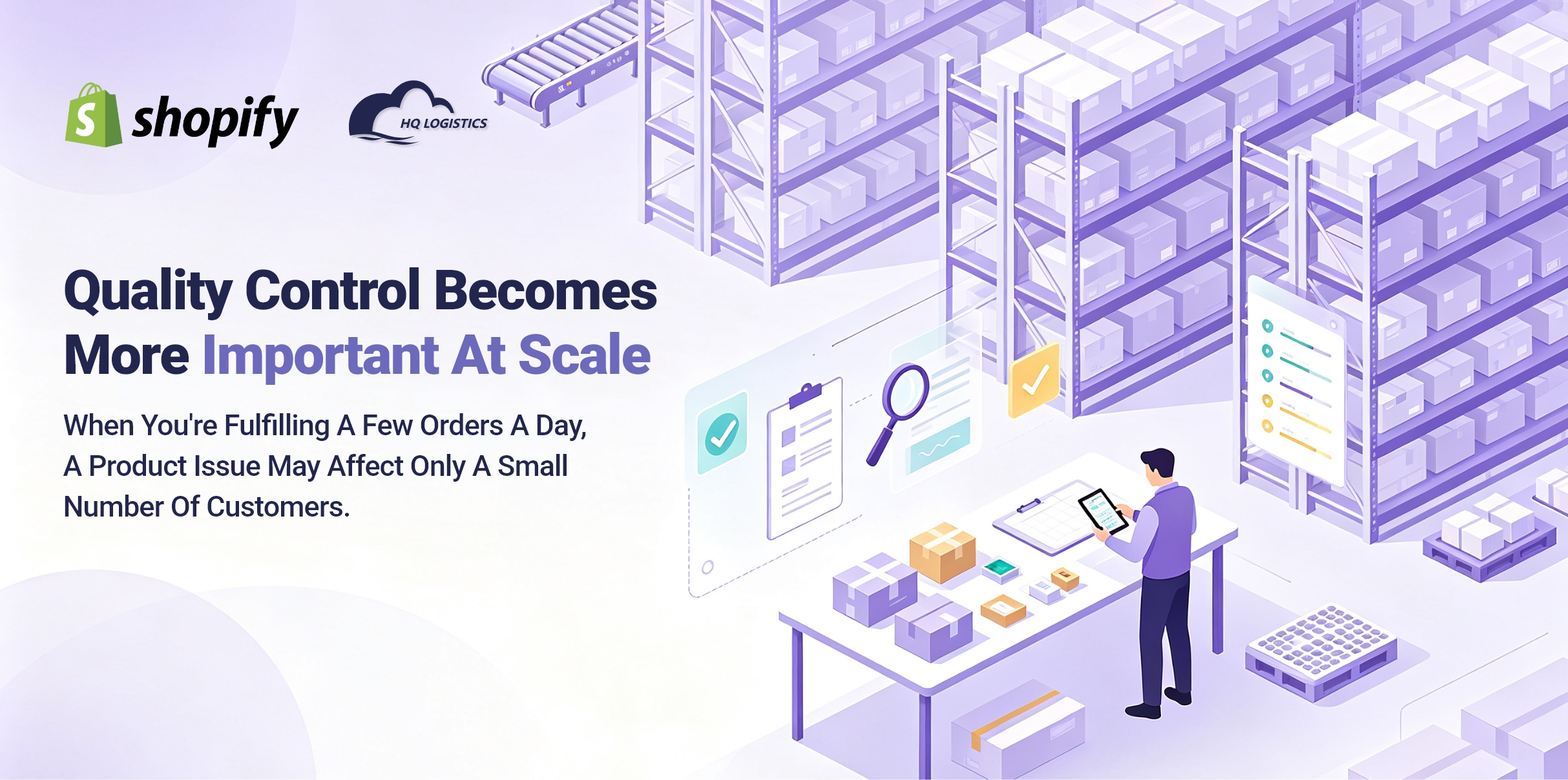
A generic dropshipping package may be enough when you're testing a product.
But customers expect more from established brands.
Custom packaging can help Shopify sellers create:
Better unboxing experiences
Stronger brand recognition
More professional presentation
Better opportunities for repeat purchases
More shareable social media content
HQ supports custom branding and packaging, allowing sellers to move beyond generic fulfillment and create a more consistent customer experience.
Your product may be sourced from the same factory as another seller.
Your brand experience doesn't have to be the same.
Q4 is different from the rest of the year.
Halloween, Black Friday, Cyber Monday, and Christmas can create significant order spikes within a short period.
That means your fulfillment partner needs to handle more than normal daily volume.
You need:
Stable inventory + Fast processing + Reliable shipping + Accurate tracking
HQ currently promotes same-day processing, real-time inventory management, Shopify order synchronization, and HQ Special Lines to the USA/EU with stated 3–8 day transit times.
For Shopify brands preparing for Q4, the key is to build capacity before orders surge.
Waiting until Black Friday arrives to discover that your supplier or fulfillment process cannot keep up is too late.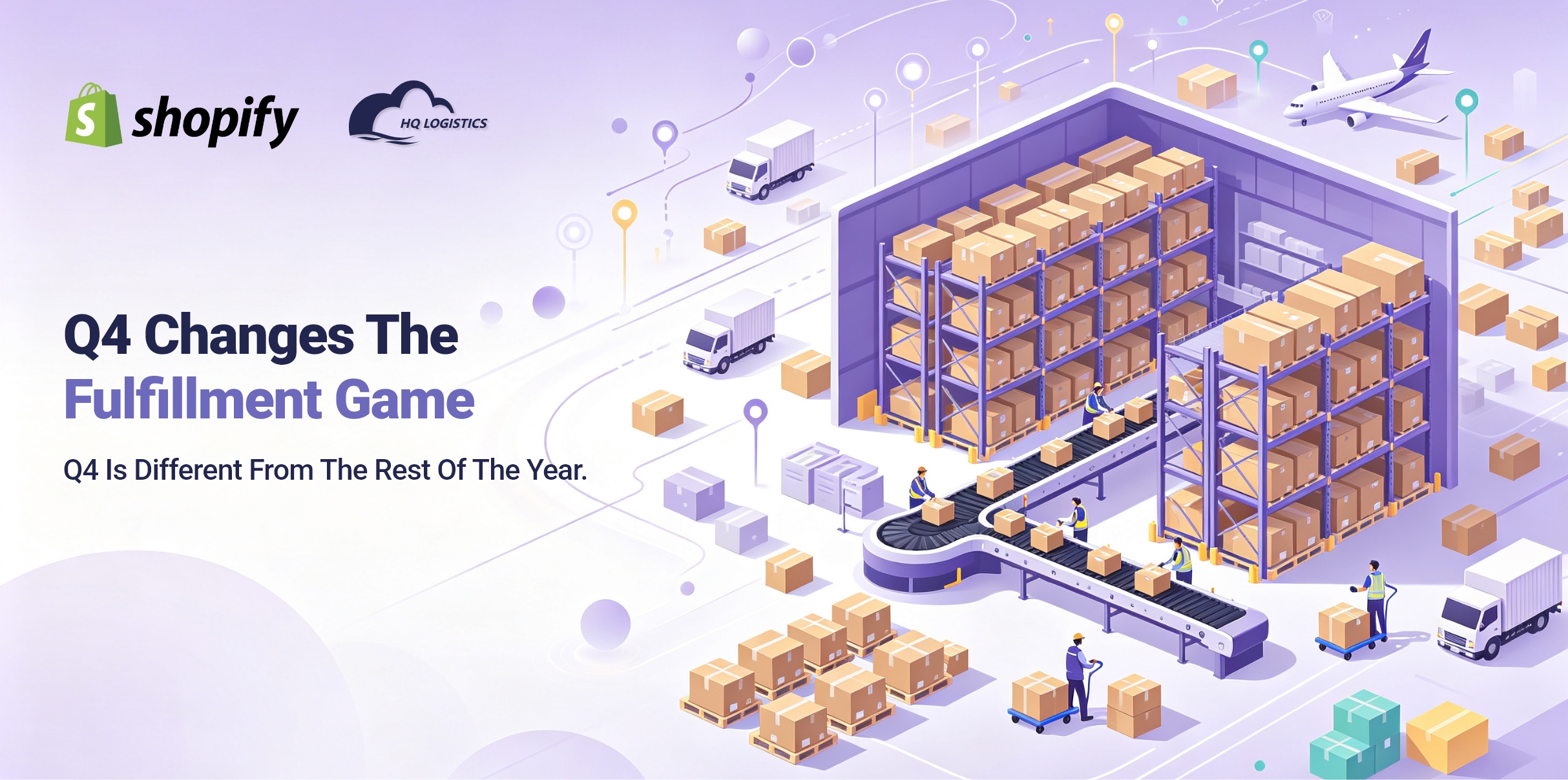
Direct shipping from China can work well when you're testing products.
But once you have proven bestsellers, pre-stocking inventory closer to customers can create a more scalable model.
For example:
China Sourcing → Bulk Inventory → Overseas Warehouse → Local Fulfillment → Customer
Instead of shipping every individual order internationally, sellers can position inventory closer to their major markets.
This can help:
Reduce international shipping dependency
Improve delivery speed
Support peak-season order volume
Reduce repeated shipping costs
Create more predictable fulfillment
HQ provides warehousing and fulfillment solutions designed to connect inventory with global delivery.
For Q4, this can be particularly useful for products with predictable demand.
As a store grows, supply chain management can become surprisingly complicated.
You may end up working with:
Supplier + Agent + QC Company + Warehouse + Packaging Company + Freight Forwarder + Fulfillment Provider
Every additional partner creates another communication point.
HQ's model combines sourcing, warehousing, packaging, fulfillment, and shipping into one supply chain workflow.
That means fewer handoffs and fewer opportunities for information to get lost between teams.
For a growing Shopify brand, simplicity can become a competitive advantage.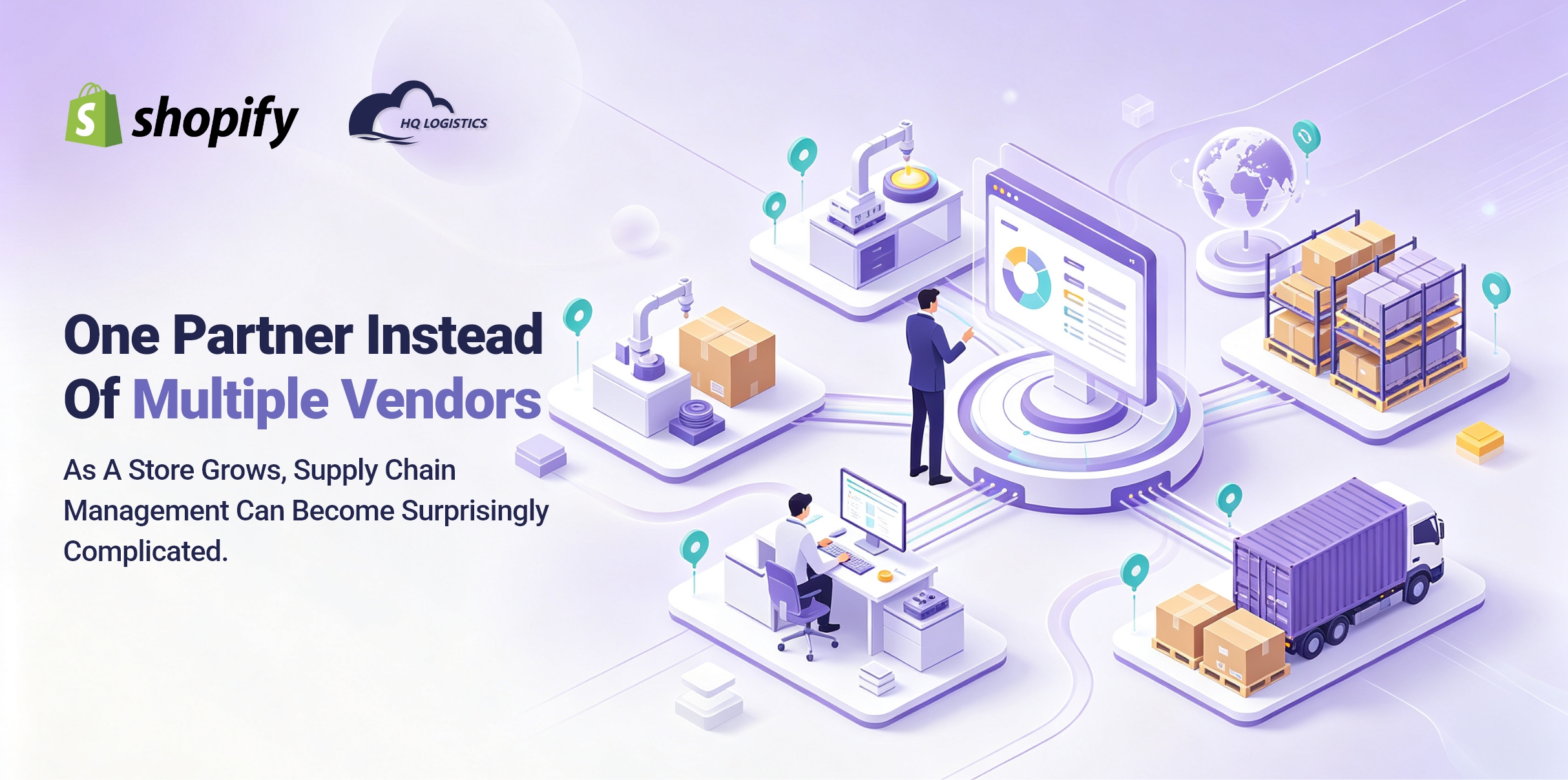
Switching from one fulfillment partner to another doesn't mean giving up automation.
HQ supports Shopify integration, automatic order synchronization, and tracking updates back to the store.
The ideal setup should allow your team to focus on:
Marketing
Product development
Customer acquisition
Brand building
Conversion optimization
rather than manually copying orders and tracking numbers between systems.
You don't necessarily need to switch just because you're using CJ.
The better question is:
Has your business outgrown the way you're currently operating?
Consider reviewing your fulfillment setup if:
Your supplier needs to support significantly higher daily order volume without sacrificing processing speed.
You need custom packaging, labels, inserts, product modifications, or stronger branding.
You need more consistent inspection and product standards.
Your current fulfillment model may no longer be cost-effective at higher order volumes.
You need inventory, warehouse capacity, and shipping routes ready before peak demand.
You want one partner to help coordinate sourcing, inventory, fulfillment, and logistics.
If several of these situations sound familiar, it may be time to evaluate a more scalable supply chain model.
Switching fulfillment partners right before peak season requires careful planning.
Here's a safer approach.
Don't move everything at once.
Start with products that generate the majority of your orders.
Don't compare product prices alone.
Look at the complete cost:
Product + Quality Control + Packaging + Storage + Fulfillment + Shipping + Returns
The cheapest product price does not always produce the lowest total fulfillment cost.
Before moving large quantities, compare:
Product quality
Packaging
Processing time
Shipping performance
Communication
Order accuracy
Move a controlled number of orders first.
Monitor the results before scaling the partnership.
Once the new supply chain is proven, send inventory to the appropriate warehouse before peak demand begins.
This gives your fulfillment team time to receive, inspect, organize, and prepare inventory.
Don't rely on a single product or shipping route during Q4.
Maintain safety stock and alternative logistics options for your key products.
The answer depends on your stage of growth.
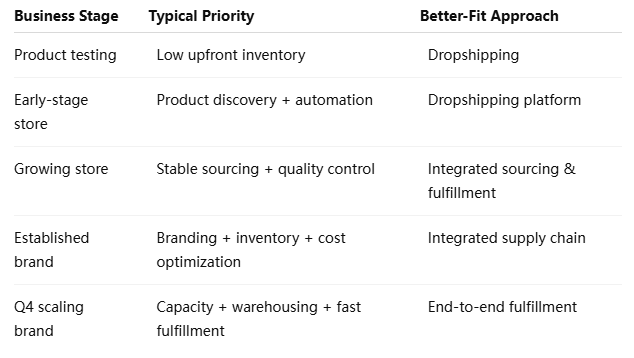
CJ remains a useful solution for sellers who value product discovery, automated dropshipping, and access to global warehouses.
HQ is positioned more toward brands that want to combine sourcing, quality control, customization, warehousing, fulfillment, and shipping into one operational system.
The question isn't:
“Which platform is better?”
It's:
“Which supply chain model fits where my business is going next?”
The worst time to discover a supply chain problem is during peak season.
By then:
Suppliers may already be overloaded
Inventory may be running low
Shipping capacity may be tight
Customer expectations are higher
Switching costs become much greater
That's why Shopify brands should evaluate their fulfillment setup before Q4, not during it.
If your store has moved beyond product testing and into serious growth, your supply chain should grow with it.
Test with dropshipping. Scale with supply chain control.
And when you're ready to build a more scalable operation, HQ can help connect the pieces—from sourcing and quality inspection to warehousing, custom packaging, fulfillment, and global shipping.
Yes. CJ provides Shopify integration, product sourcing, automated fulfillment, inventory synchronization, and global warehouse options, making it suitable for many sellers starting or testing products.
A brand may consider switching when it needs greater control over sourcing, quality inspection, custom packaging, inventory planning, warehouse operations, or fulfillment costs.
If your current provider cannot comfortably support your expected Q4 volume, it is better to evaluate alternatives before peak season rather than waiting until order volume spikes.
There is always some transition risk. Reduce it by testing samples, running trial orders, checking quality, and moving inventory in stages instead of changing everything at once.
Yes. HQ supports Shopify integration and automatic order and tracking synchronization.
Yes. HQ provides sourcing support and can help sellers find factory options based on product requirements or references.
HQ combines sourcing, quality inspection, warehousing, custom packaging, order fulfillment, and global shipping into an integrated service.
The earlier the better. Give yourself enough time to test products, verify quality, move inventory, configure fulfillment, and establish reliable shipping routes before peak demand.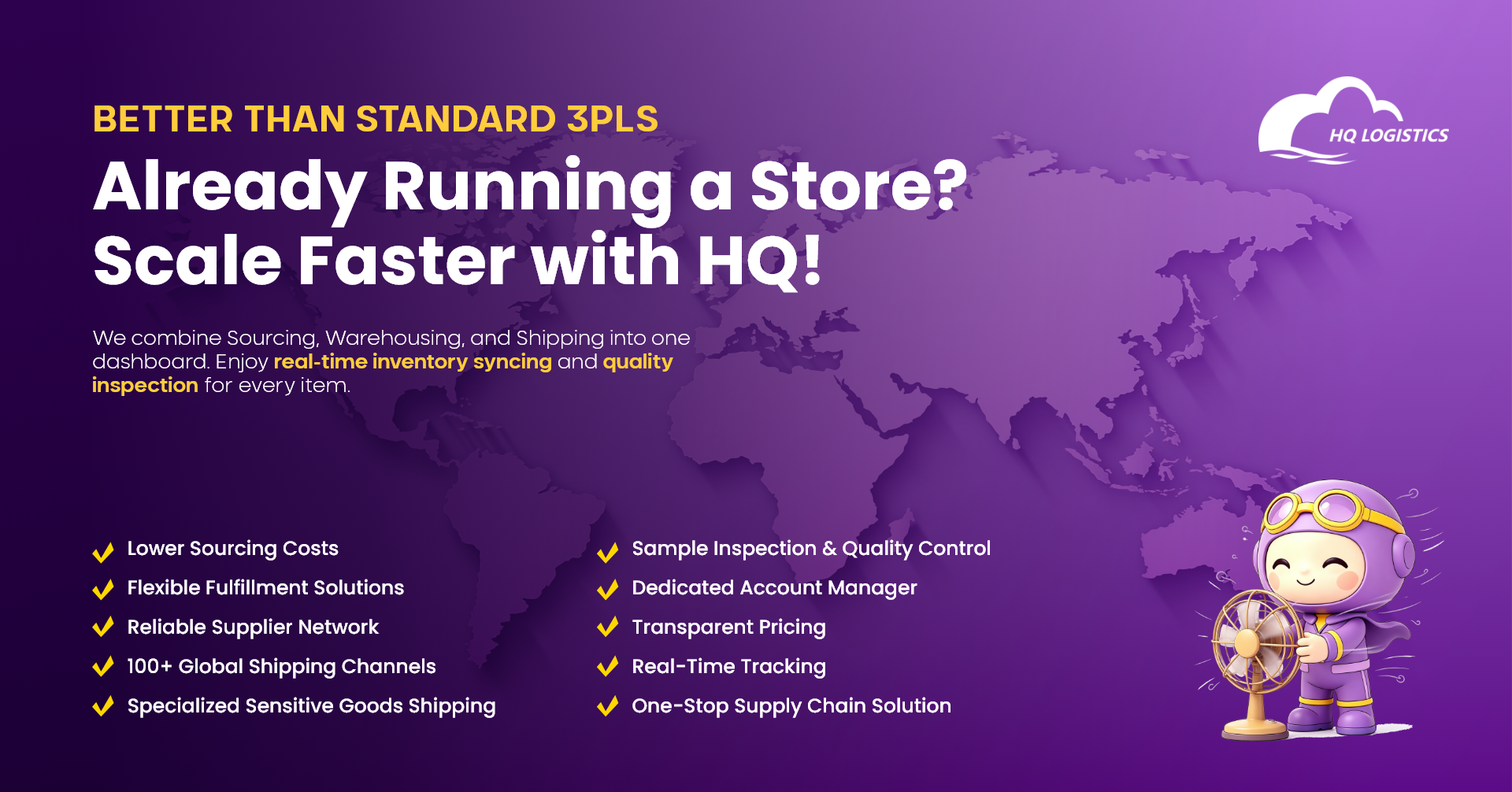
Outgrowing CJ doesn't mean CJ failed. It means your business has changed.
The needs of a store processing a few orders per day are very different from those of a Shopify brand preparing for hundreds or thousands of Q4 orders.
When your priorities shift from “How can I test this product?” to “How can I build a scalable supply chain?”, it's time to rethink your fulfillment strategy.
Before Q4 arrives, evaluate your suppliers, inventory, packaging, warehouse capacity, shipping routes, and fulfillment process.
The goal isn't simply to ship more orders.
It's to build a supply chain that can handle your next stage of growth.
📩Email: zoye@fulfllment-cn.com
PREVIOUS RECOMMENDATIONS


CJ Dropshipping alternative, CJ Dropshipping alternative for Shopify, outgrowing CJ Dropshipping, switch from CJ Dropshipping, CJ vs HQ Fulfillment, Shopify fulfillment, Shopify dropshipping supplier, Shopify fulfillment partner, Shopify sourcing agent, Shopify product sourcing, Shopify warehouse fulfillment, Q4 Shopify fulfillment, Q4 inventory planning, Black Friday fulfillment, Shopify supplier switching, change dropshipping supplier, custom packaging Shopify, quality inspection Shopify, overseas warehousing Shopify, global fulfillment for Shopify, Shopify supply chain management, ecommerce fulfillment services, 3PL for Shopify brands, scalable Shopify fulfillment, Q4 dropshipping strategy.




Customer's favorable comments is our eternal motivation. We feel grateful for all the support and company.

Lorem ipsum dolor sit amet, consetetur sadipscing elitr, sed diam nonumy eirmod tempor invidunt ut labore et dolore magna aliquyam erat, sed diam voluptua.