
When customers receive an online order, the packaging is often the first physical interaction they have with your brand. Before they try the product, they see the box, open the wrapping, and discover how everything is presented.
For ecommerce brands, packaging is more than a way to protect products during shipping. It is an opportunity to build brand recognition, improve the customer experience, and make ordinary deliveries feel more memorable.
A plain shipping box may do its job, but custom packaging can help your brand stand out in a crowded market. From branded mailers and thank-you cards to personalized inserts and gift-ready boxes, small details can make a difference.
So, what custom packaging ideas are worth considering, and how can ecommerce sellers use them without increasing fulfillment costs too much?
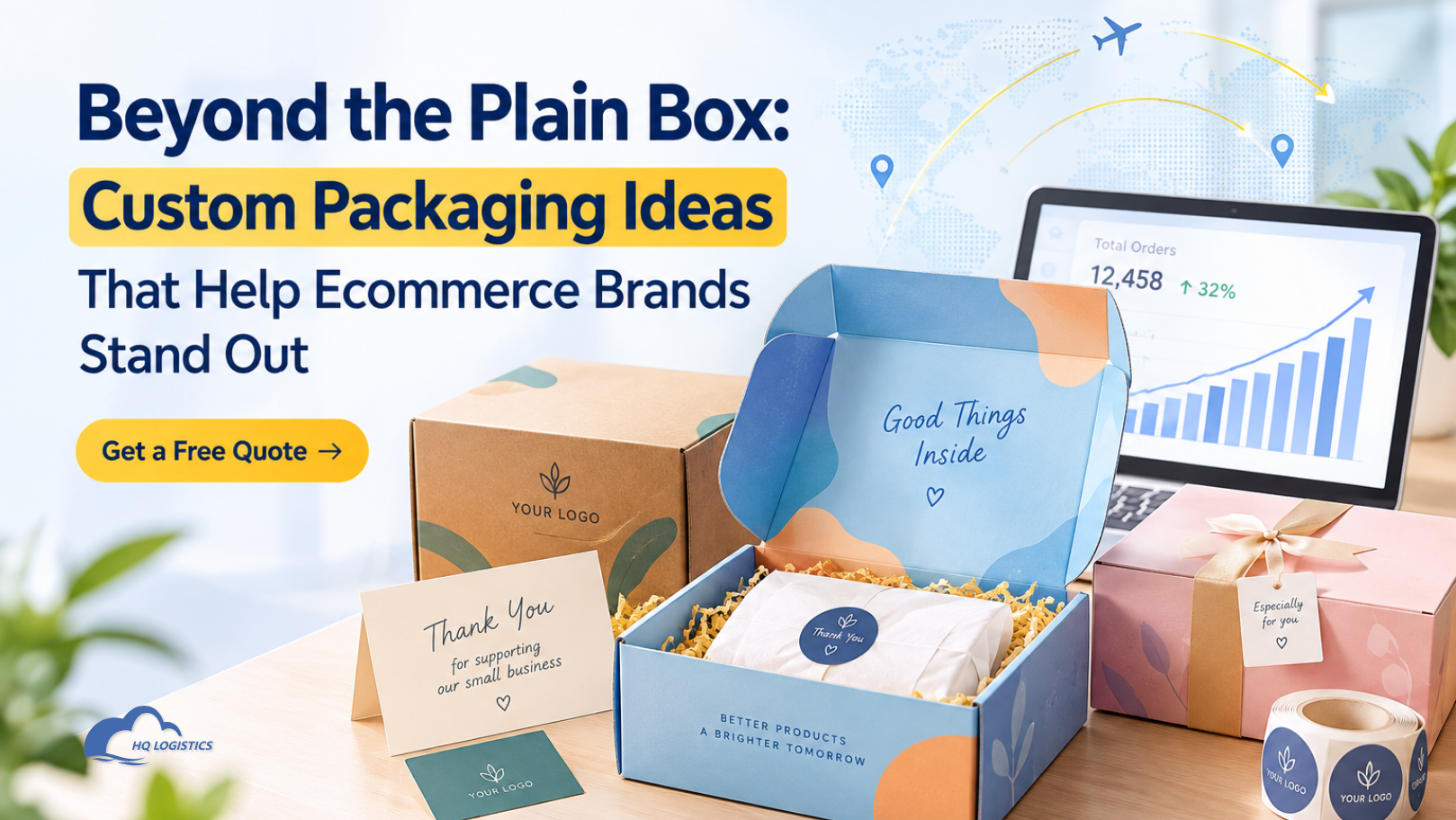
One of the simplest ways to make your parcels recognizable is to add your brand identity to the packaging.
You don't necessarily need an expensive, fully customized box. Even small branding elements can make your orders look more professional and consistent.
Here are a few options:
Custom logo boxes:
Add your logo, brand colors, or a simple design to standard shipping boxes. This works particularly well for brands with regular order volumes and products that need extra protection.
Branded mailer bags:
Lightweight mailers with custom printing are suitable for clothing, accessories, and other products that don't require rigid packaging.
Logo stickers and labels:
If you want a flexible, lower-cost option, branded stickers can be applied to plain boxes, tissue paper, or product packaging.
Custom tape:
Printed packing tape adds brand visibility without requiring every box to be specially manufactured.
For new or growing ecommerce businesses, starting with stickers, labels, or custom tape can be a practical way to introduce branding before investing in larger packaging orders.
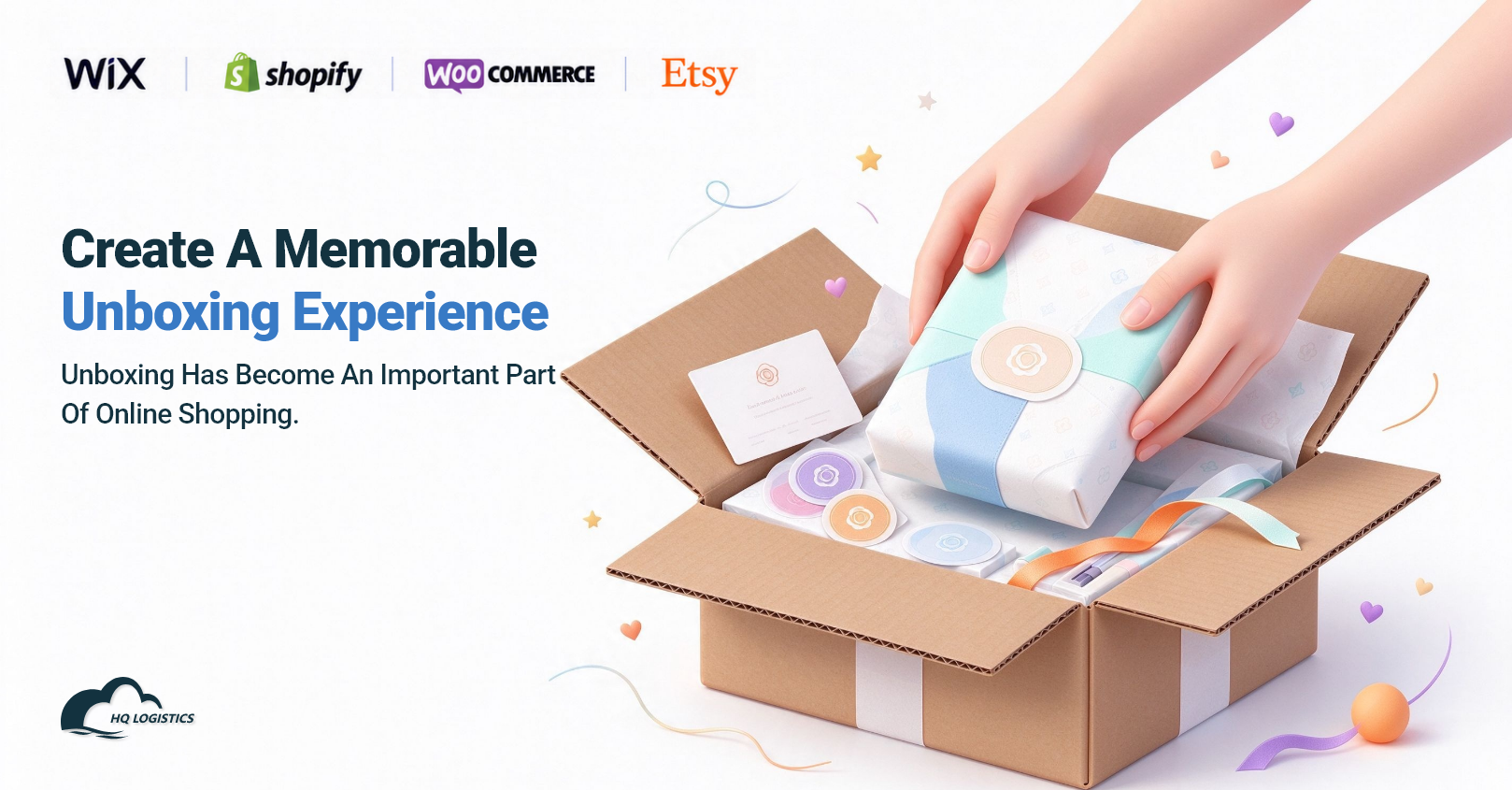
Unboxing has become an important part of online shopping. Customers may share attractive packaging in photos, videos, or social media posts, giving brands additional exposure.
A thoughtful unboxing experience doesn't have to be complicated. It is often the combination of a few well-chosen details that makes a parcel feel special.
Consider these ideas:
Branded tissue paper:
Wrap products in tissue paper that matches your brand colors. It adds a clean, polished look and works well for fashion, beauty, and lifestyle products.
Thank-you cards:
Include a short message thanking customers for their purchase. You can also add your website, social media accounts, or a QR code that directs customers to your store.
Product care cards:
Provide simple instructions for using, cleaning, or maintaining the product. This is especially useful for electronics, accessories, home products, and beauty tools.
Custom inserts:
Add promotional cards, product recommendations, or information about new collections to encourage repeat purchases.
Gift-ready packaging:
For products commonly purchased as gifts, consider custom boxes, ribbons, or gift messages that make the parcel ready to present.
The key is to make every packaging element relevant to your brand and product. Too many inserts or decorative materials can increase costs and create unnecessary waste.
There is no universal packaging solution for every ecommerce business. The right choice depends on product size, weight, fragility, shipping distance, and customer expectations.
Here are some practical ideas for different product categories.
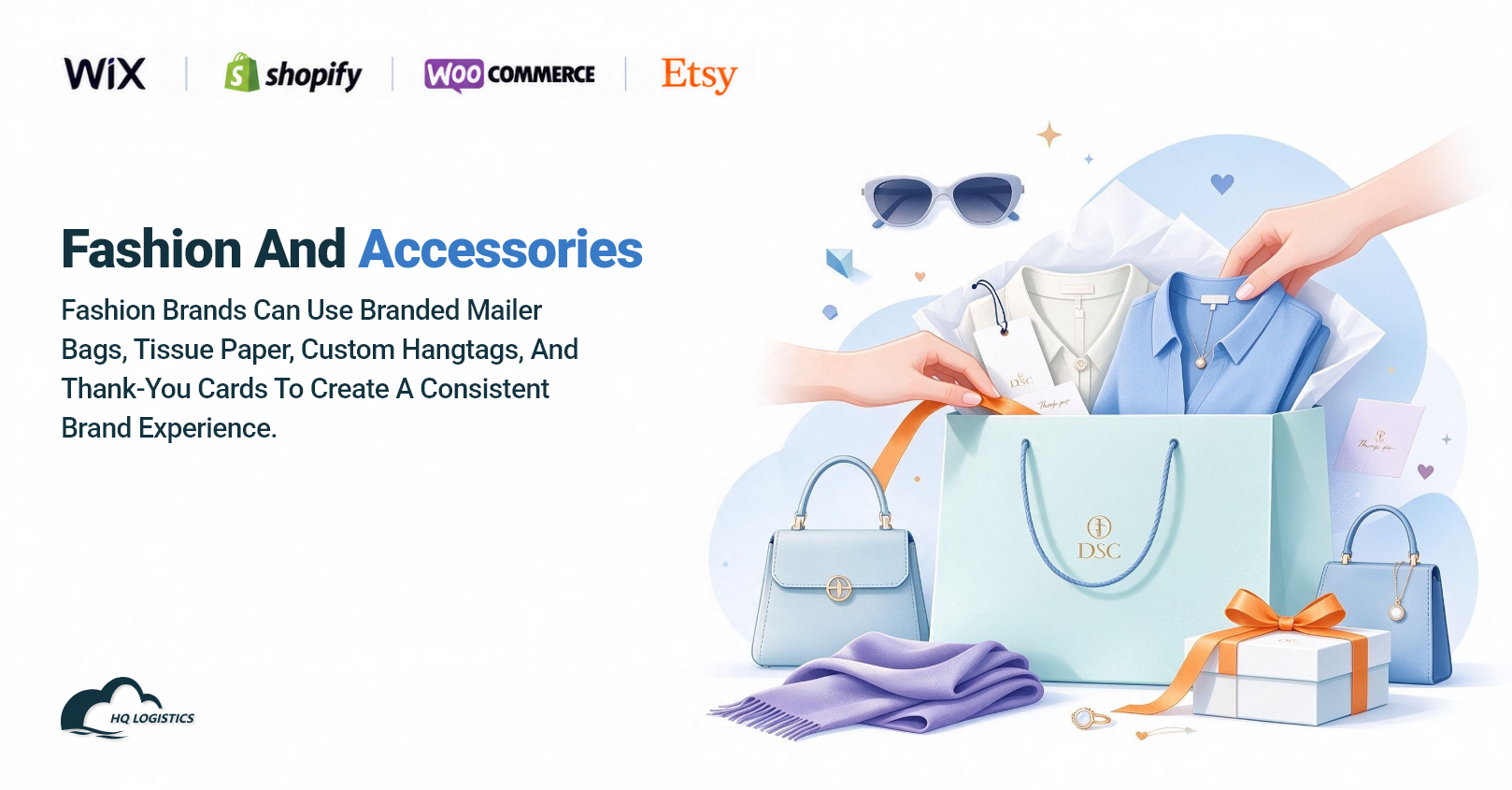
Fashion brands can use branded mailer bags, tissue paper, custom hangtags, and thank-you cards to create a consistent brand experience.
For clothing, consider adding:
Custom logo bags or mailers
Branded hangtags and care labels
Tissue paper in brand colors
Small cards introducing the collection
For jewelry and smaller accessories, compact gift boxes or pouches can make products feel more premium while keeping packaging size manageable.
Beauty products often benefit from clean, attractive, and organized packaging.
Consider:
Custom product boxes
Protective inserts to prevent movement
Branded sealing stickers
Product information or care cards
Gift sets with coordinated packaging
For liquids, creams, and fragile containers, protection should come before decoration. Make sure the packaging can handle the shipping conditions and prevent leakage or breakage.
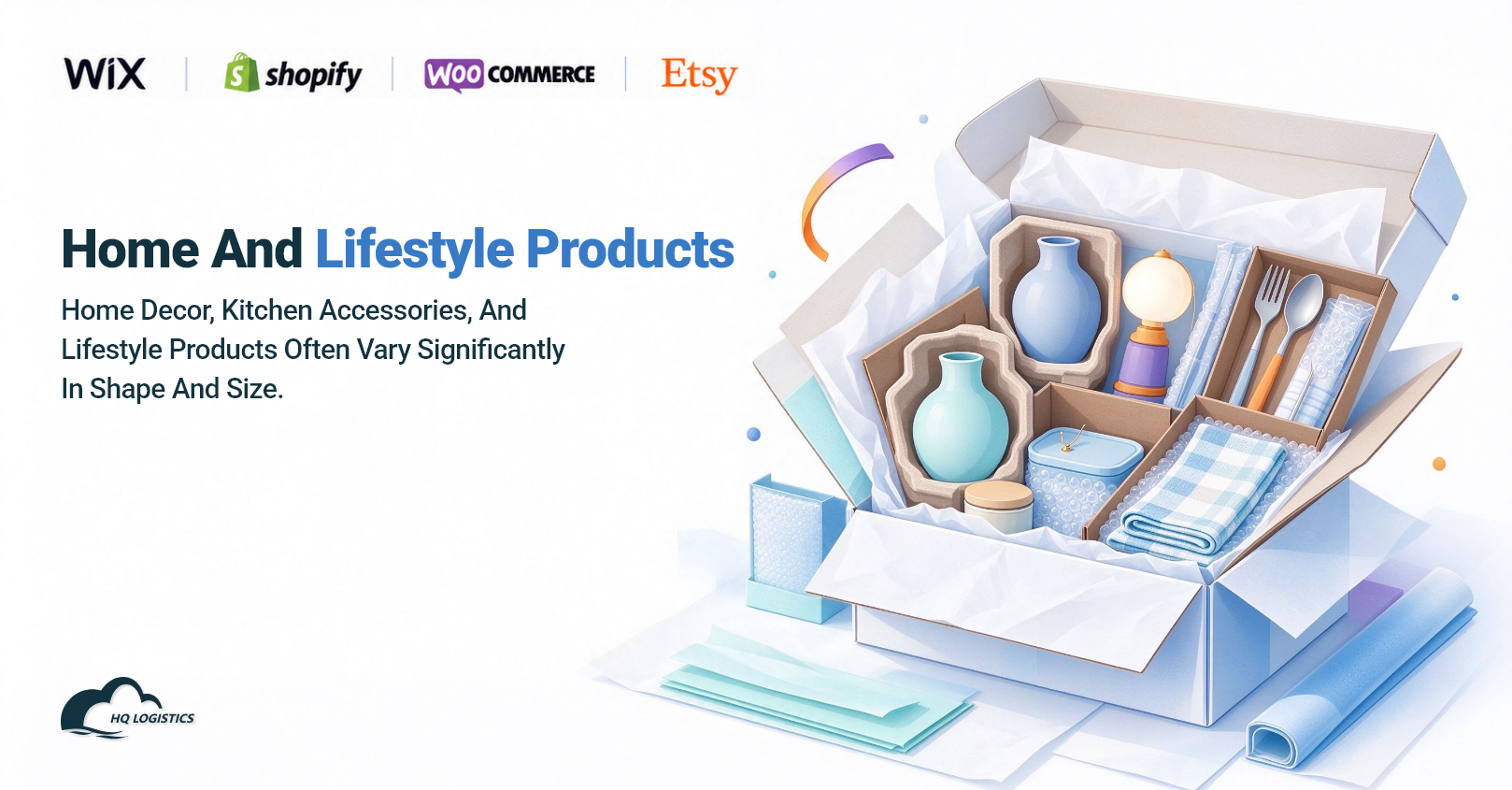
Home decor, kitchen accessories, and lifestyle products often vary significantly in shape and size.
Useful packaging options include:
Custom-sized corrugated boxes
Protective foam or paper inserts
Branded labels and outer packaging
Instruction cards or product guides
Recyclable protective materials where suitable
For fragile products, test the packaging under realistic handling and transportation conditions. Attractive packaging is only effective if the product arrives safely.
Electronics require packaging that protects products from impact, friction, and movement during transit.
Options include:
Molded inserts or protective trays
Anti-static bags where appropriate
Compact product boxes
Cable and accessory organizers
Clear instruction cards
Avoid choosing packaging based only on appearance. Product protection, dimensions, and shipping requirements should guide the final design.
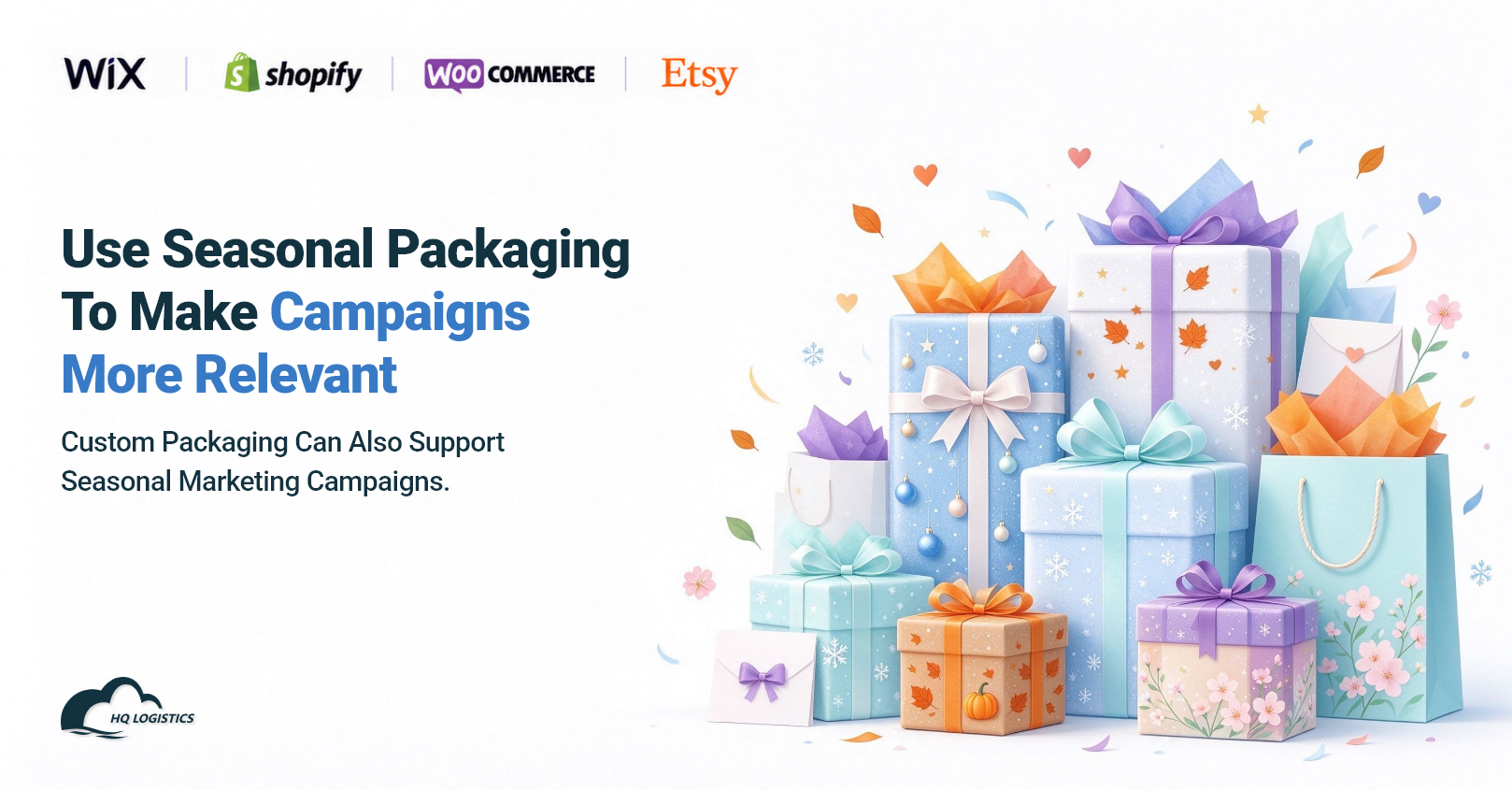
Custom packaging can also support seasonal marketing campaigns.
Instead of redesigning your entire packaging system for every holiday, use flexible elements that can be changed throughout the year.
For example:
Christmas:
Add festive thank-you cards, seasonal stickers, gift tags, or limited-edition packaging sleeves.
Valentine's Day:
Use themed inserts, ribbons, or gift-ready boxes for products aimed at couples and gift buyers.
Spring and Summer:
Introduce brighter colors and lightweight packaging designs that match seasonal collections.
Halloween:
Use limited-edition stickers or small themed inserts for relevant product categories.
Seasonal packaging can help make campaigns feel timely without requiring a complete packaging redesign. It is also a useful way to test customer responses before investing in larger customized packaging orders.
Custom packaging can improve brand presentation, but it also adds costs. For growing ecommerce businesses, the challenge is finding the right balance between appearance, protection, and profitability.
Before selecting a packaging solution, consider the following factors.
Minimum order quantity (MOQ)
Some packaging suppliers require large production quantities. If your sales volume is still growing, ask whether smaller batches or standard packaging with custom branding are available.
Packaging dimensions and shipping costs
Larger or heavier packaging may increase shipping expenses. Choose dimensions that protect the product without adding unnecessary volume.
Material costs
Compare different materials based on durability, appearance, weight, and price. More expensive materials are not automatically better for every product.
Assembly and fulfillment time
Complicated packaging may take longer to prepare. If your warehouse processes hundreds or thousands of orders each day, even a small increase in packing time can affect overall efficiency.
Storage requirements
Custom boxes and packaging materials need warehouse space. Consider how much inventory you need and how frequently packaging designs may change.
A practical approach is to start with a simple branded packaging system, measure its impact, and expand customization as your order volume grows.
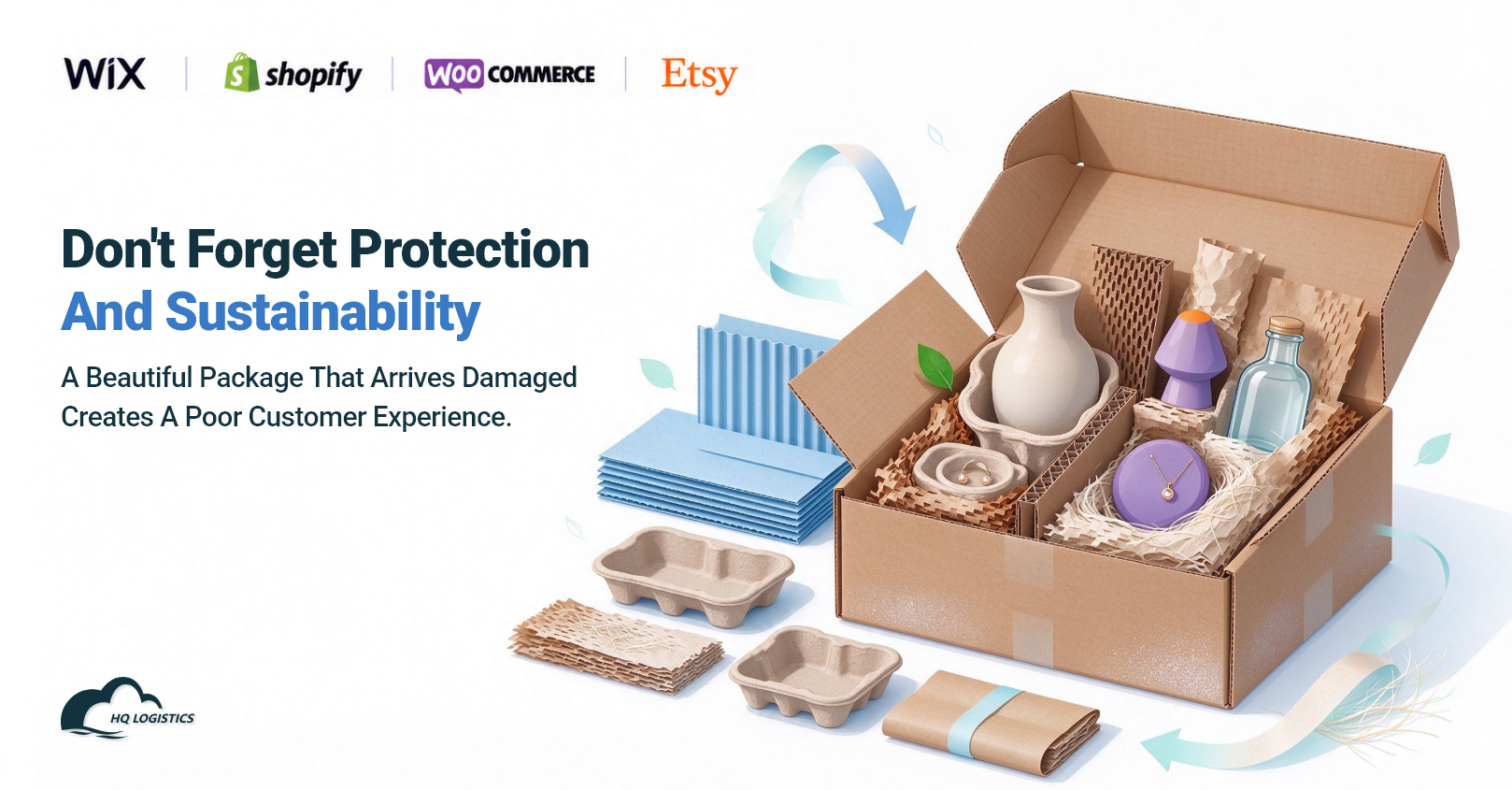
A beautiful package that arrives damaged creates a poor customer experience.
Custom packaging should balance visual appeal with practical shipping requirements. Before approving a design, check the following:
Does the packaging fit the product securely?
Can it protect the item from impact and pressure?
Is it suitable for the selected shipping route?
Does it add unnecessary weight or volume?
Can the materials be recycled or reused where local facilities allow?
Many consumers are also paying more attention to packaging waste. Depending on your product and destination market, consider recyclable cardboard, paper-based cushioning, reusable mailers, or packaging made with recycled materials.
However, sustainability claims should be accurate. Check material specifications and local recycling guidance before describing packaging as recyclable, compostable, or environmentally friendly.
Designing custom packaging is only one part of the process. You also need a reliable way to source, store, prepare, and use those materials when orders arrive.
If packaging is managed separately from your fulfillment operation, problems can occur:
Custom packaging arrives late.
The warehouse runs out of branded materials.
Incorrect packaging is used for certain products.
Packing instructions are not communicated clearly.
Packaging changes slow down order processing.
Working with a fulfillment partner that can coordinate packaging and warehouse operations helps reduce these issues.
HQ LOGISTICS supports ecommerce brands with custom packaging, including logo boxes, branded bags, hangtags, thank-you cards, inserts, and other packaging materials. Sellers can coordinate packaging requirements alongside product sourcing, quality inspection, warehouse storage, and order fulfillment.
For brands with consistent order volume, custom packaging can also be planned around daily fulfillment needs. HQ LOGISTICS offers free custom packaging support for eligible customers shipping 50 or more orders per day, subject to packaging requirements and confirmation.
This integrated approach helps brands maintain a consistent presentation while keeping packaging and shipping operations more organized.
It can be, but you don't need to invest in fully customized boxes immediately. Start with affordable options such as branded stickers, thank-you cards, or custom labels. As your order volume grows, you can introduce more packaging elements.
Branded stickers, labels, and custom tape are often practical starting points because they can be used with standard boxes or mailers. The best option depends on your product size, order volume, and packaging requirements.
It can. Additional weight, larger dimensions, or bulky materials may increase shipping costs. Choose packaging that protects the product while keeping parcel size and weight under control.
Yes. Some fulfillment partners can help source packaging materials, store them in the warehouse, and apply them during order processing. This can simplify coordination and help maintain consistent packaging across orders.
Ideally, plan several weeks or months before a major holiday campaign, depending on design approval, supplier lead times, production quantities, and shipping arrangements. Preparing early gives you more time to test packaging and avoid last-minute delays.

Custom packaging is more than decoration. It helps ecommerce brands communicate their identity, create memorable customer experiences, and make their products stand out after checkout.
You don't need the most expensive box or the most elaborate design. Start with packaging that fits your product, reflects your brand, protects orders during shipping, and makes financial sense.
From branded mailers and thank-you cards to seasonal gift boxes and custom inserts, the right details can turn an ordinary delivery into a stronger brand experience.
With HQ LOGISTICS, ecommerce sellers can coordinate custom packaging, product sourcing, quality control, and fulfillment through one supply chain partner — making it easier to deliver a consistent brand experience as their business grows.
📩Email: zoye@fulfllment-cn.com
Our website:
https://www.cnfulfillment.com/
PREVIOUS RECOMMENDATIONS


custom packaging| ecommerce packaging ideas| branded packaging| custom shipping boxes| branded mailer bags| unboxing experience| ecommerce brand packaging| custom thank-you cards| sustainable ecommerce packaging| product packaging design| China fulfillment center| custom packaging fulfillment| HQ LOGISTICS




Customer's favorable comments is our eternal motivation. We feel grateful for all the support and company.

Lorem ipsum dolor sit amet, consetetur sadipscing elitr, sed diam nonumy eirmod tempor invidunt ut labore et dolore magna aliquyam erat, sed diam voluptua.