
Christmas is one of the busiest periods of the year for ecommerce businesses. As shoppers place more orders for gifts, decorations, clothing, electronics, and seasonal products, sellers face increasing pressure to keep inventory available and deliver orders on time.
However, holiday delivery delays rarely start with the shipping carrier alone. Supplier production delays, insufficient inventory, warehouse backlogs, customs issues, and poor shipping coordination can all affect the delivery process.
For ecommerce sellers sourcing products from China, preparing early is especially important. A well-organized supply chain can help prevent stockouts, reduce shipping risks, and keep customer orders moving throughout the Christmas season.
So, how can ecommerce sellers avoid Christmas shipping delays in 2026? Here are seven practical steps to prepare your supply chain.

One of the biggest mistakes sellers make is waiting until orders increase before preparing inventory.
By that time, manufacturers may already be handling large numbers of orders, production schedules may be full, and international shipping capacity may become more limited.
Instead, build your Christmas inventory plan around expected demand and the time needed to replenish products.
Start by reviewing:
Previous Christmas sales performance.
Current best-selling and slow-moving SKUs.
Expected order growth during the holiday season.
Supplier production lead times.
International shipping and customs clearance times.
Available warehouse inventory.
Pay particular attention to products with long production cycles or multiple components. These items may require additional time for sourcing, assembly, quality inspection, and packaging.
A practical approach is to classify products into three groups:
High-demand products:
Prepare sufficient stock for expected holiday sales.
Stable sellers:
Maintain regular inventory and establish clear reorder points.
Slow-moving products:
Avoid excessive purchasing and focus on selling existing stock.
Early inventory planning gives your business more flexibility when demand changes or unexpected delays occur.
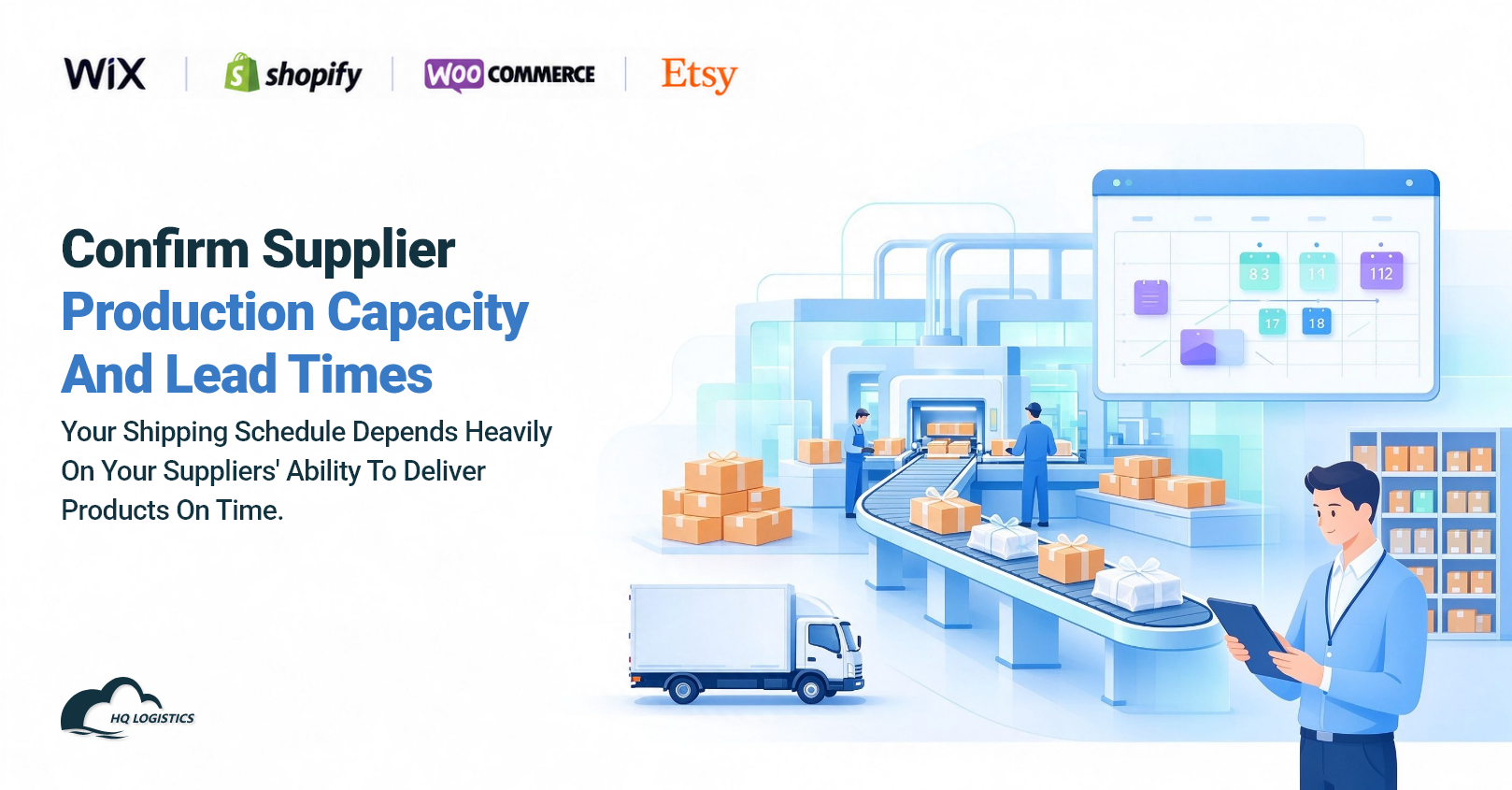
Your shipping schedule depends heavily on your suppliers' ability to deliver products on time.
During the Christmas season, manufacturers may receive more orders than usual. If your supplier cannot handle the increased workload, production delays can affect your entire fulfillment schedule.
Before placing a seasonal purchase order, confirm the following details:
Current production capacity and available production slots.
Estimated production lead time.
Raw material and component availability.
Sample approval and quality inspection schedules.
Packaging preparation time.
Expected completion and warehouse delivery dates.
Do not rely only on a supplier's estimated delivery date. Ask for a clear production schedule with milestones.
For example, you can divide the process into sample confirmation, material preparation, production, quality inspection, packaging, and final dispatch.
If you work with multiple suppliers, coordinate their delivery schedules carefully. Products arriving at different times can create additional warehouse handling and consolidation delays.
A reliable sourcing and supply chain partner can also help communicate with suppliers, follow up on production progress, and identify potential delays before they affect your shipping plan.
Not every product should use the same shipping method.
Choosing a shipping solution based only on the lowest freight rate can create problems during the holiday season. A cheaper option may take longer, while a faster service may be more suitable for products with strong seasonal demand.
Consider these common shipping options:
Air Freight
Air freight is generally suitable for urgent replenishment, lightweight products, high-value goods, and products with shorter selling windows. It offers faster transportation than ocean freight, although costs are usually higher.
Sea Freight
Sea freight is often more economical for large-volume shipments and products that can be planned well in advance. However, sellers need to account for ocean transit, port handling, customs clearance, and final delivery.
Express Shipping
Express services can be useful for urgent small shipments, samples, and last-minute inventory replenishment. However, shipping costs may be significantly higher, particularly during peak periods.
When choosing a shipping method, evaluate:
Product weight and dimensions.
Total shipment volume.
Delivery destination.
Required delivery date.
Product characteristics and shipping restrictions.
Total landed cost.
A mixed shipping strategy may be more effective than relying on one method. For example, you could send most inventory by sea freight while reserving air freight for urgent replenishment.
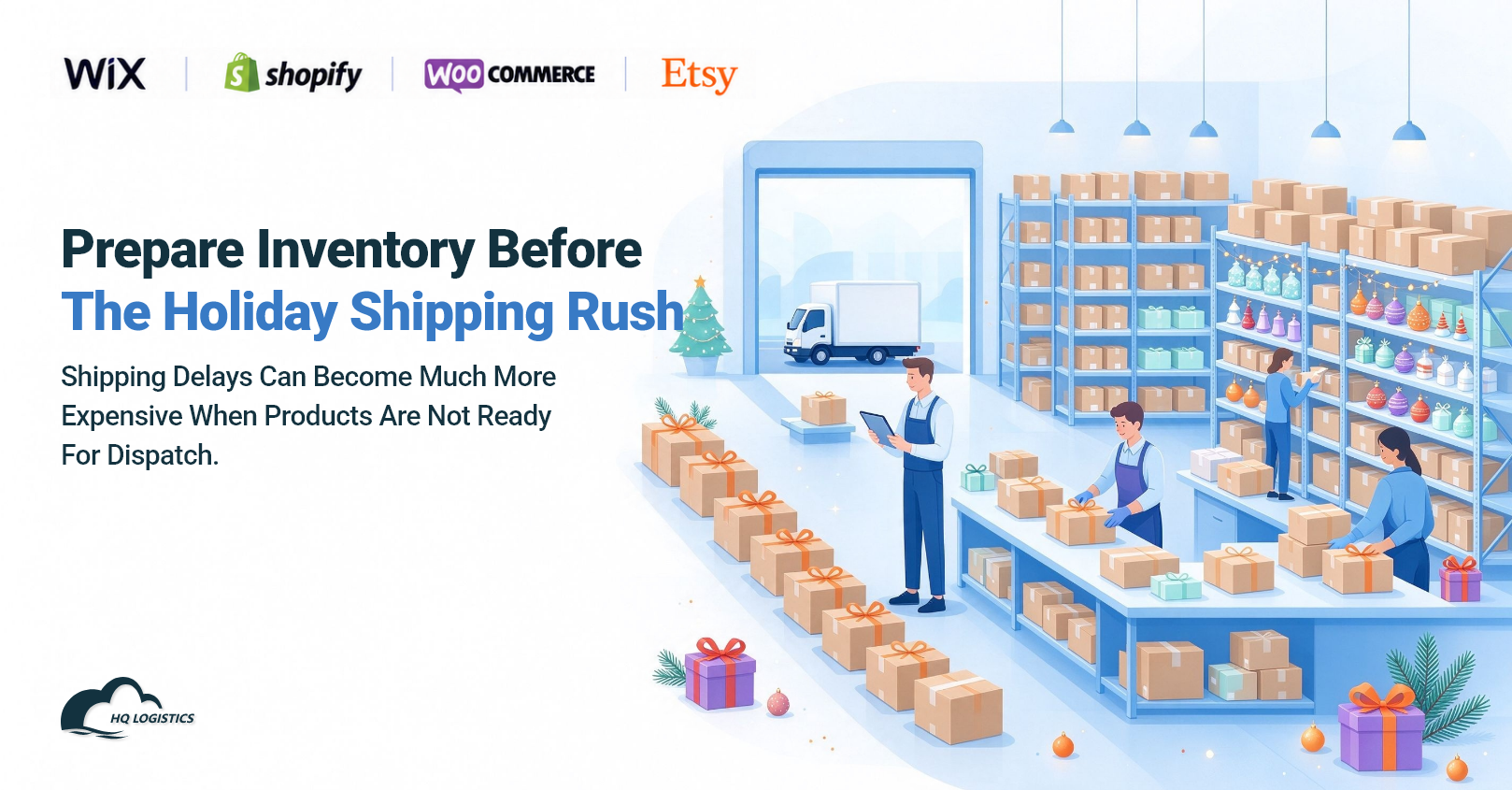
Shipping delays can become much more expensive when products are not ready for dispatch.
Even if your supplier finishes production on schedule, additional time may be needed for warehouse receiving, product inspection, labeling, sorting, and packaging.
To reduce unnecessary delays, prepare your inventory before the peak shipping period.
Here are several important steps:
Check inventory before dispatch
Confirm product quantities, SKU information, and packaging requirements before goods leave the factory.
Arrange warehouse receiving in advance
Share expected arrival dates, shipment details, and packing lists with your warehouse team so they can prepare for incoming goods.
Inspect products after receiving
Check product appearance, quantity, specifications, and packaging condition. Identify damaged, missing, or incorrect items before they enter available inventory.
Organize inventory by SKU
Clear SKU labels and accurate warehouse records make it easier to locate products and process orders.
Prepare packaging materials
Make sure shipping cartons, mailers, inserts, labels, and other packaging supplies are available before order volumes increase.
These steps help reduce warehouse bottlenecks and allow orders to move through the fulfillment process more efficiently.
International shipments can experience delays when customs documentation is incomplete or product information is inaccurate.
This is especially important for ecommerce sellers shipping products from China to the US, Europe, the UK, and other international markets.
Before arranging transportation, check the requirements for your destination country and product category.
Important details include:
Accurate product descriptions.
Correct HS codes and declared values.
Commercial invoices and packing lists.
Country-of-origin information where required.
Applicable import duties and taxes.
Product-specific certifications or documentation.
Shipping restrictions for batteries, cosmetics, supplements, and other special cargo.
For example, products containing lithium batteries may require specific handling and transportation documentation. Cosmetics and supplements may also be subject to destination-specific import and product compliance requirements.
Do not assume that a shipping route suitable for general merchandise will automatically accept every product category.
Confirm product eligibility, documentation requirements, and transportation arrangements before dispatch. This can help prevent avoidable customs problems and rejected shipments.
Even with careful planning, international shipping can still be affected by weather, customs inspections, carrier capacity, and unexpected operational issues.
That is why shipment tracking and customer communication are essential during the Christmas season.
Ecommerce sellers should establish a clear process for monitoring shipments from dispatch to final delivery.
Consider the following practices:
Track shipments regularly after dispatch.
Monitor unusual tracking gaps or status changes.
Follow up on shipments that exceed their expected transit time.
Contact logistics providers when delays occur.
Update customers when delivery estimates change.
Provide accurate tracking information through your ecommerce store.
Avoid promising delivery dates that your logistics provider cannot reliably support.
Instead, communicate realistic delivery windows and set customer expectations early. If you expect a delay, inform customers before they need to contact your support team.
Clear communication can help protect customer trust, even when transportation conditions are outside your control.

A good Christmas shipping strategy should include more than one solution.
If a supplier experiences production delays or a shipping route becomes congested, your business needs alternatives.
Consider preparing a backup plan that covers several possible situations.
Supplier delays
Identify alternative suppliers for important products or confirm whether your current supplier can prioritize urgent orders.
Inventory shortages
Maintain safety stock for best-selling products and establish clear reorder points.
Shipping disruptions
Evaluate alternative shipping routes or transportation methods when your original plan is no longer suitable.
Warehouse backlogs
Coordinate with your fulfillment provider to understand available processing capacity and expected order handling times.
Customer delivery issues
Prepare clear communication templates and procedures for delayed, lost, or damaged parcels.
Having backup arrangements in place can help your business respond faster instead of making urgent decisions after a problem occurs.
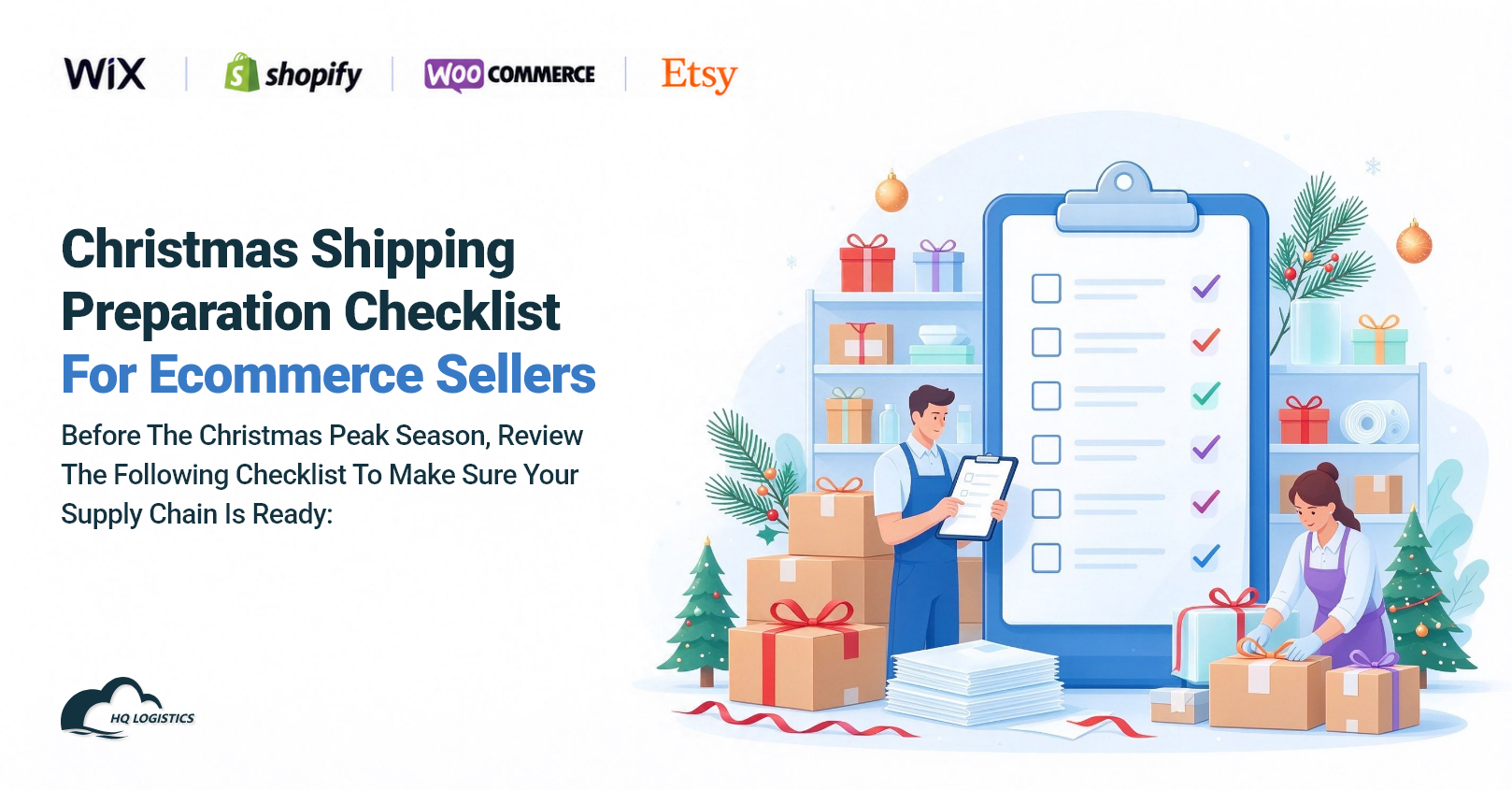
Before the Christmas peak season, review the following checklist to make sure your supply chain is ready:
Review previous holiday sales and forecast product demand.
Identify best-selling products and calculate safety stock.
Confirm supplier production capacity and delivery schedules.
Complete sample approval and quality checks.
Select suitable shipping methods for different products.
Confirm customs documents and product shipping eligibility.
Arrange warehouse receiving and inventory preparation.
Prepare packaging materials and order processing workflows.
Set up shipment tracking and customer notification procedures.
Establish backup suppliers and alternative shipping arrangements.
Completing these steps early can help reduce avoidable risks and improve supply chain coordination during the busiest time of the year.
Ideally, sellers should begin planning several months before the Christmas season. The exact timeline depends on product complexity, supplier production lead times, inventory requirements, and shipping methods. Products with longer manufacturing or transportation times should be prepared earlier.
There is no single best option for every product. Air freight is generally more suitable for urgent replenishment, while sea freight can be more cost-effective for larger shipments planned in advance. Express shipping may work for small, time-sensitive parcels.
Start by confirming supplier production schedules, preparing inventory early, checking product quality, and arranging shipping in advance. Accurate customs documentation and choosing suitable shipping routes are also important.
Yes. Safety stock can help protect businesses against unexpected demand increases, supplier delays, and transportation disruptions. The appropriate quantity depends on sales history, demand fluctuations, and replenishment lead time.
First, identify where the delay is happening, such as production, warehouse processing, customs clearance, or transportation. Then contact the relevant supplier or logistics provider, check alternative arrangements where possible, and communicate updated delivery expectations to customers.

Avoiding Christmas shipping delays requires more than choosing a fast shipping service. It starts with supplier coordination, accurate inventory planning, product quality control, warehouse preparation, and effective international shipping management.
For ecommerce sellers sourcing from China, connecting these processes can make a significant difference. When purchasing, inspection, inventory, and transportation are properly coordinated, businesses are better prepared to handle seasonal demand and unexpected disruptions.
At HQ LOGISTICS, we believe reliable supply chain management starts before products leave the factory. With better sourcing coordination, quality checks, inventory planning, and shipping preparation, ecommerce brands can build a more dependable operation for Christmas 2026 and beyond.
📩Email: zoye@fulfllment-cn.com
Our website:
https://www.cnfulfillment.com/
PREVIOUS RECOMMENDATIONS


holiday shipping delays| Christmas inventory planning | shipping from China | ecommerce holiday fulfillment | international shipping delays




Customer's favorable comments is our eternal motivation. We feel grateful for all the support and company.

Lorem ipsum dolor sit amet, consetetur sadipscing elitr, sed diam nonumy eirmod tempor invidunt ut labore et dolore magna aliquyam erat, sed diam voluptua.