
Q4 is the biggest growth opportunity of the year for many Shopify brands.
Black Friday.
Cyber Monday.
Christmas.
Holiday promotions.
More traffic can mean more orders—but it can also expose every weakness in your supply chain.
A product sells faster than expected.
Your supplier cannot replenish it quickly enough.
Your warehouse becomes overloaded.
Shipping times increase.
Customers start asking where their orders are.
And suddenly, the biggest challenge isn't getting more sales.
It's fulfilling them.
That is why more growing Shopify brands are moving beyond individual sourcing, warehousing, and fulfillment services and looking at an end-to-end supply chain strategy.
Instead of managing each stage separately, an end-to-end supply chain connects:
Sourcing → Production → Quality Control → Inventory → Warehousing → Fulfillment → Shipping → Customer Delivery
For Q4, that connection can make the difference between simply getting more orders and actually scaling profitably.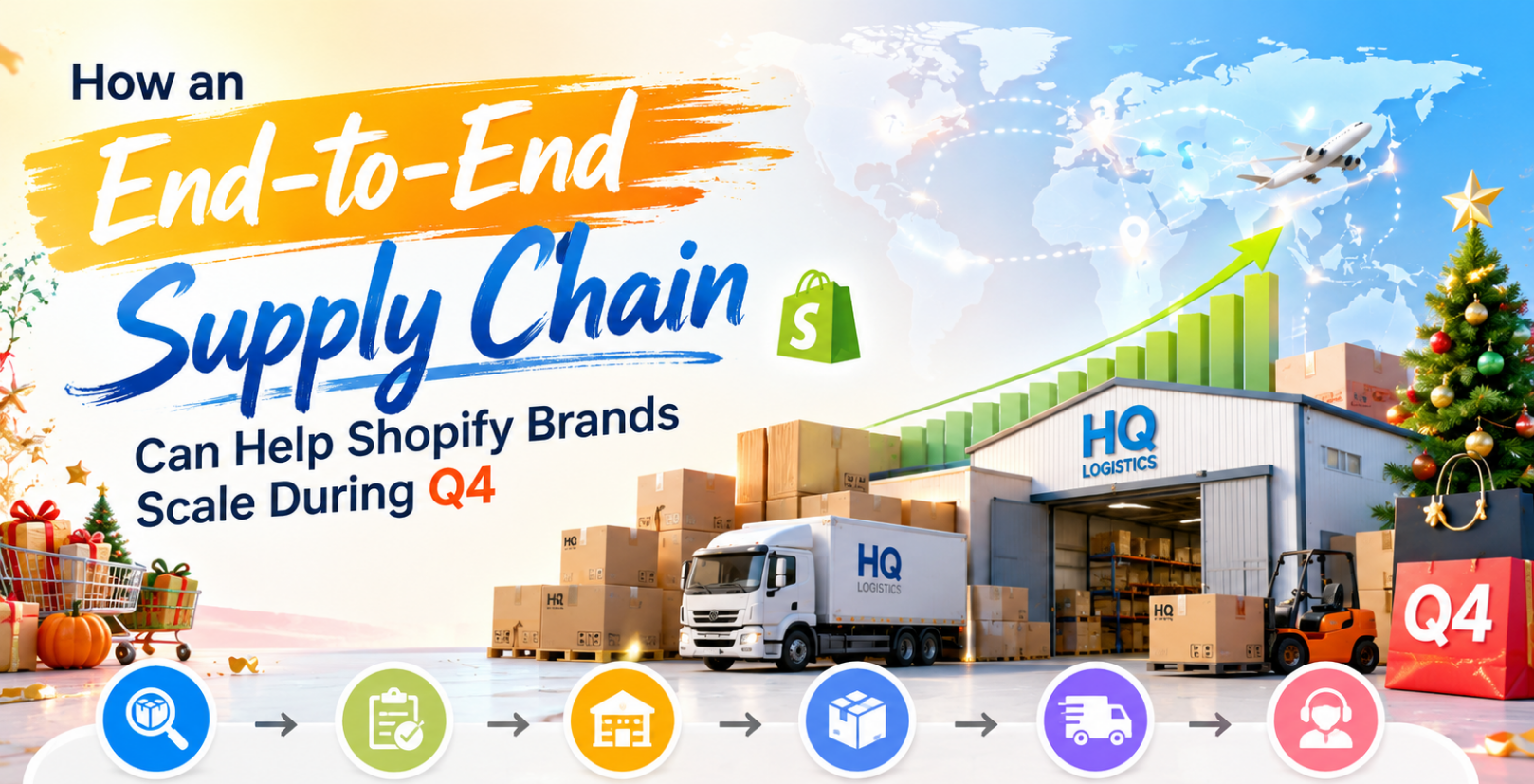
During normal months, a supply chain can often absorb small inefficiencies.
Q4 is different.
Demand can increase rapidly because of promotions, seasonal shopping, and major shopping events.
Shopify recommends preparing inventory early, mapping fulfillment processes, securing packaging supplies, and planning for holiday shipping and returns before peak demand arrives.
A typical Q4 chain might look like:
Ad Campaign → More Orders → Inventory Drops → Reorder → Supplier Production → International Shipping → Warehouse → Fulfillment → Customer
There are many opportunities for something to go wrong.
If one stage slows down, the rest of the chain can be affected.
That's why Q4 preparation shouldn't start with shipping.
It should start much earlier—with your supply chain.
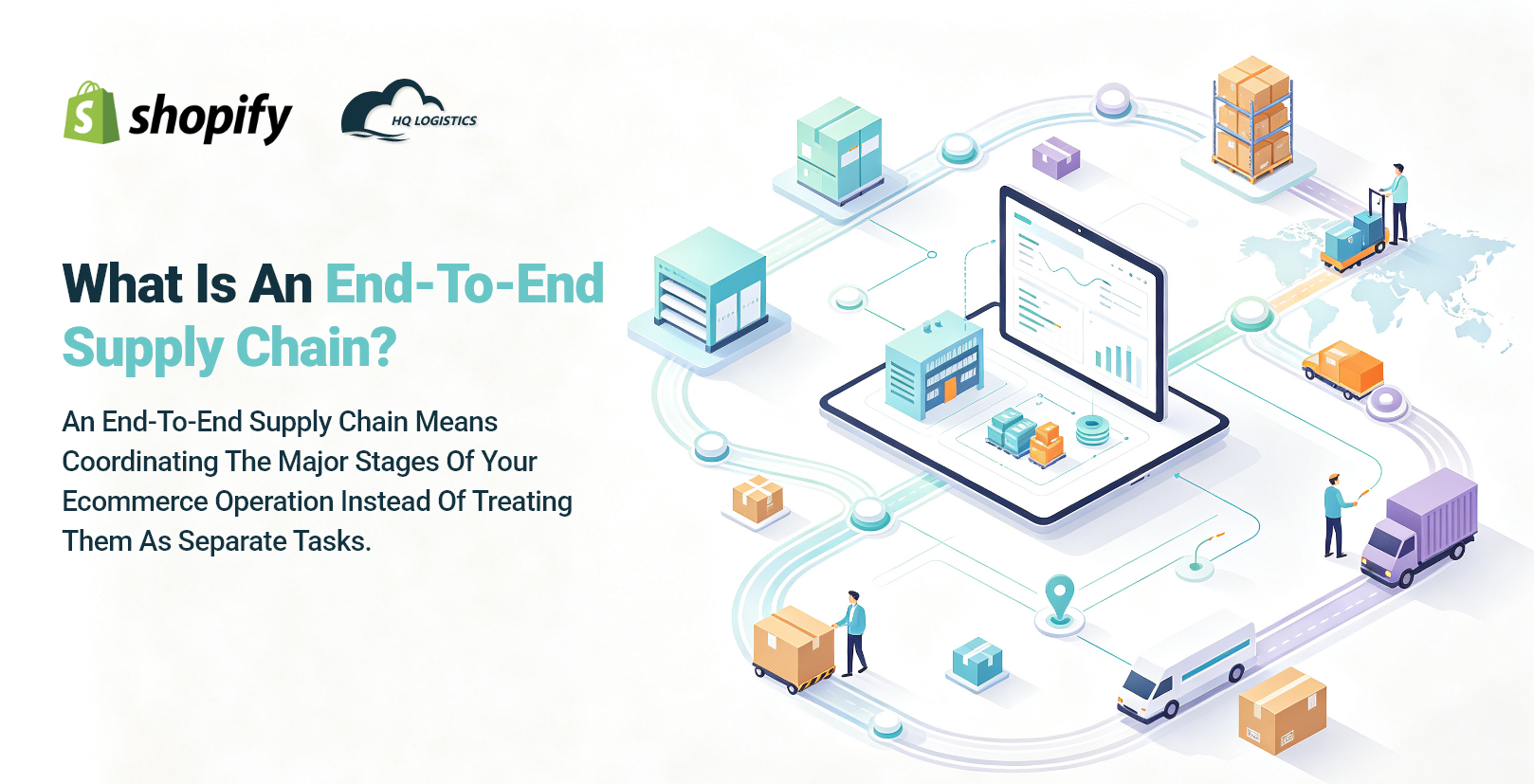
An end-to-end supply chain means coordinating the major stages of your ecommerce operation instead of treating them as separate tasks.
For a Shopify brand, this can include:
Finding reliable suppliers and competitive product costs.
Coordinating production schedules, lead times, and replenishment.
Inspecting products before they enter inventory or reach customers.
Forecasting demand and determining how much stock you need.
Storing inventory in the right locations based on customer demand.
Picking, packing, labeling, and processing orders efficiently.
Selecting appropriate shipping routes and carriers based on destination, cost, and delivery requirements.
Managing returned inventory and preparing the next inventory cycle.
The advantage is simple:
Every stage works toward the same goal.
Instead of asking, "How do I ship this order?"
You start asking:
"How do I move this product through the entire supply chain as efficiently as possible?"
Your Q4 profit doesn't start when an order is placed.
It starts when you purchase the product.
If your sourcing cost is too high, aggressive holiday promotions can quickly reduce your margin.
An end-to-end supply chain approach allows you to look beyond the first supplier quote.
You can evaluate:
Factory pricing | MOQ | Production capacity | Product quality | Lead time | Packaging options | Shipping costs | Replenishment speed
For proven products, factory-direct sourcing can also create opportunities to negotiate better pricing as order volume increases.
This matters even more during Q4 because your sales volume may be significantly higher than usual.
More orders should create more opportunities—not simply more operational costs.
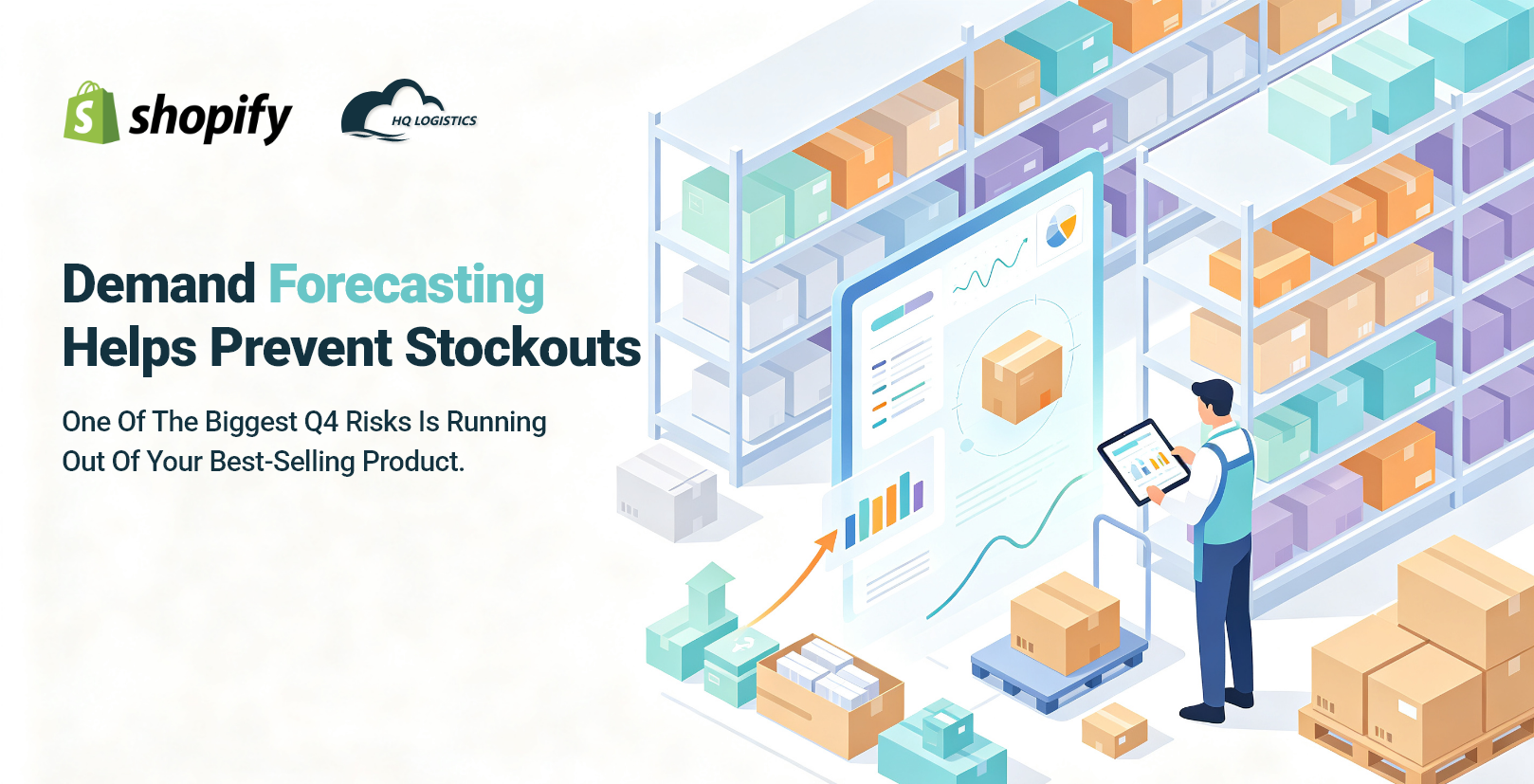
One of the biggest Q4 risks is running out of your best-selling product.
Imagine this:
Your Black Friday campaign performs 40% better than expected.
Your ads are converting.
Your customers are buying.
But your warehouse runs out of inventory.
The marketing campaign is still active, but you can't fulfill the orders.
That's a supply chain problem.
Shopify recommends using historical sales data, seasonal trends, promotions, and expected order volume to forecast demand. During peak periods, Shopify also recommends more frequent communication between merchants and fulfillment providers.
Your Q4 forecast should consider:
Previous Q4 Sales + Current Growth + Marketing Plans + Product Trends + Promotion Impact
Don't aim for perfect accuracy.
Instead, build a flexible forecast with enough safety stock to handle unexpected demand.
A winning product is only valuable if you can keep it in stock.
During Q4, suppliers may face increased production demand from many brands at the same time.
That can lead to:
Longer production lead times | Material shortages | Higher factory workloads | Delayed replenishment | Packaging delays
If you're managing several suppliers yourself, this can become difficult very quickly.
An end-to-end partner can help coordinate supplier communication and monitor production before inventory becomes a problem.
Instead of reacting after stock reaches zero, you can identify the issue earlier.
The goal is proactive replenishment—not emergency purchasing.
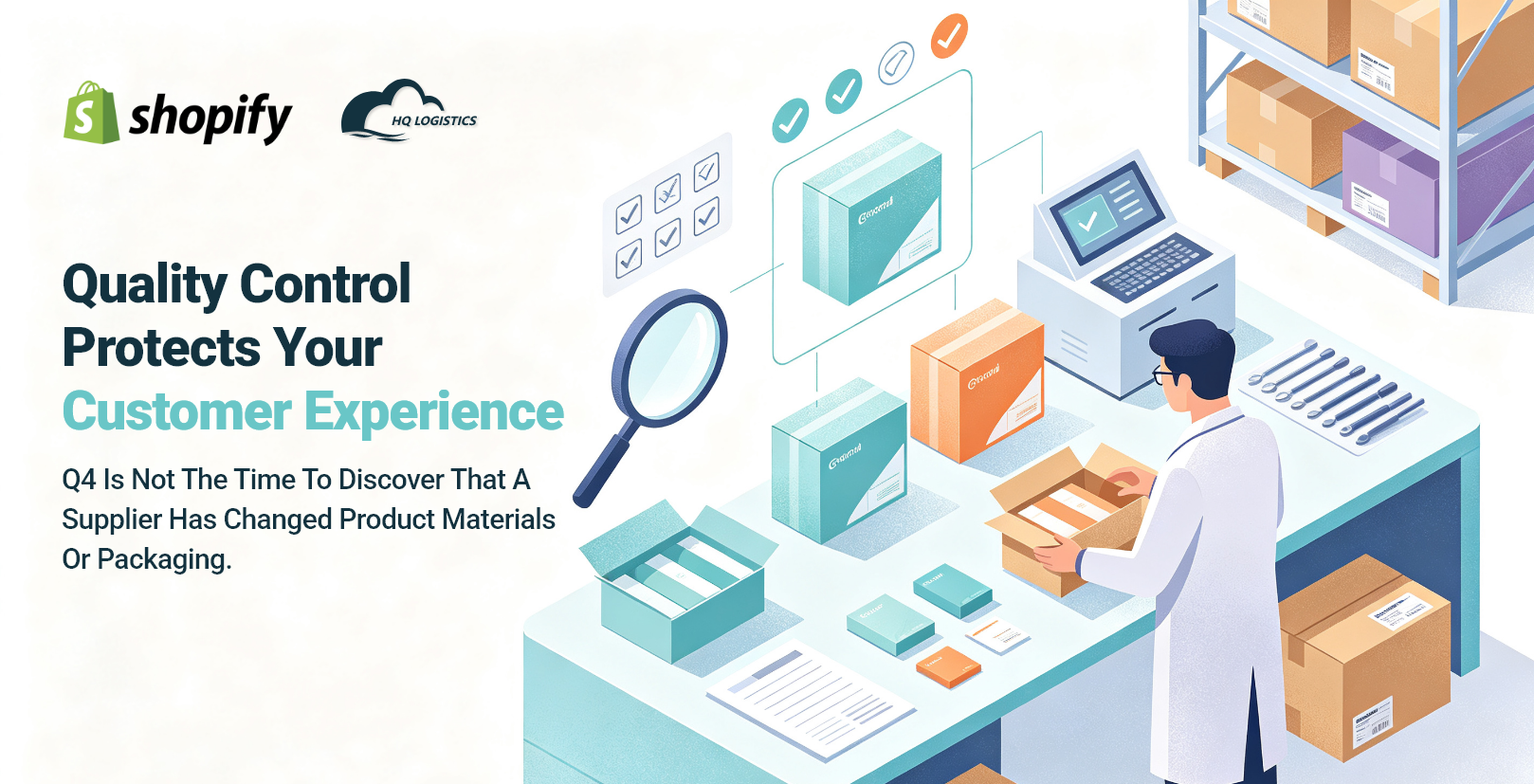
Q4 is not the time to discover that a supplier has changed product materials or packaging.
When order volume increases, even a small defect rate can create a large number of customer complaints.
Quality control should happen before products enter your fulfillment inventory.
Depending on the product, inspections can include:
Product appearance | Dimensions | Materials | Functionality | Packaging | Accessories | Quantity | Labeling
An end-to-end supply chain connects QC directly with sourcing and fulfillment.
If a quality issue is identified, the supplier can be contacted before thousands of defective units reach customers.
That can save both money and your brand reputation.
Having enough inventory is only part of the solution.
Where that inventory is stored also matters.
If most of your customers are in the US, keeping all inventory in China may create unnecessary delivery time.
If most of your customers are in Europe, European inventory positioning may make more sense.
A potential strategy could look like:
China → Sourcing + Main Inventory
US Warehouse → US Orders
EU Warehouse → European Orders
Other Regional Warehouses → Local Demand
Shopify notes that order routing can help send orders to fulfillment centers closer to customers, while its cross-border fulfillment guidance recommends stocking inventory in overseas warehouses or with freight forwarders before peak periods.
The right strategy depends on:
Customer locations | Sales volume | Product size and weight | Shipping costs | Inventory turnover | Replenishment lead time
The objective isn't to put inventory everywhere.
It's to put the right inventory in the right place.
Your warehouse may handle 100 orders a day without any issues.
But what happens when your Black Friday campaign generates 1,000?
Or 3,000?
Or more?
Peak season can quickly expose warehouse bottlenecks.
Common problems include:
Slow picking | Packing delays | Insufficient staff | Packaging shortages | Inventory location issues | Order backlogs | Tracking delays
Shopify recommends reviewing fulfillment workflows before peak season and considering third-party fulfillment when internal teams lack the capacity to handle seasonal order increases.
An end-to-end fulfillment partner should be able to scale warehouse operations with your order volume.
That means having:
People + Space + Systems + Processes + Shipping Capacity
ready before the order spike arrives.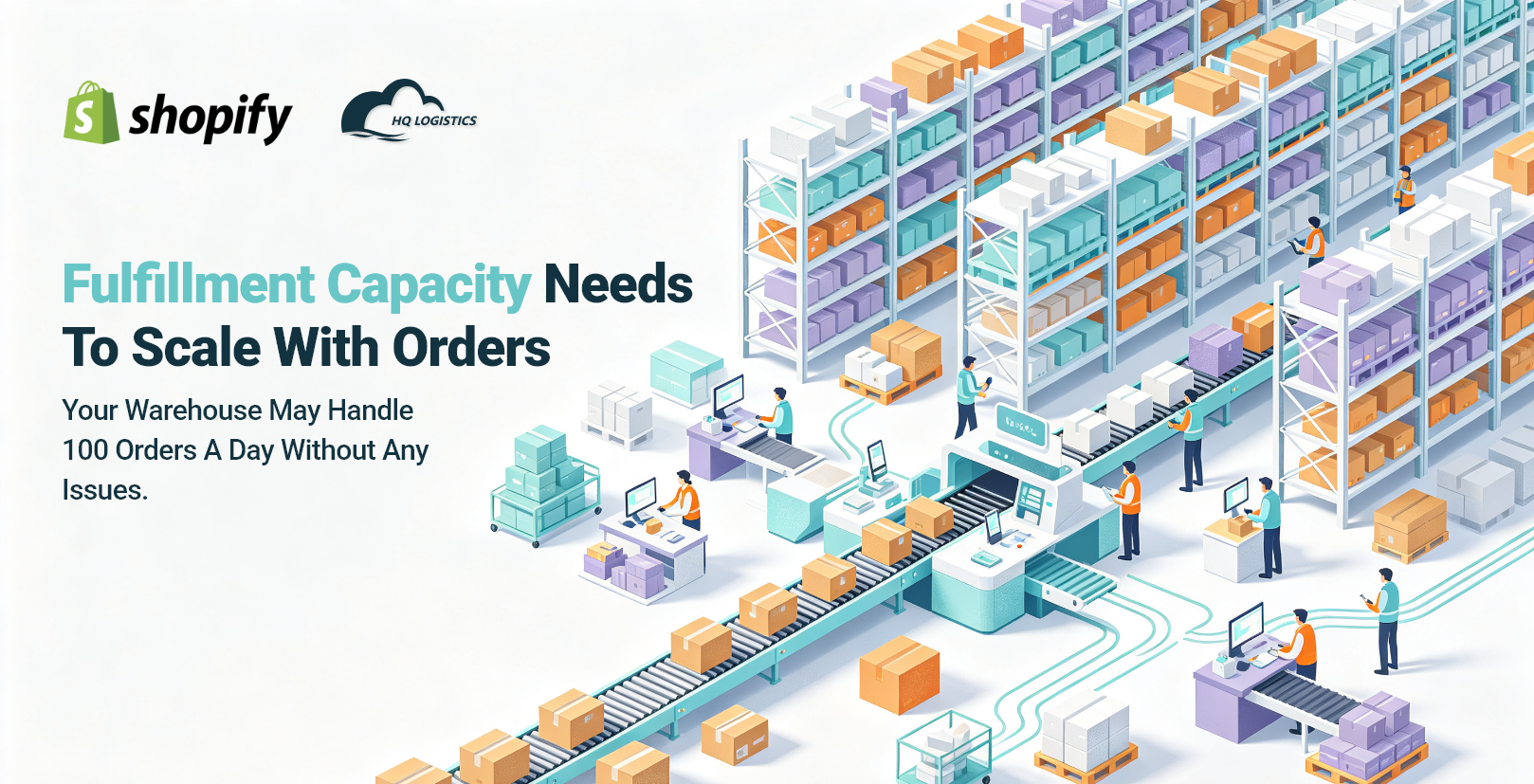
During peak season, relying on one shipping route can be risky.
Carrier capacity, customs, weather, and regional congestion can all affect delivery times.
Shopify's cross-border fulfillment guidance specifically recommends planning ahead, diversifying carriers, updating delivery estimates, and considering overseas inventory before peak periods.
A stronger shipping strategy can include:
Standard shipping | Express options | Different carrier routes | Regional fulfillment | Alternative transportation options | Backup shipping channels
The goal isn't always to choose the fastest shipping method.
It's to have the right option for different situations.
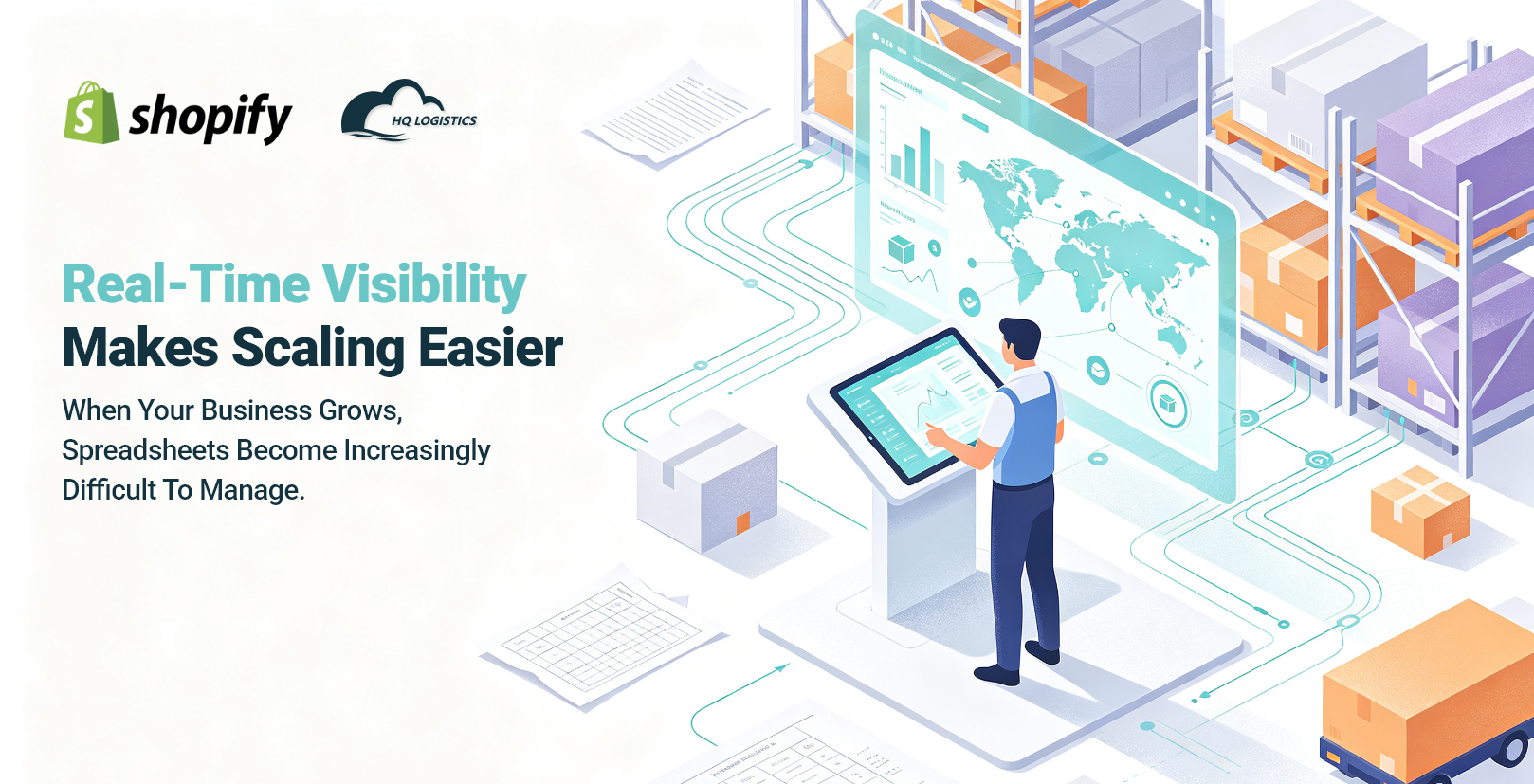
When your business grows, spreadsheets become increasingly difficult to manage.
You need to know:
How much inventory do I have?
Which SKU is selling fastest?
Where is the inventory located?
Which orders have shipped?
Which orders are delayed?
When should I reorder?
Technology can connect these pieces.
With Shopify integration, WMS, ERP, and real-time tracking systems, merchants can have better visibility across orders and inventory.
This helps turn supply chain management from a reactive process into a data-driven process.
Instead of discovering a problem after customers complain, you can identify it earlier.
What's the difference?
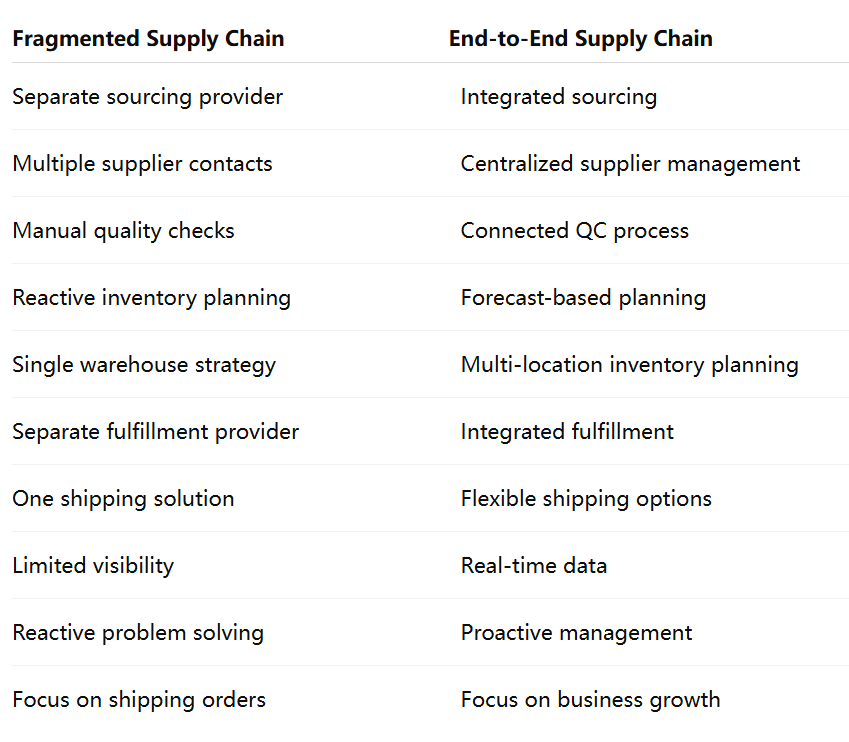
The difference isn't simply the number of services.
It's how well those services work together.
You don't need to completely redesign your business overnight.
Start with the most important products and markets.
Review your previous sales data and identify:
Best-selling SKUs | Highest-margin products | Fastest-growing products | Seasonal products | Products with frequent stockouts
Shopify recommends reviewing historical sales and inventory performance to identify fast-moving and seasonal products before peak periods.
Estimate Q4 demand based on:
Previous sales | Current growth | Planned promotions | Advertising spend | New product launches
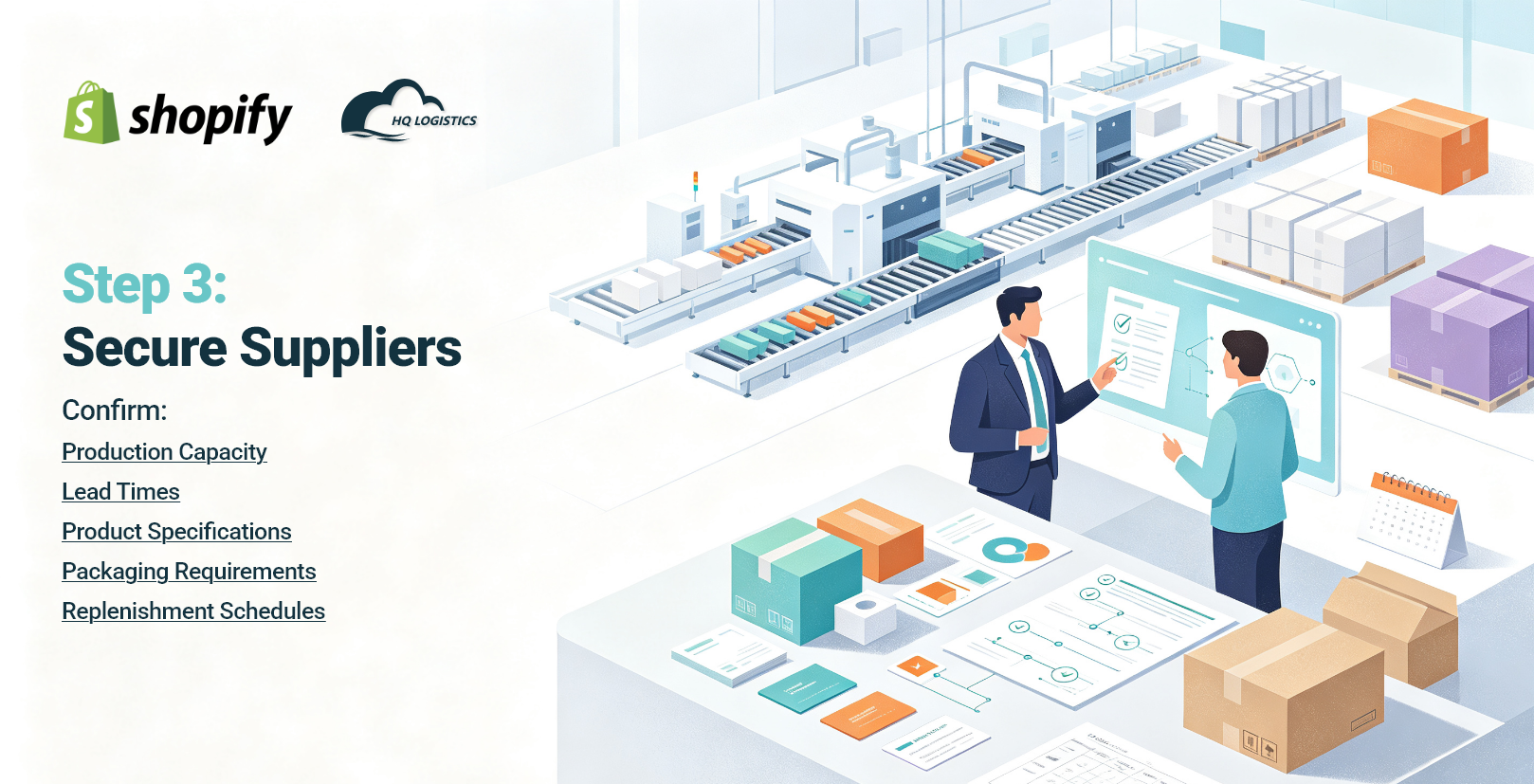
Confirm:
Production capacity | Lead times | Product specifications | Packaging requirements | Replenishment schedules
Determine:
Initial Stock + Safety Stock + Replenishment Stock
Avoid both extremes:
Too little inventory → Lost sales
Too much inventory → Cash-flow pressure
Analyze where your customers are located and determine whether China or overseas warehousing makes more sense for each market.
Before Q4 gets busy, test:
Pick and pack speed | Packaging | Order accuracy | Tracking synchronization | Shipping routes
Have alternatives for:
Suppliers | Carriers | Shipping routes | Warehouses | Packaging materials
A backup plan is not a sign that you expect failure.
It's a sign that you're prepared for growth.
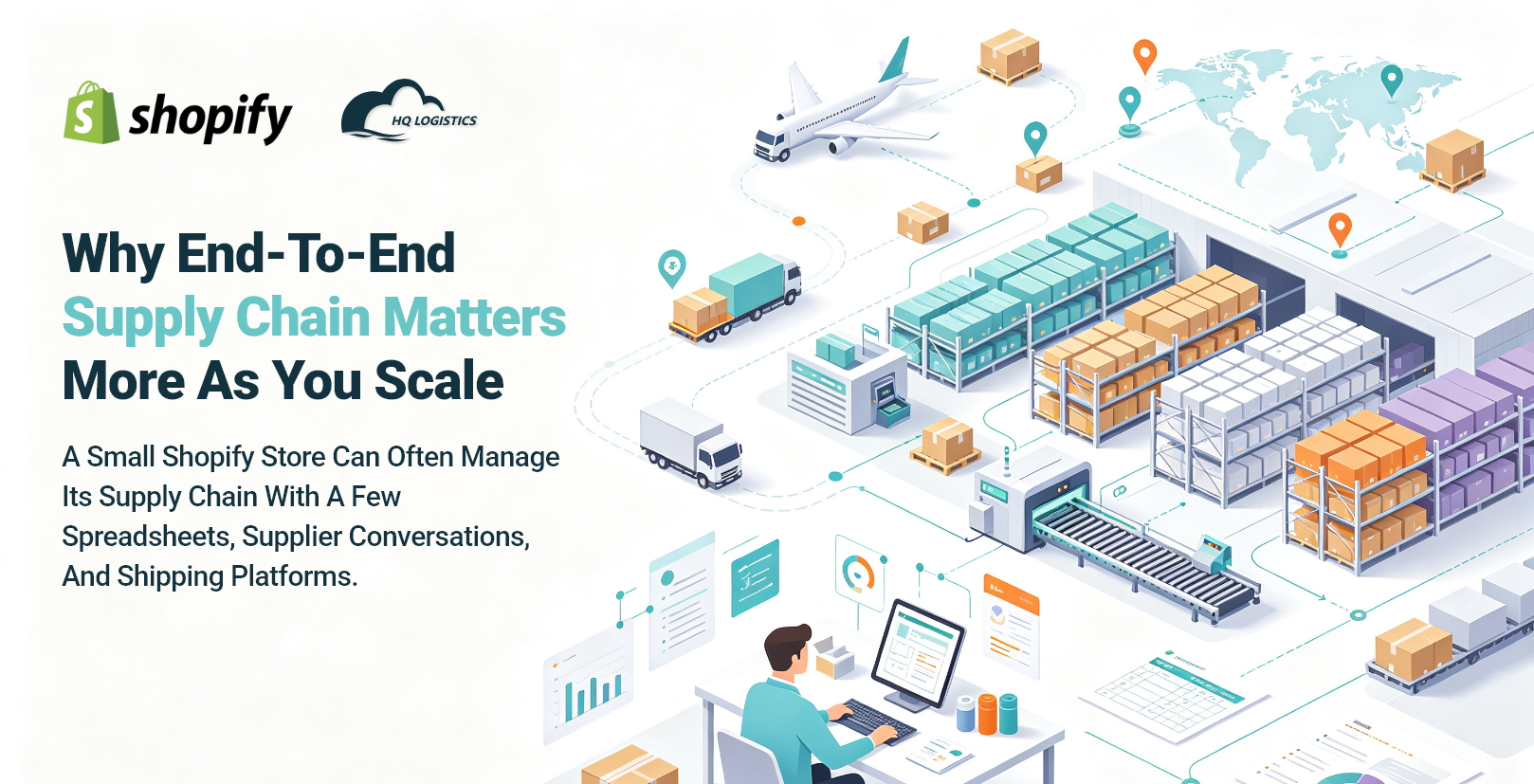
A small Shopify store can often manage its supply chain with a few spreadsheets, supplier conversations, and shipping platforms.
A growing brand cannot rely on that forever.
As order volume increases, complexity increases too.
10 Orders/Day
→ Simple sourcing and fulfillment may be enough.
100 Orders/Day
→ Inventory and warehouse management become more important.
500+ Orders/Day
→ Supplier management, forecasting, warehouse capacity, technology, and shipping strategy become critical.
At this stage, your fulfillment partner should not simply ask:
"How many orders do you need us to ship?"
They should ask:
"What are you planning to sell next month?"
"Which products are growing fastest?"
"Where are your customers located?"
"How much inventory should we prepare?"
"What happens if your Black Friday sales exceed the forecast?"
That's the difference between fulfillment execution and supply chain management.
For growing Shopify brands, HQ connects the major stages of the supply chain under one system.
Instead of managing sourcing, suppliers, quality control, warehousing, fulfillment, and shipping separately, brands can build a more connected workflow:
China Sourcing → Quality Control → Inventory → Customization → Warehousing → Fulfillment → Global Shipping
HQ can support:
Factory-direct sourcing | No-MOQ product testing | Supplier management | Quality inspection | Product photography | Custom packaging | Private labeling | China warehousing | Overseas warehousing | Shopify integration | Automated order fulfillment | Real-time inventory and tracking | Global shipping solutions | Inventory planning and replenishment
This approach gives Shopify brands more than a place to store and ship products.
It provides a supply chain designed to support growth.
Before your biggest sales period arrives, ask:
☐ Are my suppliers reliable?
☐ Can they handle increased production?
☐ Have I negotiated competitive pricing?
☐ Have I forecast Q4 demand?
☐ Do I have enough safety stock?
☐ Are my bestsellers prioritized?
☐ Is inventory stored close to key customers?
☐ Is there enough warehouse capacity?
☐ Are packaging materials ready?
☐ Can my warehouse handle peak order volume?
☐ Have I tested pick-and-pack processes?
☐ Is tracking synchronized automatically?
☐ Do I have multiple shipping options?
☐ Are delivery times realistic?
☐ Do I have backup routes?
☐ Is inventory updated in real time?
☐ Are Shopify orders automatically synced?
☐ Can I monitor fulfillment performance?
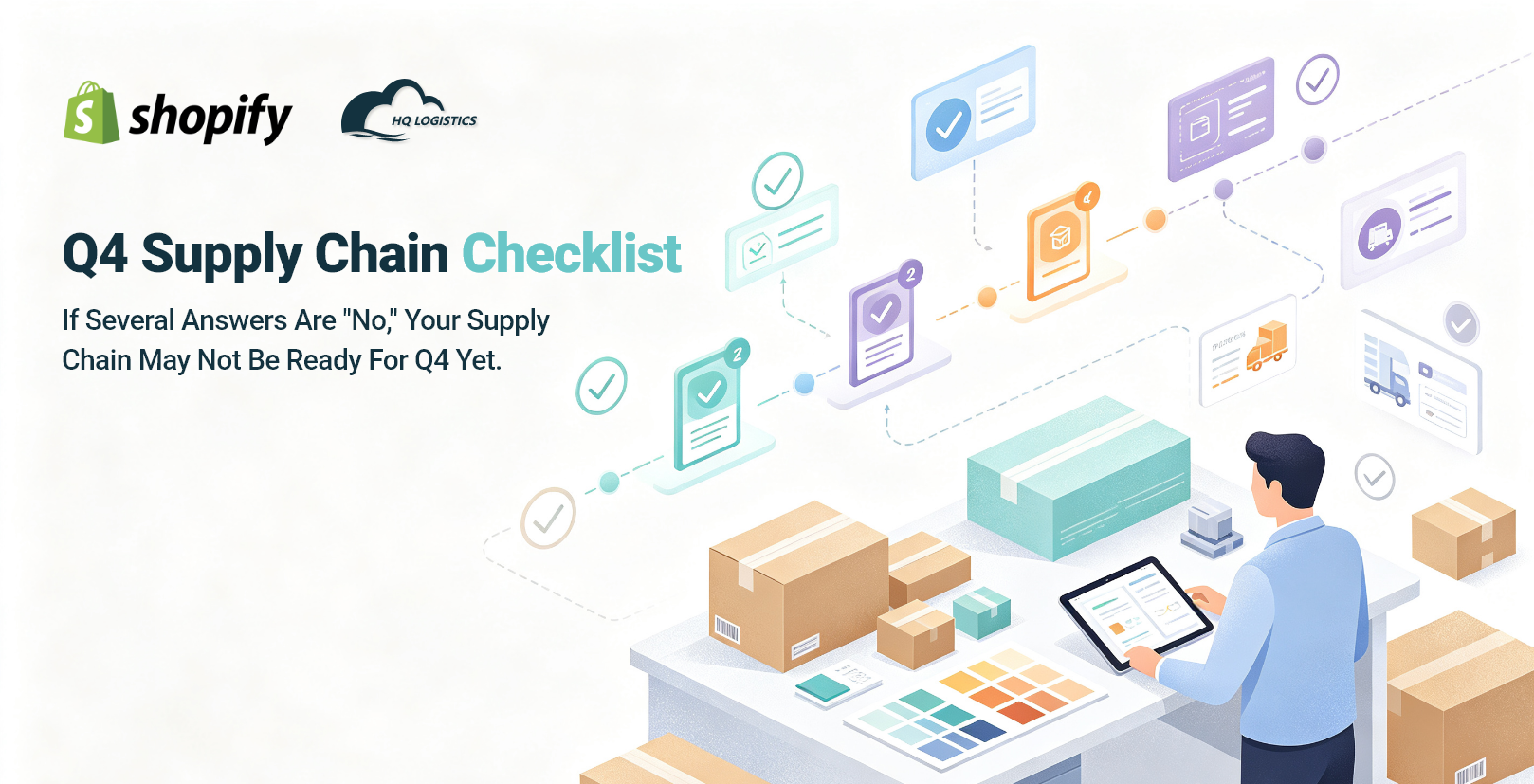
If several answers are "no," your supply chain may not be ready for Q4 yet.
Q4 growth doesn't happen because of marketing alone.
Your ads can generate demand.
Your products can attract customers.
Your Shopify store can convert them.
But your supply chain has to deliver on the promise.
An end-to-end supply chain connects the entire journey:
Source Better → Plan Smarter → Stock Earlier → Fulfill Faster → Ship Reliably → Scale With Confidence
For Shopify brands preparing for Black Friday, Cyber Monday, Christmas, and the rest of Q4, the earlier you connect these pieces, the easier it becomes to handle growth.
Don't wait for your order volume to expose your supply chain weaknesses.
Build the system before the rush.
This Q4, don't just prepare to sell more. Prepare to fulfill more.

An end-to-end supply chain connects product sourcing, supplier management, quality control, inventory planning, warehousing, fulfillment, shipping, and related operations into one coordinated process.
Q4 can bring significant demand increases. A connected supply chain helps brands prepare inventory, coordinate suppliers, scale fulfillment capacity, and manage shipping before order volume peaks.
The earlier, the better. Inventory forecasting, supplier coordination, warehouse planning, and shipping strategy should be established before major campaigns launch. Shopify recommends preparing inventory and fulfillment processes ahead of holiday demand.
For brands with significant demand in specific regions, overseas warehousing can help position inventory closer to customers and reduce dependence on cross-border shipping during peak periods. The right approach depends on sales distribution, inventory turnover, product characteristics, and replenishment lead times.
Look beyond shipping prices. Evaluate sourcing capabilities, supplier management, quality control, inventory planning, warehouse capacity, technology integration, custom packaging, shipping options, and the partner's ability to scale with your order volume.
📩Email: zoye@fulfllment-cn.com
PREVIOUS RECOMMENDATIONS


end-to-end supply chain, Shopify supply chain, Q4 fulfillment, Shopify fulfillment, Q4 inventory planning, ecommerce supply chain management, Black Friday fulfillment, Shopify logistics, global fulfillment, overseas warehousing, Shopify 3PL, ecommerce fulfillment partner




Customer's favorable comments is our eternal motivation. We feel grateful for all the support and company.

Lorem ipsum dolor sit amet, consetetur sadipscing elitr, sed diam nonumy eirmod tempor invidunt ut labore et dolore magna aliquyam erat, sed diam voluptua.