
Peak season can bring some of the biggest sales opportunities of the year for Shopify sellers.
But higher demand also creates higher supply chain pressure.
More orders. Faster inventory turnover. Longer supplier lead times. Higher fulfillment volumes. More pressure on shipping capacity.
And one problem can quickly turn into another:
More sales → Faster inventory depletion → Stockout → Missed orders → Lost revenue
That's why peak season inventory planning should start before the rush begins.
Shopify recommends using historical sales, seasonal trends, promotions, market conditions, and supplier lead times to forecast demand and avoid both stockouts and unnecessary excess inventory.
For Shopify sellers, preparing early means more than simply ordering more products.
You need to coordinate:
Product Selection → Demand Forecasting → Sourcing → Inventory → Warehousing → Fulfillment → Shipping
In this guide, we'll explain 7 practical ways to prepare your Shopify store for peak season and build a more flexible inventory strategy.
Peak season demand is difficult to predict.
A product that sells 20 units per day in September could suddenly sell 50, 100, or more during a major promotional period.
At the same time, suppliers and logistics providers are also dealing with higher demand.
That means waiting until sales spike before placing an inventory order can create unnecessary risk.
You may face:
· Supplier production delays
· Longer lead times
· Higher transportation costs
· Warehouse capacity pressure
· Stockouts
· Rush replenishment
· Slower customer delivery
Shopify's seasonal inventory guidance points out that sellers need to balance two major risks: running out of inventory and carrying too much unsold stock.
The goal isn't:
“Buy as much inventory as possible.”
The goal is:
“Have the right products, in the right quantity, at the right location, at the right time.”
The easiest place to start your peak season inventory plan is your own store data.
Your previous peak season can tell you a lot about what customers are likely to buy again.
Review:
· Last year's monthly sales
· Top-selling SKUs
· Daily sales velocity
· Inventory turnover
· Stockout dates
· Product return rates
· Average order value
· Sales by country
· Sales by channel
· Promotional performance
Shopify recommends looking at historical sales alongside seasonal patterns and other demand signals when building an inventory forecast.
Divide your products into three groups.
Products with strong and consistent sales.
These deserve the highest inventory priority.
Products showing increasing demand but with less predictable sales.
Prepare enough stock to support growth while avoiding excessive inventory.
New or experimental products without enough sales history.
Keep initial inventory relatively controlled and scale after real sales data becomes available.
This simple classification can help you avoid treating every SKU the same.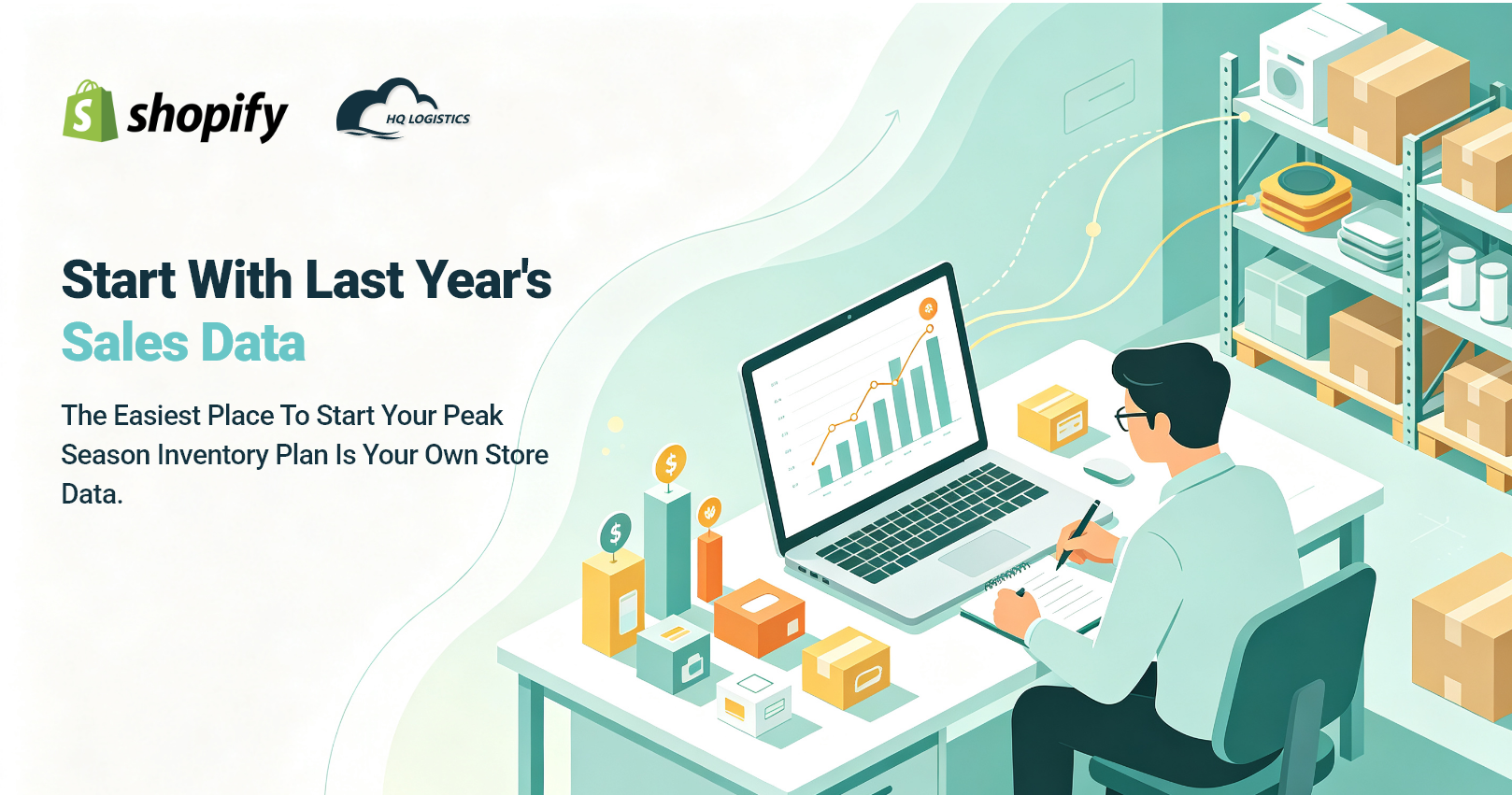
Historical data is useful, but it shouldn't be your only input.
Your upcoming peak season may look very different from last year.
Your forecast should also consider:
· Expected year-over-year growth
· New product launches
· Advertising plans
· Influencer campaigns
· Promotional events
· Seasonal trends
· Product price changes
· Market demand
· Customer locations
· Supplier lead times
Shopify's 2026 inventory guidance similarly recommends combining historical data with seasonality, promotions, market dynamics, customer behavior, and supplier lead times.
Start with your historical daily sales.
Then adjust based on expected growth.
For example:
Last year's average daily sales: 100 units
Expected growth: +30%
Forecast: 130 units/day
You can then add a safety buffer based on supplier and logistics risk.
The exact number will depend on your business, but the principle is simple:
Forecast demand → Add risk buffer → Plan inventory
Don't forget to update your forecast as real sales data comes in.
Forecasting isn't a one-time task.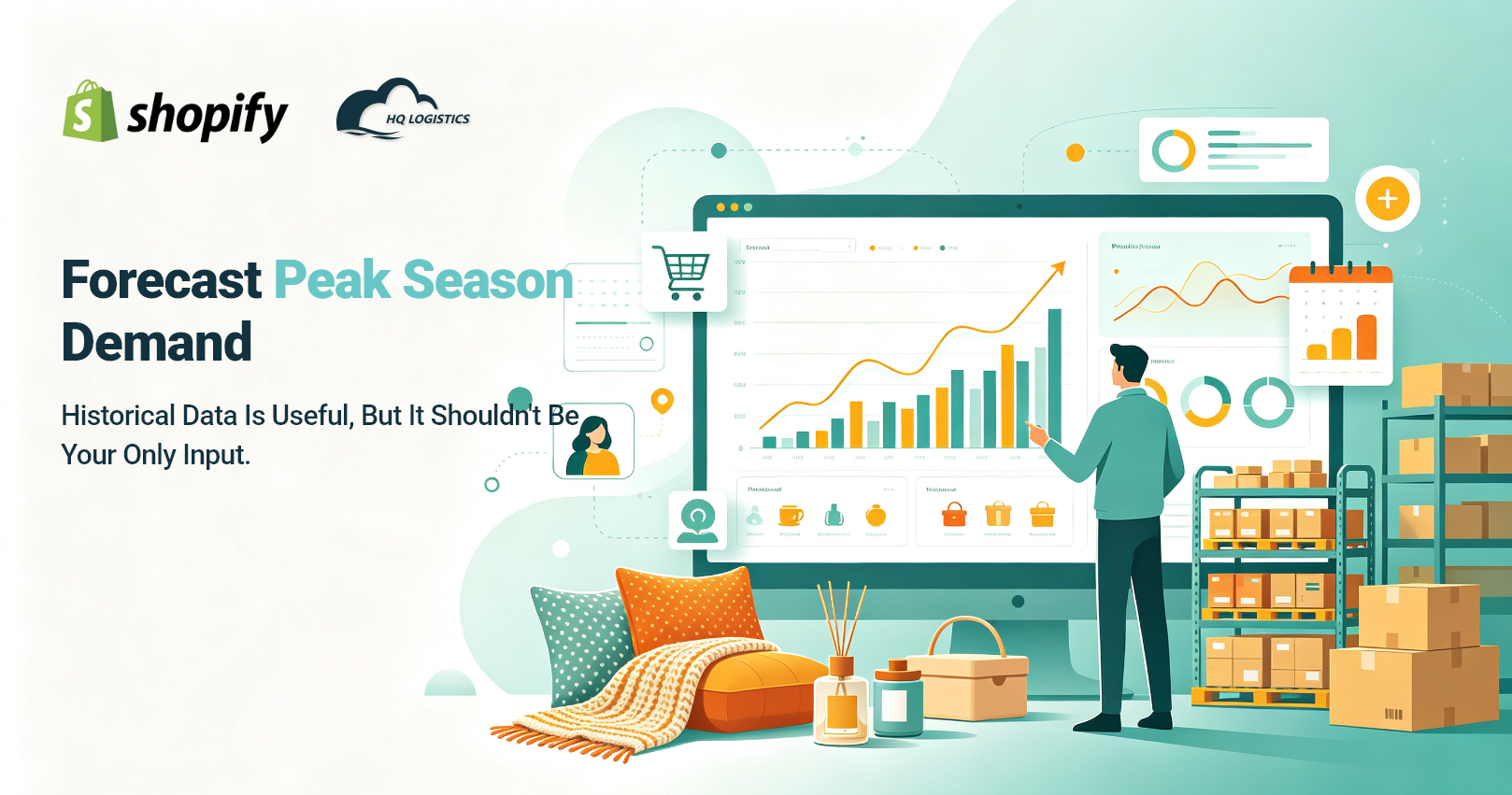
Peak season can create unexpected demand spikes.
Even a strong forecast can be wrong.
That's why your bestsellers should have a safety stock buffer.
Safety stock is additional inventory held to reduce the risk of running out when demand is higher than expected or replenishment takes longer than planned.
Shopify provides a common approach for calculating safety stock based on maximum daily sales and maximum lead time.
A simple inventory framework is:
Lead Time Demand + Safety Stock = Reorder Point
For example:
Average daily sales: 100 units
Supplier lead time: 15 days
Lead time demand:
100 × 15 = 1,500 units
If you decide to maintain 500 units of safety stock:
1,500 + 500 = 2,000 units
That means you could set your reorder point around 2,000 units.
The actual calculation should reflect your historical sales, supplier reliability, logistics lead times, and risk tolerance.
Your bestsellers may need more protection.
Slow-moving products may need much less.
This is another reason why SKU segmentation matters.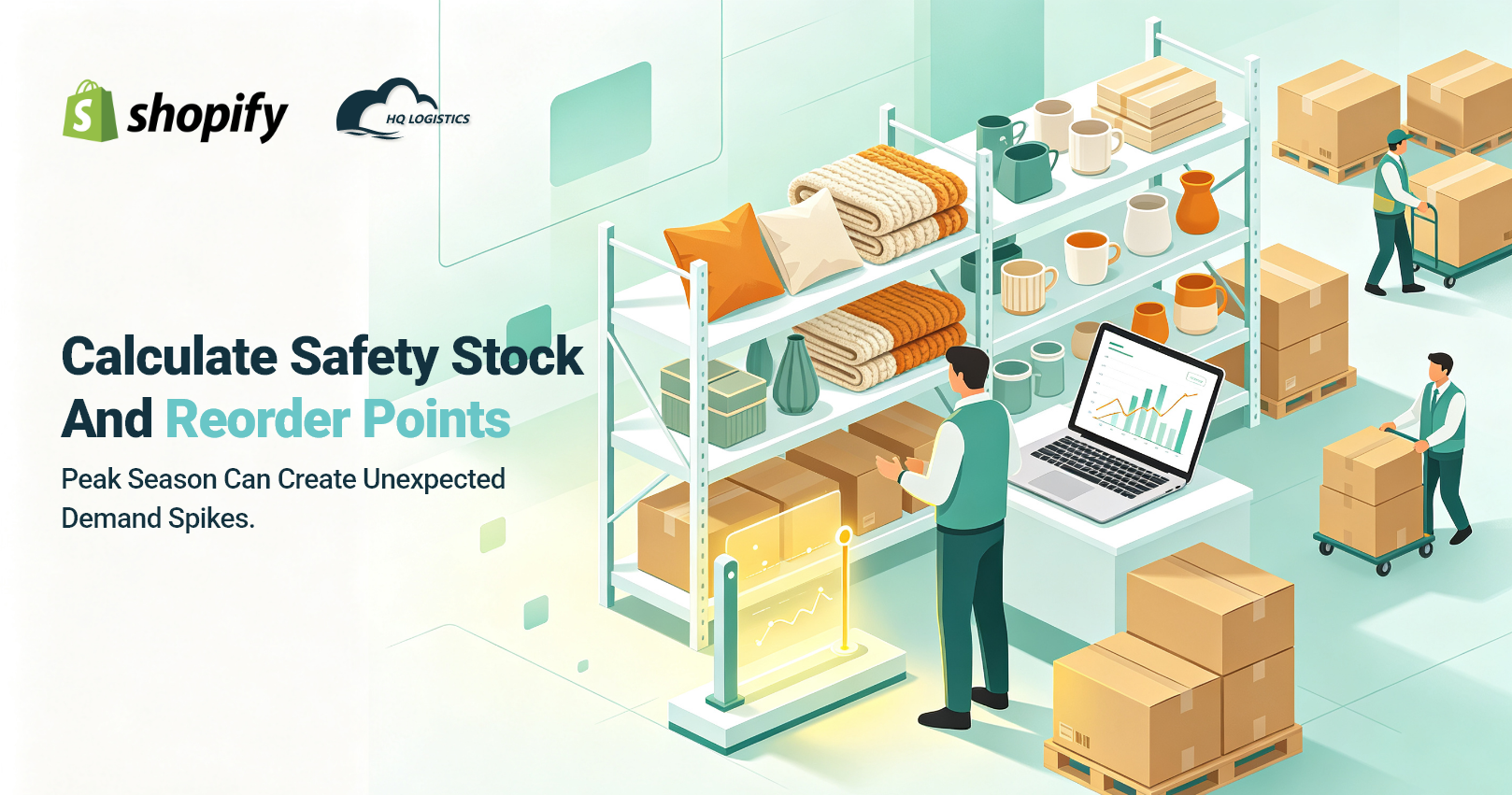
Inventory planning is only useful if your suppliers can actually deliver the products.
As demand increases, supplier production capacity can become a major bottleneck.
Before peak season, review:
· Production capacity
· Minimum order quantity
· Production lead time
· Replenishment speed
· Product quality
· Packaging requirements
· Communication speed
· Backup supplier availability
For your most important products, consider preparing:
Primary Supplier → Backup Supplier → Approved Product Specification → QC Standard
If your main supplier experiences a production problem, having an approved alternative can reduce the time needed to react.
This is particularly important for products that are expected to drive a large percentage of your peak-season revenue.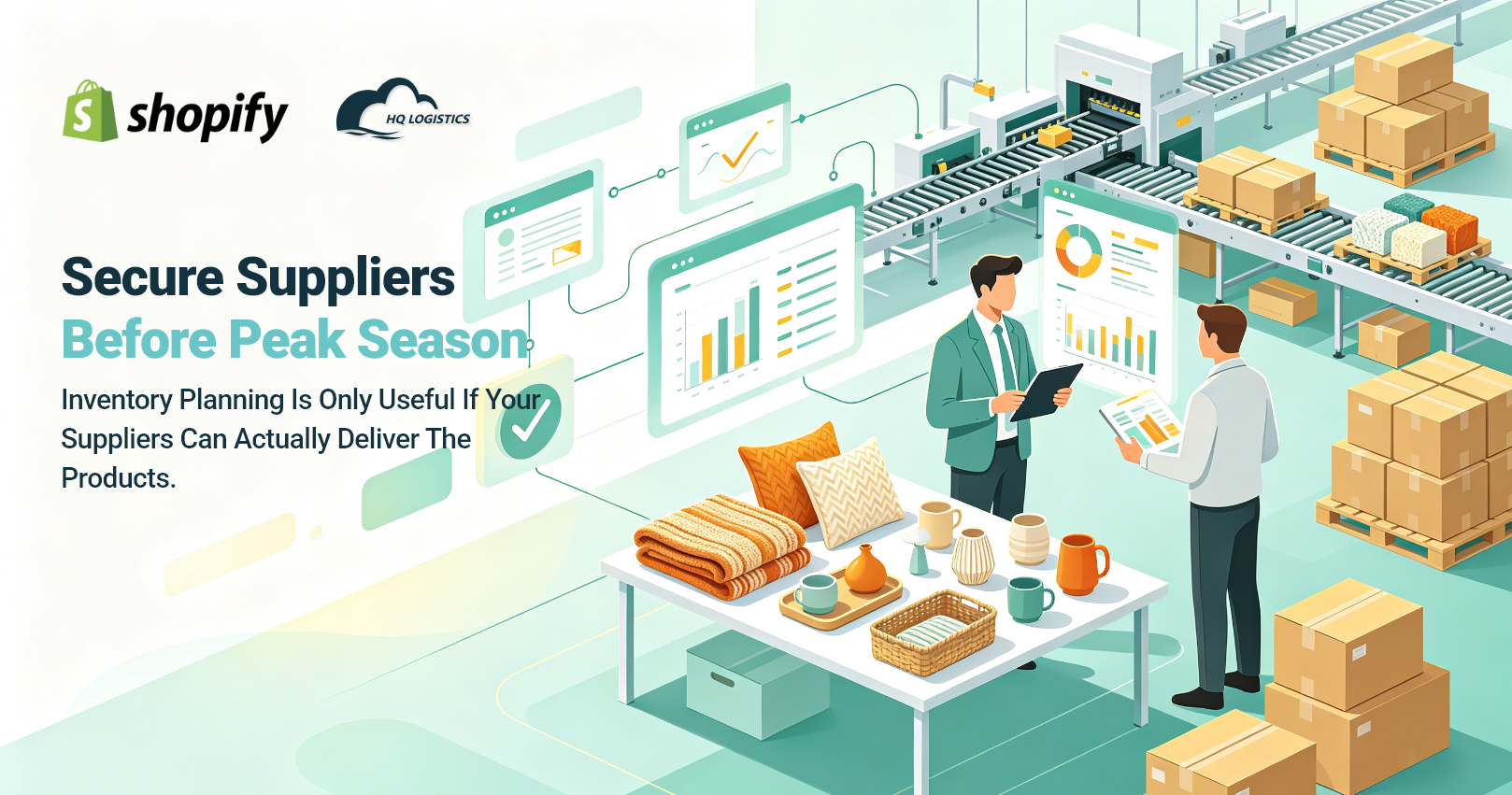
One of the biggest mistakes Shopify sellers make is waiting for peak-season sales before preparing inventory.
By the time demand becomes obvious, your supplier may already have a long production queue.
The better approach is:
Forecast → Order → Inspect → Store → Fulfill
Shopify's holiday shipping guidance specifically recommends preparing inventory early and reviewing previous peak-season bestsellers, turnover, and products that sold out too quickly.
· Review previous sales
· Identify potential bestsellers
· Forecast demand
· Confirm suppliers
· Calculate safety stock
· Review logistics routes
· Place inventory orders
· Complete product inspections
· Prepare packaging
· Move selected inventory to target markets
· Test fulfillment workflows
· Monitor inventory daily
· Track sales velocity
· Replenish fast-moving SKUs
· Adjust warehouse allocation
· Monitor shipping performance
The exact timeline will vary by product and destination, but the principle remains:
Prepare before demand peaks, not after.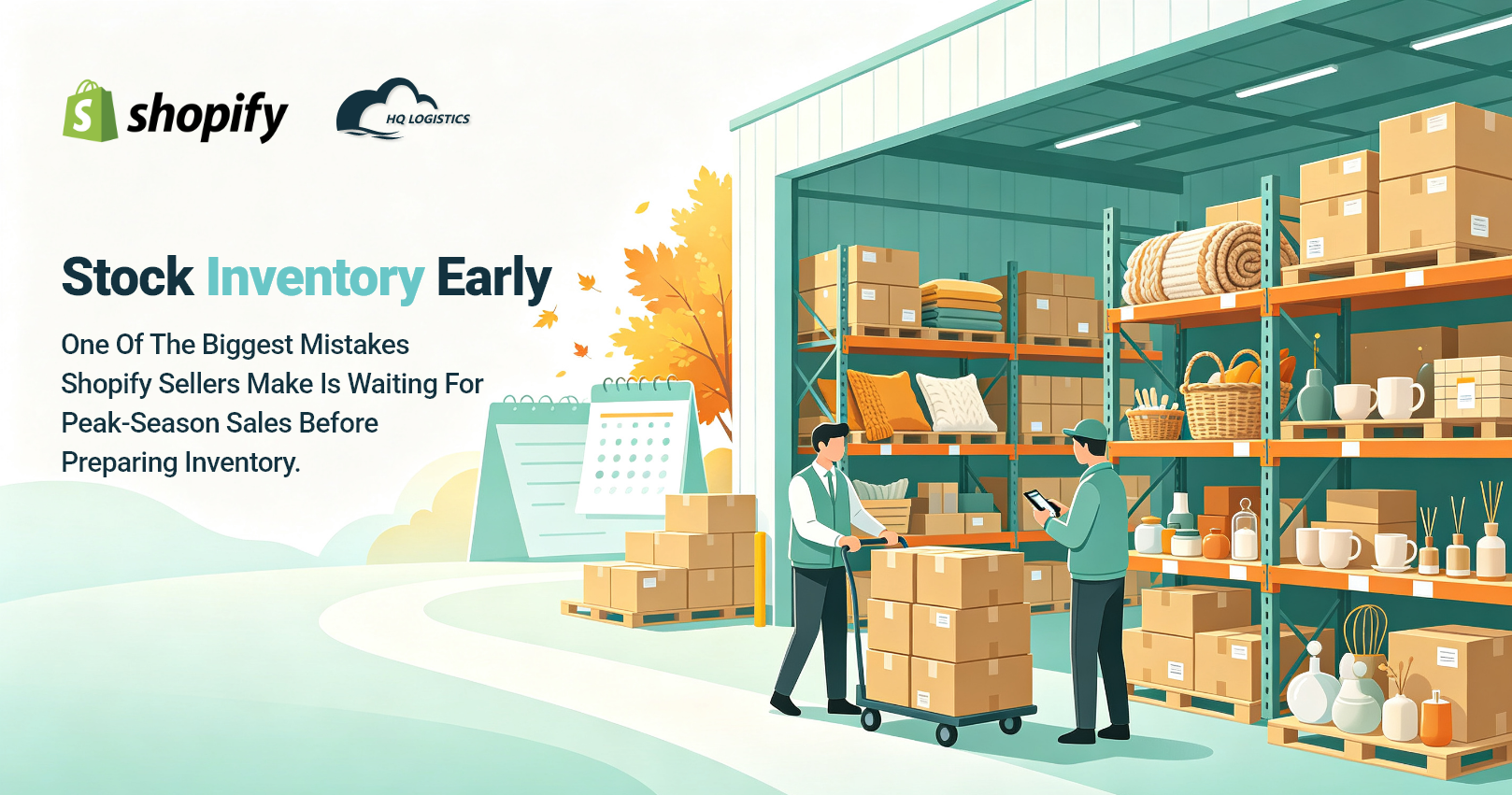
Inventory quantity isn't the only consideration.
Inventory location matters, too.
Imagine you have 5,000 units of a bestseller.
That's useful only if those 5,000 units can reach customers quickly enough.
For brands with strong demand in the U.S. or Europe, overseas warehousing can help position selected inventory closer to customers.
A typical supply chain might look like:
China Sourcing → Quality Check → Bulk Shipment → Overseas Warehouse → Local Fulfillment → Customer
Instead of:
Customer Order → China Warehouse → International Shipping → Customer
You don't need to move your entire catalog overseas.
A more flexible approach can be:
China Warehouse
· New products
· Long-tail SKUs
· Low-volume products
· Backup inventory
Overseas Warehouse
· Proven bestsellers
· High-volume SKUs
· Seasonal products
· Products with predictable demand
This helps balance:
Delivery Speed + Inventory Cost + Supply Chain Flexibility
Shopify also highlights the importance of inventory location and order routing as merchants manage multiple fulfillment locations.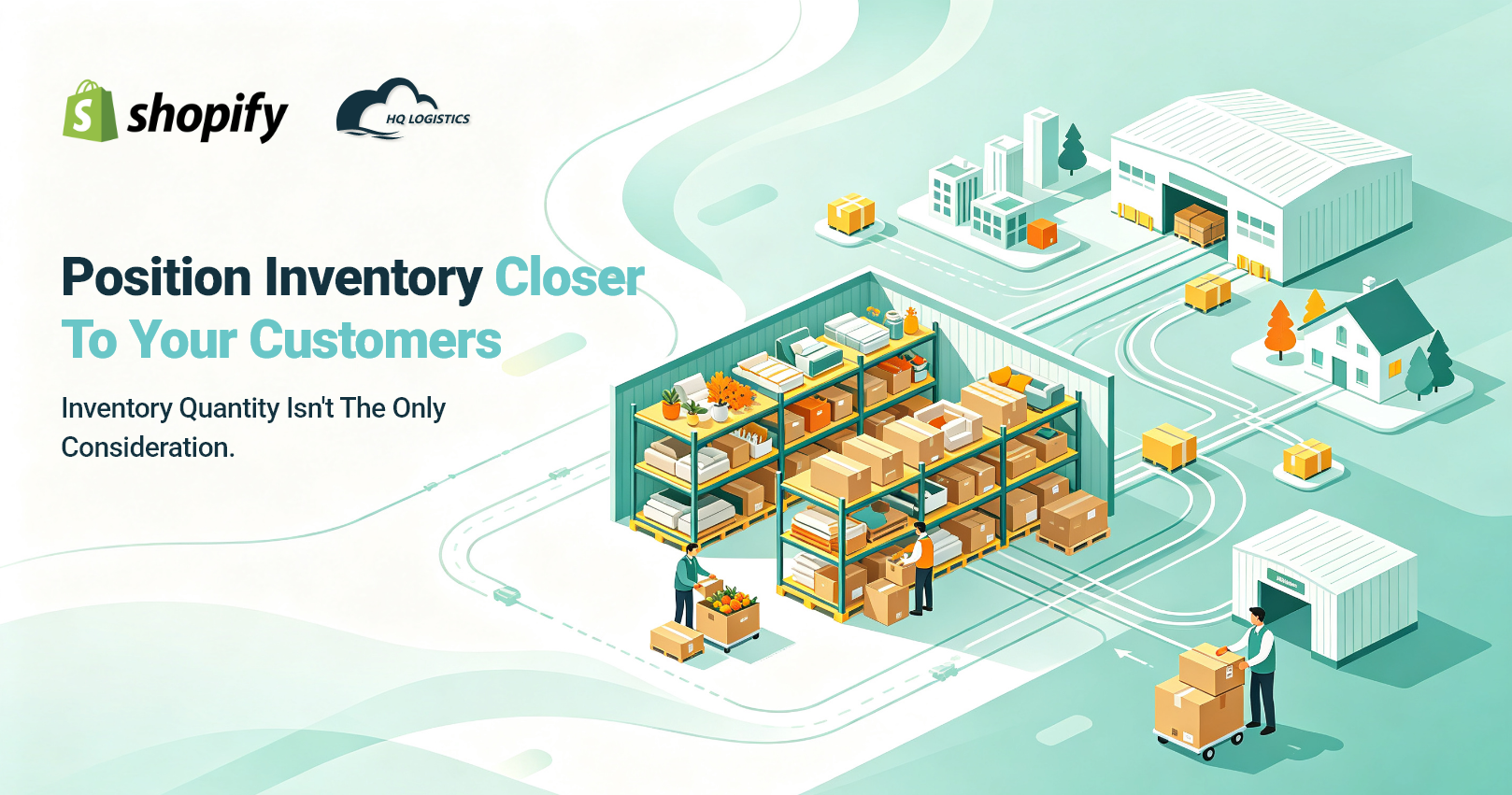
Having enough inventory doesn't guarantee a successful peak season.
Your warehouse still needs to process and ship the orders.
As order volume increases, small operational problems can quickly become major bottlenecks.
Before peak season, review:
· Warehouse capacity
· Picking speed
· Packing capacity
· SKU organization
· Quality inspection
· Packaging materials
· Shipping labels
· Carrier capacity
· Returns handling
· Order synchronization
Shopify recommends preparing additional help, products, packing materials, and carrier cutoff information ahead of seasonal sales periods.
Your process should be clear:
Shopify Order → Order Sync → Inventory Allocation → Picking → QC → Packing → Shipping → Tracking Sync
If one step depends heavily on manual work, peak season is a good time to identify whether it can be automated.
The goal is to increase order volume without increasing operational complexity at the same rate.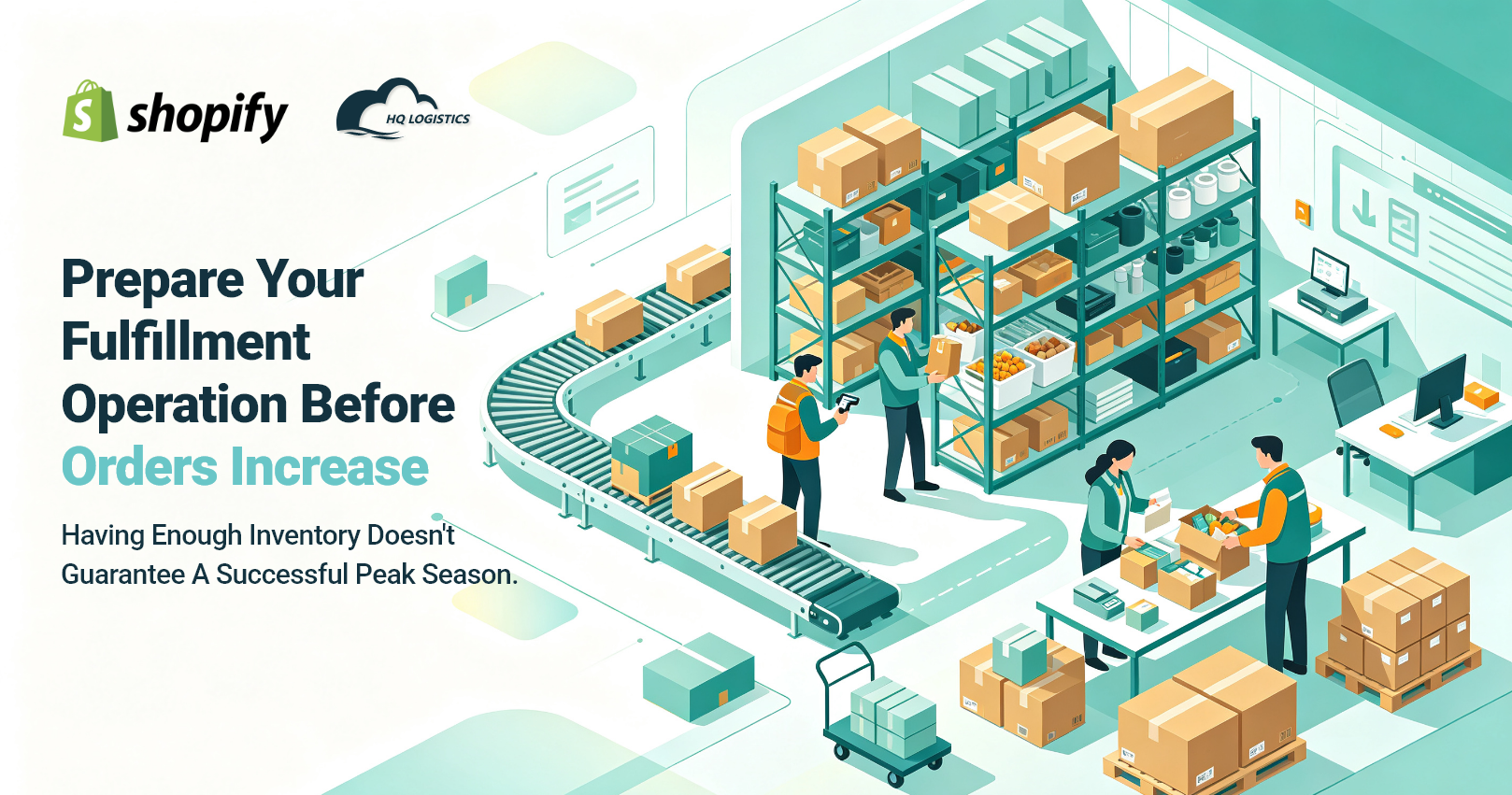
Peak season inventory planning isn't simply about preventing stockouts.
Overstock can be just as expensive.
Too much inventory can create:
· Higher storage costs
· Higher capital requirements
· Slow-moving stock
· Cash flow pressure
· End-of-season discounting
· Dead stock
Shopify notes that effective forecasting helps businesses avoid both stockouts and excess inventory costs.
High inventory priority
Maintain stronger safety stock and monitor sales frequently.
Medium-high priority
Prepare inventory based on expected seasonal demand.
Controlled inventory
Increase stock as sales data confirms demand.
Test first
Start with smaller quantities and scale based on actual performance.
This approach allows you to put more capital behind products that have already demonstrated demand.
Your initial inventory order shouldn't be your only plan.
Ask:
What happens if this product sells 50% faster than expected?
What happens if my supplier is delayed?
What happens if my overseas warehouse runs low?
What happens if international shipping takes longer than expected?
A good replenishment plan should define:
When to reorder
How much to reorder
Where to send the inventory
Which supplier to use
Which shipping method to choose
For example:
China Stock → Replenishment Trigger → Supplier Production → QC → International Shipment → Overseas Warehouse
This gives your team a clear process before an emergency happens.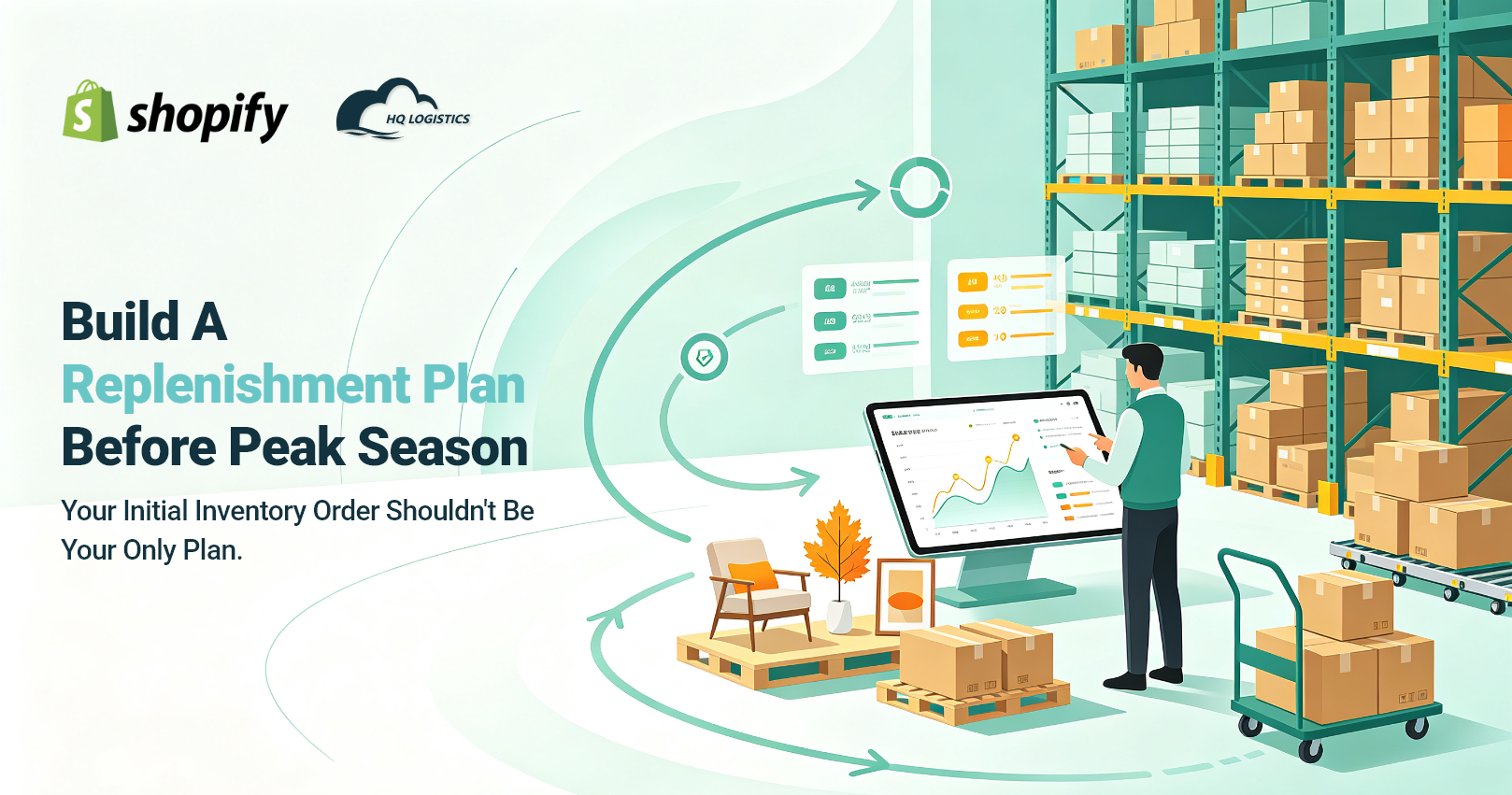
Peak season becomes much easier to manage when you know what's happening across your supply chain.
Ideally, you should be able to monitor:
Available Stock
Reserved Stock
In-Transit Stock
Warehouse Stock
Sales Velocity
Reorder Point
Inbound Inventory
Order Status
A connected inventory system can reduce the need to manually reconcile different spreadsheets and platforms.
Shopify's current inventory guidance emphasizes unified inventory data, accurate stock counts, and monitoring inventory across locations and sales channels.
For example:
SKU A
China Warehouse: 2,000
U.S. Warehouse: 800
In Transit: 500
Daily Sales: 100
Instead of only looking at the 800 units in the U.S., you can see the bigger picture.
That makes replenishment decisions much easier.
Products aren't the only inventory you need to prepare.
Your fulfillment operation also needs enough:
· Boxes
· Mailers
· Tape
· Labels
· Inserts
· Thank-you cards
· Custom packaging
· Protective materials
Running out of packaging materials during peak season can slow down fulfillment even when your product inventory is full.
Shopify specifically recommends preparing enough shipping and packing supplies before seasonal order spikes.
If you're launching custom packaging for Q4, confirm:
Packaging Design → Production → Inspection → Warehouse Delivery → Fulfillment Test
Don't wait until peak season to discover that your new packaging takes too long to assemble.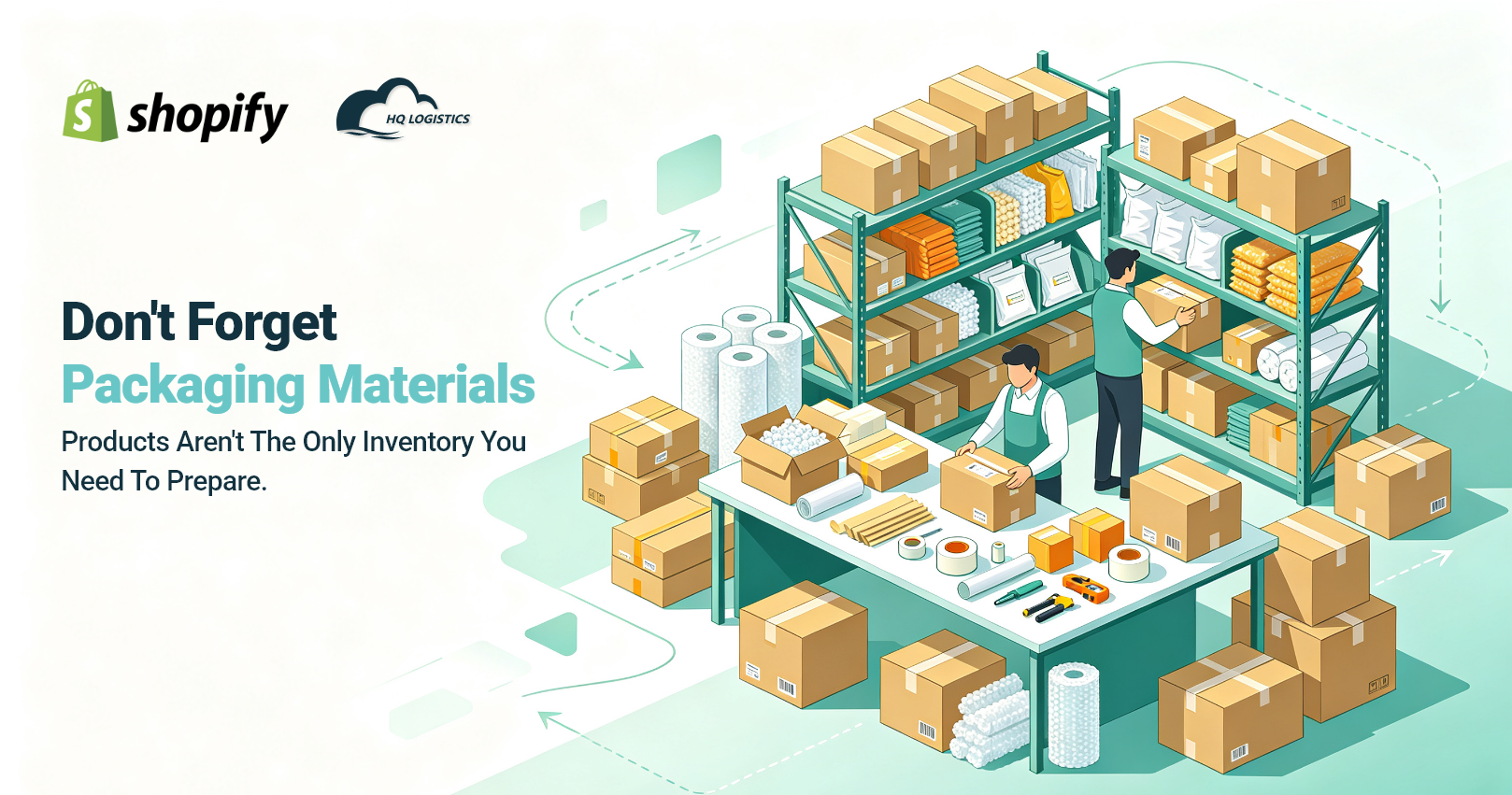
Peak season can put pressure on transportation capacity.
Your primary shipping route may work perfectly under normal conditions but become slower during high-volume periods.
Prepare alternatives.
Consider:
· Multiple shipping routes
· Different service levels
· Overseas fulfillment
· Local carriers
· Backup logistics providers
· Alternative destination warehouses
Your shipping plan should answer:
What is Plan A?
What is Plan B?
What happens if Plan A is delayed?
This doesn't mean you need to use every option.
It means you should know what to do before a disruption occurs.
Before your Shopify store enters peak season, review the following.
· Have I identified my top-selling SKUs?
· Which products have the strongest seasonal potential?
· Which products should I test before scaling?
· Have I reviewed last year's sales?
· Have I considered expected growth?
· Have I included upcoming promotions?
· Have I calculated safety stock?
· Are production lead times confirmed?
· Can suppliers handle higher order volumes?
· Do I have backup suppliers for critical products?
· Is enough inventory ordered?
· When will inventory arrive?
· What is my reorder point?
· Where should inventory be stored?
· Can my warehouse handle peak order volume?
· Should I move bestsellers to an overseas warehouse?
· Do I have enough storage capacity?
· Are Shopify orders synchronized automatically?
· Is inventory updated accurately?
· Can picking and packing scale?
· Are packaging materials ready?
· Are primary shipping routes confirmed?
· Do I have backup routes?
· Do I know carrier cutoff times?
· Can I provide realistic delivery estimates?
If several answers are “no,” your store may not be fully ready for peak season.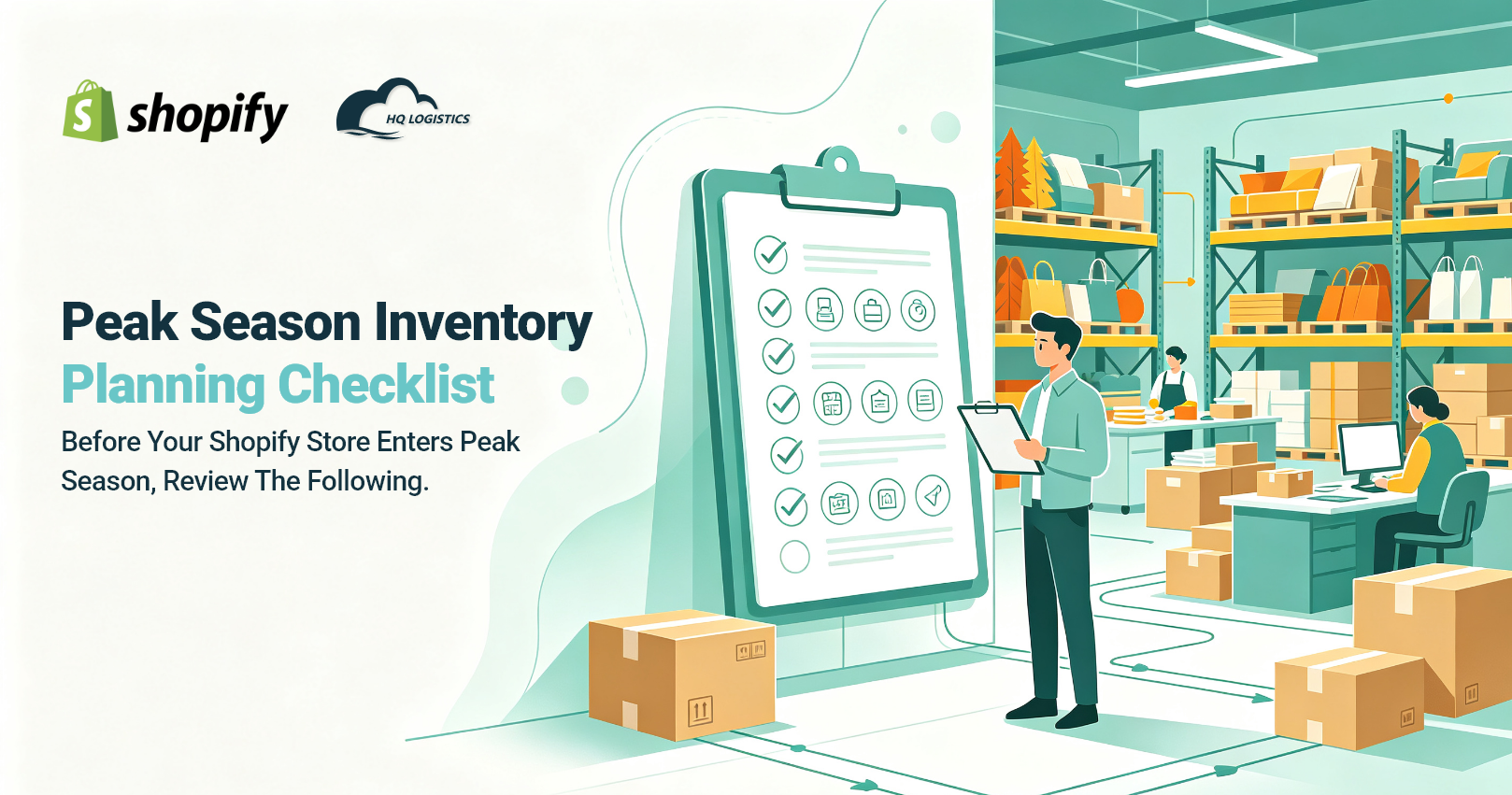
Peak season inventory planning becomes easier when sourcing, inventory, warehousing, fulfillment, and shipping are connected.
HQ can support Shopify sellers throughout the process, including:
· Product sourcing
· Supplier comparison
· Quality inspection
· Product photography
· Inventory consolidation
· Free warehousing
· Overseas warehousing
· Custom packaging
· Shopify order integration
· Automated order fulfillment
· Real-time tracking synchronization
· Global shipping solutions
· Peak-season fulfillment support
Instead of managing each stage separately, sellers can build a more connected workflow:
Sourcing → QC → Inventory → Warehousing → Fulfillment → Shipping
For brands with proven products and growing order volumes, this can make it easier to prepare inventory before demand increases and adjust fulfillment as sales change.
The goal isn't simply to stock more products.
It's to build a supply chain that can scale with your sales.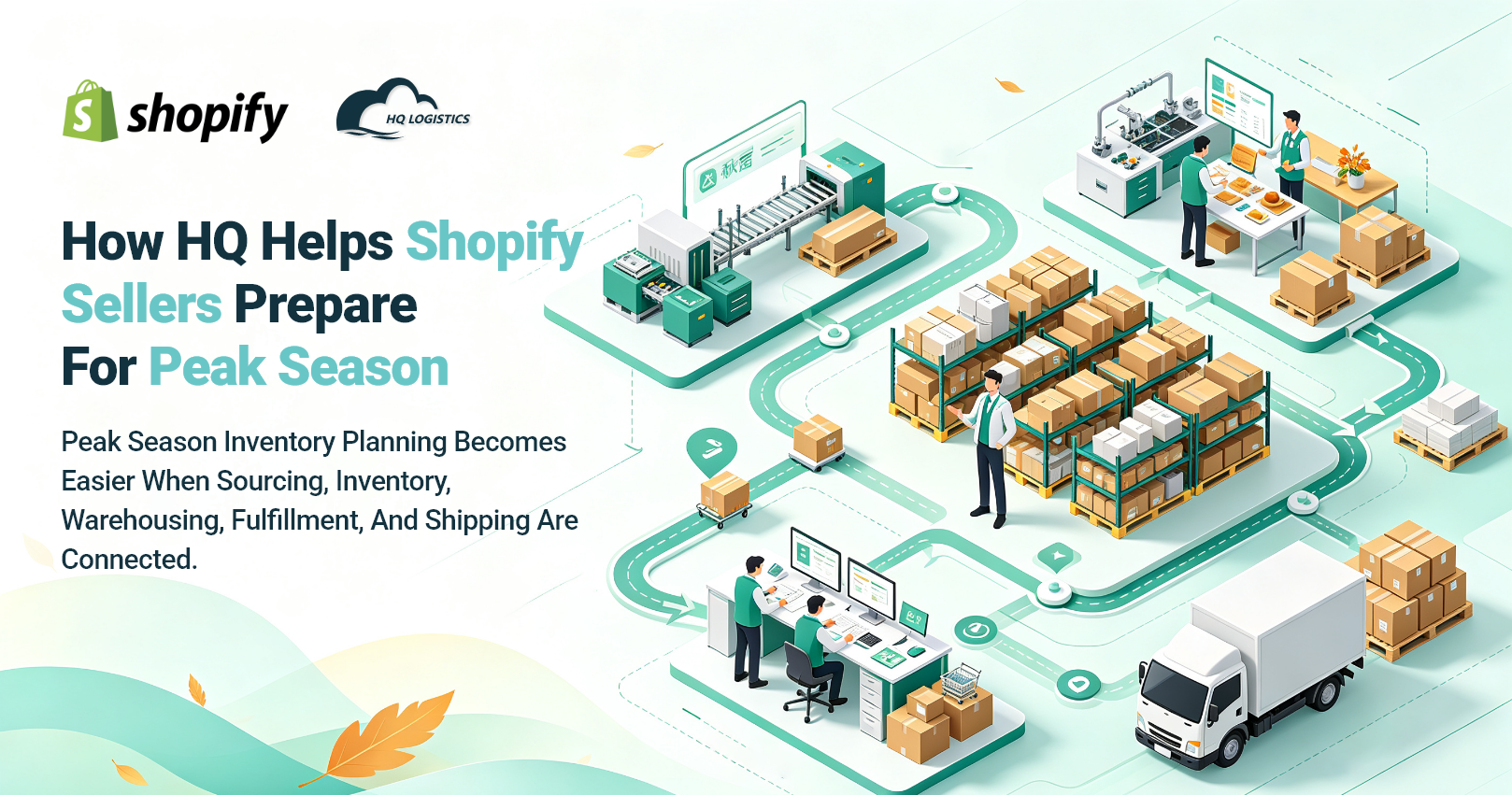
Peak season success starts before the peak.
Waiting until orders increase to think about inventory can leave Shopify sellers dealing with stockouts, rushed replenishment, higher shipping costs, and fulfillment bottlenecks.
A better approach is proactive:
Forecast Early → Source Early → Stock Early → Position Inventory → Test Fulfillment → Monitor Sales → Replenish Strategically
Start with your bestsellers.
Use historical data to build a forecast.
Protect critical SKUs with safety stock.
Secure reliable suppliers.
Position inventory closer to major customer markets when it makes sense.
And make sure your fulfillment operation can handle higher order volumes.
Peak season doesn't have to mean supply chain chaos.
With the right inventory plan, your Shopify store can enter the busiest months with more confidence, flexibility, and control.
Plan earlier. Stock smarter. Fulfill faster. Scale stronger.
Prepare your peak season inventory before the rush begins.
Ideally, preparation should begin several months before the expected sales peak. Start by reviewing historical data, forecasting demand, confirming suppliers, and calculating inventory requirements. Shopify also recommends preparing inventory and fulfillment resources ahead of busy sales periods.
There is no universal number. Start with historical sales, expected growth, promotional plans, supplier lead times, and safety stock. Your bestsellers generally deserve more inventory protection than new or slow-moving products.
Safety stock is additional inventory held to reduce the risk of stockouts caused by unexpected demand increases or supply delays. Shopify's inventory forecasting guidance provides formulas that use sales velocity and lead times to help estimate safety stock.
For brands with consistent demand in a specific market, overseas warehousing can help position inventory closer to customers and support local fulfillment. A hybrid strategy can be useful: keep new and long-tail products in China while positioning proven bestsellers closer to major customer markets.
Don't treat every SKU equally. Segment products by sales performance and demand potential, forecast based on multiple data points, and use controlled inventory levels for new products. Review sales velocity throughout the season and adjust replenishment accordingly.
Don't forget packaging materials, warehouse capacity, fulfillment labor, shipping routes, carrier cutoff times, return handling, and inventory synchronization. A product stockout isn't the only thing that can slow down fulfillment during peak season.
📩Email: zoye@fulfllment-cn.com
PREVIOUS RECOMMENDATIONS


peak season inventory planning, peak season inventory, Shopify inventory planning, peak season fulfillment, Shopify peak season, peak season inventory management, ecommerce inventory planning, Shopify inventory management, seasonal inventory planning, peak season stock planning, ecommerce fulfillment, inventory forecasting, safety stock, reorder point, overseas warehousing, how to prepare Shopify inventory for peak season, peak season inventory planning for Shopify sellers, how much inventory to stock for peak season, how to avoid stockouts during peak season, Shopify peak season fulfillment strategy, how to prepare inventory before peak season, ecommerce peak season inventory management




Customer's favorable comments is our eternal motivation. We feel grateful for all the support and company.

Lorem ipsum dolor sit amet, consetetur sadipscing elitr, sed diam nonumy eirmod tempor invidunt ut labore et dolore magna aliquyam erat, sed diam voluptua.