
Back-to-school season creates a unique inventory challenge for Shopify brands.
Demand can rise quickly.
Certain products can suddenly become bestsellers.
And when the season ends, demand can fall just as quickly.
That creates a difficult question:
How much inventory should you actually keep in the U.S.?
Send too little, and you may miss sales when demand peaks.
Send too much, and you could end the season with excess inventory sitting in a warehouse.
For Shopify sellers, the goal shouldn't be to simply stock more.
It should be to stock smarter.
A U.S. fulfillment warehouse can play an important role in that strategy—not just by storing products closer to customers, but by helping brands separate fast-moving inventory from slower SKUs, shorten replenishment cycles, and make better inventory decisions throughout the season.
Here are 7 ways to optimize back-to-school inventory with a U.S. fulfillment warehouse in 2026.
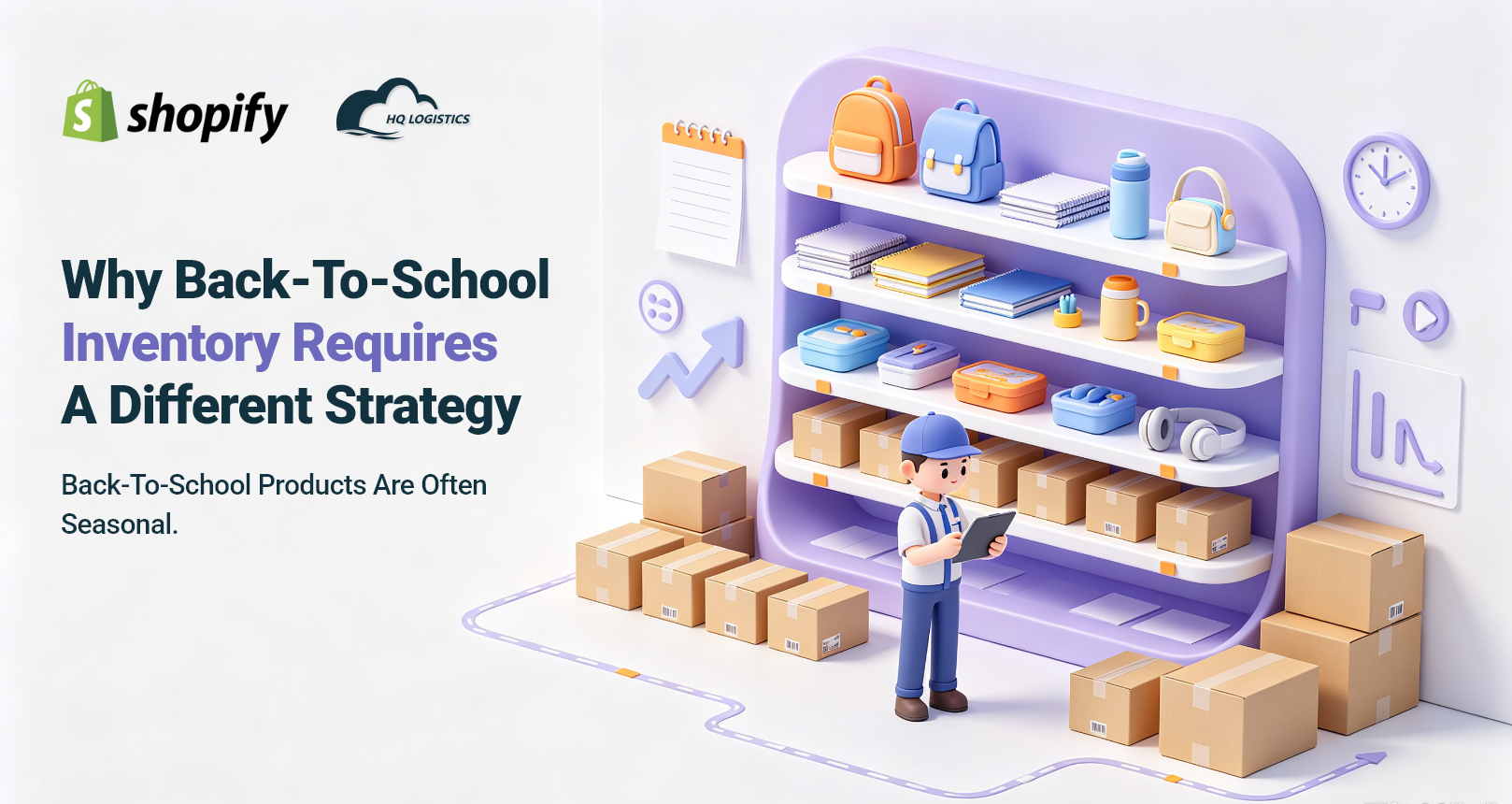
Back-to-school products are often seasonal.
A backpack may sell extremely well in August and September but slow down significantly afterward.
The same can happen with:
School supplies | Lunch bags | Student electronics | Dorm accessories | Children's apparel | Stationery | Organization products
This creates two opposite risks.
Your product is selling.
Your ads are working.
But your U.S. warehouse runs out of stock.
The next shipment takes too long to arrive.
You lose sales during the most valuable part of the season.
You prepare aggressively for peak demand.
But actual sales are lower than expected.
Now you have hundreds or thousands of seasonal products sitting in inventory after demand has already declined.
That's why back-to-school inventory planning needs to balance:
Availability + Speed + Cash Flow + Flexibility
One of the easiest ways to improve inventory decisions is to stop treating every SKU equally.
Your bestsellers, new products, and slow-moving products should not receive the same inventory strategy.
A simple model is:
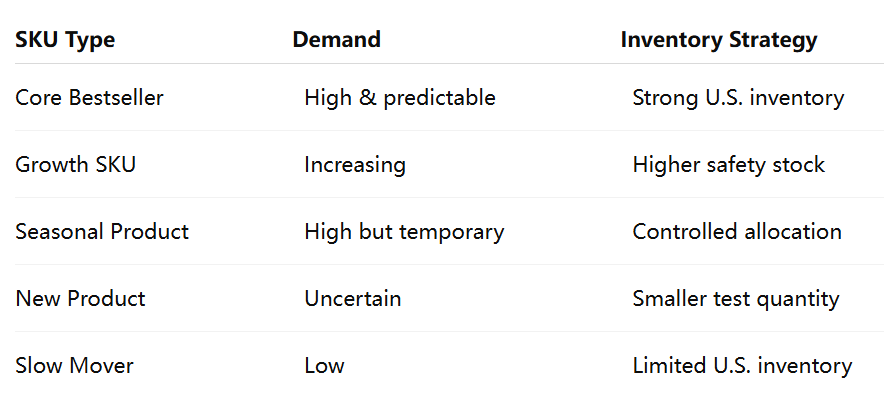
This prevents one common mistake:
Putting too much money into products simply because they are part of the seasonal catalog.
Instead, use your U.S. warehouse for the products where local inventory can create the most value.
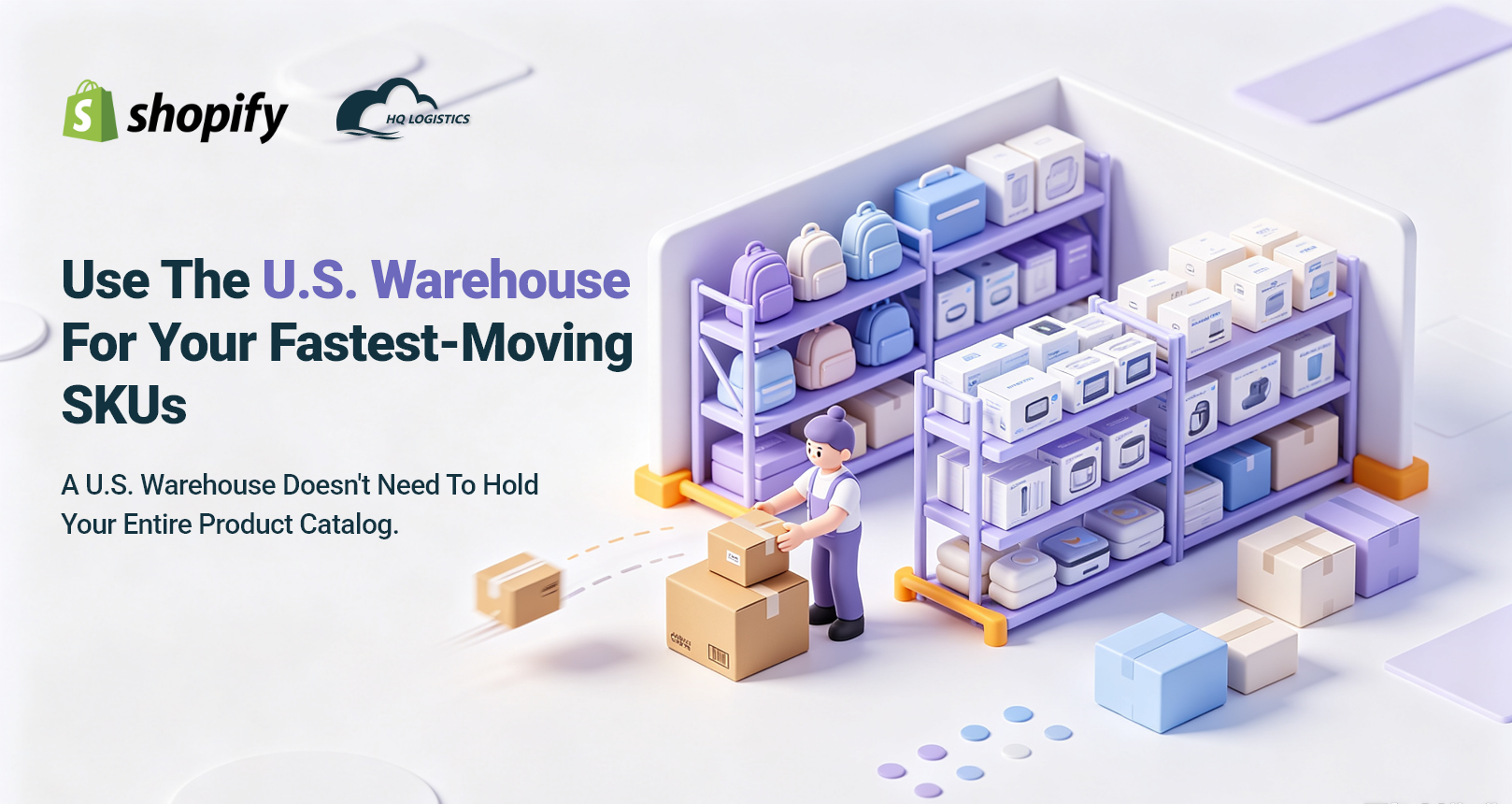
A U.S. warehouse doesn't need to hold your entire product catalog.
In many cases, a more flexible approach is to use a hybrid inventory model.
For example:
China Warehouse
→ New products
→ Long-tail SKUs
→ Slow-moving inventory
→ Backup inventory
→ Supplier-side stock
U.S. Warehouse
→ Bestsellers
→ High-velocity SKUs
→ Proven products
→ Products with time-sensitive demand
This approach gives Shopify sellers more flexibility.
You don't need to commit large amounts of inventory to the U.S. before you know whether a product will sell.
Instead:
Test → Identify Winners → Replenish → Scale
Your U.S. warehouse becomes a strategic inventory layer rather than simply a storage location.
A common question is:
“How many units should I send to the U.S.?”
There isn't one universal answer.
Your inventory level should depend on how quickly you can replenish it.
Consider four numbers:
Average Daily Sales
Supplier Lead Time
Transportation Time
Safety Stock
For example, imagine a product sells:
80 units/day
And the total replenishment cycle from supplier to U.S. warehouse is:
12 days
Your base replenishment requirement would be:
80 × 12 = 960 units
You would then add safety stock based on how volatile demand is.
If sales suddenly increase because of a successful TikTok campaign, your safety stock gives you additional time to react.
The important point is:
Inventory planning should be connected to your replenishment capability.
A seller with fast replenishment can operate with a different inventory level from a seller who needs several weeks to restock.
Forecasting is important.
But forecasts are not guarantees.
Your actual back-to-school sales may be:
Higher than expected
Lower than expected
Delayed
Or concentrated around a much shorter period.
Instead of sending your entire forecasted inventory to the U.S. at once, consider using multiple inventory waves.
For example:
Send enough inventory to cover your expected early-season demand.
Monitor actual sales and replenish products that are outperforming.
Increase inventory for SKUs showing strong momentum.
This approach reduces the risk of making one large inventory decision based on an uncertain forecast.
It also gives you more flexibility to react to real sales data.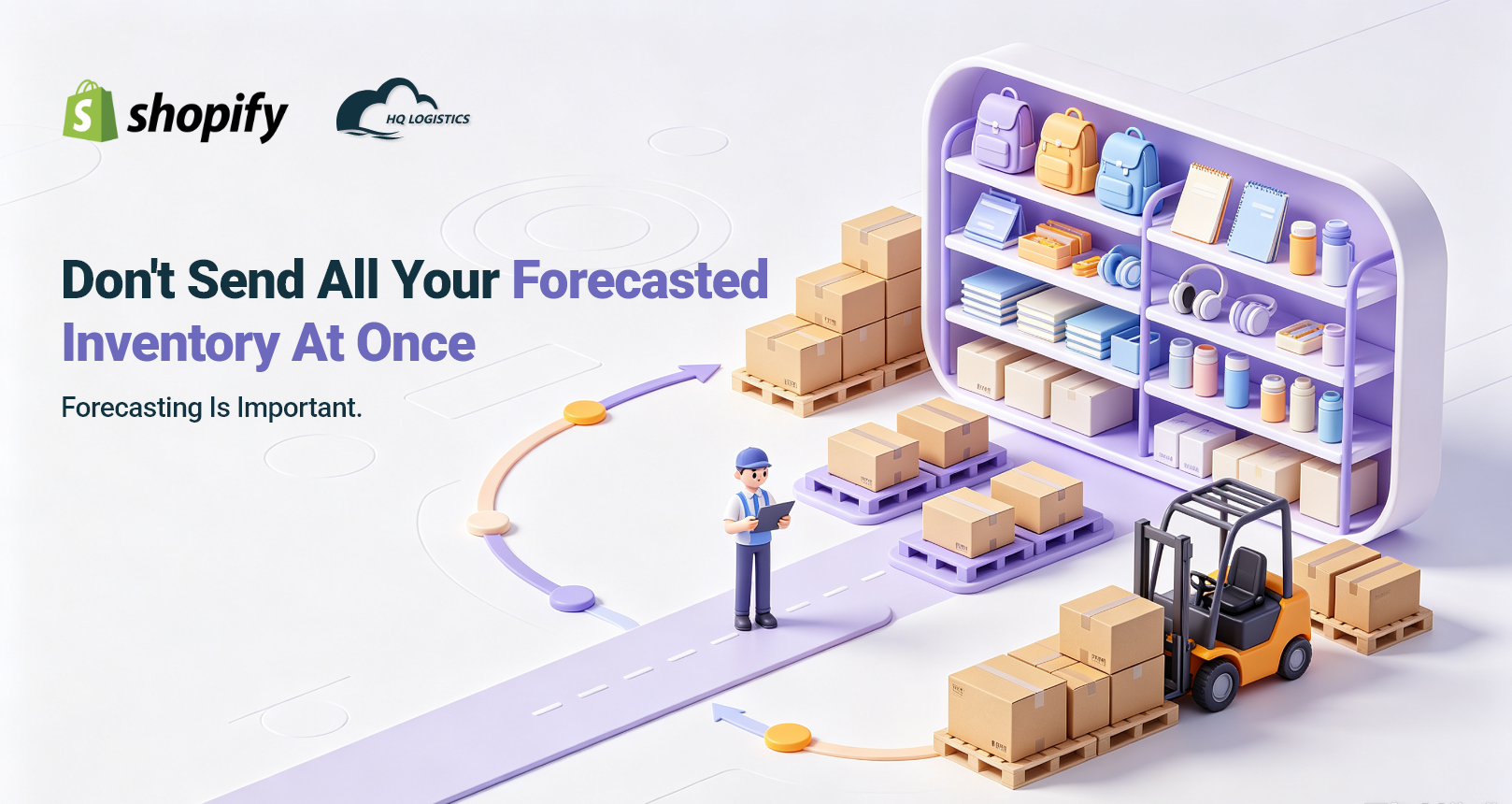
Warehouse space has a cost.
More importantly, inventory sitting in a warehouse ties up working capital.
That's why inventory turnover matters.
Imagine two products:
Sells 500 units per month.
Sells 30 units per month.
If both occupy significant U.S. warehouse space, your inventory strategy may not be efficient.
Instead, prioritize U.S. warehouse capacity for products with:
High sales velocity
Strong margins
Predictable demand
Reliable replenishment
Low return rates
Slow-moving products may be better kept closer to your source warehouse until demand becomes more predictable.
This helps your U.S. warehouse focus on inventory that actually needs fast domestic fulfillment.
This is one of the most overlooked parts of seasonal inventory planning.
Most sellers focus heavily on:
When should I send inventory?
But they should also ask:
When should I stop sending inventory?
As back-to-school demand approaches its end, another shipment of inventory may create more problems than it solves.
For example:
Your sales are slowing.
You still have 800 units in the U.S.
But another 1,000 units are already in production.
If you continue replenishing based on earlier sales numbers, you could end the season with significant excess inventory.
Create a last replenishment date based on:
Expected demand decline | Remaining selling days | Supplier lead time | Transportation time | Existing inventory | Post-season demand
This helps prevent late-season overstock.
A U.S. fulfillment warehouse can do more than fulfill existing orders.
It can also support your product strategy.
Suppose you have five new back-to-school products.
Instead of sending large quantities of all five to the U.S., you could test smaller quantities.
Then monitor:
Orders → Sales Velocity → Conversion → Reorders → Inventory Turnover
After a few weeks, you may discover:
Product A is a bestseller.
Product B has steady demand.
Product C needs a better price.
Product D isn't moving.
Product E performs well only after advertising.
Now you have real sales data to guide your next inventory decision.
This is much more efficient than treating your original product forecast as fixed.
A common inventory mistake is:
“We already shipped 5,000 units, so we need to sell 5,000 units.”
The better mindset is:
“Customers are buying this product, so let's make sure inventory follows demand.”
Your inventory should continuously move through a cycle:
Forecast → Stock → Sell → Monitor → Replenish → Adjust
Not:
Forecast → Stock → Wait
This is especially important for seasonal products because the demand window is limited.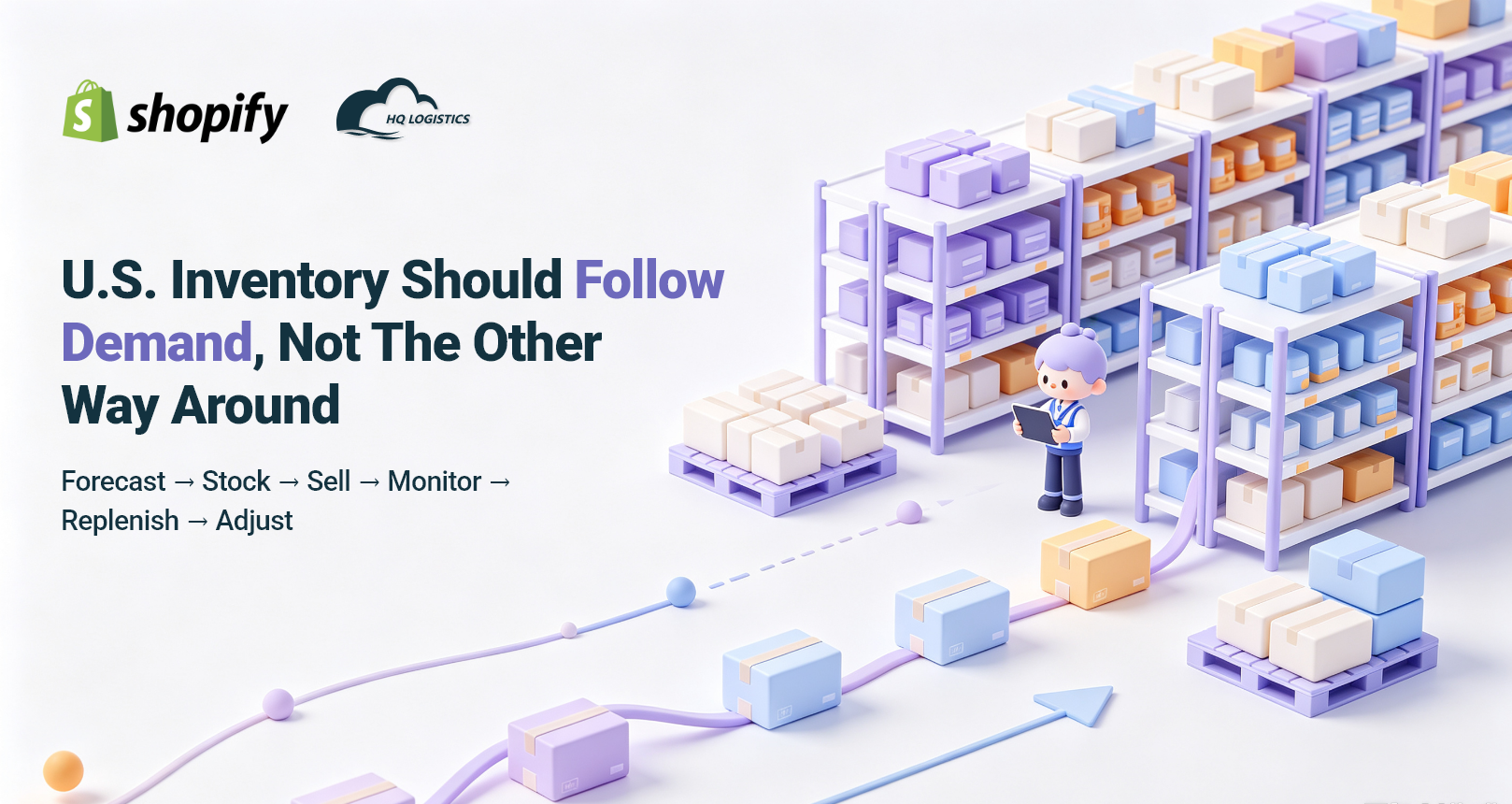
For Shopify brands, a practical structure could look like this:
Keep new or uncertain SKUs closer to the source.
Goal: Minimize inventory risk.
Move products with strong sales momentum into the U.S.
Goal: Improve fulfillment speed.
Increase U.S. inventory for proven bestsellers.
Goal: Capture maximum demand.
Track daily sales and remaining inventory.
Goal: Avoid stockouts.
Reduce replenishment as demand slows.
Goal: Avoid excess seasonal inventory.
This creates a more flexible inventory cycle.
You don't need hundreds of metrics.
Focus on the numbers that help you make decisions quickly.
How quickly are products selling?
How many days can current inventory support?
How many units are being sold per day or week?
How often are products unavailable?
How long does it take to get new inventory into the U.S.?
How much capital is currently tied up in stock?
Is your original demand estimate still accurate?
These metrics help turn inventory management from guesswork into an ongoing decision-making process.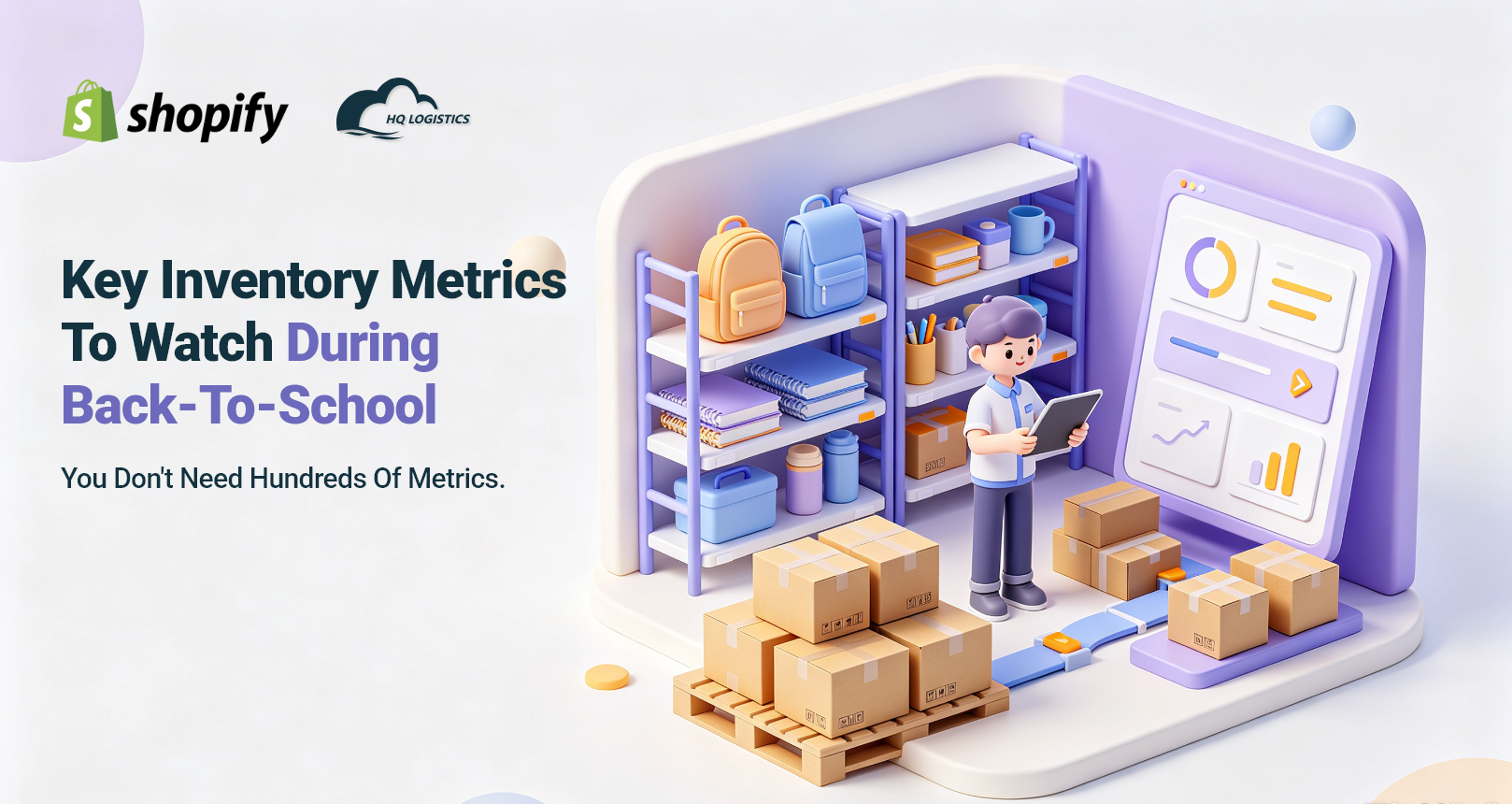
The biggest advantage of U.S. fulfillment isn't simply faster delivery.
It's flexibility.
When inventory is already positioned in the U.S., you can respond to demand without waiting for every individual order to cross borders.
For a Shopify brand, the workflow can become:
China Sourcing → Bulk Inventory → U.S. Warehouse → Domestic Fulfillment → Customer
Instead of:
China Warehouse → Individual Cross-Border Shipment → Customer
This can make a major difference during a short seasonal selling window.
You can use China for:
Sourcing + Production + Main Inventory
And the U.S. warehouse for:
Fast Fulfillment + Bestseller Inventory + Demand Response
That division can create a more flexible supply chain.
Here's a simple framework Shopify sellers can use.
Identify:
Top SKUs → Expected demand → Supplier lead time → U.S. inventory requirements
Classify products by risk.
Send initial inventory for priority products.
Prepare:
Warehouse capacity → Packaging → Product labels → Fulfillment workflow
Monitor actual sales.
Compare:
Forecast vs. Actual
Increase inventory for products showing strong momentum.
Review inventory frequently.
Watch:
Sales velocity → Days remaining → Stockouts → Replenishment → Fulfillment volume
Don't rely only on your original forecast.
Slow down replenishment.
Review:
Remaining inventory → Sell-through rate → Post-season demand
Create a plan for leftover stock before ordering additional seasonal inventory.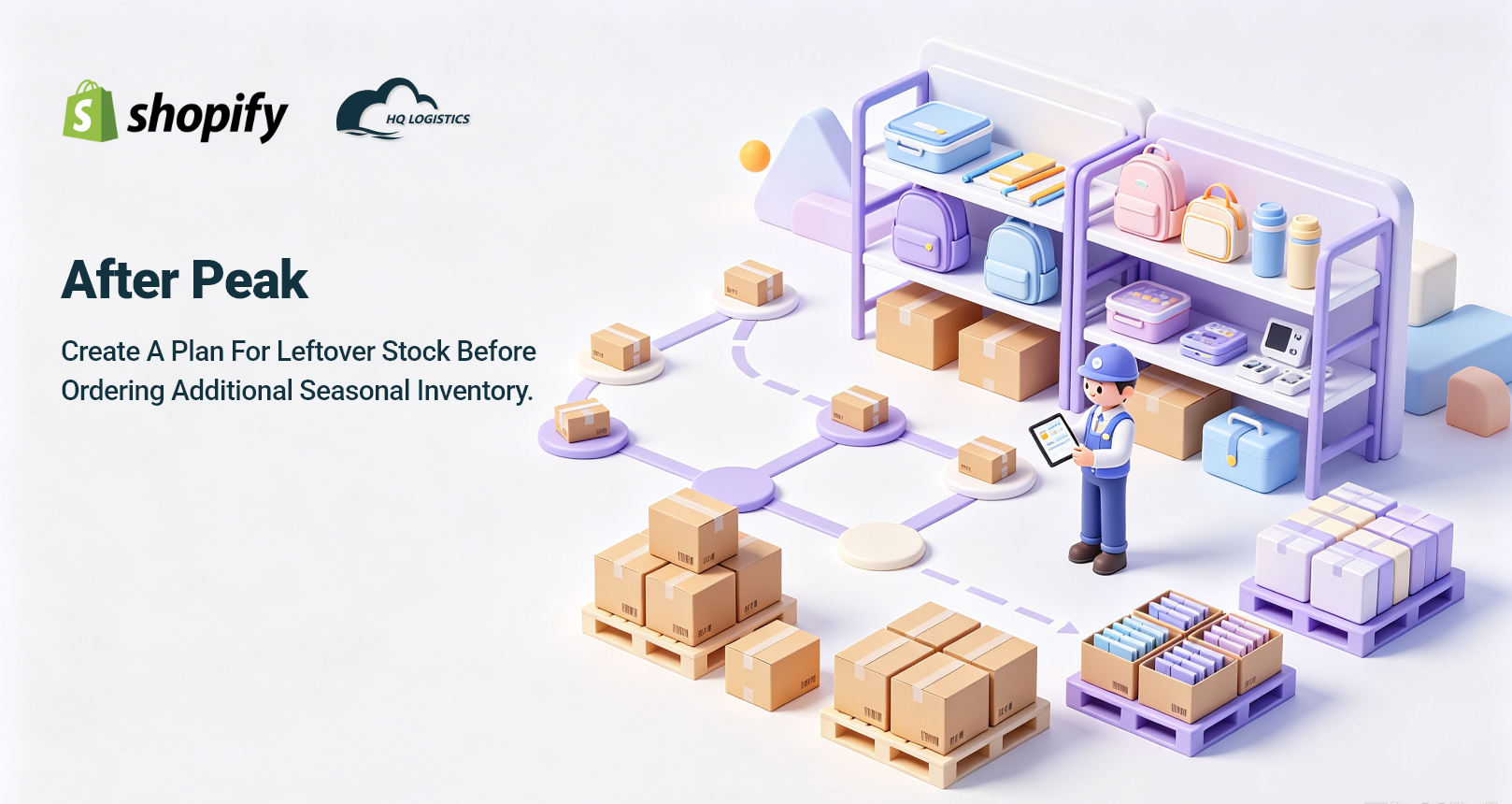
The choice doesn't have to be all-or-nothing.
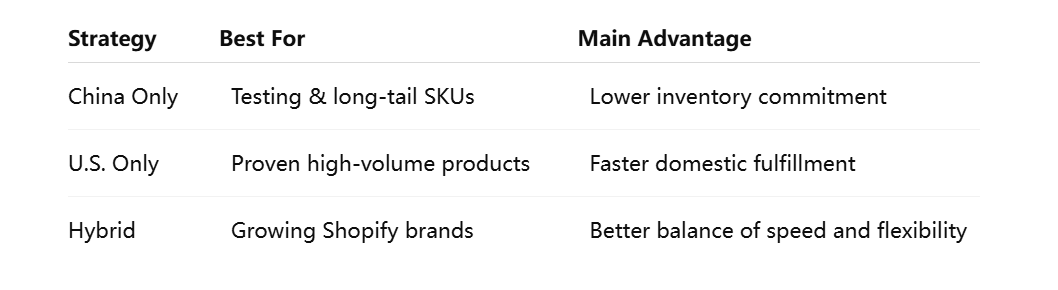
For many Shopify sellers, the hybrid model can be particularly useful.
China manages supply.
The U.S. manages demand.
This allows brands to keep their broader inventory closer to their sourcing base while using U.S. fulfillment for products that need faster delivery.
For Shopify brands preparing for back-to-school demand, HQ can connect sourcing, inventory, warehousing, fulfillment, and shipping within one supply chain.
The workflow can include:
China Sourcing → Quality Control → Inventory Planning → U.S. Warehousing → Shopify Order Sync → U.S. Fulfillment → Domestic Shipping
HQ can support:
Factory-direct sourcing
Product quality inspection
Product photography
Custom packaging
China warehousing
U.S. overseas warehousing
Shopify integration
Automated order fulfillment
Real-time inventory and tracking
Inventory replenishment support
U.S. fulfillment and shipping
This gives Shopify brands more flexibility to decide which products should stay in China, which products should move to the U.S., and when inventory should be replenished.
The goal isn't to put everything into a U.S. warehouse.
It's to put the right inventory there at the right time.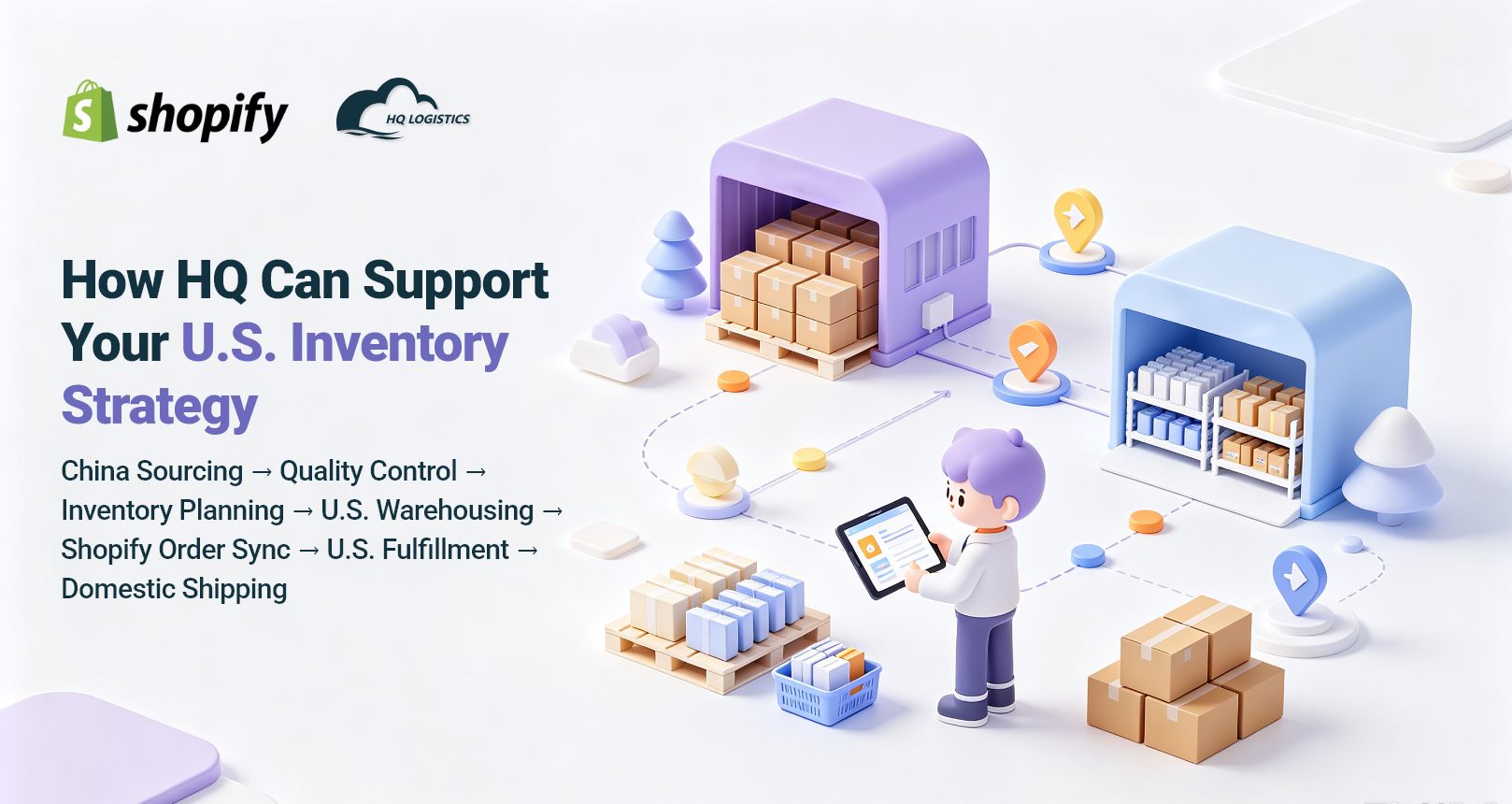
Before moving inventory into a U.S. warehouse, ask:
☐ Which SKUs are proven bestsellers?
☐ Which products are new or uncertain?
☐ Which products are highly seasonal?
☐ What is my expected daily sales volume?
☐ How many days of inventory do I need?
☐ What is my replenishment lead time?
☐ How much safety stock should I hold?
☐ Which SKUs need domestic fulfillment?
☐ How much warehouse space do they require?
☐ Can inventory be replenished quickly?
☐ When is my expected demand peak?
☐ What happens if sales are 30% higher than forecast?
☐ What happens if sales are 30% lower?
☐ When should I make my last replenishment?
☐ What is my plan for leftover seasonal inventory?
☐ Can slower-moving stock remain in another warehouse?
Back-to-school 2026 isn't simply an inventory volume game.
The brands that perform well aren't necessarily the ones that stock the most products.
They are the ones that can move inventory according to demand.
A U.S. fulfillment warehouse gives Shopify brands another layer of flexibility:
Test products without overcommitting.
Position bestsellers closer to customers.
Replenish based on real sales.
Reduce stockout risk.
Control seasonal overstock.
Protect working capital.
The real goal of U.S. fulfillment is not just faster shipping.
It's better inventory decision-making.
Stock Less Blindly. Respond Faster. Sell Smarter.
For Shopify brands preparing for back-to-school season, the winning strategy is simple:
Put the right products in the right warehouse at the right time.
Not necessarily. A hybrid strategy can be more flexible. Fast-moving and proven SKUs can be positioned in the U.S., while new, slow-moving, or uncertain products remain closer to the sourcing base.
A U.S. warehouse allows brands to position inventory closer to customers while still using demand data to guide replenishment. Combined with a China-based supply chain, it can provide more flexibility than relying on a single inventory location.
It depends on sales volatility, replenishment lead time, supplier reliability, and the length of the selling season. Products with unpredictable demand or longer replenishment cycles generally require a larger buffer.
You should consider stopping replenishment when remaining inventory can comfortably cover expected demand through the end of the selling period. Factor in current sales velocity, remaining selling days, inbound inventory, and replenishment lead time.
No. U.S. fulfillment can also support inventory positioning, demand testing, replenishment flexibility, and better allocation of stock between different markets.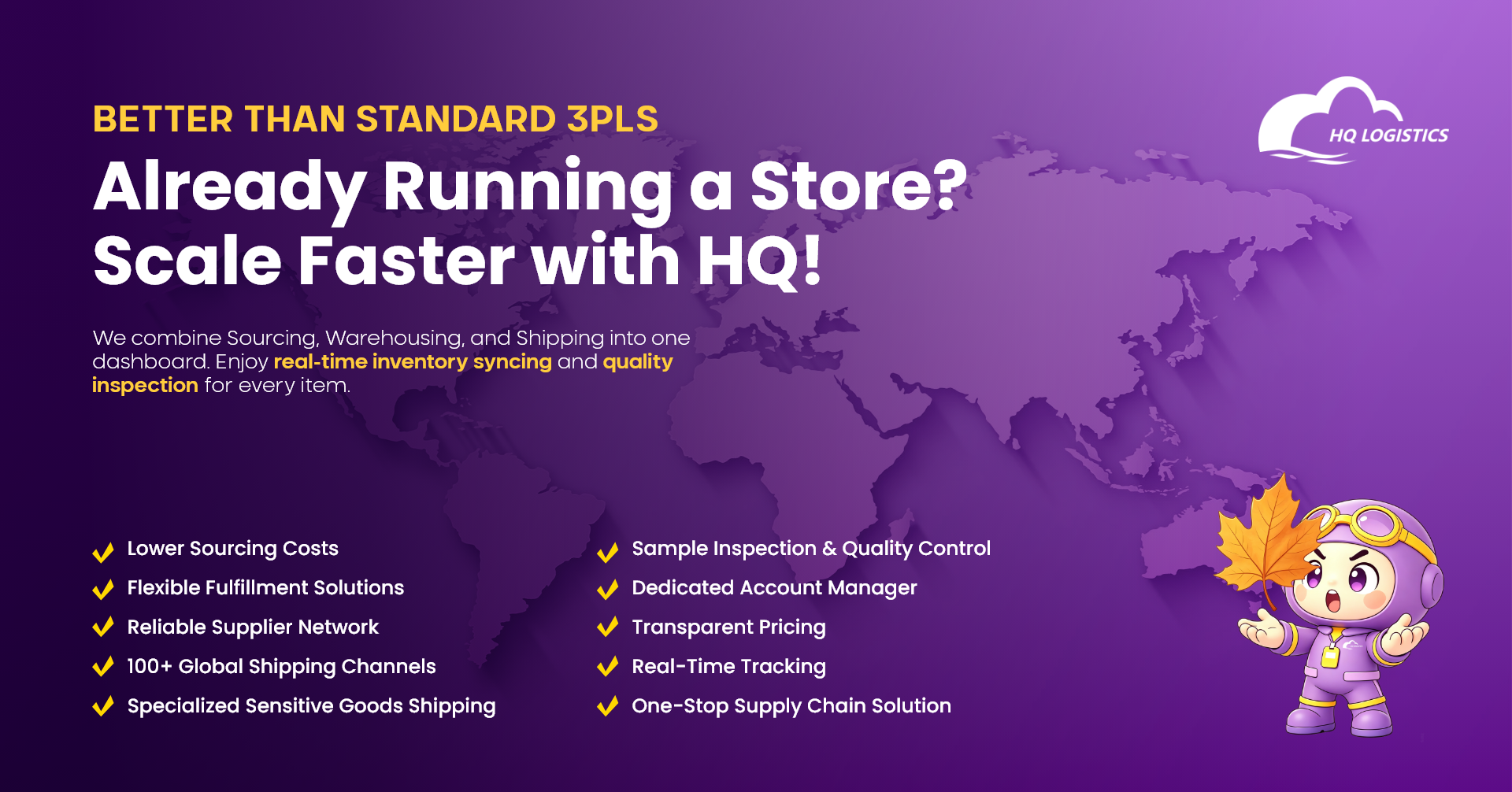
📩Email: zoye@fulfllment-cn.com
PREVIOUS RECOMMENDATIONS


Back-to-School 2026, U.S. fulfillment warehouse, Shopify inventory management, U.S. fulfillment for Shopify, back-to-school inventory planning, Shopify fulfillment USA, U.S. warehouse, seasonal inventory management, Shopify inventory optimization, ecommerce inventory planning, U.S. 3PL, Shopify fulfillment partner




Customer's favorable comments is our eternal motivation. We feel grateful for all the support and company.

Lorem ipsum dolor sit amet, consetetur sadipscing elitr, sed diam nonumy eirmod tempor invidunt ut labore et dolore magna aliquyam erat, sed diam voluptua.