
Small electronics can be attractive ecommerce products.
They are often compact, easy to demonstrate, and suitable for impulse purchases, bundles, and social media marketing.
But selling small electronics is not simply about finding a low product price.
You also need to think about:
Product Quality → Supplier Reliability → Battery Requirements → Shipping → Packaging → Fulfillment → Cost
A product may look profitable on paper, but a high defect rate, damaged packaging, expensive shipping, or unsuitable logistics channel can quickly reduce your margins.
For growing Shopify and ecommerce brands, the goal is not simply to find cheap small electronics.
It is to build a reliable and cost-efficient small electronics fulfillment strategy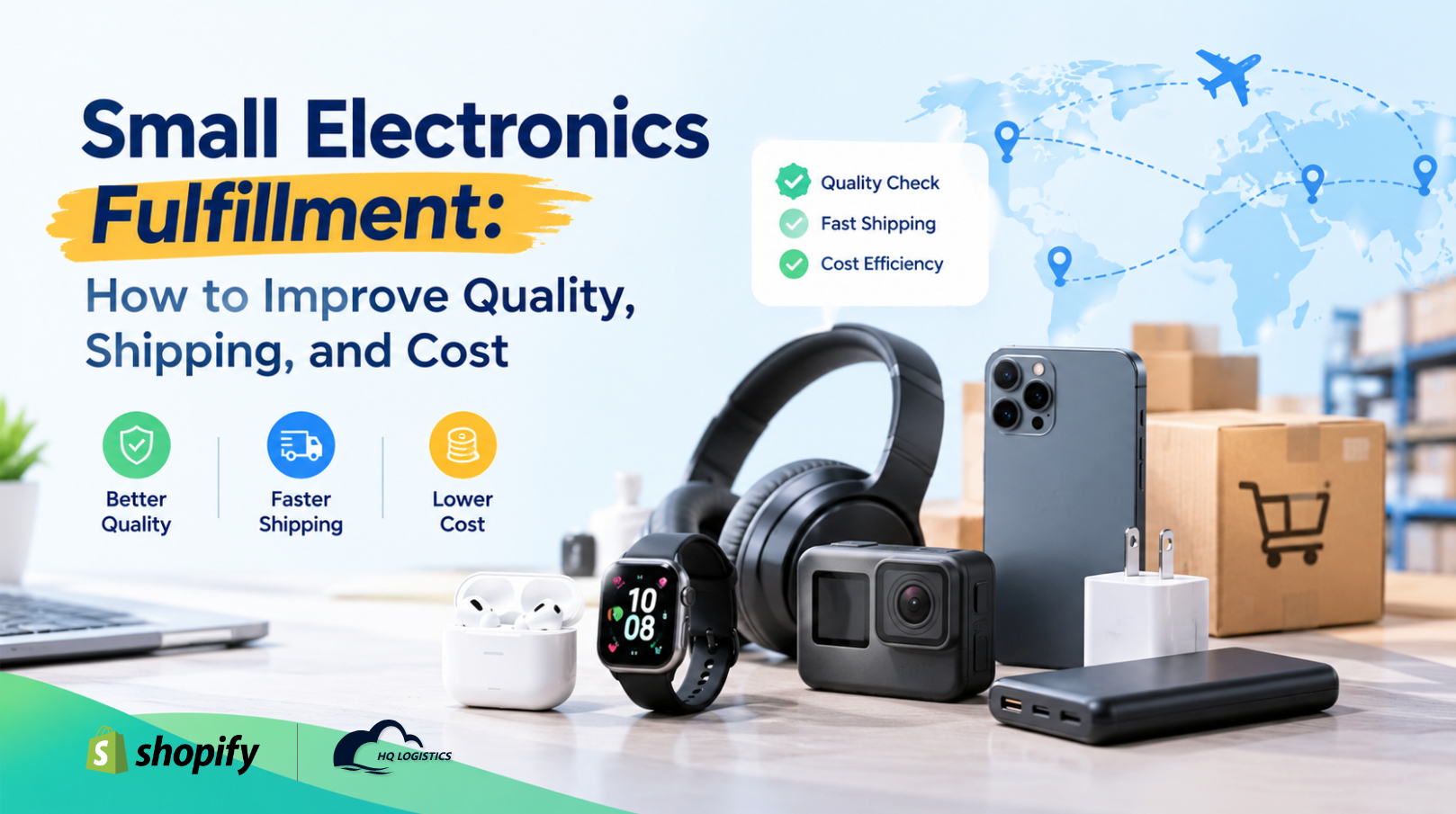
Small electronics can include many different products:
LED Products | Portable Gadgets | USB Accessories | Mini Fans | Small Household Electronics | Smart Accessories | Battery-Powered Products
These products can be small in size, but their supply chain requirements may be more complicated than ordinary products.
Some may contain batteries.
Some may require additional protective packaging.
Some may have higher return rates because customers expect them to work perfectly.
And some may have specific transportation or documentation requirements depending on the product and destination.
This means the fulfillment process should consider more than:
Pick → Pack → Ship
A better process is:
Source → Inspect → Test → Package → Store → Fulfill → Ship
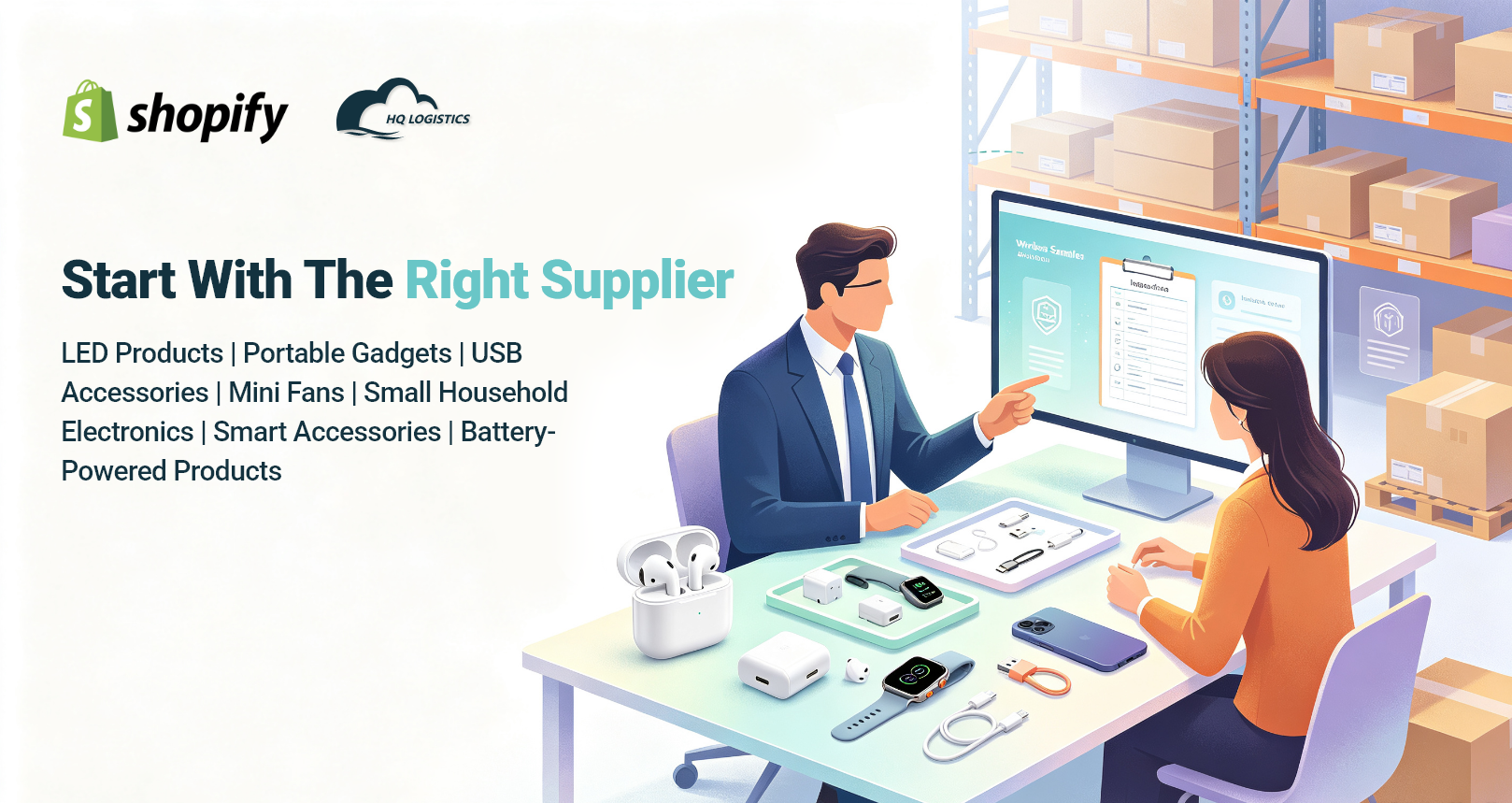
Supplier selection is the foundation of small electronics fulfillment.
The cheapest supplier isn't always the best supplier.
A supplier may offer a low unit price but create additional costs through:
Defective Products | Inconsistent Quality | Poor Packaging | Slow Replenishment | High Return Rates | Shipping Problems
For small electronics, supplier evaluation should include more than product pricing.
Look at:
Product Specifications | Factory Capability | Quality Consistency | Production Capacity | Packaging | Replenishment Speed
A reliable supplier should also be able to maintain consistent product specifications as your order volume increases.
Quality control is especially important for electronics.
Customers expect electronic products to work correctly when they arrive.
A small problem can quickly become a return or refund.
For example:
Product Doesn't Turn On | Battery Doesn't Charge | Button Doesn't Work | Cable Is Damaged | Light Doesn't Work | Product Is Scratched
These problems may seem small individually.
But when your store processes hundreds or thousands of orders, they can become expensive.
A better fulfillment workflow is:
Supplier → Warehouse → Quality Inspection → Fulfillment → Customer
Instead of discovering problems after delivery, quality inspection can help identify issues before products are shipped.
Visual inspection is useful, but small electronics may require more than simply checking whether the product looks good.
Depending on the product, quality checks may include:
Appearance | Accessories | Product Function | Charging | Buttons | Lights | Packaging | Labels
The exact inspection process should match the product.
For example, a simple LED product may require different checks from a rechargeable electronic device.
The key principle is:
Match QC to the Product.

Battery-powered products require additional planning.
Before selling a small electronic product internationally, confirm:
Does the product contain a battery?
What type of battery is used?
What are the product specifications?
What shipping restrictions apply?
What documentation may be required?
Which logistics channels can handle the product?
Do not assume that the shipping method used for ordinary products will work for every electronic product.
Instead:
Product Information → Shipping Requirements → Suitable Channel
This can help reduce avoidable shipping problems.
For brands selling battery-powered products, working with a fulfillment partner that understands product-specific logistics can make operations easier.
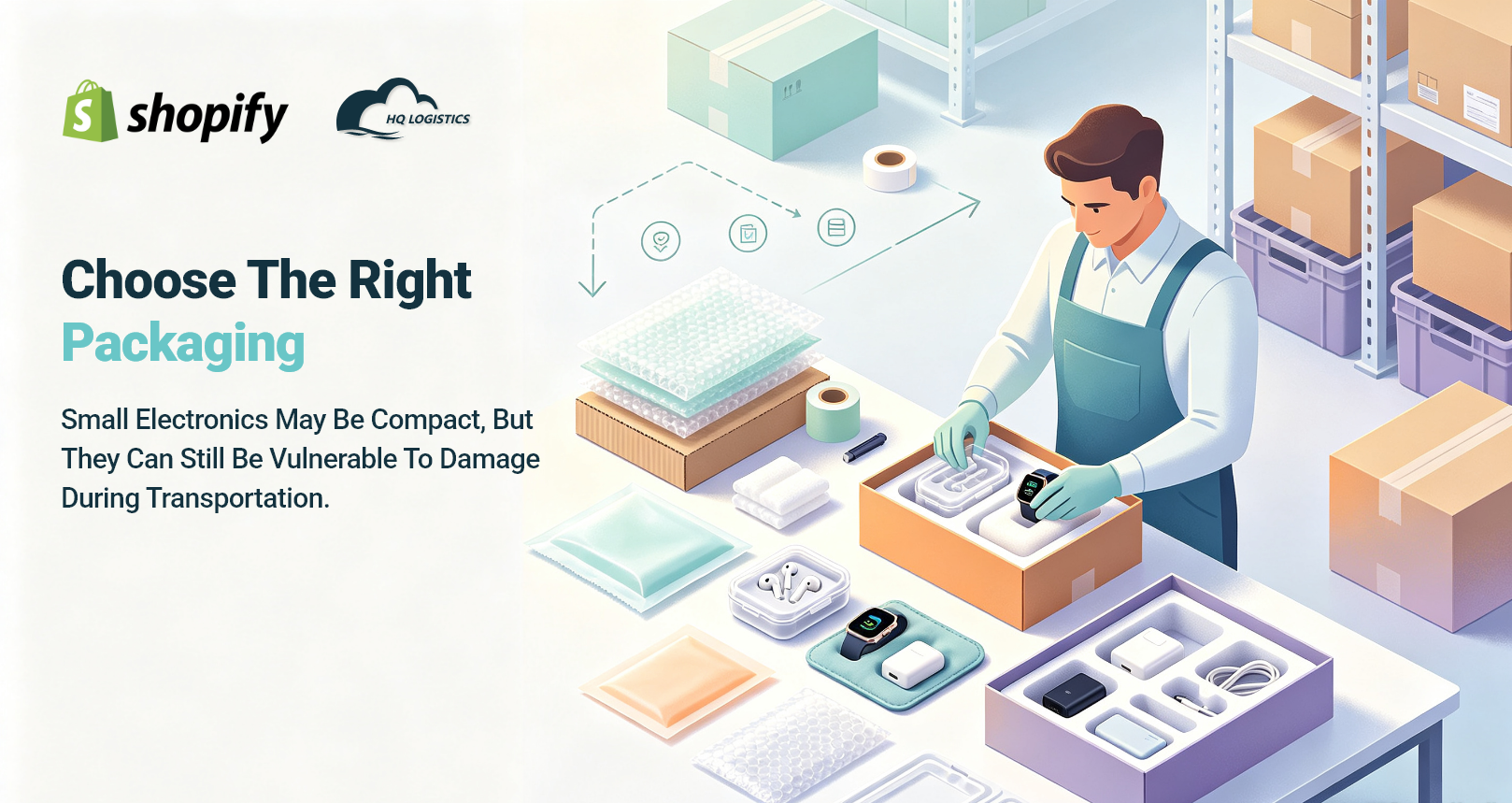
Small electronics may be compact, but they can still be vulnerable to damage during transportation.
Common risks include:
Impact
Pressure
Scratches
Moisture
Broken Accessories
Damaged Retail Packaging
Packaging should therefore balance:
Protection + Size + Cost + Brand Experience
Avoid simply putting a small electronic product into an oversized shipping box.
A better approach is:
Product → Protective Inner Packaging → Right-Sized Outer Packaging
This can help reduce unnecessary package volume while still protecting the product.
Packaging size can directly affect fulfillment and shipping efficiency.
Imagine shipping a small electronic accessory in a large box.
You're not only using more packaging material.
You may also be paying to transport unnecessary space.
A better strategy is:
Small Product → Compact Packaging → Efficient Shipment
Right-sized packaging can help improve:
Material Usage
Storage Efficiency
Packing Efficiency
Shipping Volume
Fulfillment Cost
This becomes more important as your order volume grows.
At 10 orders per day, packaging inefficiency may not seem significant.
At 1,000 orders per day, it can become a major operational cost.
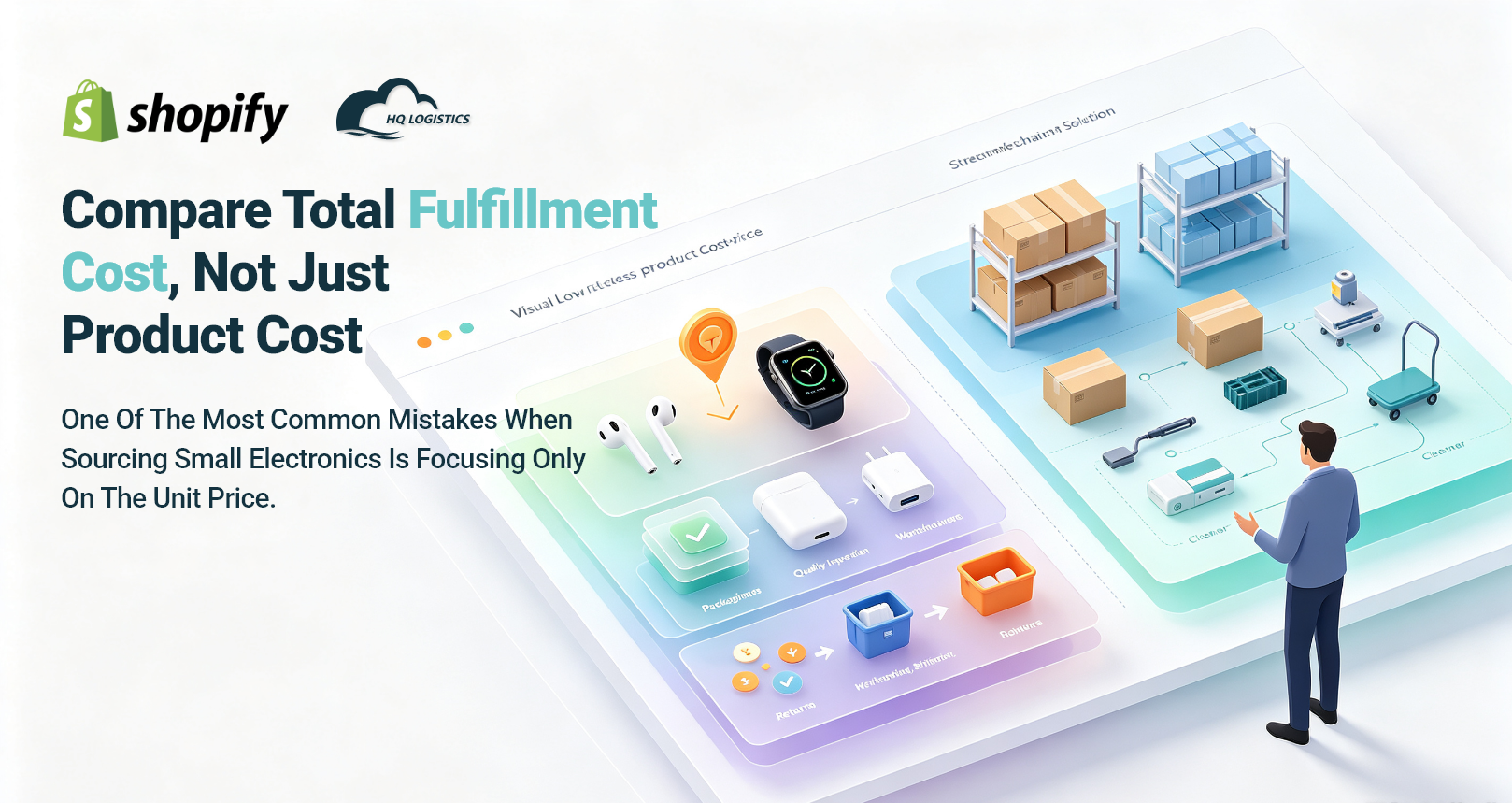
One of the most common mistakes when sourcing small electronics is focusing only on the unit price.
For example:
Supplier A: $4.00
Supplier B: $4.30
At first glance, Supplier A looks better.
But what if Supplier A has:
Higher Defect Rate
More Returns
More Packaging Damage
Slower Fulfillment
Higher Shipping Cost
The cheaper product may actually be more expensive overall.
A better calculation is:
Product Cost + QC + Packaging + Fulfillment + Shipping + Returns
This gives you a more realistic view of your actual cost per order.
There is no single shipping solution for every small electronic product.
Your best option may depend on:
Product Type
Weight
Battery
Destination
Delivery Speed
Shipping Restrictions
Order Volume
For example:
Small Non-Battery Product → Standard Shipping Channel
Battery-Powered Product → Suitable Battery Channel
U.S. Bestseller → U.S. Warehouse
EU Bestseller → EU Fulfillment
The goal is not always to choose the cheapest route.
It is to choose a route that balances:
Cost + Reliability + Delivery Speed + Product Requirements
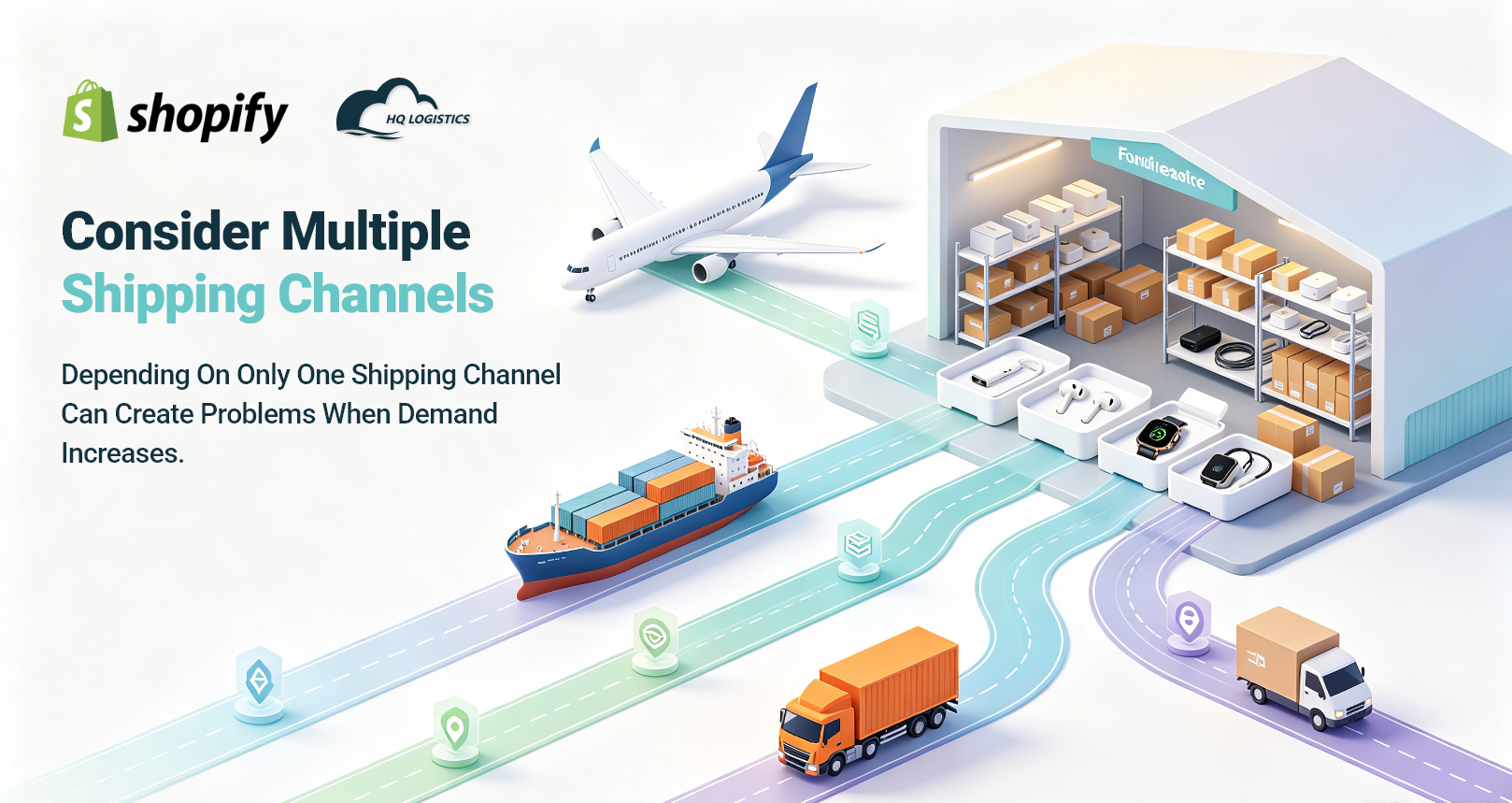
Depending on only one shipping channel can create problems when demand increases.
Imagine your main shipping route suddenly experiences:
Capacity Limits
Price Changes
Delays
Peak-Season Congestion
If you have no alternative, your fulfillment operation may be affected immediately.
A more flexible strategy is:
Channel A → Primary
Channel B → Alternative
Channel C → Backup
This doesn't mean using every channel at the same time.
Instead, it gives your business more options when conditions change.
For growing ecommerce brands, logistics flexibility can be especially valuable during Q4.
Supplier diversification can also improve supply chain flexibility.
Imagine one of your small electronic products suddenly goes viral.
Your orders increase:
20 → 50 → 100 → 300 Orders/Day
Can your supplier keep up?
If not, your growth may be limited by supplier capacity.
A more flexible structure could be:
Supplier A → Main Supplier
Supplier B → Alternative Supplier
Supplier C → Backup Capacity
Multiple suppliers can help brands respond to:
Demand Surges
Stockouts
Production Delays
Quality Problems
Supplier Capacity Limits
The goal isn't to work with as many suppliers as possible.
It's to have reliable alternatives for important products
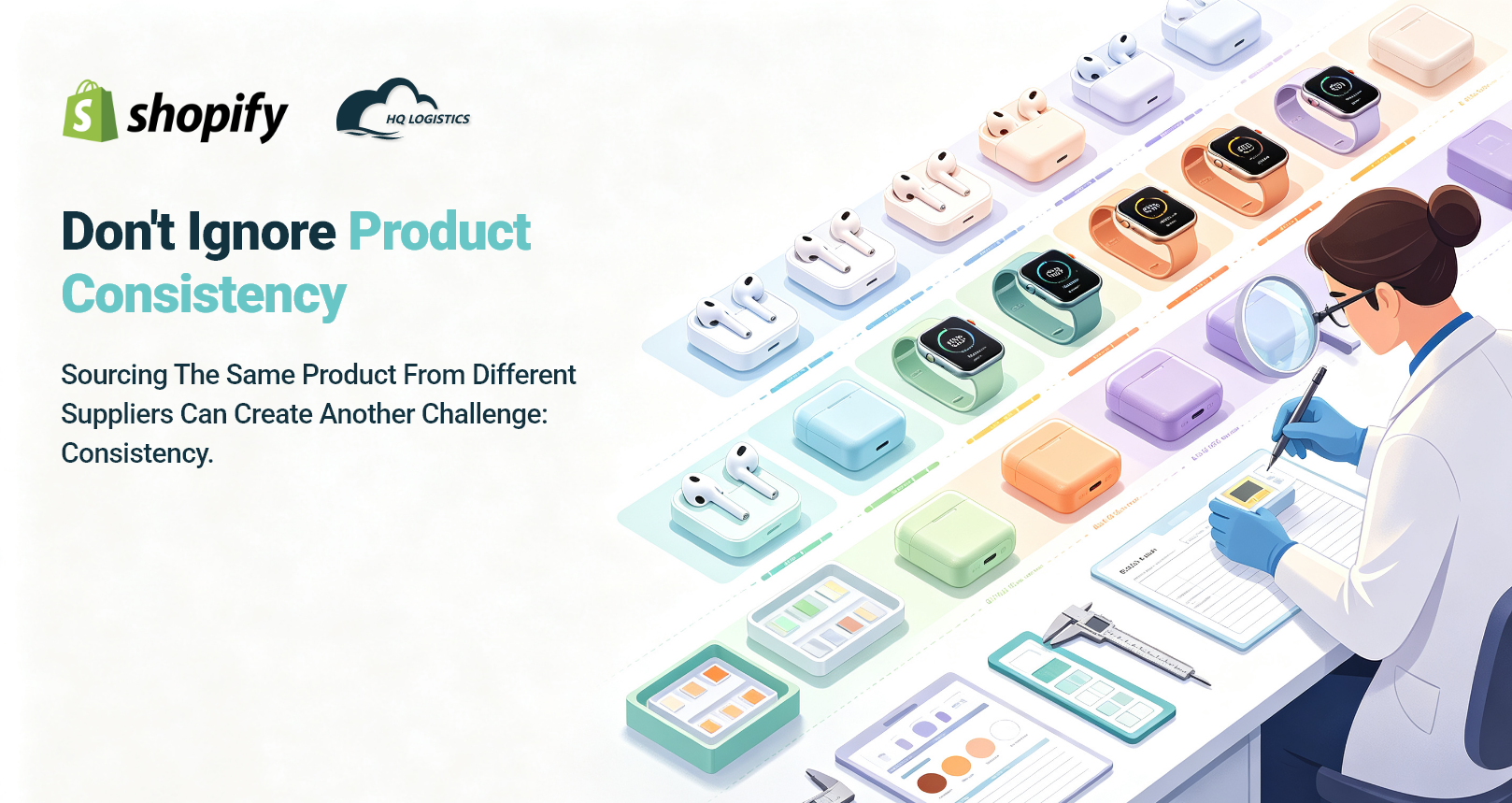
Sourcing the same product from different suppliers can create another challenge: consistency.
You may receive differences in:
Color
Materials
Components
Packaging
Accessories
Product Performance
That's why supplier diversification should be combined with quality control.
A better process is:
Multiple Suppliers → Product Standards → QC → Fulfillment
Before switching or adding a new supplier, compare samples against your existing product requirements.
This is especially important if you're building a recognizable brand.
Small electronics don't have to look like generic dropshipping products.
As your brand grows, custom packaging can help create a more professional customer experience.
Depending on the product, you can explore:
Custom Boxes
Branded Labels
Product Inserts
Thank-You Cards
Hangtags
Instruction Cards
The goal is to move from:
Generic Product → Generic Package
to:
Branded Product → Branded Customer Experience
For small electronics, packaging can also provide space for important product information and usage instructions when appropriate.
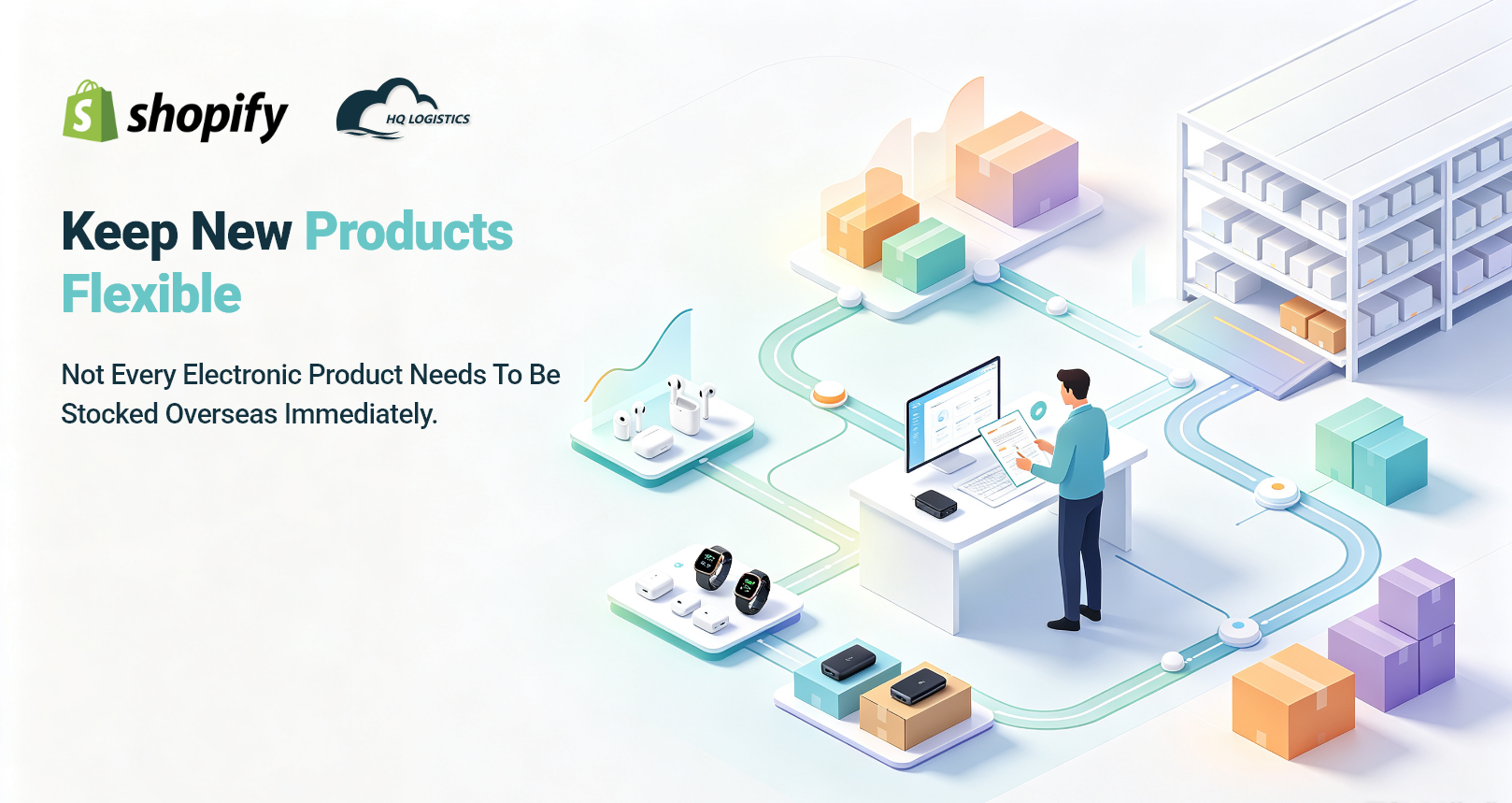
Not every electronic product needs to be stocked overseas immediately.
If you're testing a new product, keeping inventory in China can reduce inventory risk.
A practical model is:
New Product → China Fulfillment → Test Demand
Once the product becomes a proven bestseller:
Proven Product → Overseas Warehouse → Local Fulfillment
This can help brands avoid moving large quantities of untested products overseas.
If your small electronic product has stable U.S. demand, a U.S. warehouse may make sense.
For example:
China Sourcing → QC → Bulk Inventory → U.S. Warehouse → U.S. Customer
This can help position inventory closer to customers and support domestic U.S. fulfillment.
But the decision should be based on actual demand.
Consider:
Daily Orders
Product Size
Inventory Turnover
Shipping Cost
Storage Cost
Expected Demand
Don't send large quantities overseas simply because a product looks promising.
Test first.
Then scale.
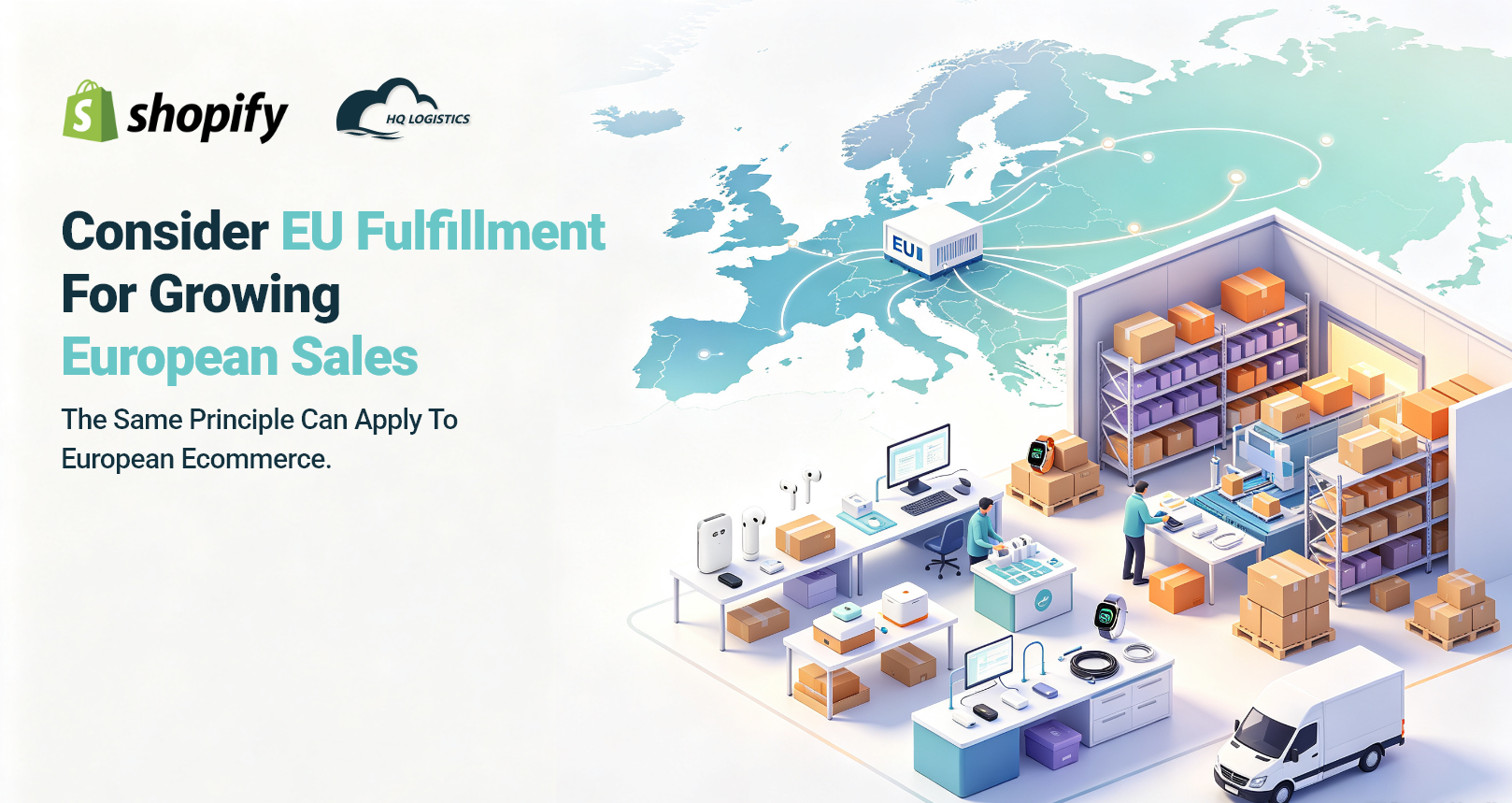
The same principle can apply to European ecommerce.
If your product has stable demand across multiple EU markets, EU warehousing can become part of your fulfillment strategy.
For example:
China → EU Warehouse → Germany
China → EU Warehouse → France
China → EU Warehouse → Italy
China → EU Warehouse → Spain
A hybrid approach can work well:
New Products → China
Proven EU Products → EU Warehouse
This allows brands to maintain sourcing flexibility while building a more localized European fulfillment strategy.
A strong fulfillment process can be structured as:
Step 1: Product Sourcing
Find suitable suppliers and compare product specifications.
Step 2: Sample Testing
Check product quality before placing larger orders.
Step 3: Supplier Selection
Choose suppliers based on quality, capacity, cost, and reliability.
Step 4: Quality Inspection
Inspect products before fulfillment.
Step 5: Packaging
Use protective, right-sized, and branded packaging when appropriate.
Step 6: Inventory
Store products in China or overseas based on demand.
Step 7: Fulfillment
Pick, pack, and process orders efficiently.
Step 8: Shipping
Choose the appropriate shipping channel based on product and destination.
Step 9: Tracking
Monitor shipments and customer delivery performance.
This creates a more complete process than simply:
Supplier → Ship
For ecommerce brands selling small electronics, HQ can connect sourcing, quality control, packaging, warehousing, fulfillment, and shipping.
HQ can help identify suitable products and supplier options based on your requirements.
Access multiple supplier options for important products to create greater sourcing flexibility.
Products can be inspected before fulfillment to help identify quality issues earlier.
Build your brand with:
Custom Packaging | Labels | Inserts | Thank-You Cards | Hangtags
Keep new or lower-volume products flexible while testing demand.
For proven products with stable U.S. demand, inventory can be pre-stocked for domestic U.S. fulfillment.
For growing European sales, EU warehousing can support fulfillment across multiple European markets.
Select shipping solutions based on:
Product + Destination + Weight + Cost + Delivery Requirements
For small electronic products, the right fulfillment strategy can help balance:
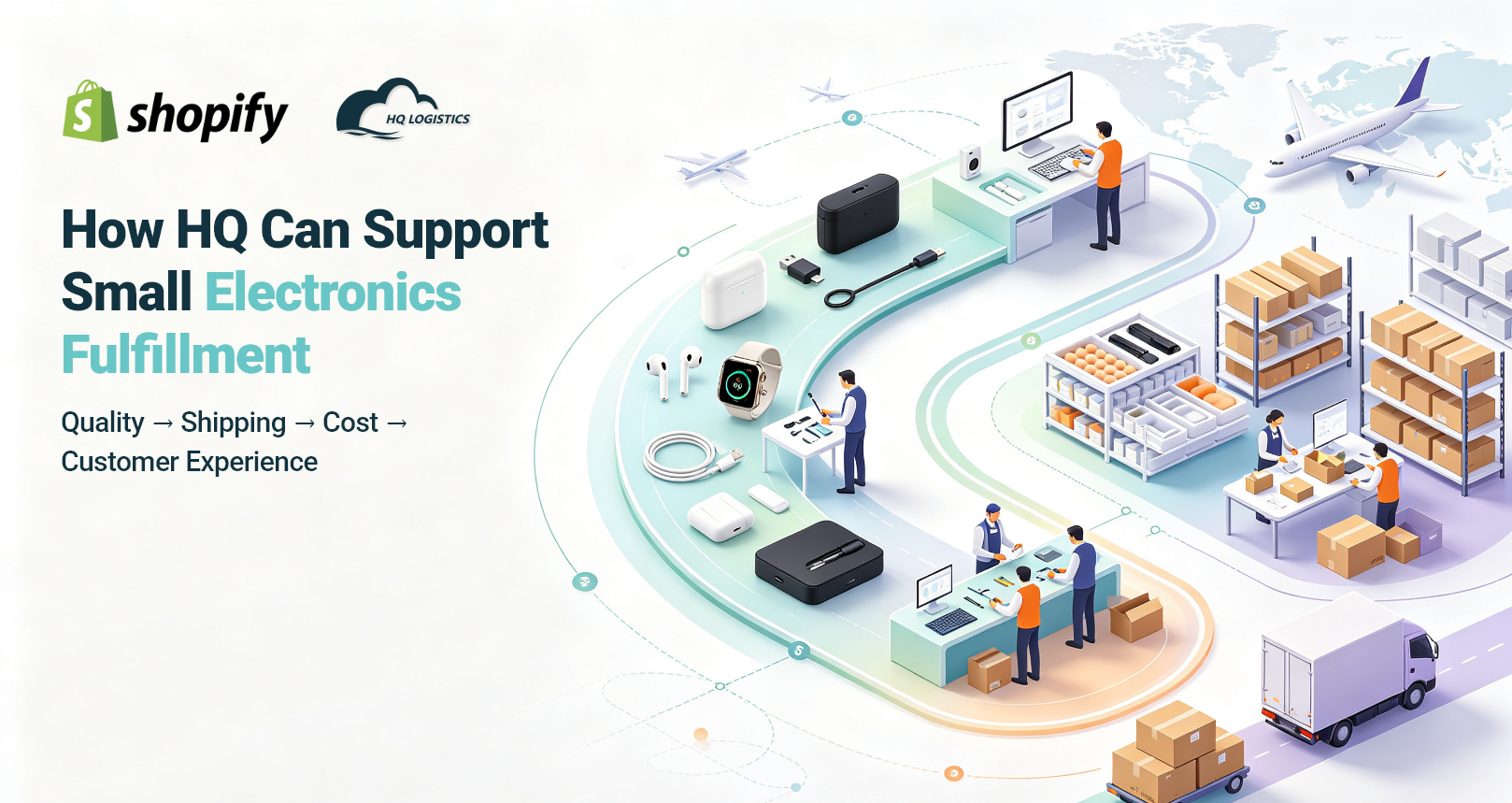
Quality → Shipping → Cost → Customer Experience
Before launching a small electronic product, ask:
Is the product specification clear?
Can the supplier maintain consistent quality?
Can the product be inspected before shipment?
Does it contain a battery, and what shipping requirements apply?
Is the product adequately protected?
Have I calculated the total fulfillment cost?
Do I have suitable shipping channels?
Should I keep inventory in China or move proven products overseas?
Can I add custom packaging or inserts?
Can the supply chain support higher order volume?
If you can't answer these questions clearly, the product may need more preparation before scaling.
Low product cost doesn't always mean low total fulfillment cost.
A small defect can become a refund, return, or negative review.
Battery-powered and non-battery products may require different logistics solutions.
Large packages can increase material usage and shipping volume.
Untested seasonal or trending products can create excess inventory.
A single supplier can become a bottleneck when demand suddenly increases.
Q4 can increase both order volume and logistics pressure.
A better strategy is:
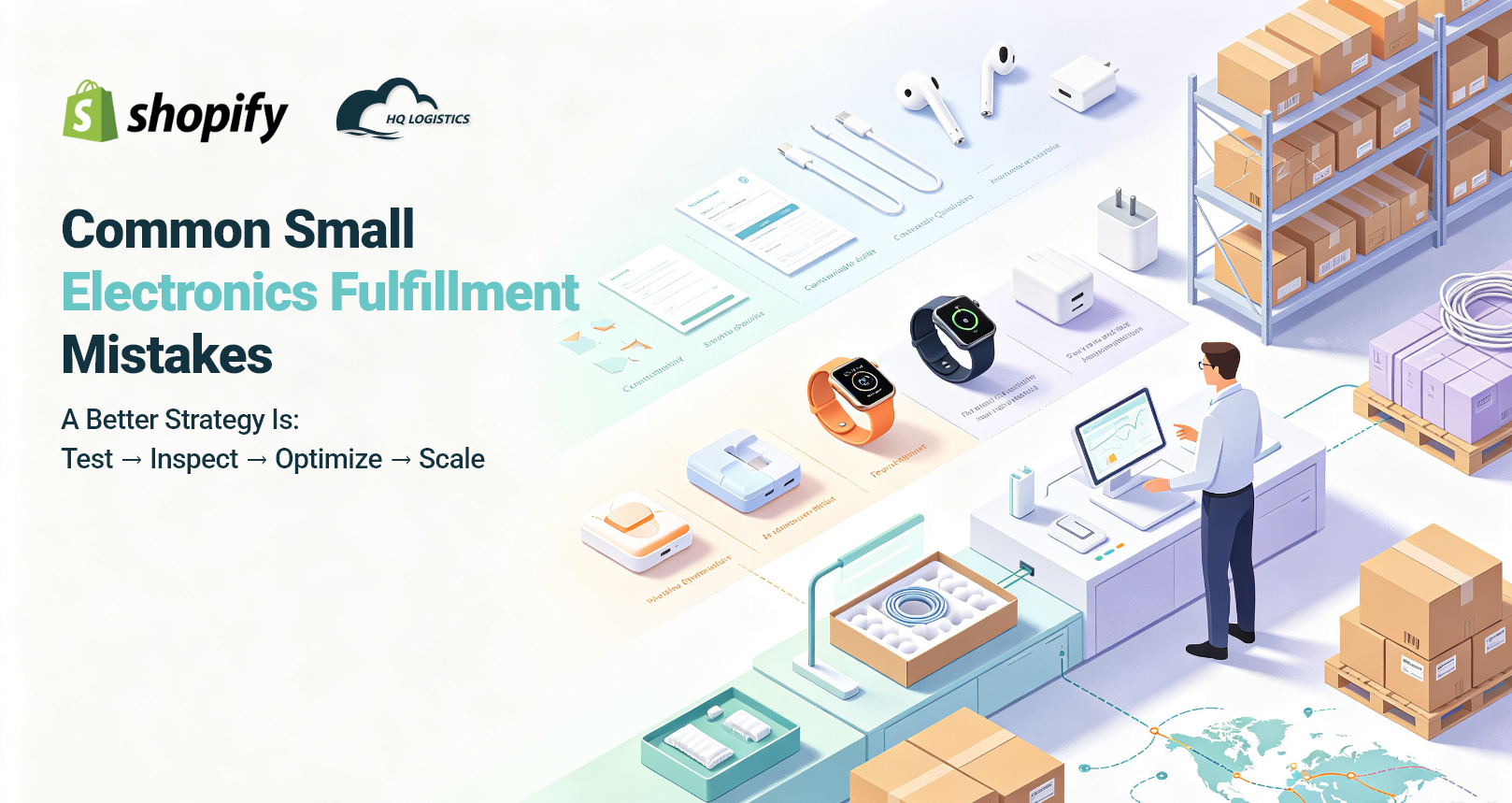
Test → Inspect → Optimize → Scale
You may need a stronger fulfillment setup when:
Orders Are Increasing
Quality Problems Are Increasing
Your Product Range Is Expanding
You Are Adding Battery-Powered Products
Shipping Costs Are Rising
Your Customers Want Faster Delivery
You Need Custom Packaging
You Are Entering the U.S. or EU
You Are Preparing for Q4
Your Current Supplier Can't Keep Up
These are signs that your business may be moving beyond basic dropshipping.
Small Electronics Fulfillment: How to Improve Quality, Shipping, and Cost
starts with looking at the entire supply chain rather than one individual cost.
The right strategy connects:
Sourcing → Supplier Management → Quality Control → Packaging → Inventory → Fulfillment → Shipping
For small electronics, pay special attention to product quality, battery-related shipping requirements, protective packaging, and the total cost per order.
As your business grows, consider adding multiple suppliers, multiple shipping channels, custom packaging, China fulfillment, U.S. warehousing, and EU fulfillment.
You don't need to build the most complicated supply chain from day one.
Start with the right product, test the supplier, inspect the quality, and choose the right shipping method. Then scale the products that prove demand.
For growing ecommerce brands, the goal isn't simply to ship small electronics cheaply
It's to build a fulfillment strategy that helps you protect quality, control costs, deliver reliably, and scale with confidence
Small electronics fulfillment covers the process of sourcing, inspecting, storing, picking, packing, and shipping small electronic products to customers. It may also include product-specific quality checks, packaging, and logistics planning.
Start with reliable suppliers and sample testing. Then use product-specific quality inspection before fulfillment. Depending on the product, checks may include appearance, accessories, charging, buttons, lights, and basic functionality.
They can have additional transportation requirements compared with ordinary products. Sellers should confirm the battery type, product specifications, documentation, and suitable shipping channels before scaling internationally.
Look beyond product price. Optimize supplier selection, packaging size, quality control, fulfillment, shipping channels, and inventory placement. For proven products, overseas warehousing may also improve fulfillment efficiency in certain markets.
Multiple suppliers can provide alternative sourcing options and backup capacity. However, supplier diversification should be combined with consistent product specifications and quality control.
If you have stable U.S. demand for specific products, pre-stocking proven SKUs in a U.S. warehouse may support domestic fulfillment. For new products, keeping inventory in China can provide more flexibility while you test demand.
Yes. Depending on the product, HQ can support custom packaging, labels, inserts, thank-you cards, and other branding elements as part of the fulfillment process.
Consider the product type, weight, battery status, destination, shipping requirements, cost, and delivery time. Different products may require different logistics solutions.
📩Email: zoye@fulfllment-cn.com
PREVIOUS RECOMMENDATIONS


Small Electronics Fulfillment, small electronics fulfillment, electronics fulfillment, small electronics shipping, small electronics sourcing, small electronics supplier, electronics dropshipping, electronics fulfillment service, Shopify electronics fulfillment, battery product shipping, small electronics quality control, electronics packaging, electronics shipping from China, U.S. electronics fulfillment, EU electronics fulfillment, small electronic products, Learn how to improve small electronics fulfillment with better quality control, packaging, shipping channels, supplier management, inventory planning, and cost optimization.




Customer's favorable comments is our eternal motivation. We feel grateful for all the support and company.

Lorem ipsum dolor sit amet, consetetur sadipscing elitr, sed diam nonumy eirmod tempor invidunt ut labore et dolore magna aliquyam erat, sed diam voluptua.