
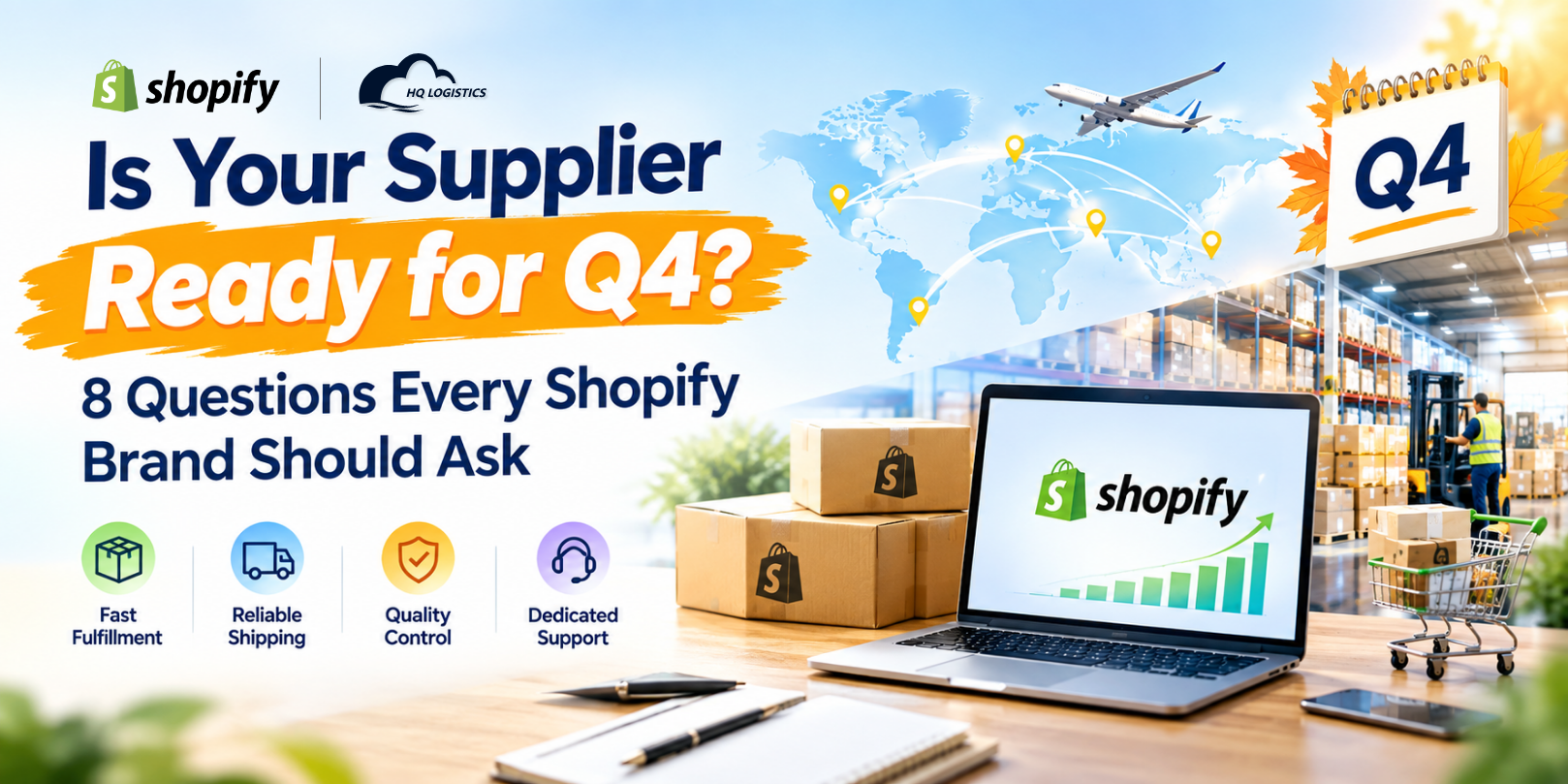
Q4 is one of the most important periods of the year for Shopify brands.
Halloween → Black Friday → Cyber Monday → Christmas
Orders can increase quickly, but so can supply chain pressure.
A supplier that works well during normal months may struggle when your order volume suddenly doubles or triples.
Before Q4 arrives, don't just ask:
“Can my supplier fulfill my orders?”
Ask a better question:
“Can my supplier support my brand when demand increases?”
Here are 8 questions every Shopify brand should ask before Q4.
During normal periods, a small delay may not create a major problem.
During Q4, the same delay can affect hundreds or thousands of orders.
A supply chain issue can quickly lead to:
Stockouts → Delayed Fulfillment → Late Delivery → Customer Complaints → Refunds
At the same time, advertising costs and customer expectations are already increasing.
That's why Q4 preparation shouldn't start with inventory alone.
You should review:
Suppliers → Products → Inventory → Quality → Packaging → Fulfillment → Shipping
Your supplier needs to be ready for the entire process.
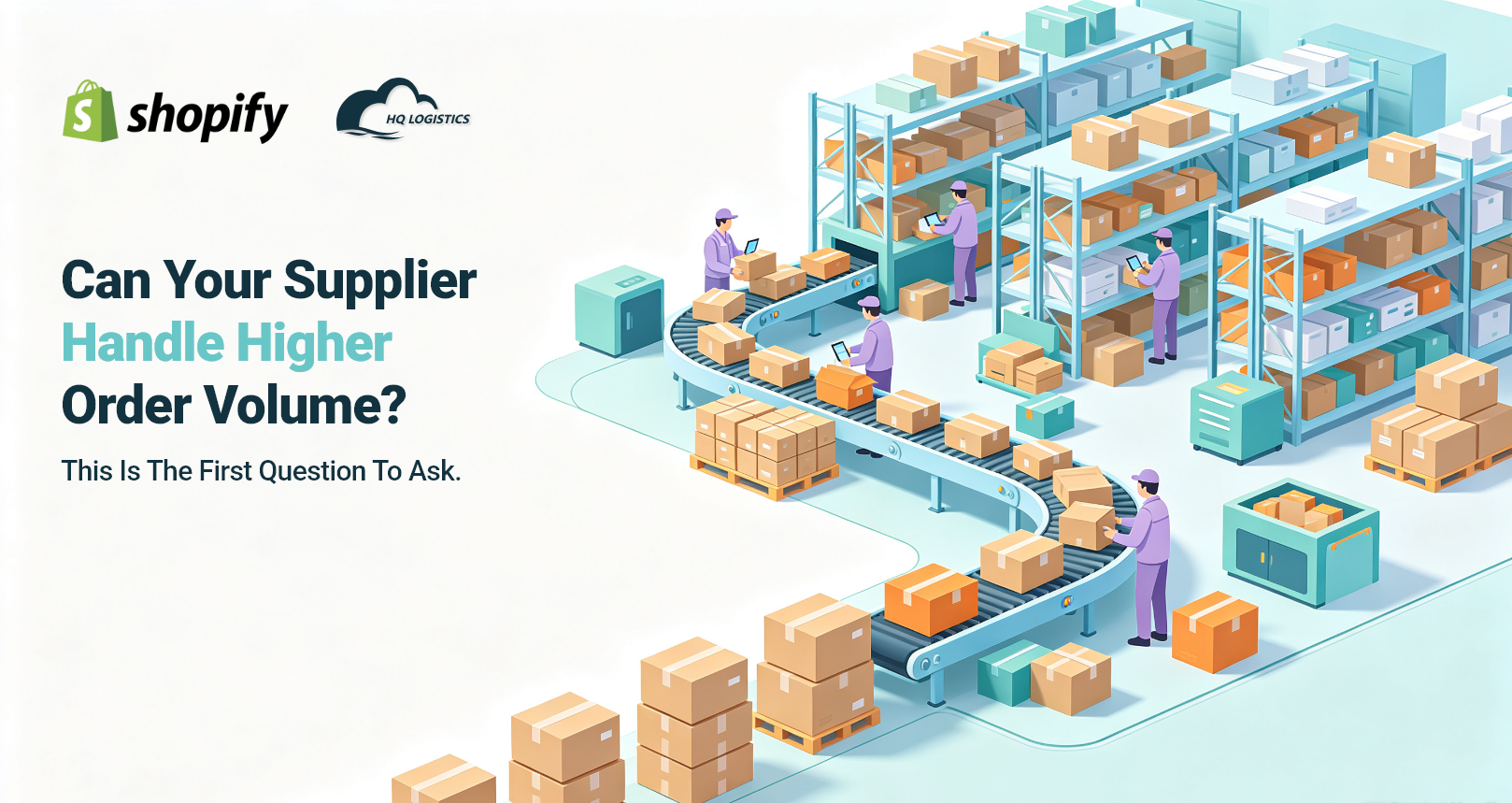
This is the first question to ask.
Your store may currently receive:
20 Orders/Day
But during Q4, demand could increase to:
50 → 100 → 300+ Orders/Day
Can your supplier handle that increase?
Ask about:
Production capacity | Daily fulfillment capacity | Replenishment speed | Warehouse capacity | Peak-season staffing | Order processing time
Don't only ask:
“How many orders can you handle?”
Ask:
“What happens if my order volume suddenly doubles?”
A supplier should have a clear plan for demand spikes.
Stockouts are especially painful during Q4.
Imagine your best-performing product starts generating hundreds of orders, but your supplier doesn't have enough inventory.
Your ads are running.
Customers are ordering.
But you can't ship.
That's a supply chain problem.
Before Q4, identify your:
Top-Selling SKUs → Expected Q4 Demand → Required Inventory → Replenishment Time
Then discuss your stocking plan with your supplier.
For proven products, consider preparing inventory earlier instead of waiting until demand arrives.
A simple approach is:
Forecast → Order → Inspect → Stock → Fulfill
The earlier you understand your inventory requirements, the more options you have.
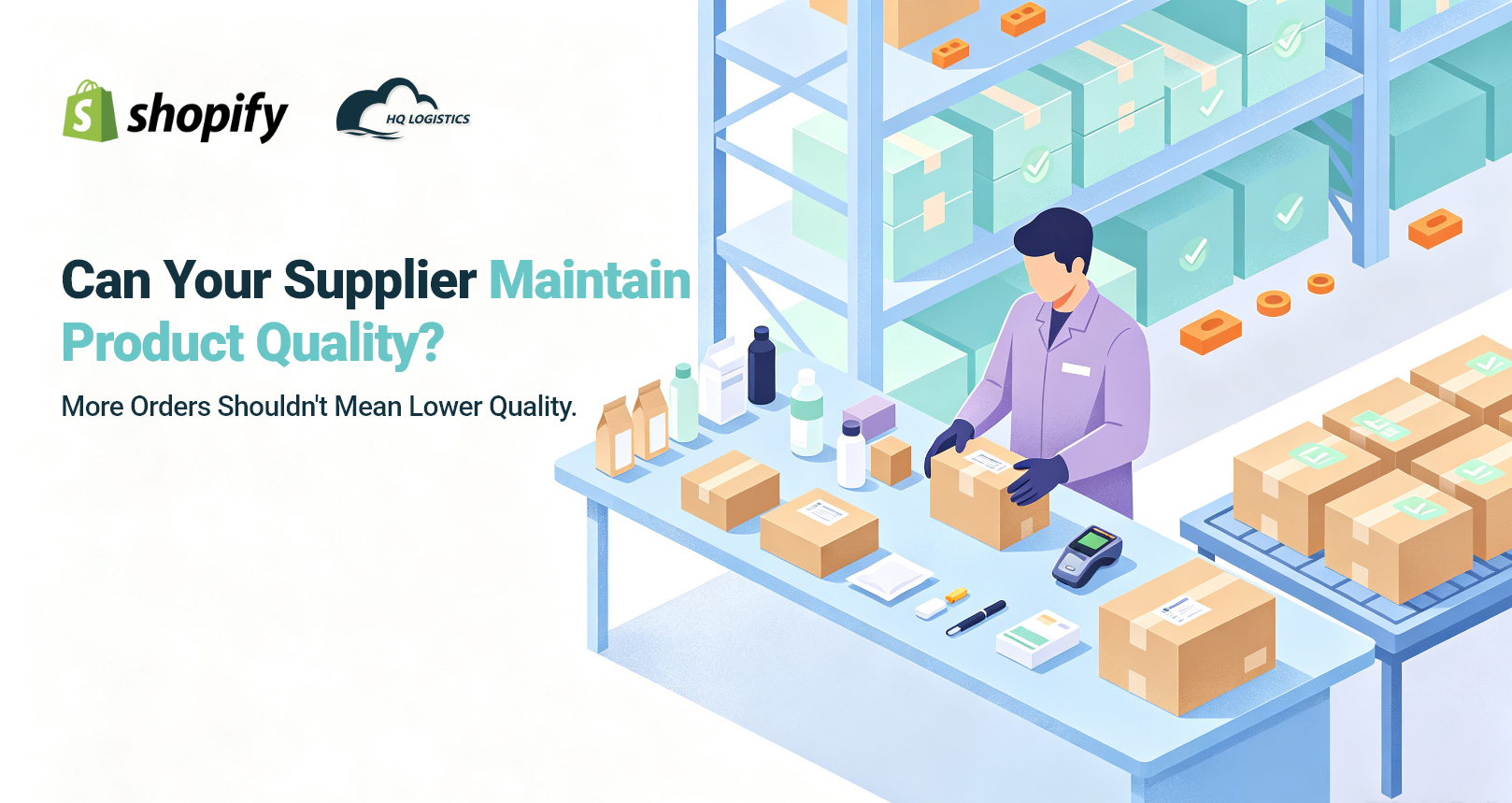
More orders shouldn't mean lower quality.
Unfortunately, rapid scaling can sometimes expose quality problems.
A supplier may maintain good quality at low volume but struggle when production increases.
Ask:
How is product quality checked?
Can products be inspected before fulfillment?
What happens if a batch has quality problems?
Can product specifications remain consistent?
This is especially important for categories such as:
Baby Products | Pet Products | Beauty Products | Small Electronics | Supplements
A strong Q4 strategy should include:
Supplier → Quality Inspection → Warehouse → Fulfillment → Customer
Not simply:
Supplier → Customer
Quality control becomes even more important when order volume increases.
Relying on one supplier can create unnecessary risk during peak season.
What happens if your main supplier:
Runs Out of Stock? | Has Production Delays? | Raises Prices? | Experiences Quality Problems? | Cannot Handle Your Q4 Volume?
A more flexible supply chain can include:
Supplier A → Main Supplier
Supplier B → Alternative Supplier
Supplier C → Backup Capacity
You don't need to split every order between multiple suppliers.
The goal is to have reliable alternatives for important products.
This can give your brand more flexibility when demand changes unexpectedly.
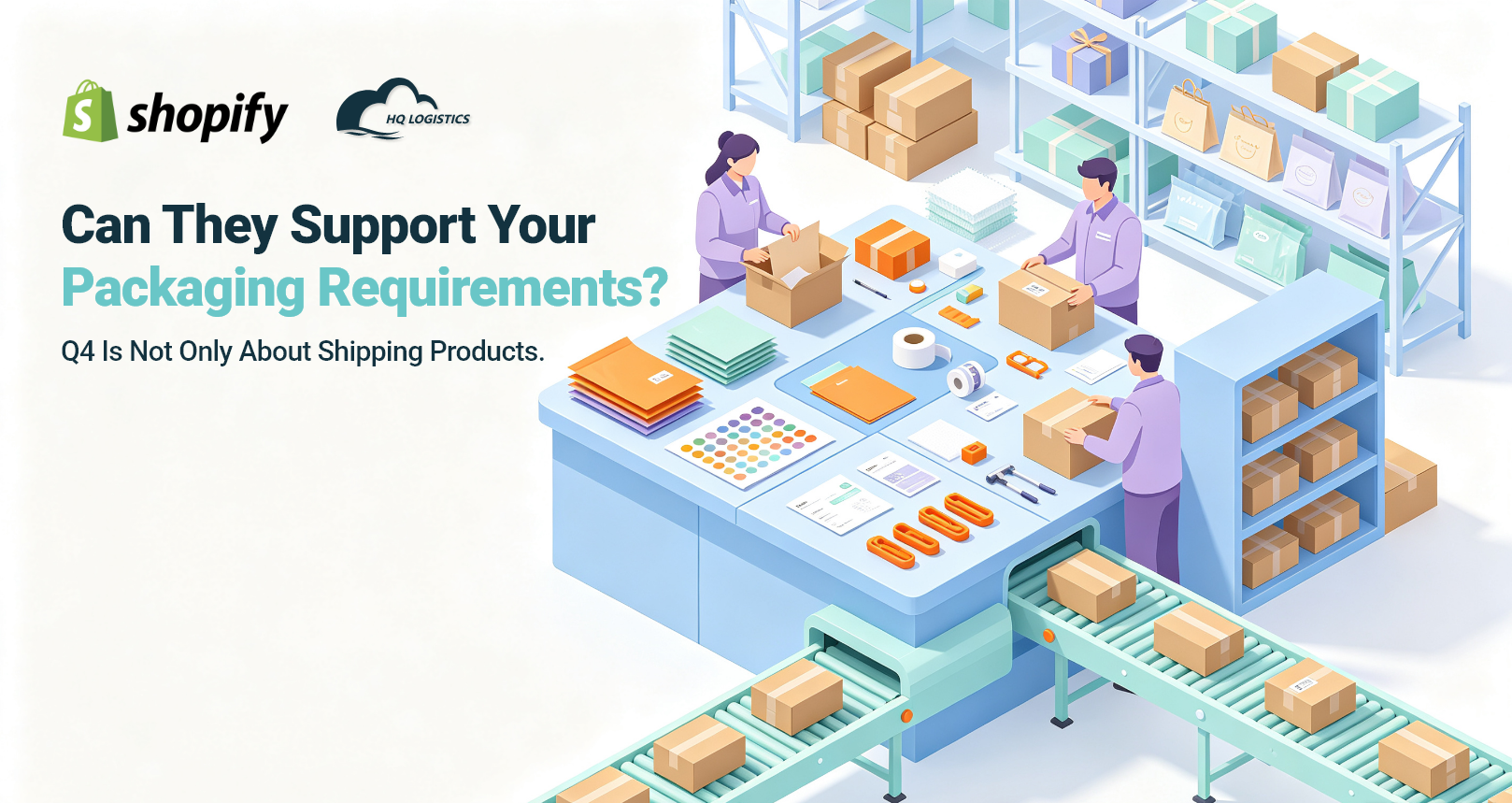
Q4 is not only about shipping products.
It's also an opportunity to strengthen your brand.
If you're already using:
Custom Boxes | Branded Labels | Inserts | Thank-You Cards | Hangtags
make sure your supplier can support these requirements during peak season.
Ask:
Can packaging materials be prepared in advance?
Can branded packaging be stored in the warehouse?
Can orders be packed according to different SKU requirements?
Can packaging capacity keep up with order volume?
You don't want to discover during Black Friday that your custom packaging cannot be produced or processed quickly enough.
A better workflow is:
Custom Packaging → Pre-Stock → Warehouse → Pick & Pack → Ship
For suitable products sold in Europe, brands can also consider eco-friendly packaging as part of their brand strategy.
One shipping channel may work during normal periods.
Q4 is different.
Peak-season congestion, capacity changes, and price fluctuations can affect delivery performance.
Ask your supplier:
How many shipping channels are available?
Do you have alternative routes?
Which channels are suitable for my products?
What happens if the primary route becomes delayed?
A flexible logistics strategy can look like:
Primary Channel → Alternative Channel → Backup Channel
Different products may also require different solutions.
For example:
Standard Products → Standard Shipping
Battery Products → Suitable Specialized Channel
U.S. Bestsellers → U.S. Fulfillment
EU Bestsellers → EU Fulfillment
The goal isn't to use the cheapest shipping route.
It's to choose the right balance of:
Cost + Delivery Speed + Reliability + Product Requirements
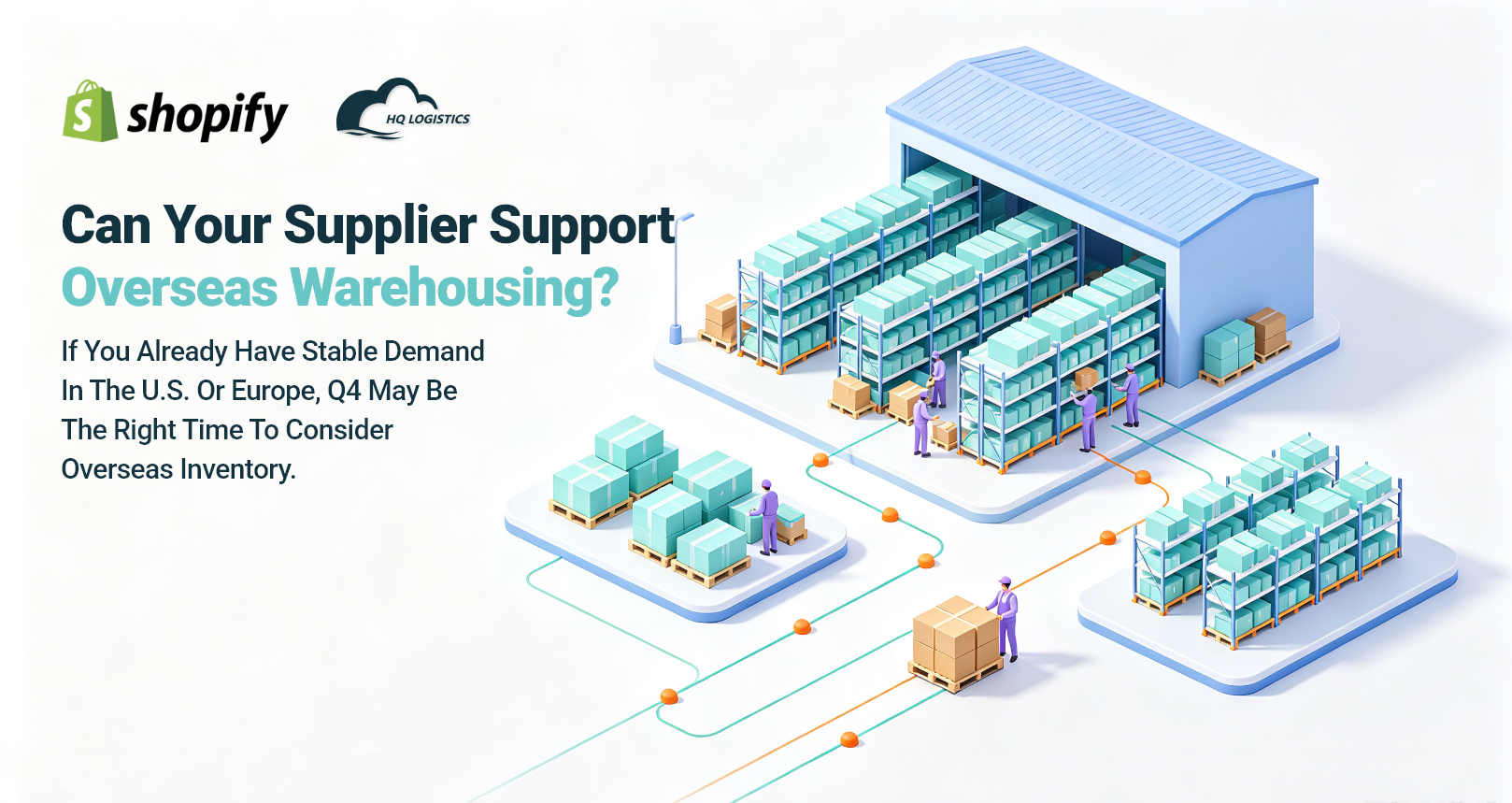
If you already have stable demand in the U.S. or Europe, Q4 may be the right time to consider overseas inventory.
Instead of:
China → Customer
you may use:
China → Overseas Warehouse → Customer
For proven U.S. products:
China Sourcing → QC → U.S. Warehouse → U.S. Customer
For proven EU products:
China Sourcing → QC → EU Warehouse → Multiple EU Markets
This doesn't mean you should move every SKU overseas.
A hybrid strategy can be more practical:
New Products → China Fulfillment
Proven Bestsellers → Overseas Warehouse
This allows you to keep new products flexible while positioning high-demand products closer to customers.
Q4 shouldn't be treated as a one-time sales event.
If your store grows successfully during Q4, your order volume may remain higher afterward.
That's why you should think beyond:
“Can they survive Q4?”
Ask:
“Can they support my brand after Q4?”
As your business grows, you may need:
More Suppliers | Better Quality Control | Custom Packaging | Inventory Planning | Multiple Shipping Channels | U.S. Warehousing | EU Fulfillment | Faster Order Processing | Better Supply Chain Communication
Your supplier should be able to grow with your business.
Otherwise, the success you create during Q4 can become a problem in the following months.
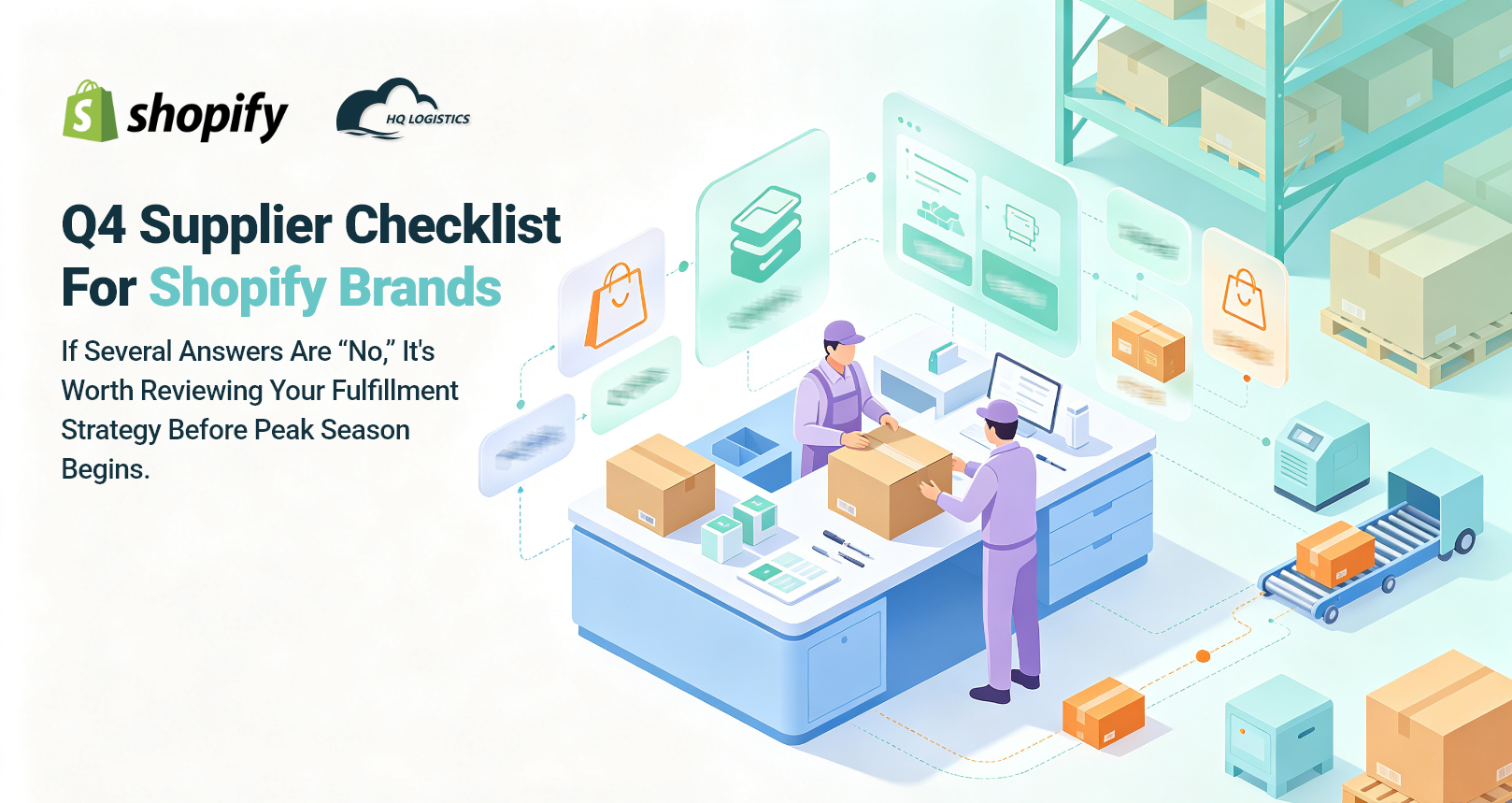
Before peak season, review your supplier using this checklist:
Can they handle 2× or 3× your normal order volume?
Can they keep your bestsellers in stock?
Do they have a reliable QC process?
Do you have alternative suppliers for important products?
Can they support your branded packaging at scale?
Do you have multiple shipping channels?
Would U.S. or EU inventory improve fulfillment for your bestsellers?
Can the supplier support your brand after Q4?
If several answers are “No,”it's worth reviewing your fulfillment strategy before peak season begins.
You don't necessarily need to replace everything immediately.
Start by identifying the biggest risks.
For example:
Solution → Add Alternative Supplier Options
Solution → Strengthen Pre-Fulfillment QC
Solution → Compare Multiple Shipping Channels
Solution → Consider Overseas Warehousing for Proven Products
Solution → Prepare Custom Packaging Before Peak Season
Solution → Forecast Demand and Pre-Stock Bestsellers
The goal is to fix the bottleneck before it becomes a Q4 emergency.
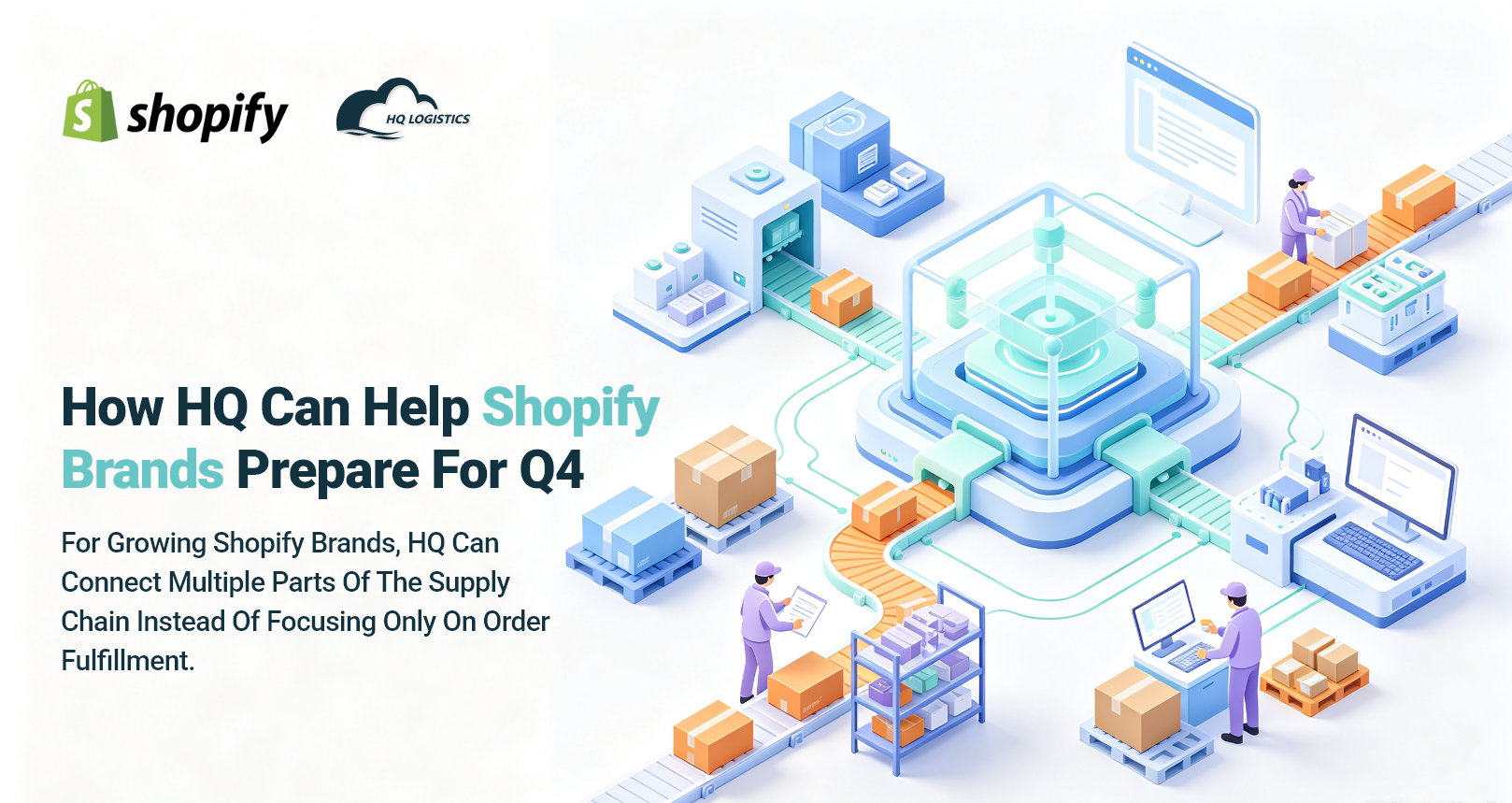
For growing Shopify brands, HQ can connect multiple parts of the supply chain instead of focusing only on order fulfillment.
HQ can help brands source from multiple supplier options, creating greater flexibility for important products.
Products can be inspected before fulfillment to help identify quality problems earlier.
HQ can support:
Custom Packaging | Labels | Inserts | Thank-You Cards | Hangtags
Brands can prepare packaging in advance and build a more consistent customer experience during Q4.
Different products and destinations can be matched with suitable logistics solutions.
This gives brands more flexibility when peak-season conditions change.
New products and lower-volume SKUs can remain in China while brands test demand.
Proven U.S. bestsellers can be pre-stocked for domestic U.S. fulfillment when demand supports it.
Proven products can be positioned in an EU warehouse and fulfilled across multiple EU markets.
This creates a more flexible model:
China for Sourcing & Flexibility
Overseas Warehouses for Proven Demand
Not every Shopify brand needs to switch suppliers.
But if your current supplier has problems with:
Capacity | Quality | Inventory | Packaging | Shipping | Communication | Scalability
then Q4 is a good reason to review your options.
The biggest mistake is waiting until peak season has already started.
A better approach is:
Evaluate → Test → Optimize → Scale
If you're considering a new supplier, test the new workflow before Q4.
Check:
Product Quality → Processing Speed → Packaging → Shipping → Communication
Then make a decision based on actual performance.
Is Your Supplier Ready for Q4?
That's a question every Shopify brand should ask before peak season.
Your supplier may be perfectly capable of handling normal demand.
But Q4 can bring:
More Orders + More SKUs + More Inventory Pressure + More Shipping Pressure + Higher Customer Expectations
The right supplier should be prepared for all of them.
Before Q4, ask these eight questions:
1. Can they handle higher order volume?
2. Can they keep your bestsellers in stock?
3. Can they maintain product quality?
4. Do you have backup supplier options?
5. Can they support your packaging requirements?
6. Do you have enough shipping options?
7. Can they support overseas warehousing?
8. Can they support your brand beyond Q4?
If your current supplier can answer these questions confidently, you're in a stronger position for peak season.
If not, it may be time to rethink your supplier before the orders start coming in.

Ideally, Q4 preparation should begin well before peak demand. Start by forecasting demand, identifying bestsellers, checking supplier capacity, reviewing inventory, and confirming shipping options.
Ask about production capacity, fulfillment capacity, inventory availability, quality control, packaging, shipping channels, and peak-season support. If your supplier cannot provide clear answers, further testing or alternative suppliers may be necessary.
If your current supplier has recurring problems with quality, inventory, capacity, shipping, or communication, consider evaluating alternatives before Q4. Test the new supplier before peak demand rather than switching during the busiest period.
Multiple supplier options can provide backup capacity and reduce dependence on a single supplier. Focus on having reliable alternatives for your key products rather than using many suppliers unnecessarily.
For proven bestsellers with stable demand, overseas warehousing can help position inventory closer to customers. New or untested products may be better kept in China until demand is confirmed.
Start early. Forecast demand, pre-stock bestsellers, inspect products, prepare custom packaging, confirm shipping channels, and establish backup supplier options before peak season begins.
Yes. HQ can support product sourcing, multiple supplier options, quality inspection, custom packaging, China fulfillment, multiple shipping channels, U.S. overseas warehousing, and EU fulfillment for growing ecommerce brands.
📩Email: zoye@fulfllment-cn.com
PREVIOUS RECOMMENDATIONS


Is Your Supplier Ready for Q4, Q4 fulfillment, Shopify Q4 preparation, Q4 supplier, Shopify supplier, ecommerce supplier, Q4 inventory planning, peak season fulfillment, Q4 fulfillment strategy, Shopify fulfillment, supplier management, ecommerce supply chain, holiday fulfillment, Q4 inventory, overseas warehouse, U.S. fulfillment, EU fulfillment, Is your supplier ready for Q4? Discover 8 key questions Shopify brands should ask about capacity, inventory, quality, packaging, shipping, suppliers, and fulfillment.




Customer's favorable comments is our eternal motivation. We feel grateful for all the support and company.

Lorem ipsum dolor sit amet, consetetur sadipscing elitr, sed diam nonumy eirmod tempor invidunt ut labore et dolore magna aliquyam erat, sed diam voluptua.