
When you start an ecommerce business, working with one supplier often feels like the easiest option.
You have one contact, one product source, one fulfillment process, and fewer things to manage.
But as your store grows, the same setup can become a risk.
More orders mean more inventory pressure, higher customer expectations, and greater consequences when something goes wrong. A production delay, stockout, quality issue, or shipping problem from one supplier can quickly affect your entire business.
So, one supplier vs. multiple suppliers—which is better for scaling ecommerce?
The answer depends on your business stage, product range, order volume, and supply chain strategy.
For many growing ecommerce brands, the goal is not to work with as many suppliers as possible. It is to build a reliable supplier network with the right suppliers for the right products.
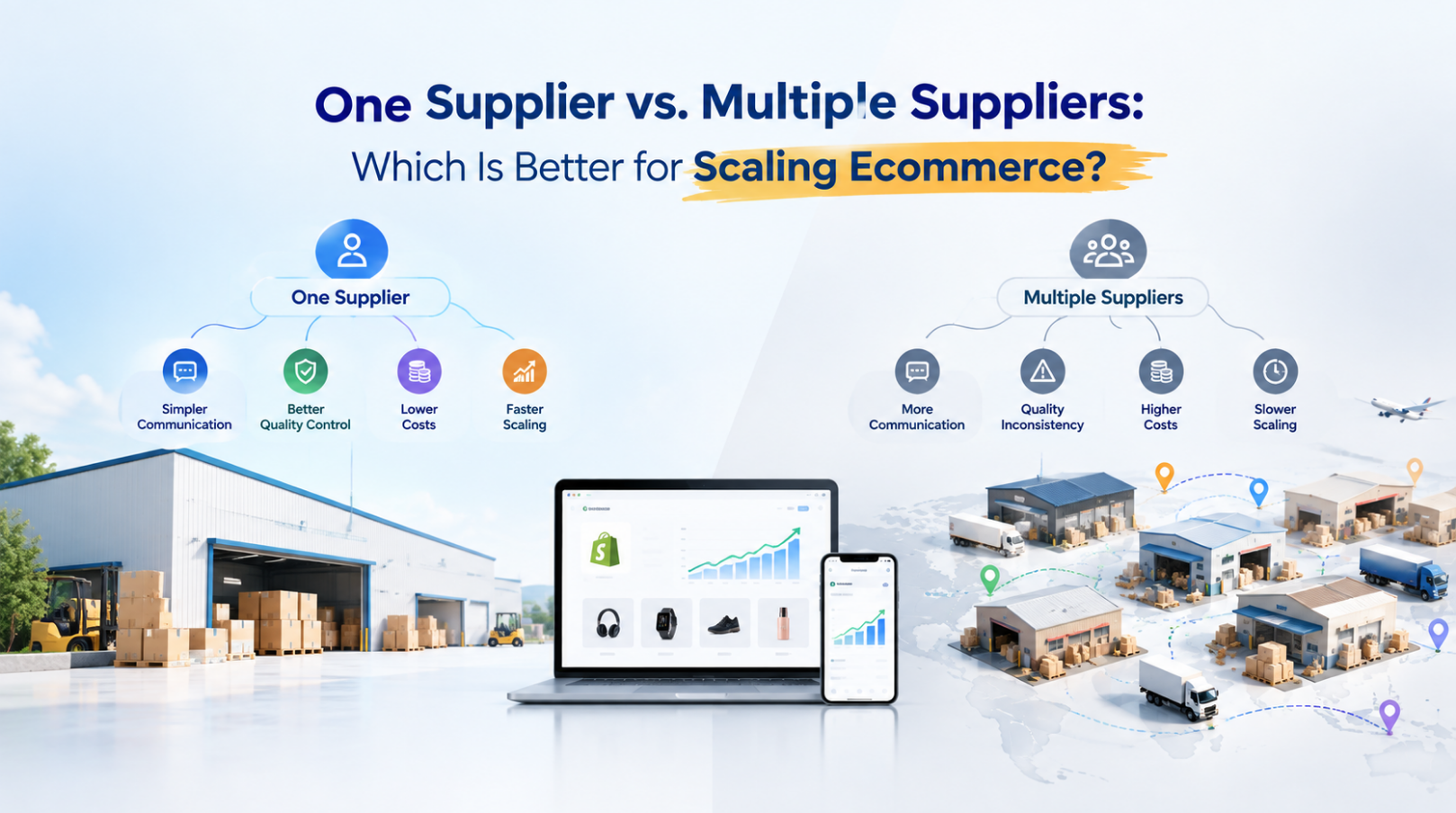
A single supplier offers simplicity.
Multiple suppliers offer flexibility and risk diversification.
One Supplier | Easier Communication | Simpler Inventory Management | Faster Decision-Making | Less Supplier Coordination
Multiple Suppliers | Backup Supply | More Product Options | Better Capacity Flexibility | Supplier Comparison | Lower Dependency Risk
Neither model is automatically better.
The important question is:
Can your current supplier structure support your next stage of growth?
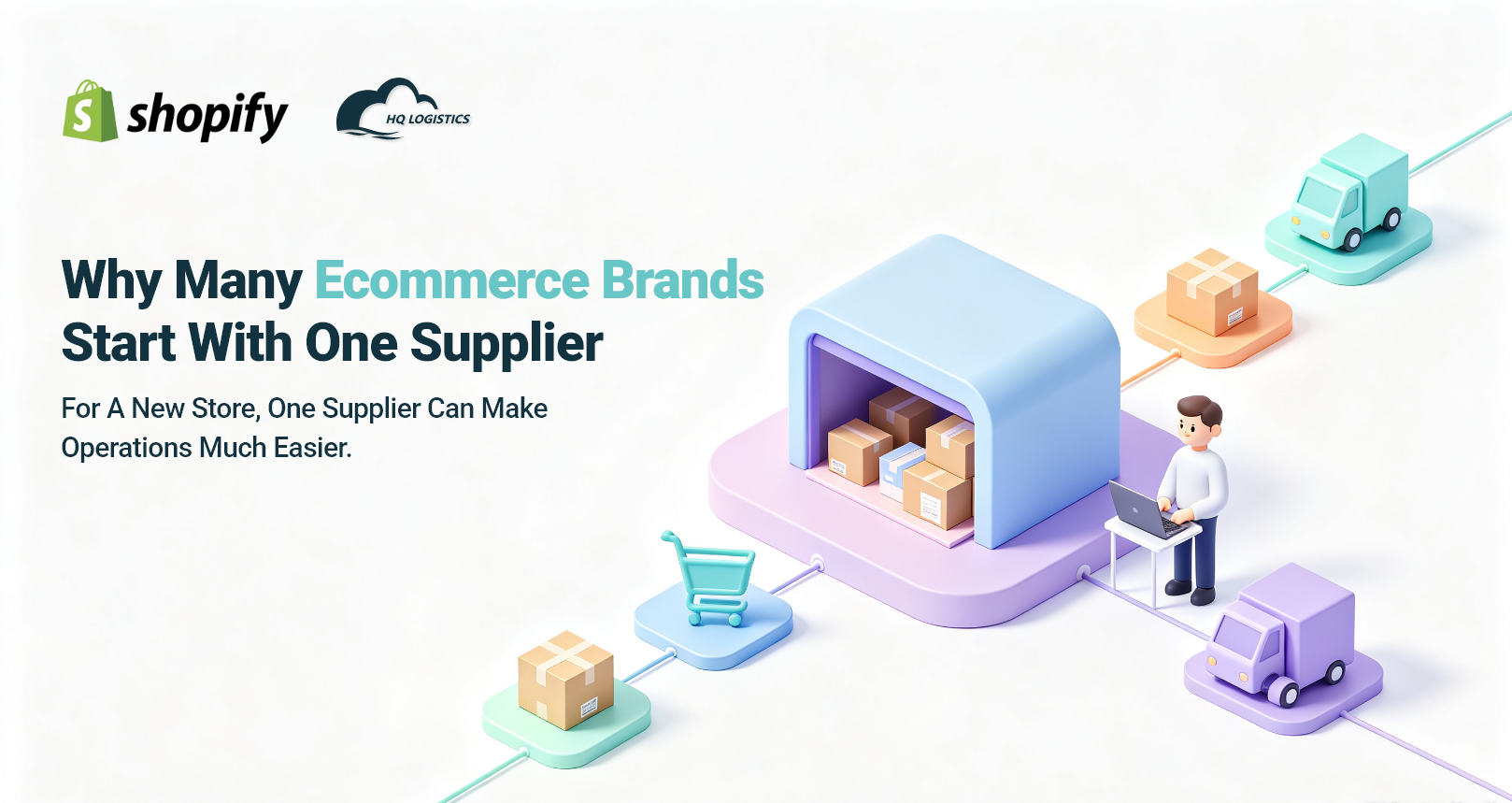
For a new store, one supplier can make operations much easier.
You may only have a few products and a relatively small number of daily orders. Managing one supplier means you can focus more on marketing, customer acquisition, and testing products.
A single supplier can also simplify:
Product Sourcing | Pricing | Communication | Inventory | Quality Control | Order Fulfillment | Shipping
If the supplier is reliable and your order volume is still low, there may be no reason to make your supply chain more complicated.
Your Product Range Is Small | Order Volume Is Low | Demand Is Predictable | The Supplier Has Stable Inventory | Product Quality Is Consistent | Fulfillment Is Reliable | Communication Is Fast
For an early-stage ecommerce business, simplicity can be valuable.
The problem starts when your business becomes too dependent on that one source.
As your store grows, supplier dependency becomes more important.
Imagine that your best-selling product suddenly receives five times your normal order volume.
Your supplier may not have enough inventory.
Or perhaps the factory experiences a production delay.
Or the quality of a new batch is inconsistent.
Or your supplier's shipping channel becomes more expensive or slower.
If you only have one supplier, there may be no immediate alternative.
Stockouts | Production Delays | Quality Problems | Limited Capacity | Shipping Restrictions | Price Increases | Communication Issues | Supplier Dependency
One supplier does not mean your business will fail.
It simply means that one supplier problem can have a larger impact on your entire operation.
As order volume increases, flexibility becomes more valuable.
Multiple suppliers allow you to spread risk and create alternatives.
For example, you might use one supplier for your best-selling product and another qualified supplier as a backup.
You could also use different suppliers for different product categories.
Supplier A → Main Product Line
Supplier B → Backup Source
Supplier C → New Product Development
Supplier D → Alternative Product or Material
This creates a more flexible supply chain without requiring you to move every product to every supplier.
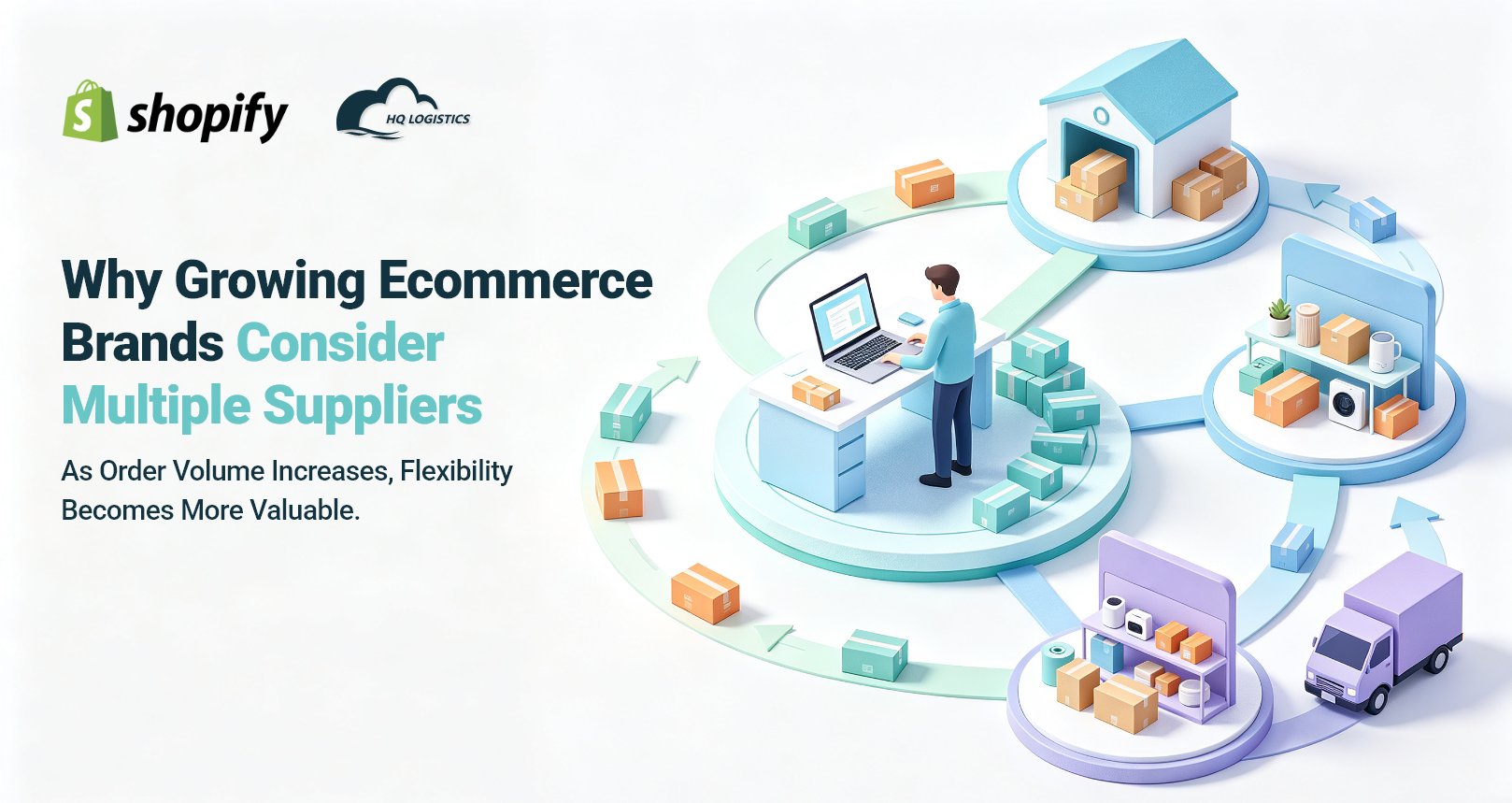
The biggest advantage of multiple suppliers is risk management.
If your main supplier has a production issue, you already have another source that understands your product requirements.
This can be especially valuable during peak seasons such as Q4, when demand and production pressure increase.
Primary Supplier | Backup Supplier | Emergency Replenishment | Alternative Product Source
The goal is not to constantly switch suppliers.
The goal is to make sure one supplier problem does not stop your entire business.
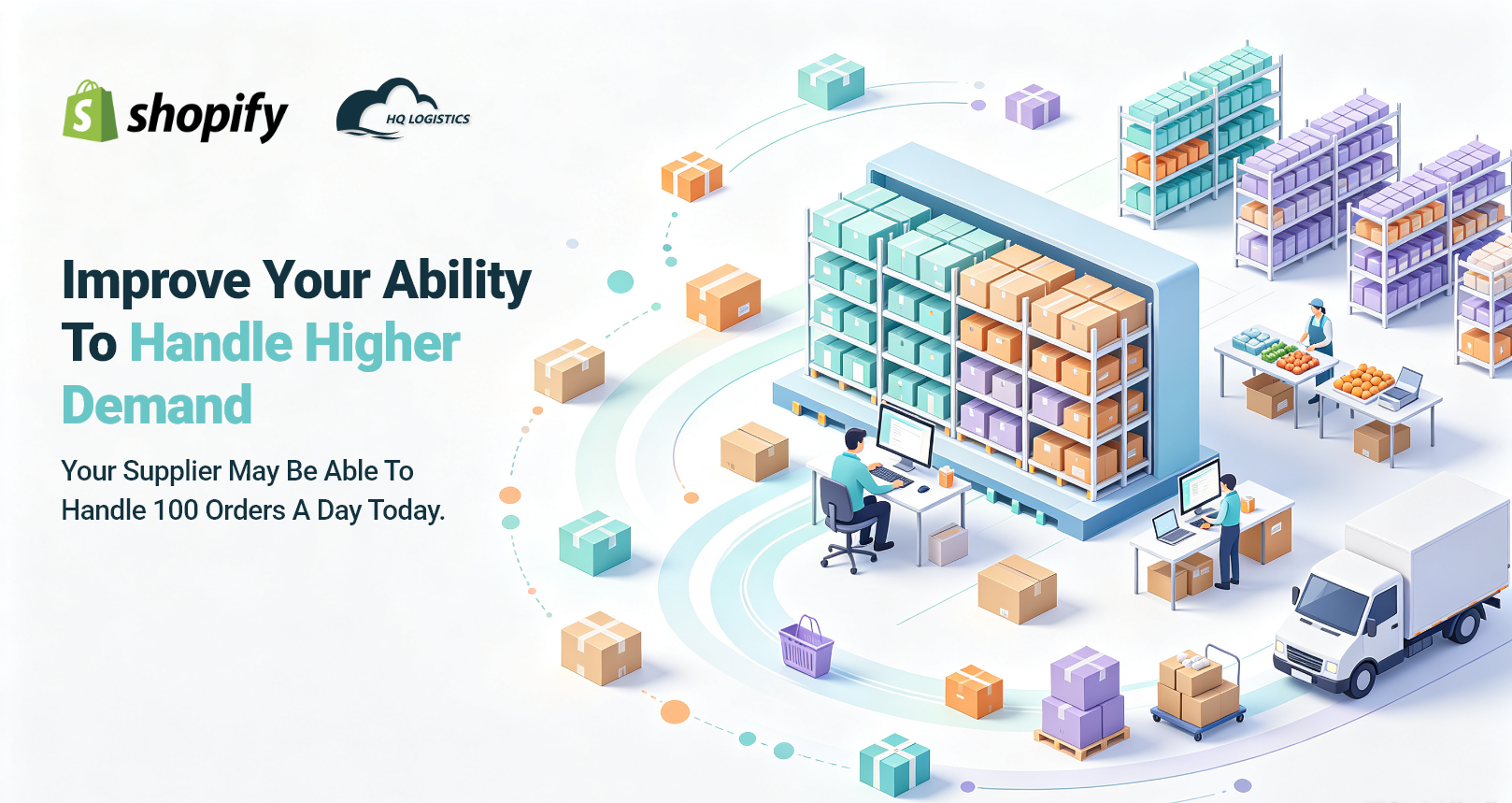
Your supplier may be able to handle 100 orders a day today.
But what happens when you reach 500?
Having access to multiple qualified suppliers gives you more options when demand increases.
You can allocate production or sourcing based on capacity, product requirements, and delivery timelines.
This is especially useful when a product becomes a bestseller unexpectedly.
Instead of asking one supplier to solve every capacity problem, you can build a system that gives your brand more room to scale.
Multiple suppliers also give you better visibility into the market.
You can compare:
Product Cost | Material Quality | Production Lead Time | MOQ | Packaging | Defect Rate | Communication | Fulfillment Speed
This does not mean choosing the cheapest supplier every time.
A supplier with a slightly higher product price may provide better quality, faster production, fewer defects, or better packaging.
The real goal is to understand your total supply chain cost, not just your factory price.
Not every product requires the same supply chain.
A baby product may require careful quality control and material checks.
A small electronic product may require different packaging and shipping considerations.
A fashion accessory may need custom colors, labels, or packaging.
A supplement brand may have specific product and packaging requirements.
Instead of forcing every product through one supplier, multiple qualified suppliers can help you match the right capabilities to the right products.
Product Type → Suitable Supplier → Quality Control → Packaging → Fulfillment → Shipping
This can create a more specialized and flexible supply chain.
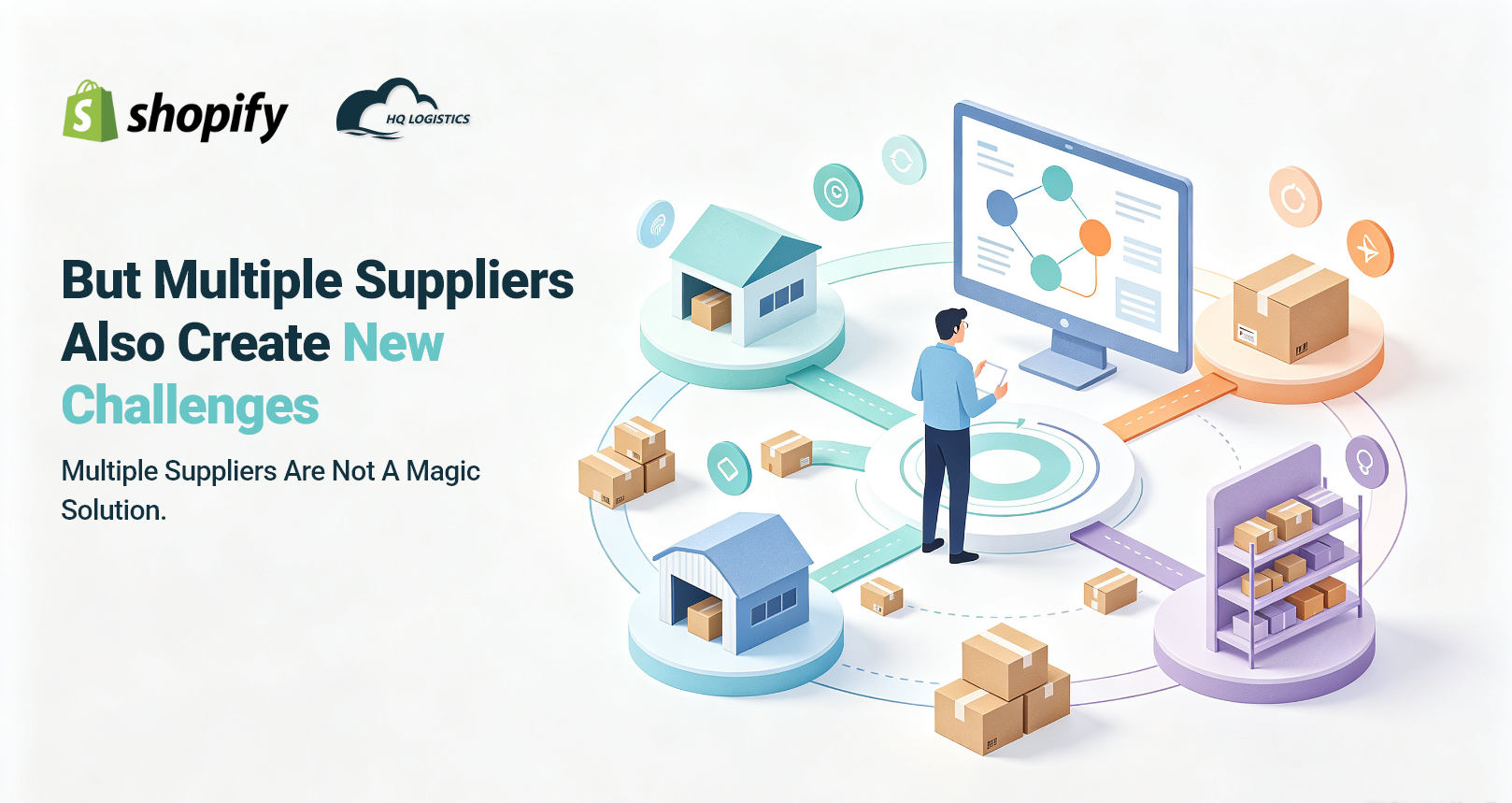
Multiple suppliers are not a magic solution.
More suppliers also mean more management.
You may need to coordinate different:
Prices | MOQs | Lead Times | Quality Standards | Product Specifications | Packaging Requirements | Inventory | Communication
If every supplier uses a different process, your operations can become complicated very quickly.
That is why simply adding suppliers is not enough.
You need a supplier management system.
Every supplier should work from the same product requirements.
Document important details such as:
Materials | Dimensions | Colors | Product Features | Packaging | Labels | Quality Standards
This makes it easier to compare products and maintain consistency across suppliers.
If two suppliers produce the same product, customers should not receive two completely different versions.
Set clear quality requirements and use consistent inspection standards.
Sample Approval | Pre-Shipment Inspection | Product Photos | Quantity Check | Appearance Check | Functional Check
Quality control becomes even more important when you have multiple suppliers.
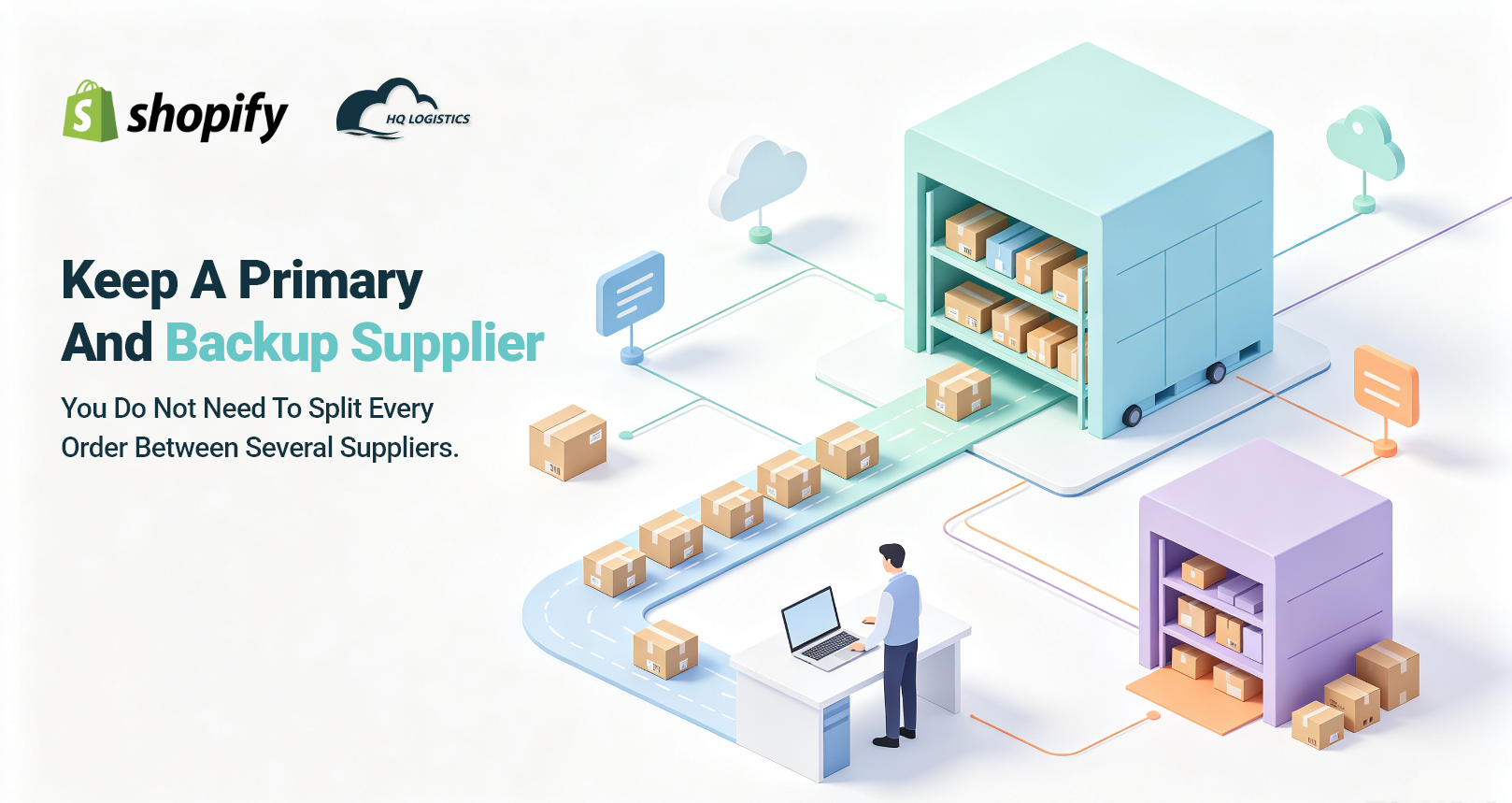
You do not need to split every order between several suppliers.
A practical approach is to identify:
Primary Supplier → Main Production
Backup Supplier → Emergency Capacity
This keeps daily operations relatively simple while giving you an alternative when problems occur.
Do not evaluate suppliers only by product price.
Monitor their performance over time.
On-Time Delivery | Product Quality | Defect Rate | Inventory Availability | Response Speed | Fulfillment Accuracy | Shipping Performance
This helps you identify which suppliers are actually supporting your business.
You may want to consider adding a second supplier when:
Your Bestselling Product Is Frequently Out of Stock | Order Volume Is Increasing Quickly | Your Supplier Has Limited Production Capacity | Quality Is Becoming Inconsistent | Lead Times Are Increasing | Your Business Depends Too Heavily on One Supplier | You Are Launching New Product Categories | You Are Preparing for Q4
You do not have to wait for a serious problem.
Building a backup supplier before you need one is usually much easier than finding one during an emergency.
One reliable supplier is often enough.
At this stage, keeping operations simple can help you focus on product testing and customer acquisition.
This is where a second supplier can become valuable.
Your priority should shift from simple sourcing to supply chain reliability and scalability.
A more developed supplier network can provide greater flexibility.
You may have different suppliers for different products, markets, materials, or production requirements.
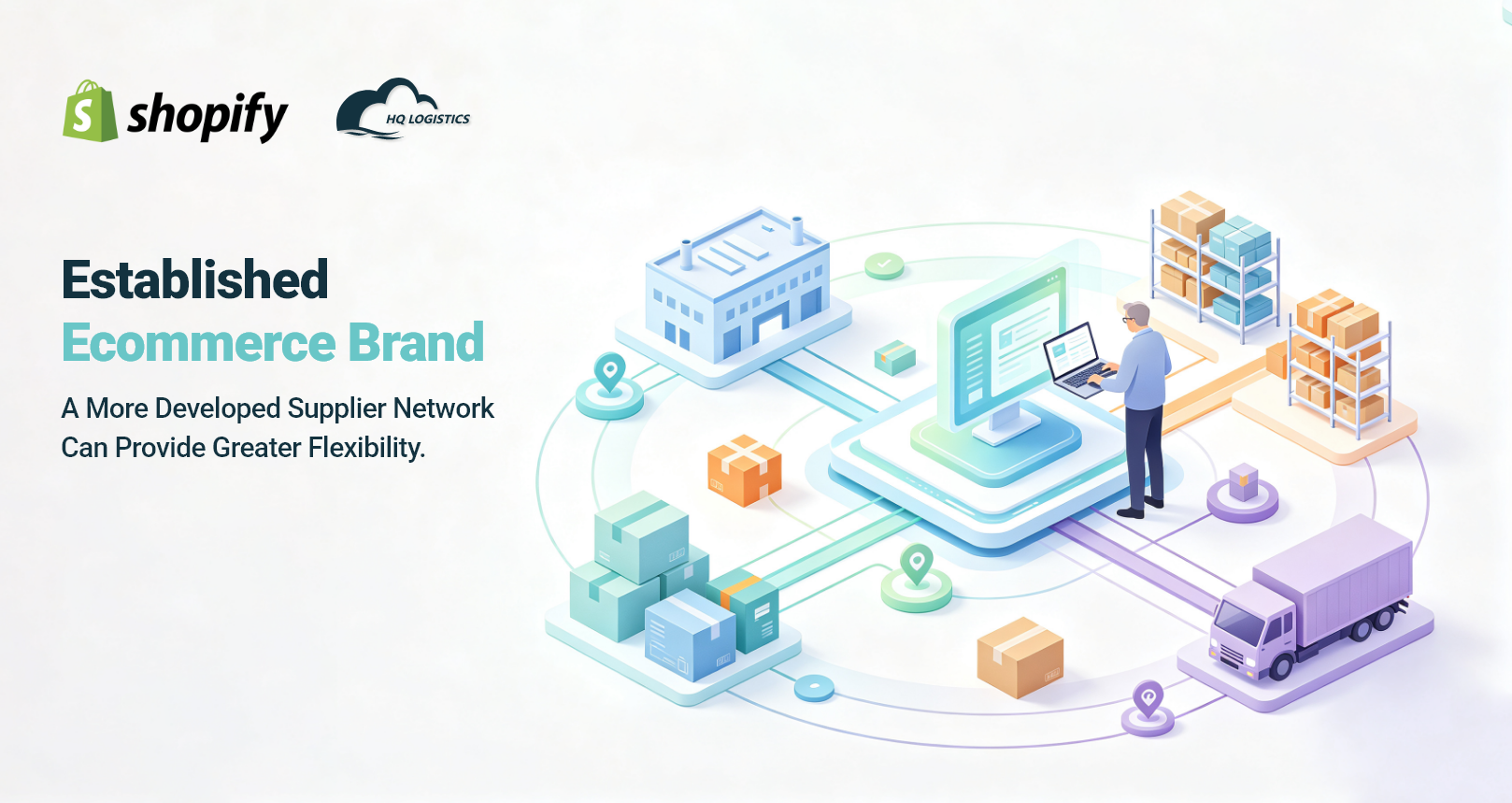
At larger scale, supplier management becomes a core part of your business strategy.
You may need multiple suppliers, multiple warehouses, multiple logistics channels, and more structured inventory planning.
Supplier diversification is only one part of scaling ecommerce.
You also need to think about where inventory is stored and how orders are fulfilled.
For example, a growing Shopify brand might use:
China Fulfillment → Flexible Sourcing and Inventory
U.S. Warehouse → Domestic U.S. Fulfillment
EU Warehouse → Fulfillment Across Multiple EU Markets
This can help brands create a more flexible fulfillment strategy as their sales markets expand.
Instead of using one supplier and one shipping method for every order, you can build a system based on:
Product | Market | Inventory | Order Volume | Delivery Requirements | Total Cost
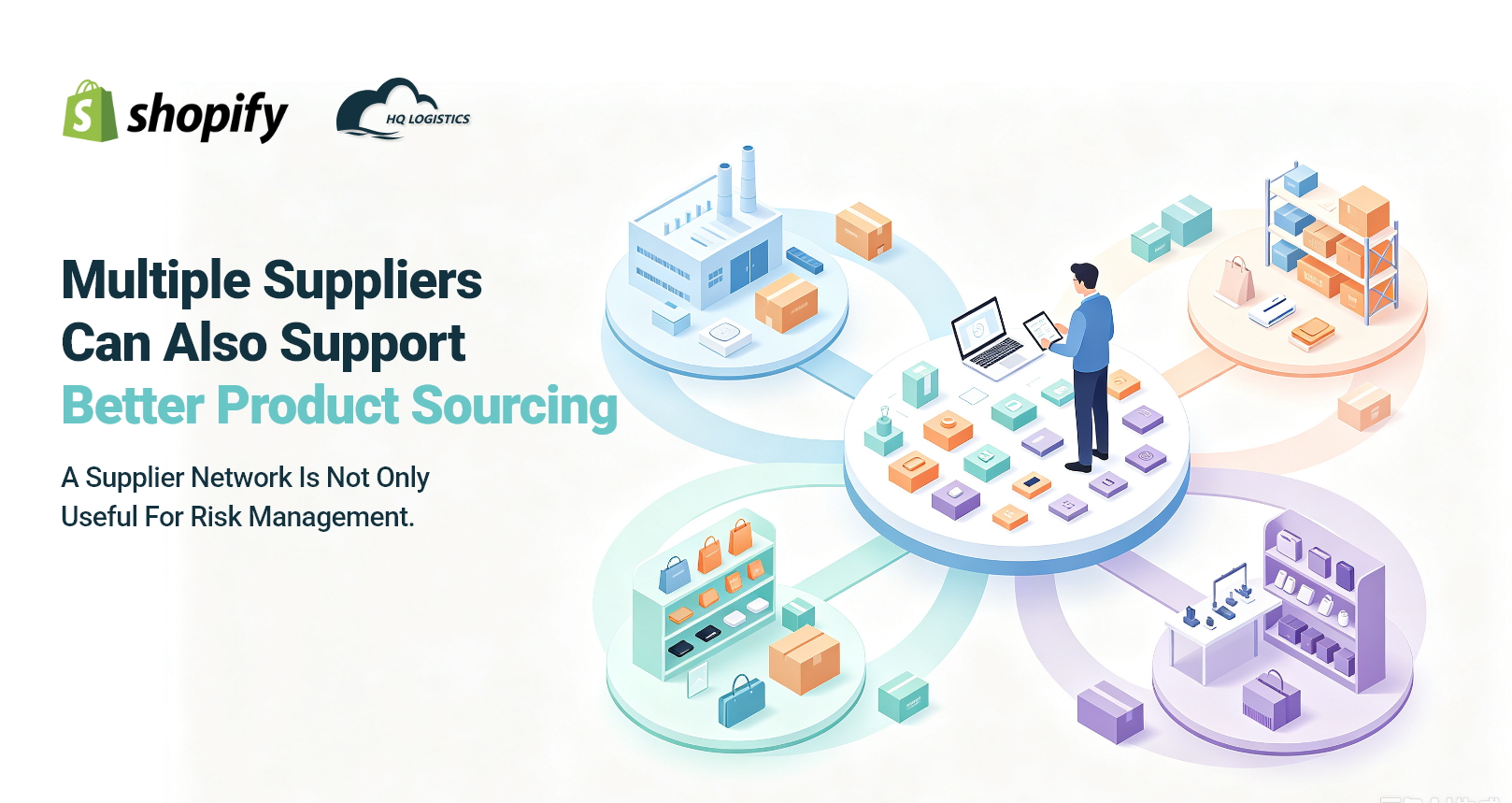
A supplier network is not only useful for risk management.
It can also help brands discover better products.
When you work with multiple qualified sources, you can compare different materials, designs, production capabilities, and pricing.
This can be especially useful when developing private-label or branded products.
For example, instead of asking:
“Who can supply this product?”
You can ask:
“Which supplier can produce this product at the quality, cost, and scale my brand needs?”
That is a much stronger approach to ecommerce sourcing.
As your ecommerce business grows, managing multiple suppliers, inventory, quality control, and fulfillment can become difficult to handle on your own.
HQ can support brands across the supply chain—from product sourcing and supplier management to quality inspection, packaging, warehousing, fulfillment, and global logistics.
Instead of relying on one supplier for everything, brands can access multiple supplier options and select suitable sources based on product requirements, quality, capacity, and cost.
HQ can also support quality inspection before fulfillment, helping brands maintain more consistent product standards.
For growing brands, custom packaging can be integrated into the fulfillment process, including branded packaging, labels, inserts, thank-you cards, and other brand elements.
On the logistics side, multiple shipping channels and warehouse options can help brands build a fulfillment strategy based on their target markets.
The goal is not simply to manage more suppliers.
It is to make the entire supply chain more reliable, flexible, and scalable.
You do not need ten suppliers to build a strong supply chain.
Start with a simple structure.
1 Reliable Primary Supplier | 1 Qualified Backup Supplier | Clear Product Specifications | Consistent Quality Standards | Regular Supplier Performance Reviews | Flexible Shipping Options | Scalable Fulfillment
As your business grows, you can expand the network when necessary.
This gives you flexibility without creating unnecessary complexity.
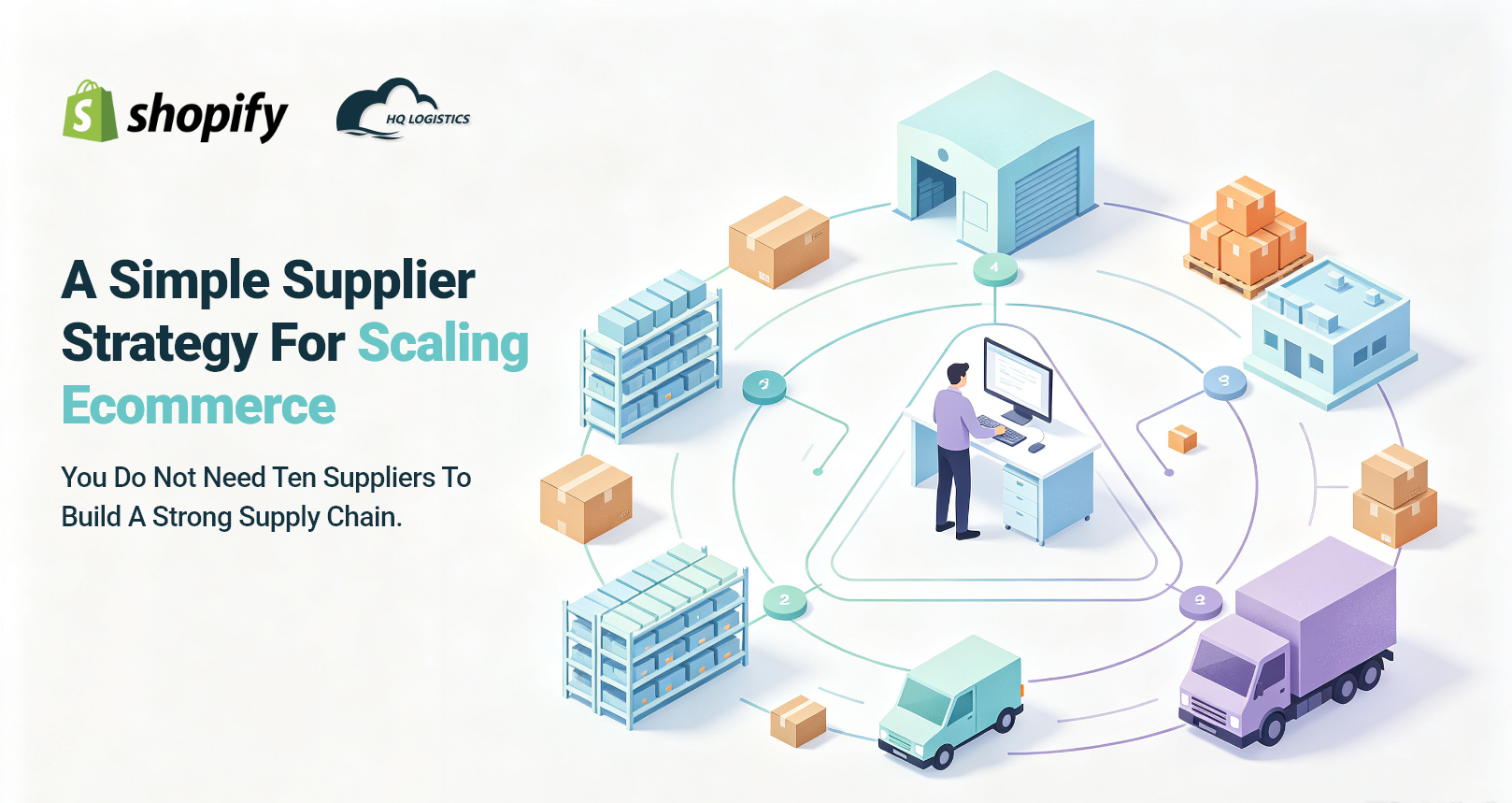
So, one supplier vs. multiple suppliers—which is better for scaling ecommerce?
For a new store, one reliable supplier can be the simplest and most efficient option.
For a growing brand, however, depending entirely on one supplier can create unnecessary risk.
Multiple qualified suppliers can provide backup capacity, better sourcing options, more flexibility, and greater protection against unexpected supply chain problems.
But the goal is not to collect suppliers.
The goal is to build a well-managed supplier network that supports your products, customers, and growth.
As your ecommerce business moves from testing products to building a long-term brand, your supply chain should evolve with it.
One supplier may help you start. The right supplier network can help you scale.
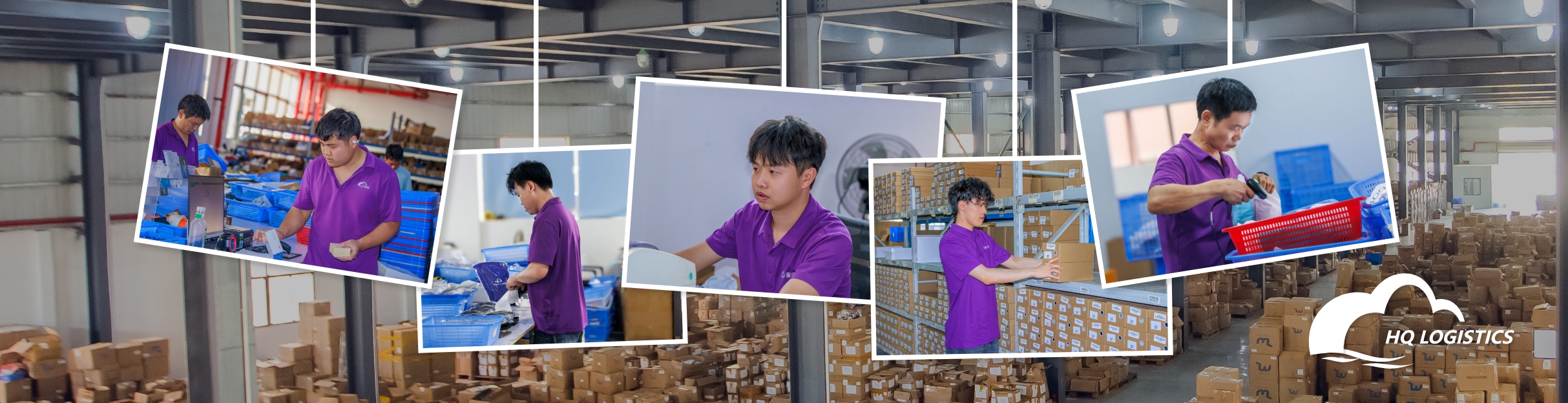
It depends on your business stage. One supplier can be suitable for small or new stores, while multiple qualified suppliers can provide more flexibility and reduce dependency as your business grows.
There is no universal number. A practical starting point is one reliable primary supplier plus one qualified backup supplier for important products.
It can require more management, but it can also improve pricing visibility, reduce stockout risk, and provide more flexibility. The important metric is total supply chain cost rather than supplier count.
Use clear product specifications, approve samples, establish consistent inspection standards, and regularly track supplier performance.
Consider adding a second supplier when order volume is increasing, bestsellers frequently go out of stock, lead times are becoming longer, or your business has become heavily dependent on one supplier.
📩Email: zoye@fulfllment-cn.com
PREVIOUS RECOMMENDATIONS


one supplier vs multiple suppliers, ecommerce suppliers, multiple suppliers for ecommerce, ecommerce supply chain, supplier management, Shopify suppliers, ecommerce sourcing, supplier diversification, multiple supplier strategy, scaling ecommerce, One supplier vs. multiple suppliers—which is better for scaling ecommerce? Learn the pros, risks, and best strategies for building a reliable supplier network.



Customer's favorable comments is our eternal motivation. We feel grateful for all the support and company.

Lorem ipsum dolor sit amet, consetetur sadipscing elitr, sed diam nonumy eirmod tempor invidunt ut labore et dolore magna aliquyam erat, sed diam voluptua.