
Selling supplements online is not just about finding a product and putting it on your Shopify store.
A successful supplement brand needs a supply chain that can manage product sourcing, quality requirements, packaging, inventory, warehousing, fulfillment, and delivery.
This becomes even more important when your customers are in the United States.
Shipping every order directly from China may work when order volume is low. But as your brand grows, longer delivery times, inventory planning, packaging requirements, and fulfillment costs can become harder to manage.
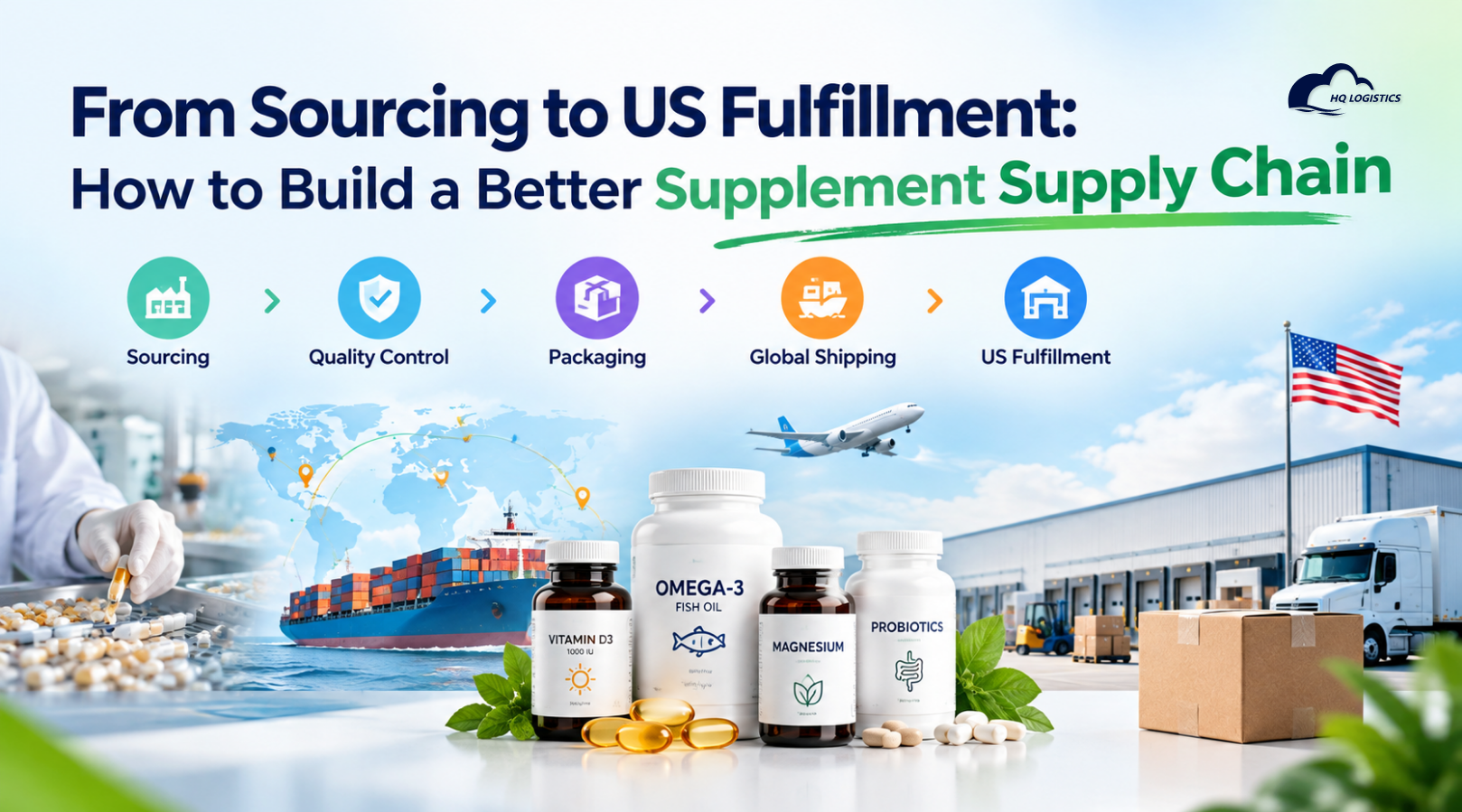
A better approach is to build a supply chain that connects sourcing, quality control, warehousing, and U.S. fulfillment.
Here's how to build it step by step.
Supplements are different from many ordinary ecommerce products.
Customers care about product quality, packaging, labeling, expiration dates, and overall product presentation.
At the same time, supplement brands need to manage inventory carefully because products can have shelf-life considerations and packaging requirements.
Your supply chain therefore needs to answer several questions:
Where should I source my supplements?
How can I maintain consistent product quality?
How should I manage packaging and labeling?
When should I move inventory to a U.S. warehouse?
How can I reduce fulfillment costs as order volume grows?
How can I keep products available without overstocking?
These questions are connected.
A problem at the sourcing stage can eventually affect fulfillment, customer experience, and profit.
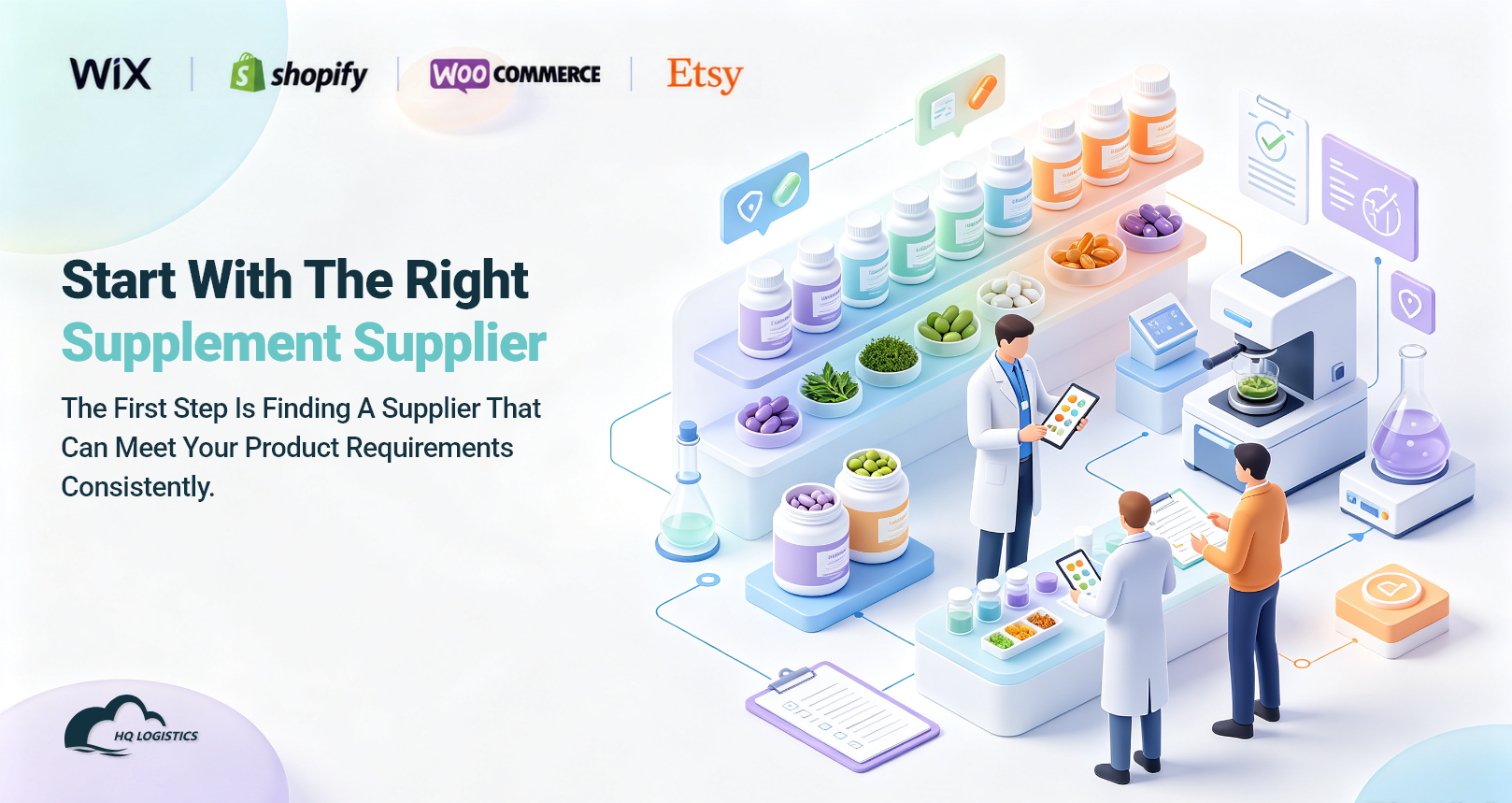
The first step is finding a supplier that can meet your product requirements consistently.
Price is important, but it should not be the only factor.
When evaluating a supplement supplier, consider:
Product Quality | Production Capacity | MOQ | Lead Time | Ingredient Specifications | Packaging Options | Quality Documentation | Communication | Customization
A low product price may not be valuable if production is inconsistent or lead times are unpredictable.
For growing brands, supplier capacity is especially important.
A supplier that can comfortably handle your current order volume should also have enough capacity to support future growth.
For a supplement brand, consistency is part of the customer experience.
Changes in appearance, packaging, product specifications, or other product characteristics can create problems when customers receive repeat purchases.
Before scaling, establish clear product specifications with your supplier.
The more detailed your requirements are, the easier it is to maintain consistency as your order volume increases.
Quality control should not happen only after something goes wrong.
It should be part of the supply chain from the beginning.
Depending on the product and applicable requirements, your quality-control process may include checking:
Product Specifications | Packaging | Labels | Quantity | Appearance | Batch Information | Expiration Information | Order Accuracy
For supplement businesses, documentation and regulatory compliance can also be important.
Requirements can vary depending on the product, ingredients, claims, packaging, and market.
For U.S. sales, brands should make sure their products and labeling meet applicable requirements before selling them.
A fulfillment partner can help with operational checks, but regulatory compliance remains the responsibility of the brand and its qualified advisors.
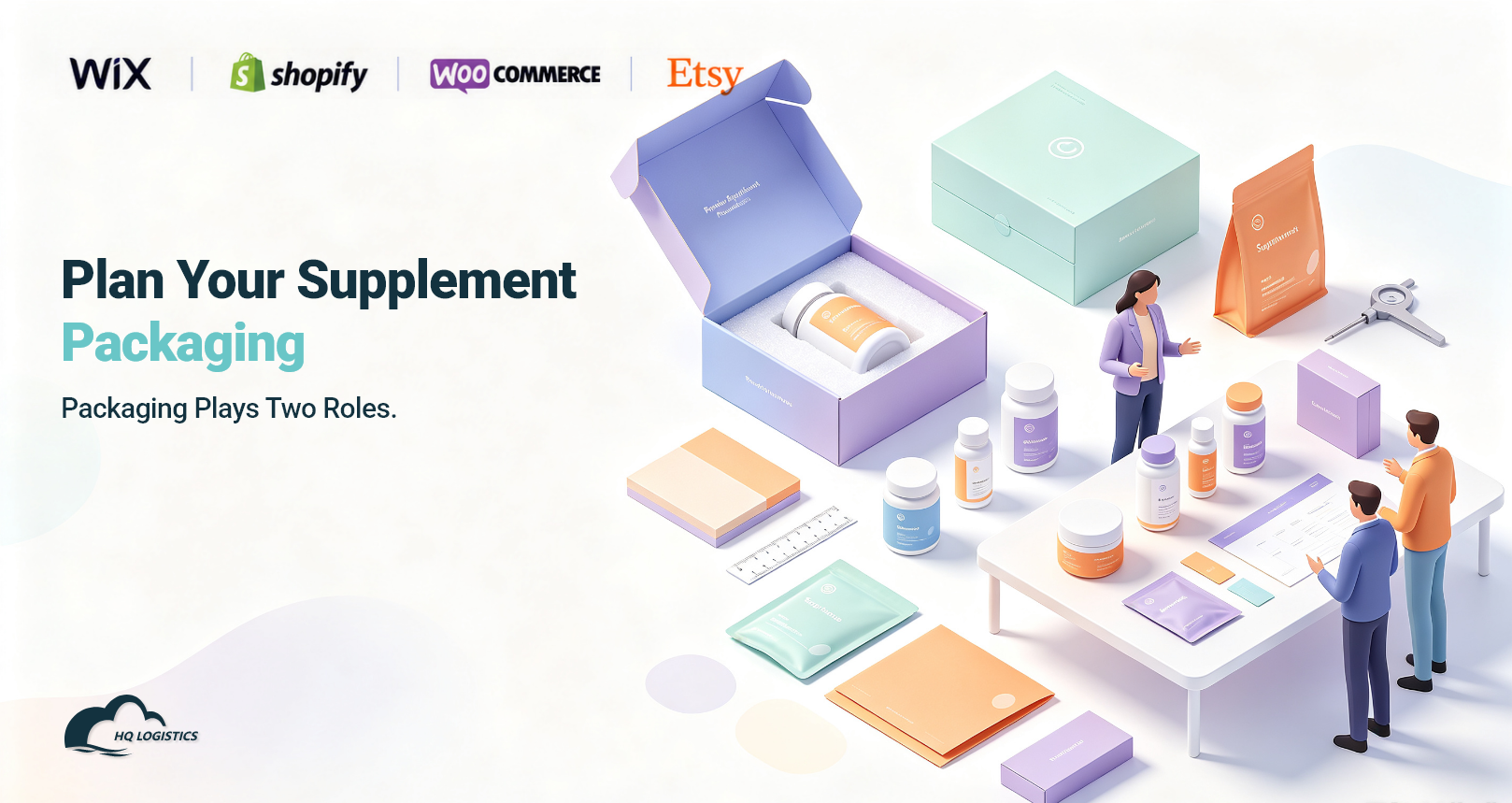
Packaging plays two roles.
First, it protects the product during storage and transportation.
Second, it represents your brand when the customer receives the order.
For supplement brands, packaging may include:
Bottles | Pouches | Boxes | Labels | Inserts | Thank-You Cards | Branded Shipping Packaging
A professional packaging system can help create a more consistent customer experience.
Instead of adding packaging decisions to every individual order, establish your packaging requirements in advance.
Your fulfillment partner can then follow the same packaging instructions when processing orders.
For growing brands, this can reduce manual work and make order processing more consistent.
Moving inventory closer to your customers can improve fulfillment efficiency, but inventory needs to be planned carefully.
Sending too little inventory to the U.S. can result in stockouts.
Sending too much can tie up cash and increase inventory risk.
A basic inventory planning process should consider:
Average Daily Orders | Sales Growth | Lead Time | Safety Stock | Product Shelf Life | Seasonal Demand | Replenishment Time
For example, if your Shopify store normally receives 100 orders per day but expects sales to increase during a major promotion, your U.S. warehouse inventory should be planned before the promotion begins.
Don't wait until inventory is almost gone to start replenishing.
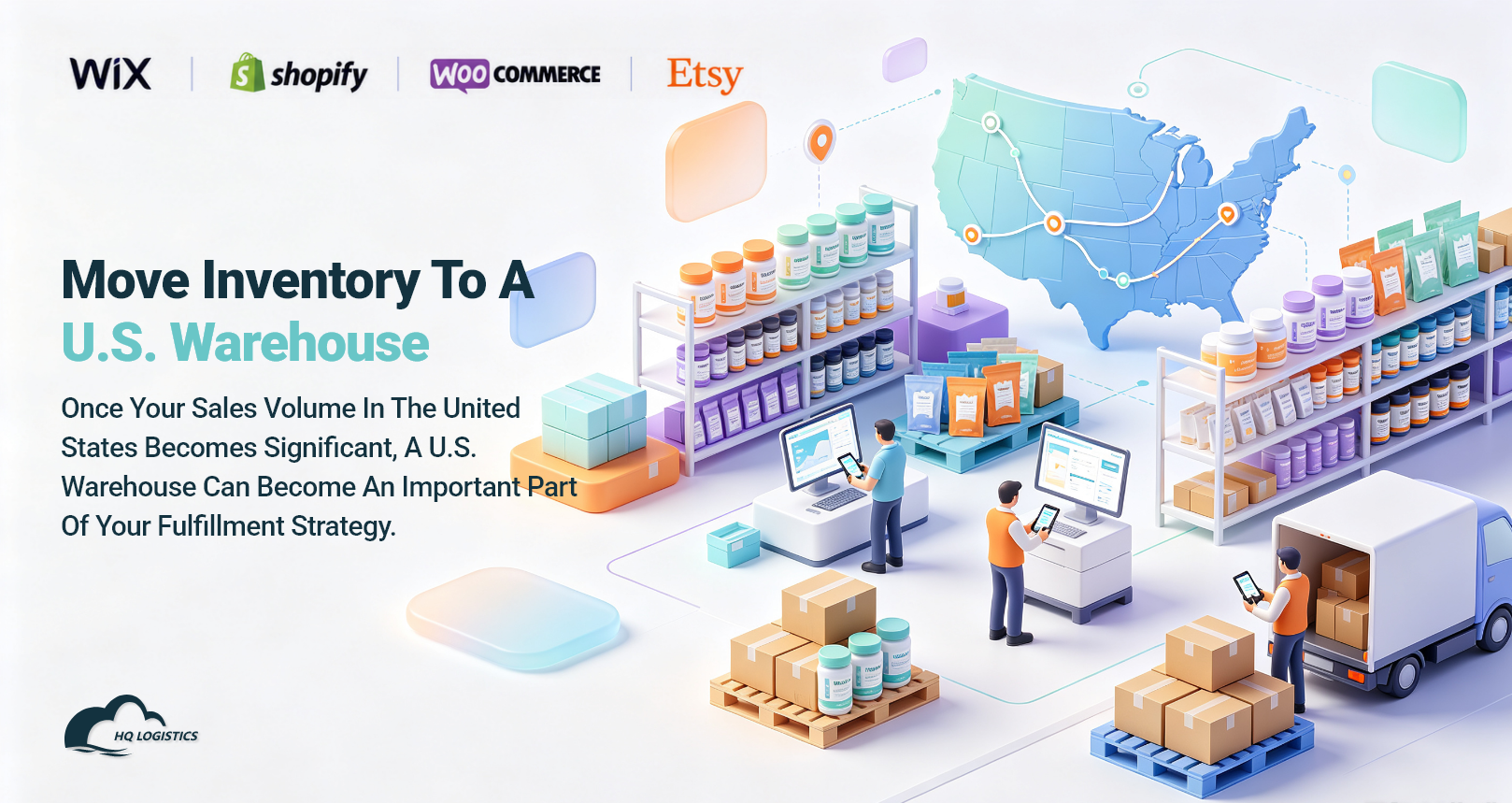
Once your sales volume in the United States becomes significant, a U.S. warehouse can become an important part of your fulfillment strategy.
Instead of shipping every order individually from China, you can move inventory in bulk to a U.S. warehouse.
The warehouse can then fulfill orders domestically.
This creates a different supply chain structure:
China Sourcing → Production → Quality Control → Bulk Shipment → U.S. Warehouse → U.S. Customer
Compared with shipping every individual order internationally, this structure can provide more control over domestic fulfillment.
There is no single order volume that works for every business.
A U.S. warehouse may make more sense when:
U.S. Sales Represent a Large Share of Your Orders | Order Volume Is Growing Consistently | Customers Expect Faster Delivery | International Shipping Costs Are Becoming Significant | You Have Stable Best-Selling SKUs
The important point is to look at your actual order data rather than moving inventory overseas simply because other brands do it.
A warehouse becomes much more useful when it is connected to your ecommerce operations.
For Shopify supplement brands, the ideal workflow is straightforward:
Customer Places an Order → Order Is Synced → Inventory Is Checked → Product Is Picked → Product Is Packed → Order Is Shipped → Tracking Is Updated
Automation can reduce manual order processing and help keep inventory information more accurate.
It also allows your team to focus more on marketing, product development, and customer growth instead of manually processing every order.
U.S. fulfillment is more than simply storing products in a warehouse.
You also need to consider:
Storage | Pick & Pack | Packaging | Kitting | Inventory Management | Order Processing | Shipping Channels | Returns | Tracking
A good fulfillment setup should match your product and order profile.
For example, a brand selling one supplement SKU with hundreds of daily orders may need a very different warehouse workflow from a brand selling 30 SKUs with mixed orders.
Your fulfillment strategy should grow with your business.
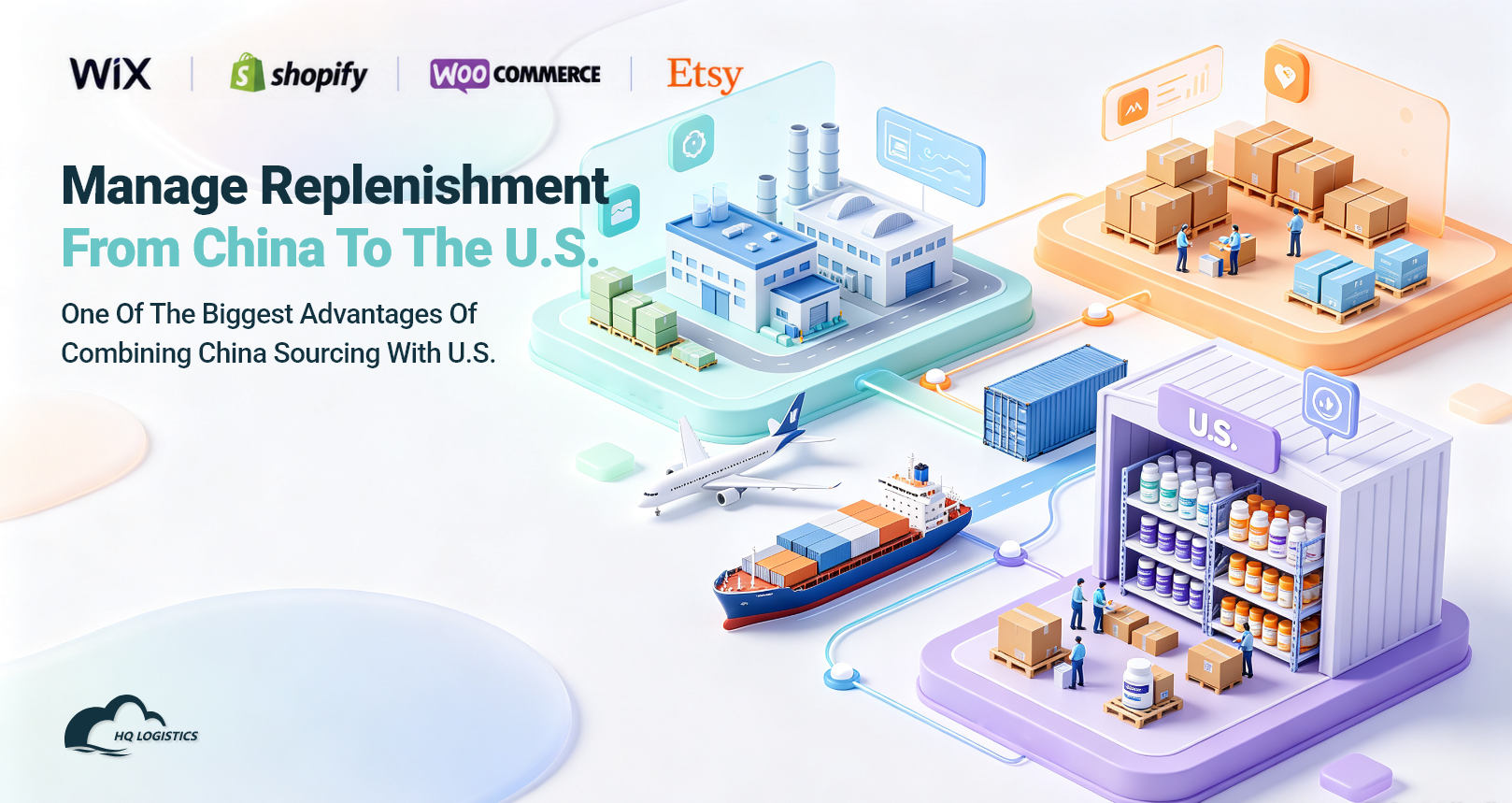
One of the biggest advantages of combining China sourcing with U.S. fulfillment is that you can separate production from customer fulfillment.
Your products can be sourced and manufactured in China while inventory is positioned closer to U.S. customers.
The process can look like this:
Source in China → Produce in China → Inspect Products → Ship Inventory in Bulk → Store in U.S. Warehouse → Fulfill U.S. Orders
This can help your business maintain a balance between sourcing advantages and faster domestic fulfillment.
The key is replenishment planning.
You need to know when your U.S. inventory is approaching its reorder point and how long it will take to produce and transport the next shipment.
Relying completely on one supplier can create risks.
If your primary supplier experiences a production delay, capacity problem, or material shortage, your U.S. warehouse could eventually run out of inventory.
For important supplement products, consider qualifying alternative suppliers or backup production options.
This does not mean splitting every order between multiple suppliers.
Instead, you can establish backup sourcing options before you need them.
A stronger supply chain might look like:
Primary Supplier → Main Production
Backup Supplier → Emergency Capacity
U.S. Warehouse → Centralized Fulfillment
This gives your brand more flexibility when demand changes or unexpected supply problems occur.
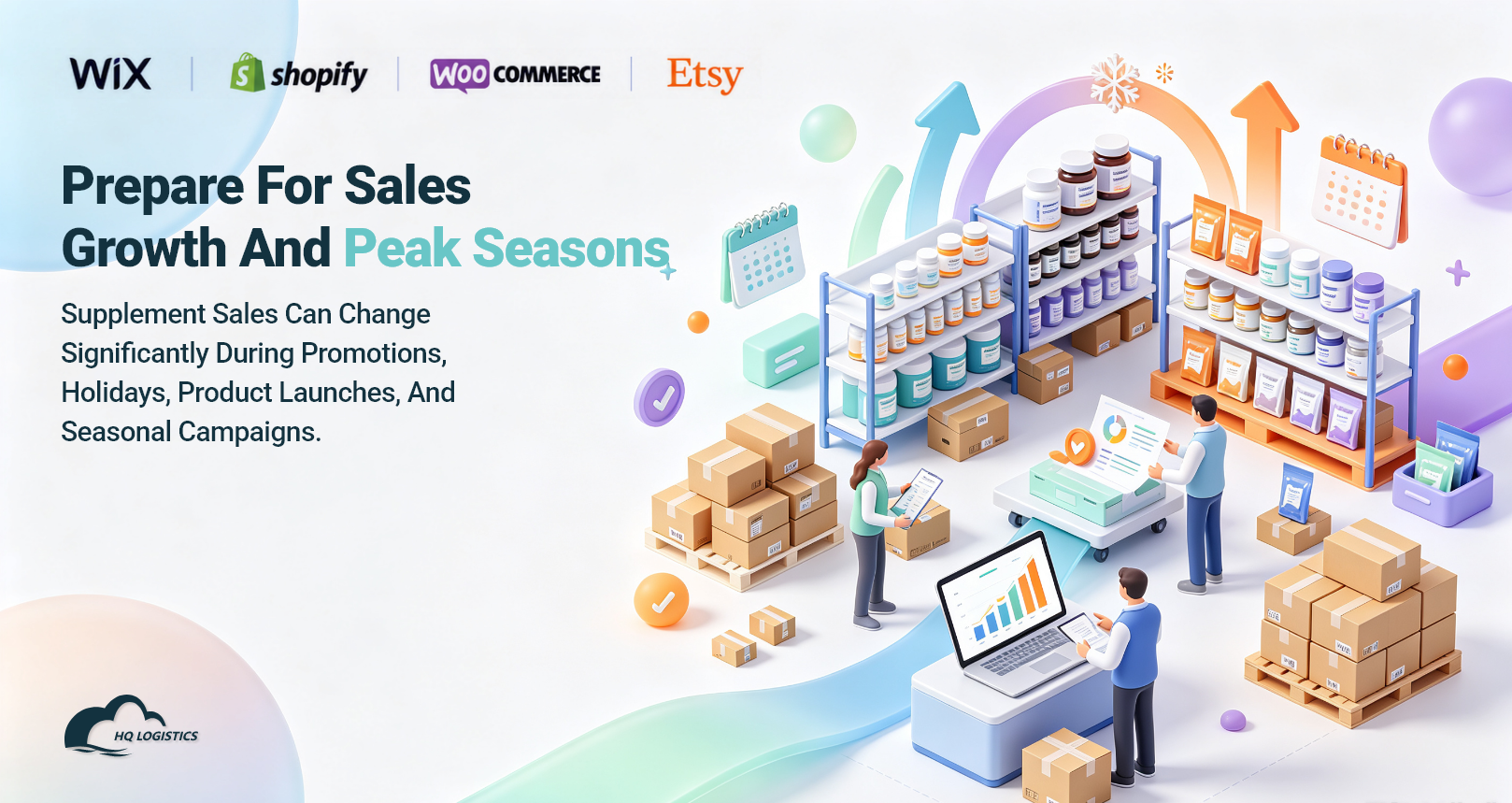
Supplement sales can change significantly during promotions, holidays, product launches, and seasonal campaigns.
If your normal sales volume is 100 orders per day, a successful campaign could push that number much higher.
Your supply chain needs to be prepared before the campaign begins.
Before a major promotion, review:
Inventory Levels | Supplier Capacity | Production Lead Time | U.S. Warehouse Stock | Packaging Materials | Fulfillment Capacity | Shipping Capacity
This is especially important for fast-growing Shopify brands.
Marketing can generate orders quickly.
Your supply chain needs to be ready to fulfill them.
Cost reduction should not focus only on shipping rates.
Your total fulfillment cost can include:
Product Cost + Packaging + International Transportation + Warehousing + Pick & Pack + Domestic Shipping + Returns + Inventory Loss
A better supply chain looks at the entire cost structure.
For example, bulk shipping inventory to the U.S. may change the cost structure compared with sending individual parcels from China.
Similarly, standardized packaging may reduce handling time, while better inventory planning can reduce expensive emergency replenishment.
The goal is not simply to find the cheapest shipping option.
The goal is to build a more efficient supply chain from sourcing to final delivery.
The lowest product price does not necessarily mean the lowest total cost.
Quality problems, delays, returns, and inconsistent production can create additional expenses.
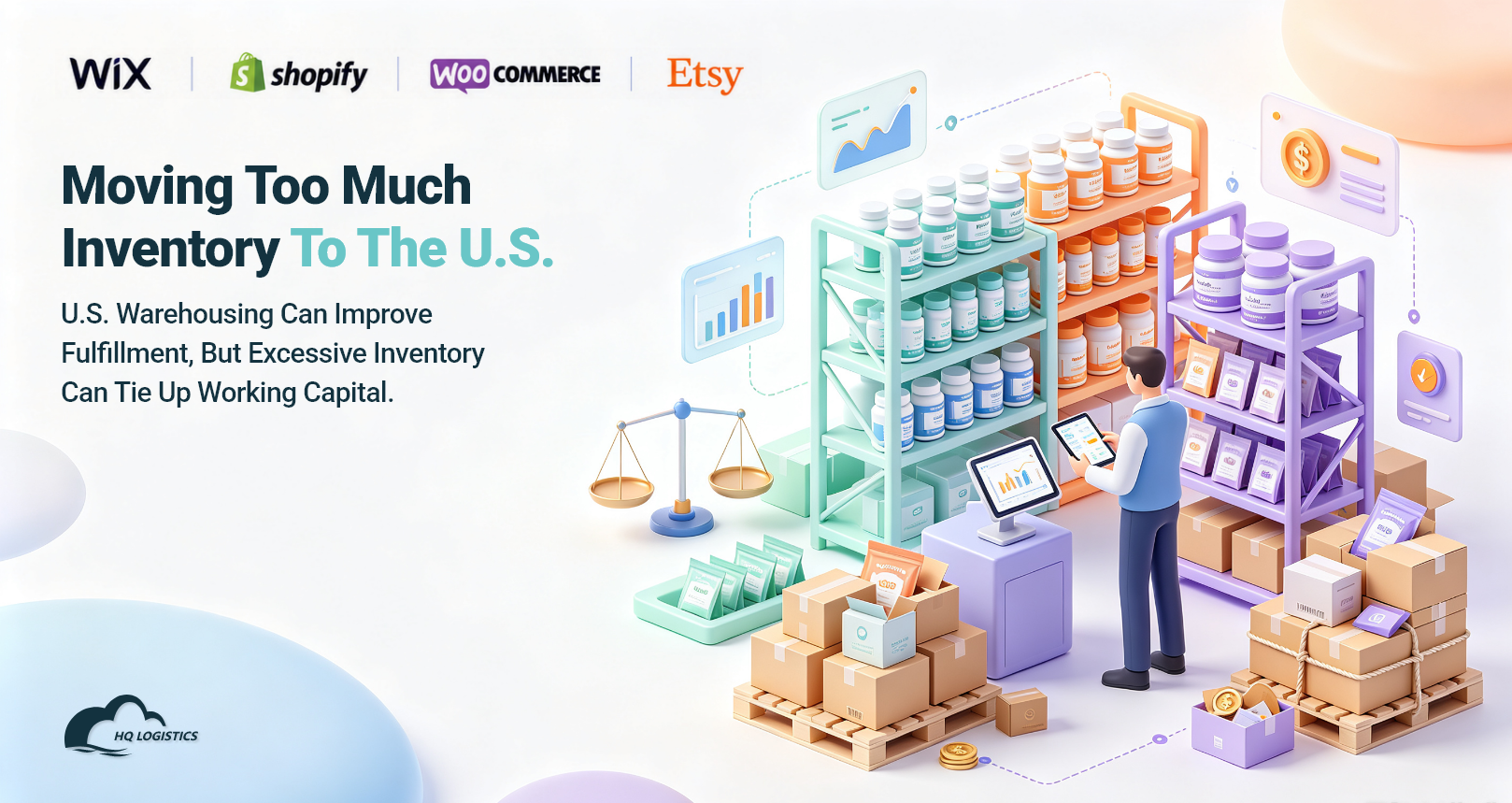
U.S. warehousing can improve fulfillment, but excessive inventory can tie up working capital.
Use sales data to determine how much inventory you actually need.
International production and transportation take time.
Replenishment should be planned before inventory reaches a critical level.
Packaging should be considered during product development, not after the product has already reached the warehouse.
Sourcing, inventory, packaging, warehousing, and fulfillment are connected.
Managing them as one supply chain can make it easier to identify bottlenecks and control costs.
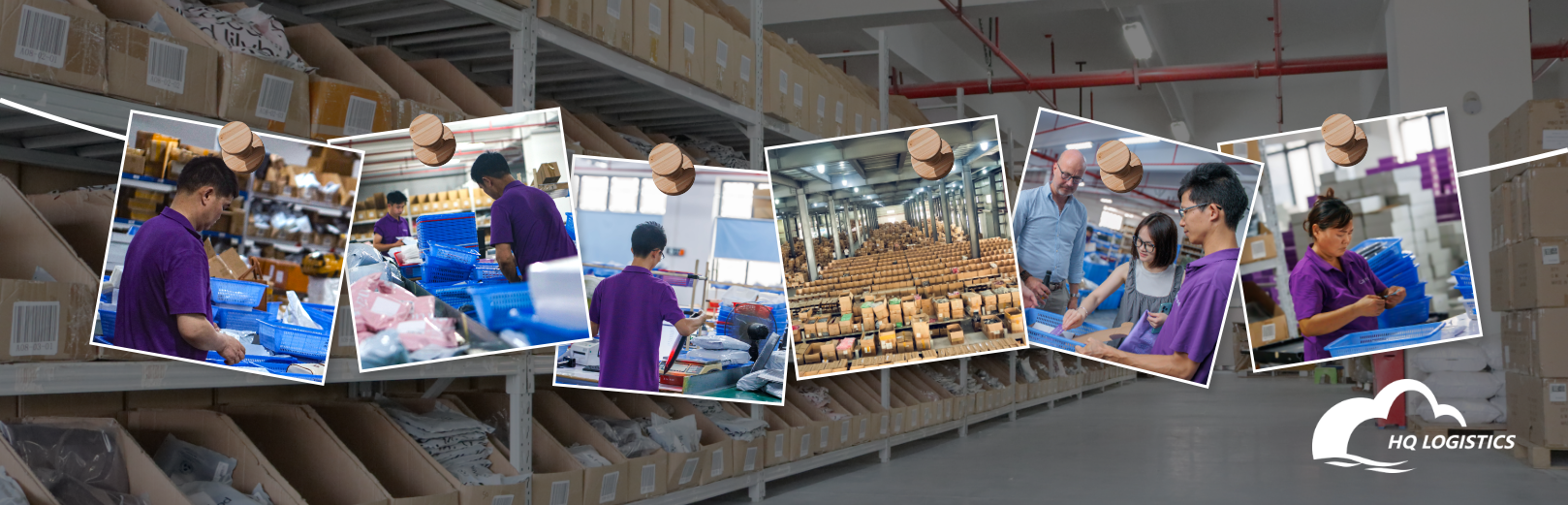
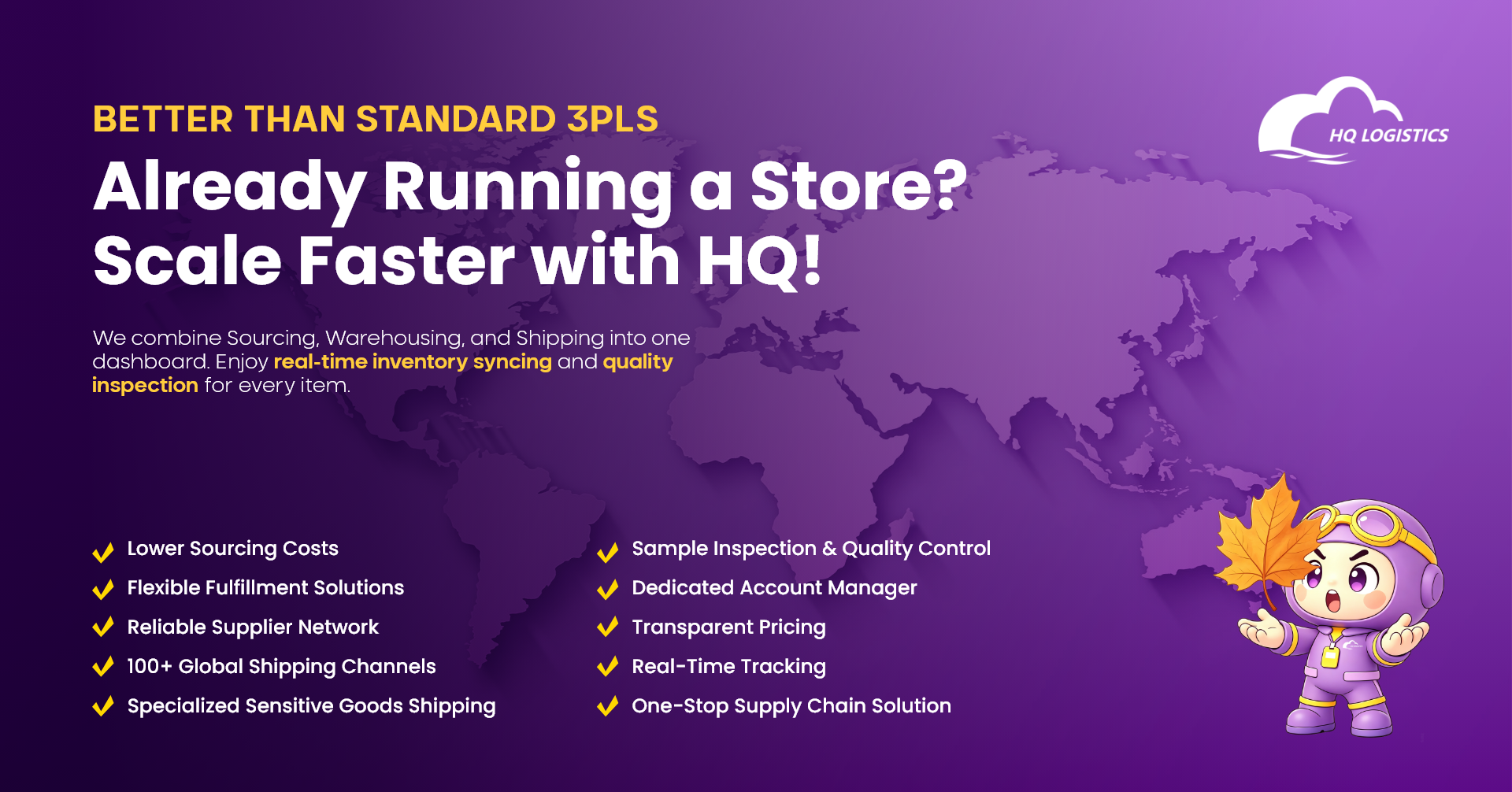
For growing supplement brands, HQ can connect several parts of the supply chain through one fulfillment operation.
HQ can support brands with product sourcing, supplier coordination, quality inspection, packaging, inventory management, warehousing, and fulfillment.
For U.S.-focused brands, the model can connect China sourcing with U.S. overseas warehousing:
China Sourcing → Quality Control → Custom Packaging → Bulk Shipping → U.S. Warehouse → U.S. Fulfillment
HQ also supports custom packaging for supplement brands, helping businesses maintain a more consistent presentation across their orders.
For eligible products and services, HQ can also provide fulfillment solutions designed around the product type, order volume, and destination.
Core fulfillment capabilities include:
⚡ 3–8 Days Delivery | 📦 Free Custom Packaging From 50 Orders/Day | 🚚 20,000 Orders/Day Fulfillment Capacity | 🇺🇸 U.S. Fulfillment | 🔎 Product Sourcing | ✅ Quality Inspection
The exact product acceptance, packaging requirements, shipping method, and fulfillment terms should be confirmed based on the specific supplement product and destination.
Yes, this is one possible supply chain model. Products can be sourced and produced in China, then transported in bulk to a U.S. warehouse for domestic order fulfillment. The specific product, import, regulatory, and logistics requirements need to be evaluated before using this model.
A U.S. warehouse can be useful when a significant portion of your customers are in the United States and your sales volume is stable enough to justify positioning inventory closer to customers. However, the right setup depends on order volume, inventory turnover, shipping costs, and product requirements.
Start with sales data. Monitor daily order volume, inventory turnover, production lead times, transportation times, safety stock, and seasonal demand. Set a reorder point before inventory becomes critically low.
Some fulfillment partners can support custom packaging such as branded boxes, labels, inserts, and other packaging components. Requirements vary by product and packaging type, so confirm the available options before production.
Look for a partner that can support more than storage and shipping. Sourcing, quality inspection, packaging, inventory management, warehouse fulfillment, and reliable shipping can all be important when building a supplement supply chain.
A successful supplement business needs more than a good product.
It needs a supply chain that can support the product from sourcing to the customer's doorstep.
For many growing brands, the process can be structured as:
Source in China → Control Quality → Customize Packaging → Ship Inventory in Bulk → Store in the U.S. → Fulfill Orders Domestically
As your Shopify store grows, this connected approach can make sourcing, inventory, fulfillment, and customer delivery easier to manage.
The goal is not simply to find a supplier or a warehouse.
The goal is to build a supply chain that can grow with your supplement brand.
📩Email: zoye@fulfllment-cn.com
PREVIOUS RECOMMENDATIONS


supplement supply chain, supplement sourcing, supplement fulfillment, U.S. supplement fulfillment, supplement warehouse, supplement packaging, Shopify supplement fulfillment, China supplement sourcing, U.S. fulfillment center




Customer's favorable comments is our eternal motivation. We feel grateful for all the support and company.

Lorem ipsum dolor sit amet, consetetur sadipscing elitr, sed diam nonumy eirmod tempor invidunt ut labore et dolore magna aliquyam erat, sed diam voluptua.