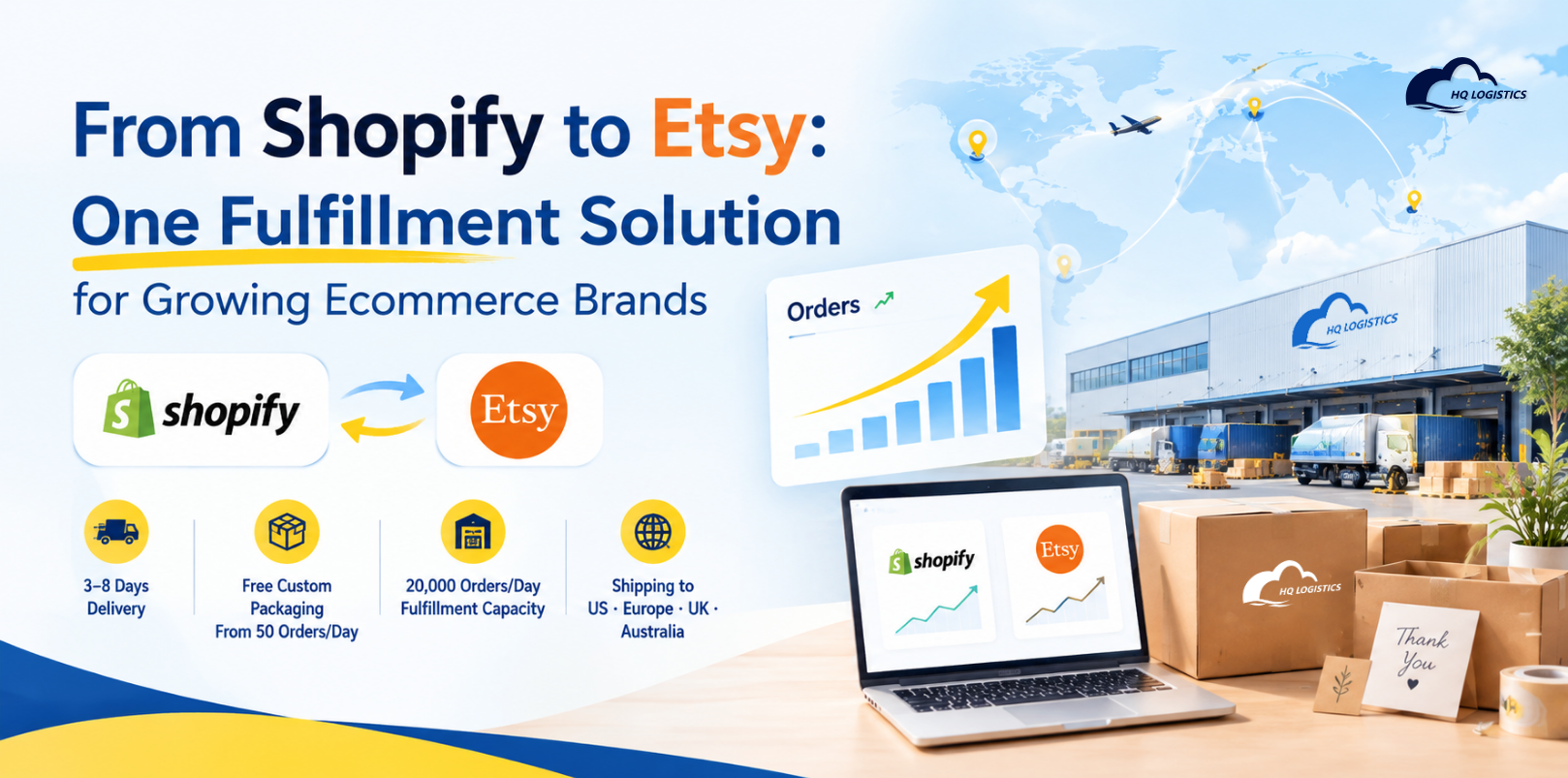
Selling on Shopify is one thing. Selling across Shopify, Etsy, WooCommerce, Wix, and other ecommerce platforms is another.
As your brand grows, managing orders from multiple platforms can quickly become complicated. You may have different order systems, inventory levels, suppliers, packaging requirements, and shipping methods to manage.
That is where a multi-channel fulfillment solution can make a difference.
Instead of managing fulfillment separately for every sales channel, growing ecommerce brands can connect multiple stores to one fulfillment partner and simplify sourcing, inventory, quality control, packaging, and shipping.
For brands selling on Shopify, Etsy, and other ecommerce platforms, the goal is simple: sell everywhere while keeping fulfillment under control.
When you only have a few orders per day, fulfilling orders manually may be manageable.
But as sales increase, the process becomes more complicated.
A Shopify store may generate hundreds of orders while an Etsy store brings additional orders from a different customer base. At the same time, you may be working with several suppliers, different product variations, and multiple shipping routes.
Without a centralized fulfillment system, it can lead to:
Inventory becoming difficult to track | Orders being processed manually | Different packaging across sales channels | More communication with suppliers | Higher fulfillment costs | Longer processing times | More opportunities for fulfillment mistakes
A centralized ecommerce fulfillment service can bring these processes together.
Instead of asking each platform, supplier, or warehouse to work separately, you can build one fulfillment workflow for your growing brand.
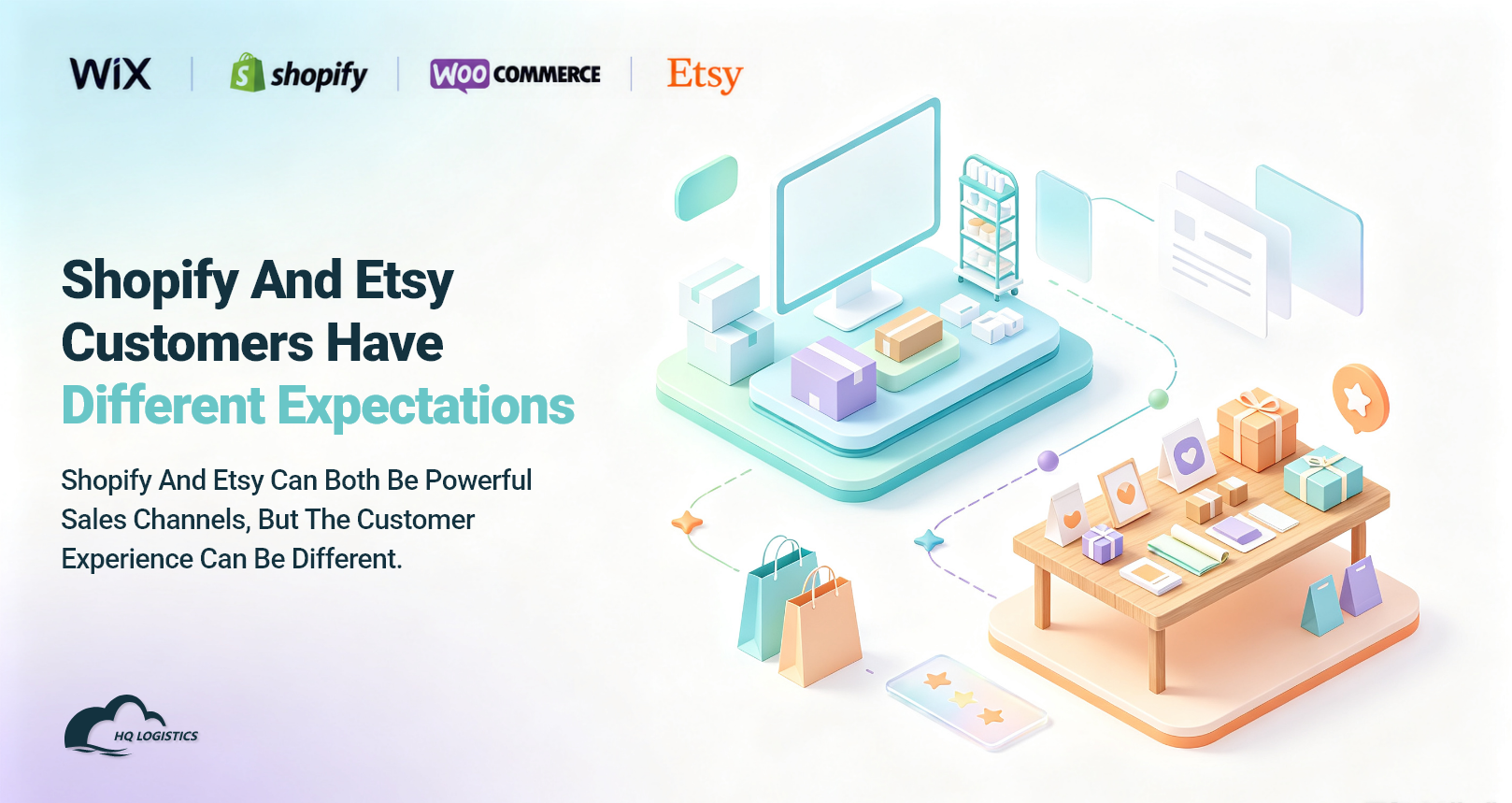
Shopify and Etsy can both be powerful sales channels, but the customer experience can be different.
Shopify brands often have more control over their store design, branding, customer experience, and marketing strategy.
Etsy sellers may focus more on handmade products, personalized products, lifestyle products, gifts, accessories, or niche product categories.
However, both types of businesses still need reliable fulfillment.
Customers expect their orders to be picked correctly, packed carefully, shipped on time, and delivered with accurate tracking information.
That means your fulfillment operation needs to support the brand experience regardless of where the order comes from.
A growing brand does not necessarily need a separate fulfillment partner for every ecommerce platform.
A better approach can be connecting multiple sales channels to one fulfillment operation.
For example:
Shopify → HQ Fulfillment
Etsy → HQ Fulfillment
WooCommerce → HQ Fulfillment
Wix → HQ Fulfillment
Orders can then move through a centralized process:
Order Sync → Inventory → Quality Check → Pick & Pack → Custom Packaging → Shipping → Tracking
This helps reduce the amount of manual work required to manage orders across different stores.
It also gives your team more time to focus on marketing, product development, customer acquisition, and brand growth.
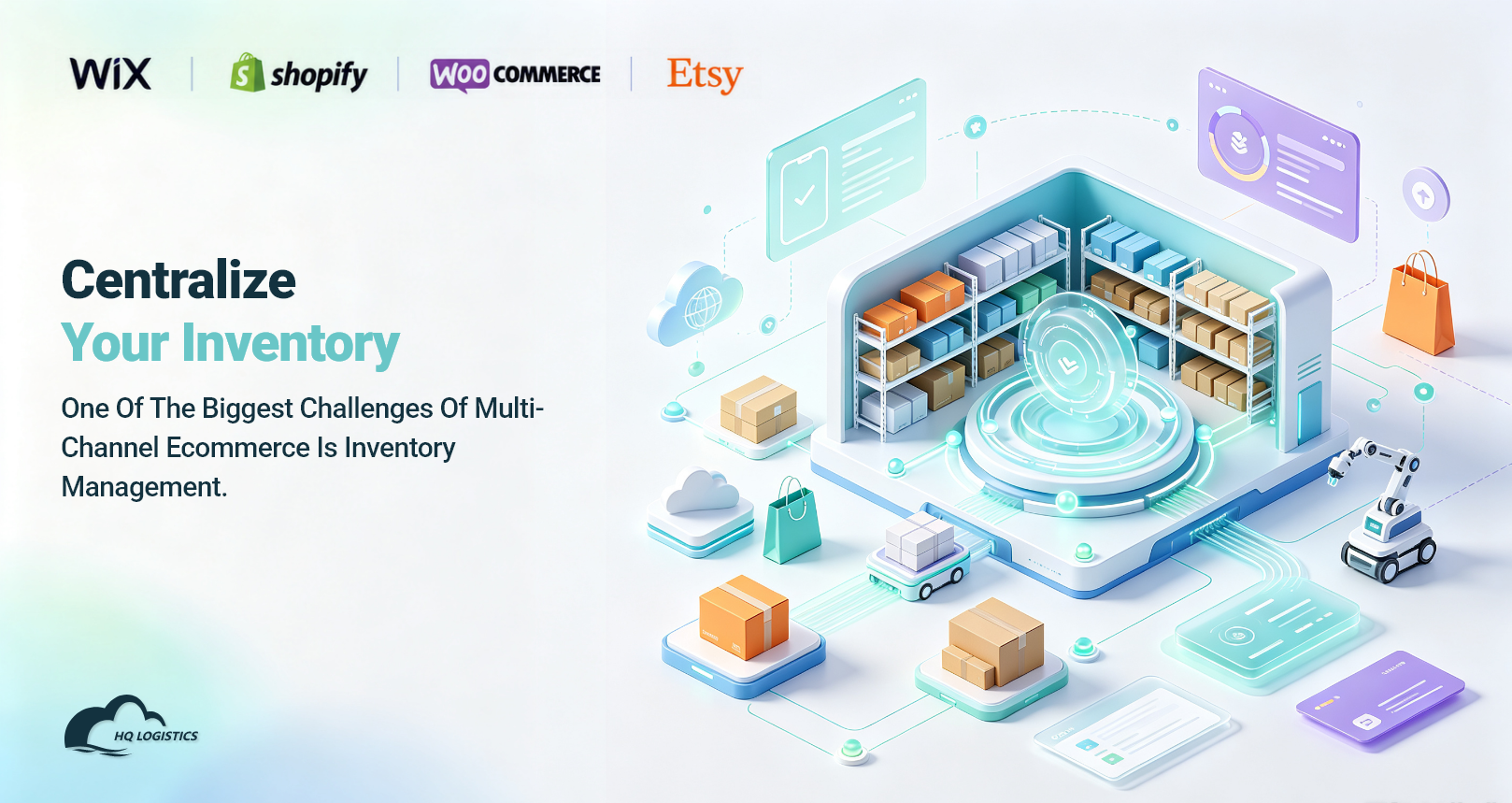
One of the biggest challenges of multi-channel ecommerce is inventory management.
Imagine selling the same product on Shopify and Etsy.
If your inventory is managed separately, you may sell the same remaining stock on both platforms without realizing that inventory is running low.
A centralized fulfillment system can help you manage inventory across sales channels.
Instead of asking, “How much inventory does my Shopify store have?” and “How much inventory does Etsy have?”, you can think about your total available inventory across the fulfillment operation.
This becomes increasingly important as your product catalog grows.
Fulfillment is not only about shipping orders.
For growing ecommerce brands, sourcing is often the first step.
You may need to:
Find suppliers | Compare quotations | Request samples | Check product quality | Confirm production capacity | Manage inventory
Working with one fulfillment partner that can also support sourcing can simplify this process.
Instead of communicating with multiple suppliers independently, you can have one partner coordinate sourcing and fulfillment.
This is particularly useful when you are testing new products or expanding your product catalog.
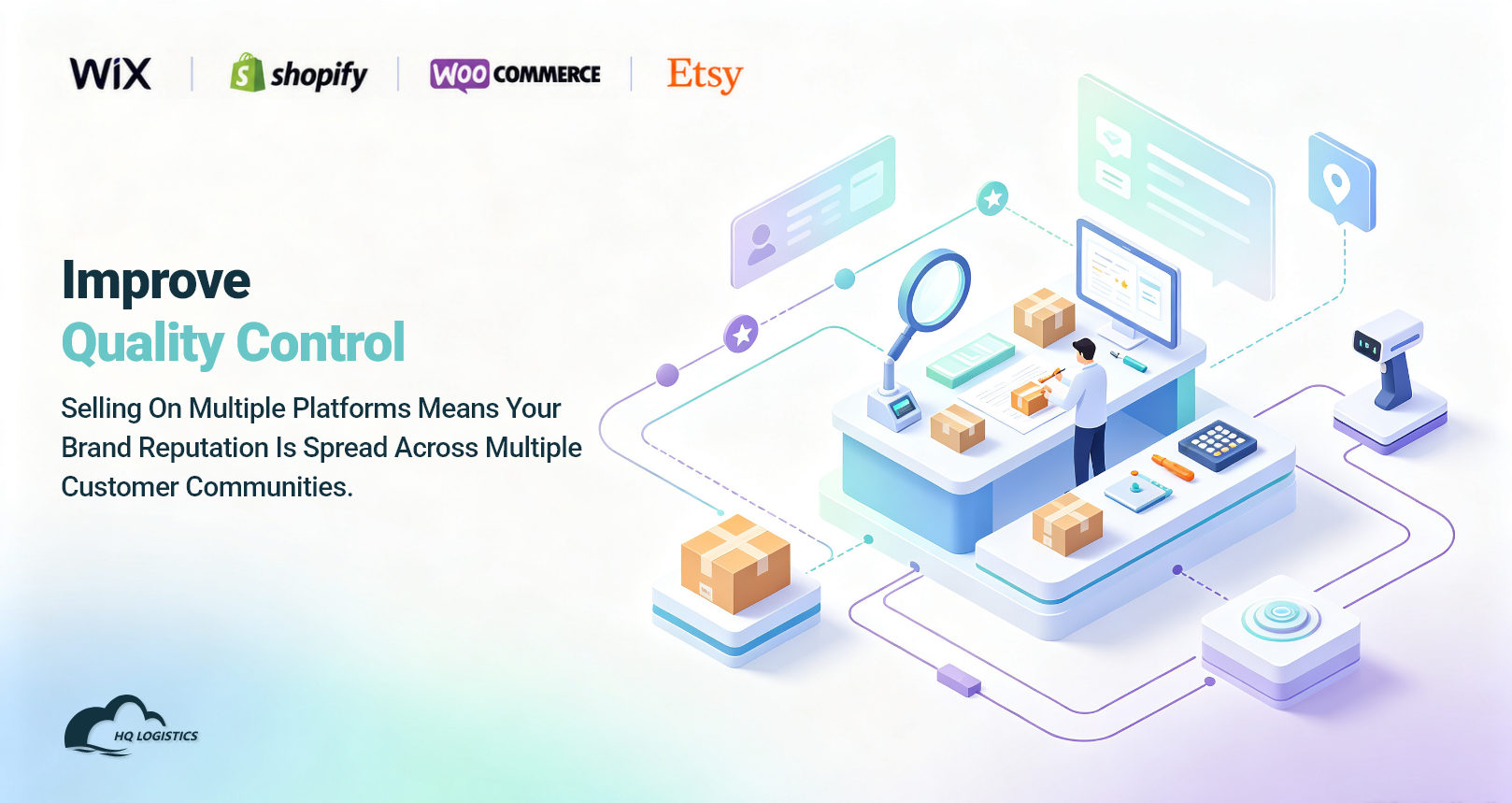
Selling on multiple platforms means your brand reputation is spread across multiple customer communities.
A product quality problem can affect more than one sales channel.
For example, a product with damaged packaging or missing accessories can lead to customer complaints on both Shopify and Etsy.
That is why quality control should happen before an order leaves the warehouse.
A fulfillment partner can inspect products during the fulfillment process and help identify issues before they reach customers.
For growing brands, consistent quality is just as important as fast shipping.
Packaging is especially important for ecommerce brands that are building a recognizable identity.
Customers should receive a consistent brand experience whether they purchased from your Shopify store or your Etsy shop.
Depending on your needs, fulfillment can include:
Custom boxes | Branded mailers | Hangtags | Thank-you cards | Product inserts | Custom labels | White-label packaging
For brands reaching higher order volumes, custom packaging can also become part of the fulfillment workflow.
HQ offers free custom packaging from 50 orders/day for eligible customers, helping growing brands move beyond generic packaging and build a more consistent customer experience.
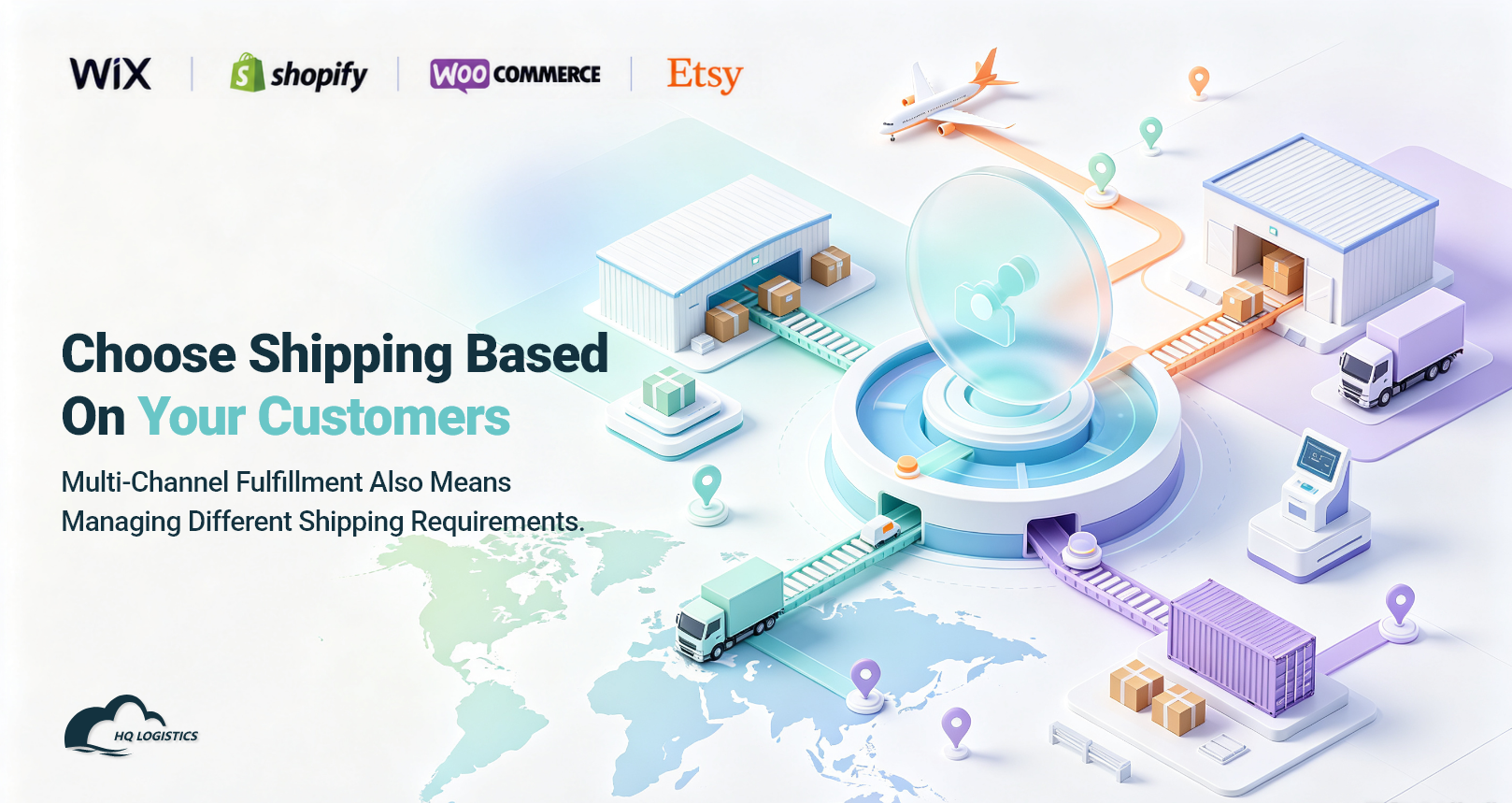
Multi-channel fulfillment also means managing different shipping requirements.
A Shopify customer in the United States may need a different shipping solution from an Etsy customer in Europe.
Instead of using the same shipping method for every order, a fulfillment partner can help select suitable routes based on destination, product type, weight, and delivery requirements.
For growing ecommerce brands, having multiple shipping channels can provide more flexibility when costs, capacity, or delivery conditions change.
HQ provides global fulfillment solutions with shipping to markets including the US, Europe, UK, and Australia, with selected routes offering approximately 3–8 day delivery.
Actual transit times and shipping options depend on the product, destination, route, and current carrier conditions.
Your fulfillment strategy should not only work today.
It should also work when your store grows from 20 orders a day to 100, 500, or more.
At low order volumes, manual processing may still be possible.
At higher volumes, you need:
Reliable inventory | Organized warehouse processes | Fast order processing | Quality control | Packaging workflows | Multiple shipping options | Order tracking
This is where a scalable fulfillment center becomes valuable.
HQ supports fulfillment capacity of up to 20,000 orders per day, giving growing brands room to scale without rebuilding their entire fulfillment operation every time order volume increases.
Not necessarily.
If you are selling on both Shopify and Etsy, using separate fulfillment partners can create additional complexity.
You may need to manage different:
Inventory systems | Warehouse contacts | Packaging suppliers | Shipping accounts | Order workflows | Tracking systems | Customer service processes
A centralized fulfillment partner can bring these activities into one operation.
The exact setup depends on your business model, order volume, product types, and sales channels, but the basic idea is simple:
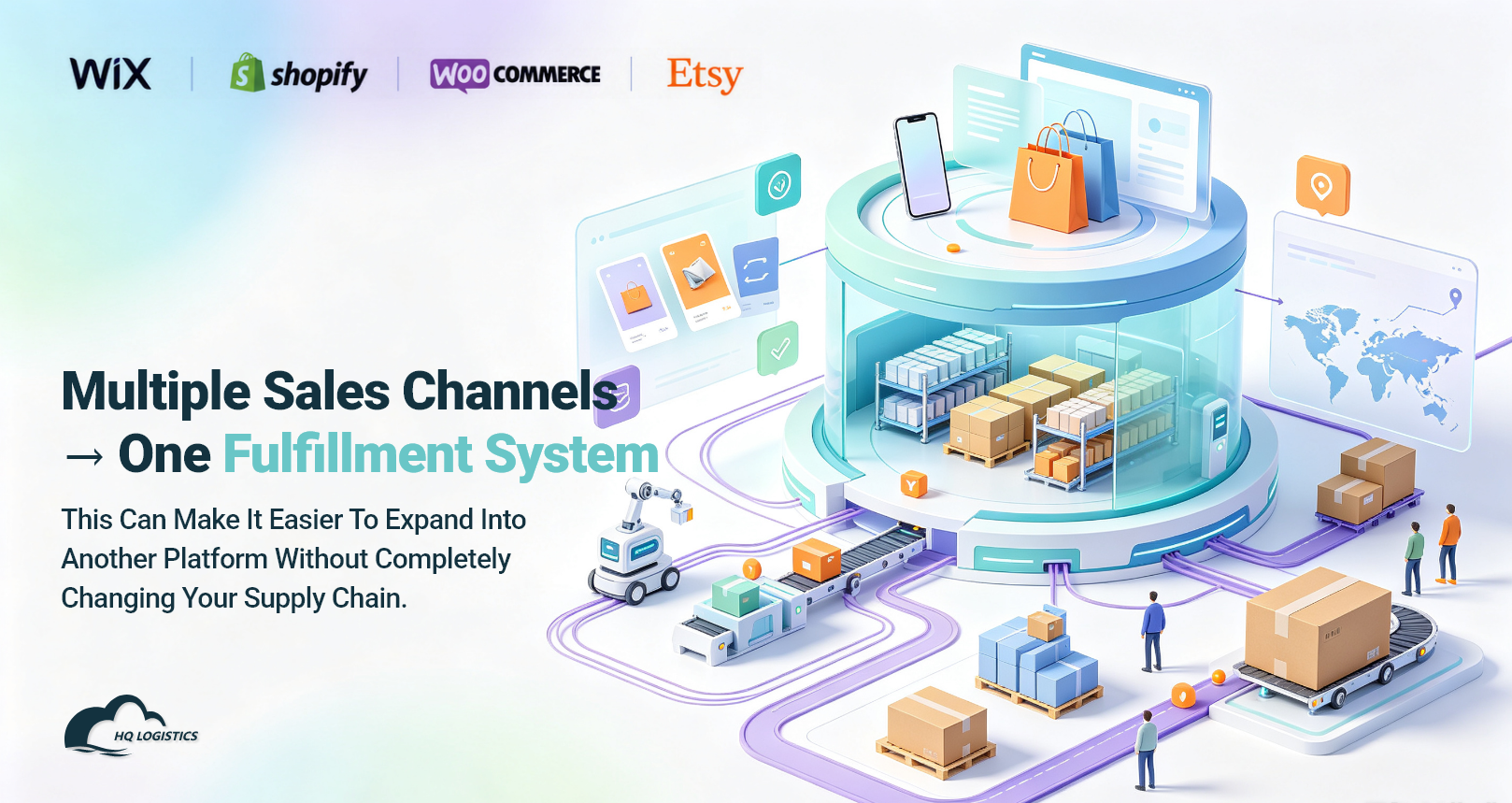
Multiple Sales Channels → One Fulfillment System
This can make it easier to expand into another platform without completely changing your supply chain.
You do not need a sophisticated fulfillment system on day one.
But there are several signs that it may be time to upgrade.
If you are spending more time processing orders than growing your business, fulfillment may be becoming a bottleneck.
Managing Shopify, Etsy, WooCommerce, and other stores separately can become difficult as order volume increases.
More SKUs mean more inventory, sourcing, quality control, and warehouse management requirements.
If you are moving from simple product selling toward brand building, custom packaging and consistent fulfillment become more important.
International growth requires more than finding customers. You also need suitable inventory, warehouse, and shipping strategies for different markets.
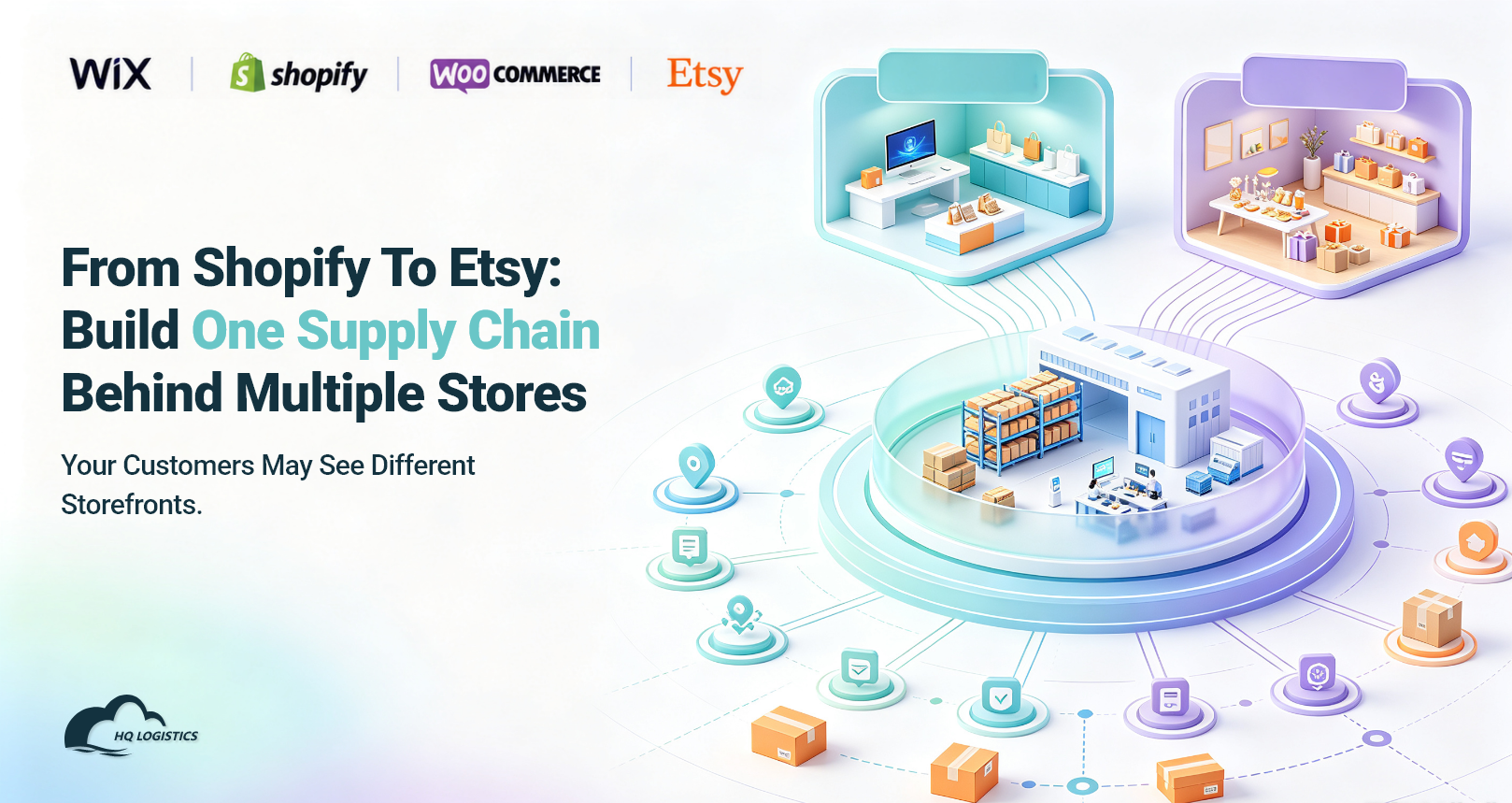
Your customers may see different storefronts.
They may find you through Shopify, Etsy, Google, social media, or another ecommerce channel.
But behind the scenes, your supply chain does not need to be fragmented.
A centralized fulfillment strategy can connect:
Product Sourcing → Supplier Management → Quality Control → Warehousing → Inventory → Custom Packaging → Order Fulfillment → Global Shipping
This gives your brand one operational foundation behind multiple sales channels.
The result is not simply easier order processing.
It can also help you build a more organized supply chain that is ready for the next stage of growth.
HQ provides an end-to-end fulfillment solution for ecommerce brands selling through Shopify, Etsy, WooCommerce, Wix, and other channels.
Our services can include:
Product Sourcing | Quality Inspection | Warehousing | Inventory Management | Custom Packaging | Order Fulfillment | Global Shipping
HQ supports growing brands with:
⚡ 3–8 Days Delivery on selected routes
📦 Free Custom Packaging From 50 Orders/Day for eligible customers
🚚 20,000 Orders/Day Fulfillment Capacity
🌍 Shipping to US · Europe · UK · Australia
🛍️ Shopify · Wix · WooCommerce · Etsy
Whether you are selling through one store or multiple ecommerce platforms, the goal is the same: build a fulfillment system that can grow with your business.
Yes. A multi-channel fulfillment partner can support orders from Shopify, Etsy, and other ecommerce platforms through a centralized fulfillment operation. The available integrations and workflow depend on the fulfillment provider.
The basic fulfillment process is similar: receive the order, pick the product, pack it, and ship it. However, product types, packaging requirements, customer expectations, and store integrations can vary between platforms.
Yes. Custom boxes, mailers, inserts, thank-you cards, labels, and other branded materials can be integrated into the fulfillment process depending on the product and order volume.
Multi-channel fulfillment means using one fulfillment operation to process orders from multiple sales channels, such as Shopify, Etsy, WooCommerce, and Wix.
There is no single order-volume threshold. Many brands consider a fulfillment center when manual fulfillment becomes time-consuming, inventory becomes difficult to manage, order volume increases, or they begin selling across multiple markets and platforms.
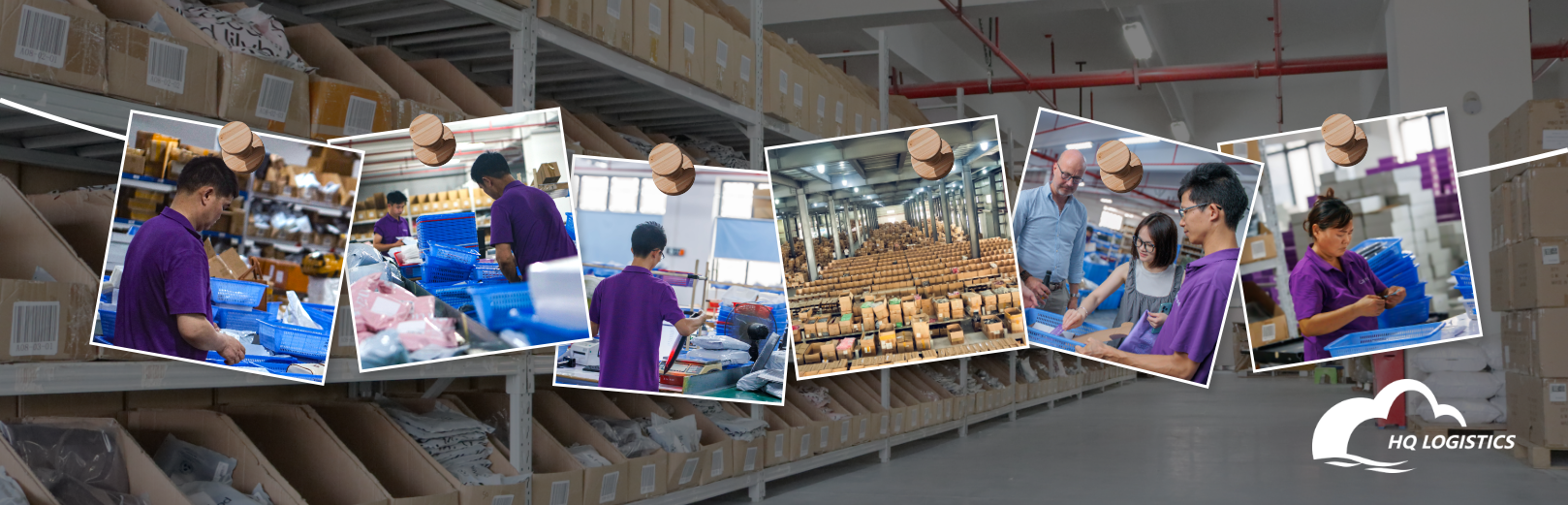
Growing from a single Shopify store to a multi-channel ecommerce brand creates new opportunities—but it also creates new supply chain challenges.
Instead of building separate fulfillment processes for every sales channel, consider building one centralized system that supports your entire business.
From Shopify to Etsy, from sourcing to global delivery, the right fulfillment partner can help connect the operational pieces behind your growing brand.
If your ecommerce business is growing across multiple platforms, now is the time to build a fulfillment system that can grow with it.
📩Email: zoye@fulfllment-cn.com
PREVIOUS RECOMMENDATIONS


Shopify fulfillment, Etsy fulfillment, ecommerce fulfillment, multi-channel fulfillment, fulfillment solution, global ecommerce fulfillment, China fulfillment center, ecommerce fulfillment service



Customer's favorable comments is our eternal motivation. We feel grateful for all the support and company.

Lorem ipsum dolor sit amet, consetetur sadipscing elitr, sed diam nonumy eirmod tempor invidunt ut labore et dolore magna aliquyam erat, sed diam voluptua.