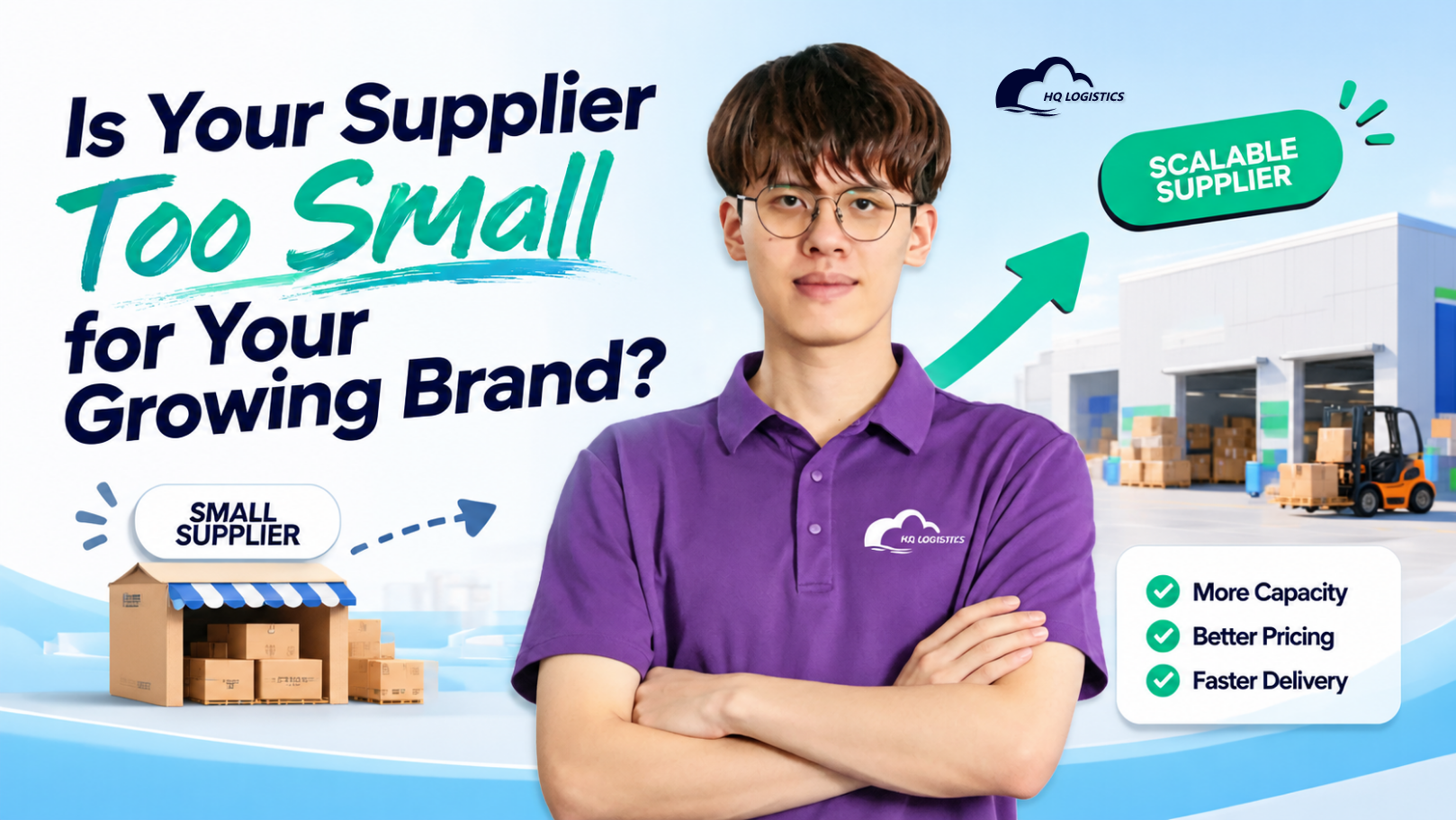
Supplier managemen becomes more important as an ecommerce brand grows.
A supplier that worked perfectly when you were receiving 10 orders a day may struggle when your store reaches 100, 500, or 1,000 orders a day.
This doesn't necessarily mean your supplier is bad.
It may simply mean that your business has outgrown the supplier's current capacity, systems, and supply chain capabilities.
At the beginning of an ecommerce business, you may care mostly about product price and basic fulfillment.
As your brand grows, you need much more:
Stable product quality. Reliable production. Faster replenishment. Better inventory planning. Custom packaging. Multiple sourcing options. Quality inspection. Warehousing. Scalable fulfillment.
If your supplier cannot support these requirements, growth itself can become a problem.
In this article, we'll explain 7 signs your supplier may be too small for your growing brand—and what you can do before supply chain problems start affecting your sales.
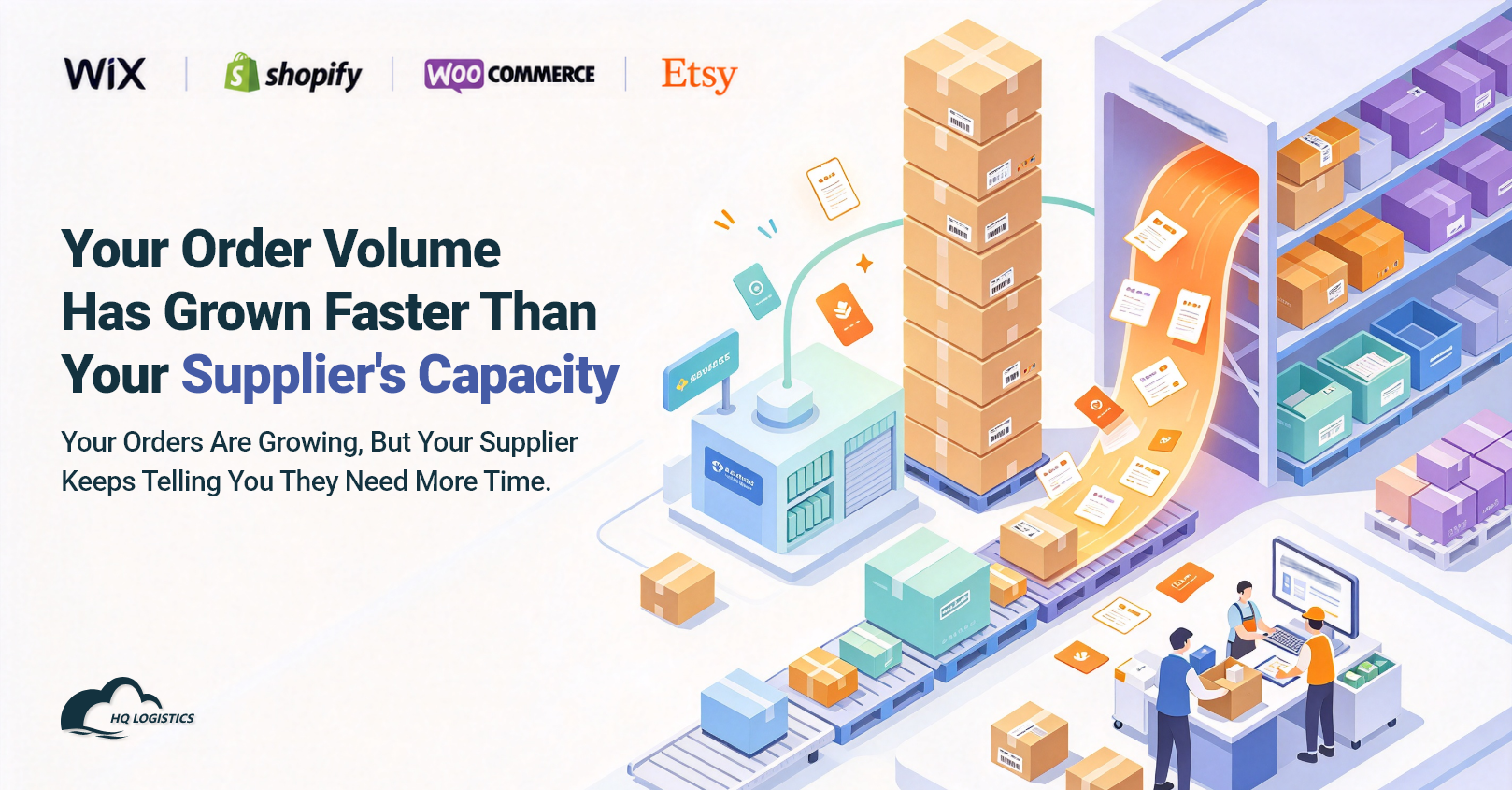
The clearest warning sign is simple:
Your orders are growing, but your supplier keeps telling you they need more time.
At a low order volume, a small supplier may be able to produce and ship everything without difficulty.
But when your daily orders increase, the same supplier may suddenly face:
Production delays | Longer lead times | Inventory shortages | Slow replenishment | Packing delays | Shipping backlogs
For example, a supplier that comfortably handled 20 orders per day may struggle when your brand starts generating 300 orders per day.
The problem isn't necessarily the supplier's willingness to help.
The problem may be production capacity.
Before scaling a product aggressively, ask:
How many units can the supplier realistically produce per day or week?
How quickly can they increase production?
What happens if demand doubles?
Do they have backup production capacity?
If the answers are unclear, your supply chain may already have a capacity risk.
A supplier may deliver excellent samples and small test orders.
But quality can become harder to maintain when production volume increases.
You may start seeing:
Different materials | Color inconsistencies | Incorrect sizes | Loose stitching | Missing components | Damaged packaging | Wrong product variants
This is especially risky for growing brands because more orders mean more opportunities for a small defect rate to become a large number of customer complaints.
For example, a 1% defect rate may sound small.
But at 10,000 units, that could mean around 100 defective products.
That's why growing brands need more than a supplier's promise that products are "checked."
They need a repeatable quality control process.
A scalable supply chain should include product specifications, sample approval, inspection standards, and quality checks before products enter inventory.
A growing ecommerce brand needs to replenish inventory quickly.
If your best-selling product suddenly takes off, waiting several weeks for the next production batch can mean losing sales.
Watch for warning signs such as:
You sell out before your supplier can replenish.
Your supplier cannot provide a reliable production date.
Lead times change frequently.
You have to repeatedly ask for production updates.
Your supplier cannot reserve capacity for your growing orders.
This is particularly dangerous during seasonal sales periods.
When demand increases, other customers are competing for the same factory capacity.
A supplier that has limited capacity may prioritize larger or longer-term customers.
Your brand can then face stockouts precisely when demand is strongest.
As your brand grows, you may want to move beyond generic products.
You may need:
Custom packaging | Private labeling | Hangtags | Product inserts | Thank-you cards | Custom colors | Custom product specifications | Branded shipping boxes
A small supplier may be able to provide the basic product but struggle with the complete branding requirements.
This can limit your ability to build a recognizable brand.
For example, your product may be excellent, but customers receive it in a generic package with another company's labeling.
At the testing stage, this may be acceptable.
At the brand-building stage, it becomes a problem.
Your supply chain should support the customer experience you want to create.
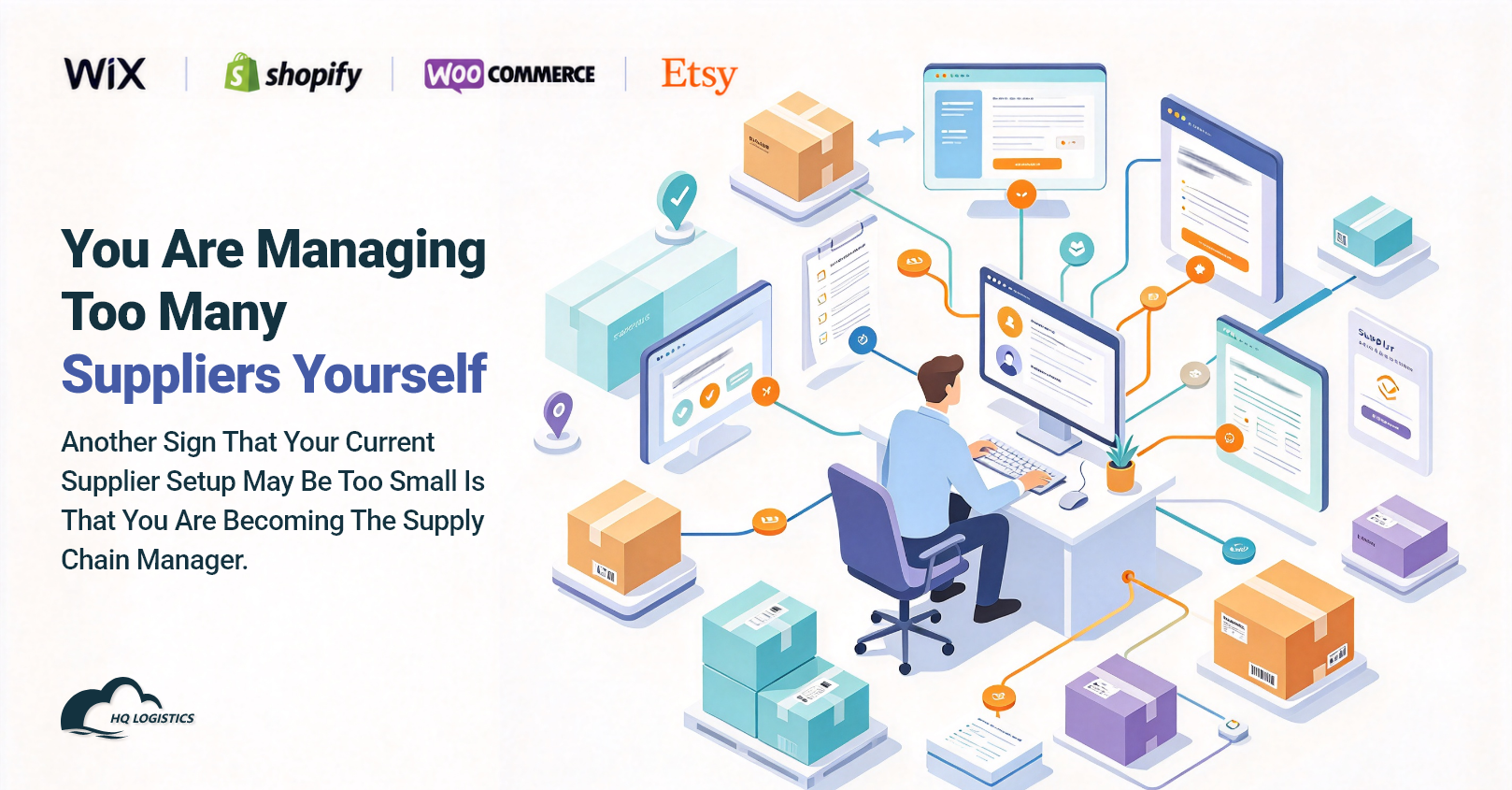
Another sign that your current supplier setup may be too small is that you are becoming the supply chain manager.
You may spend your day communicating with:
Supplier A for Product 1 | Supplier B for Product 2 | Packaging supplier | Inspection company | Warehouse | Shipping agent | Freight forwarder
As order volume grows, this becomes increasingly difficult.
You are no longer just running an ecommerce brand.
You're coordinating a supply chain.
Every additional supplier creates another communication point, another invoice, another production schedule, and another potential failure point.
At a certain stage, consolidating these activities through a more integrated fulfillment partner can save significant time.
A growing brand should not be dependent on one shipping method.
Different products and markets may require different solutions.
For example:
Standard products | Battery products | Beauty products | Oversized products | High-value products | Seasonal products
You may also need different fulfillment strategies depending on your customer location.
Direct international shipping may work well for new or low-volume products.
Overseas warehousing may be more suitable for proven bestsellers.
Local fulfillment can help reduce final-mile delivery times in major markets.
If your supplier only offers one shipping method, your business may have limited flexibility as it expands.
A more scalable supply chain gives you options.
This is one of the most important warning signs.
Ask your supplier:
"If our orders increase from 100 to 500 per day, what will change?"
A scalable supplier should be able to discuss:
Production capacity | Lead times | Inventory planning | Staffing | Quality control | Warehouse space | Packaging capacity | Shipping options | Replenishment
If the answer is simply:
"Don't worry. We can handle it."
That's not enough.
Growing brands need visibility.
You should understand how your supplier plans to support higher demand before the orders arrive.
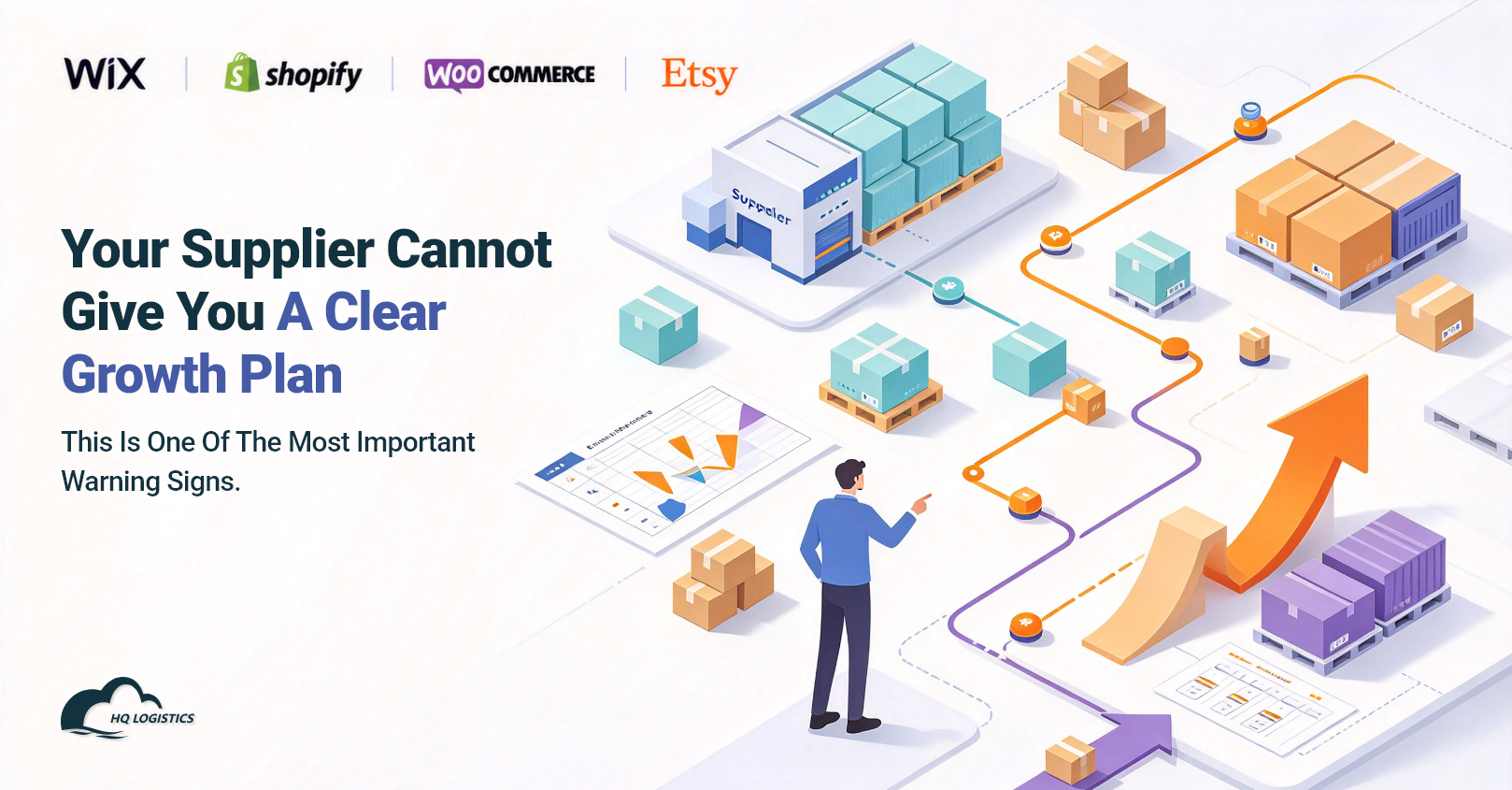
Not every supply chain problem means you need a new supplier.
Sometimes the real issue is that your fulfillment model has not evolved with your business.
For example, you may still be using a basic setup:
Supplier → Product → Customer
But your brand now needs:
Supplier → Quality Control → Warehouse → Inventory Planning → Fulfillment → Shipping → Customer
The difference is significant.
At the early stage, your supplier may be able to manage everything.
At the growth stage, you may need a dedicated supply chain system.
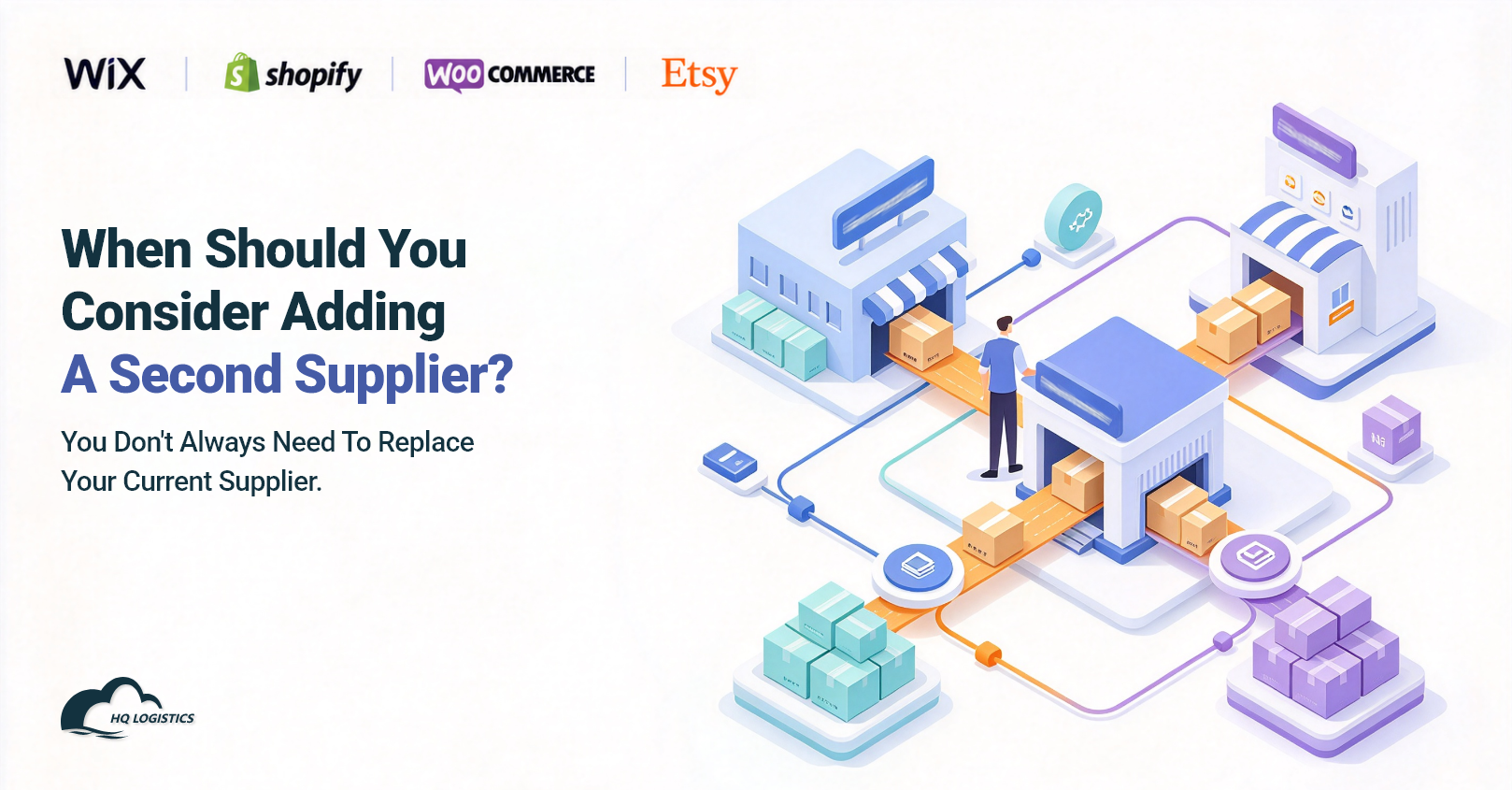
You don't always need to replace your current supplier.
Sometimes the better strategy is to add a second supplier.
This can help when:
Your primary supplier is near capacity | You need a backup source | You want to compare quality | You need better pricing | You are launching new products | Your current supplier cannot support customization
A multi-supplier strategy can reduce dependency on a single factory.
However, managing multiple suppliers also creates additional complexity.
You need standardized product specifications, quality requirements, packaging instructions, and inventory management.
That's why supplier diversification works best when it is supported by a coordinated supply chain process.
Consider a supplier change when problems are structural rather than temporary.
For example:
Consistent quality problems:
Defects continue despite repeated feedback.
Chronic delays:
Production lead times remain unreliable.
Limited capacity:
The supplier cannot support your forecasted growth.
Poor communication:
You cannot get clear production or inventory information.
Limited customization:
The supplier cannot support your branding strategy.
Uncompetitive costs:
Your total landed cost is becoming difficult to maintain.
No backup plan:
The supplier cannot offer alternative production or logistics solutions.
The key is not to switch suppliers because of one bad shipment.
The key is recognizing when the supplier's operating model no longer fits your business.
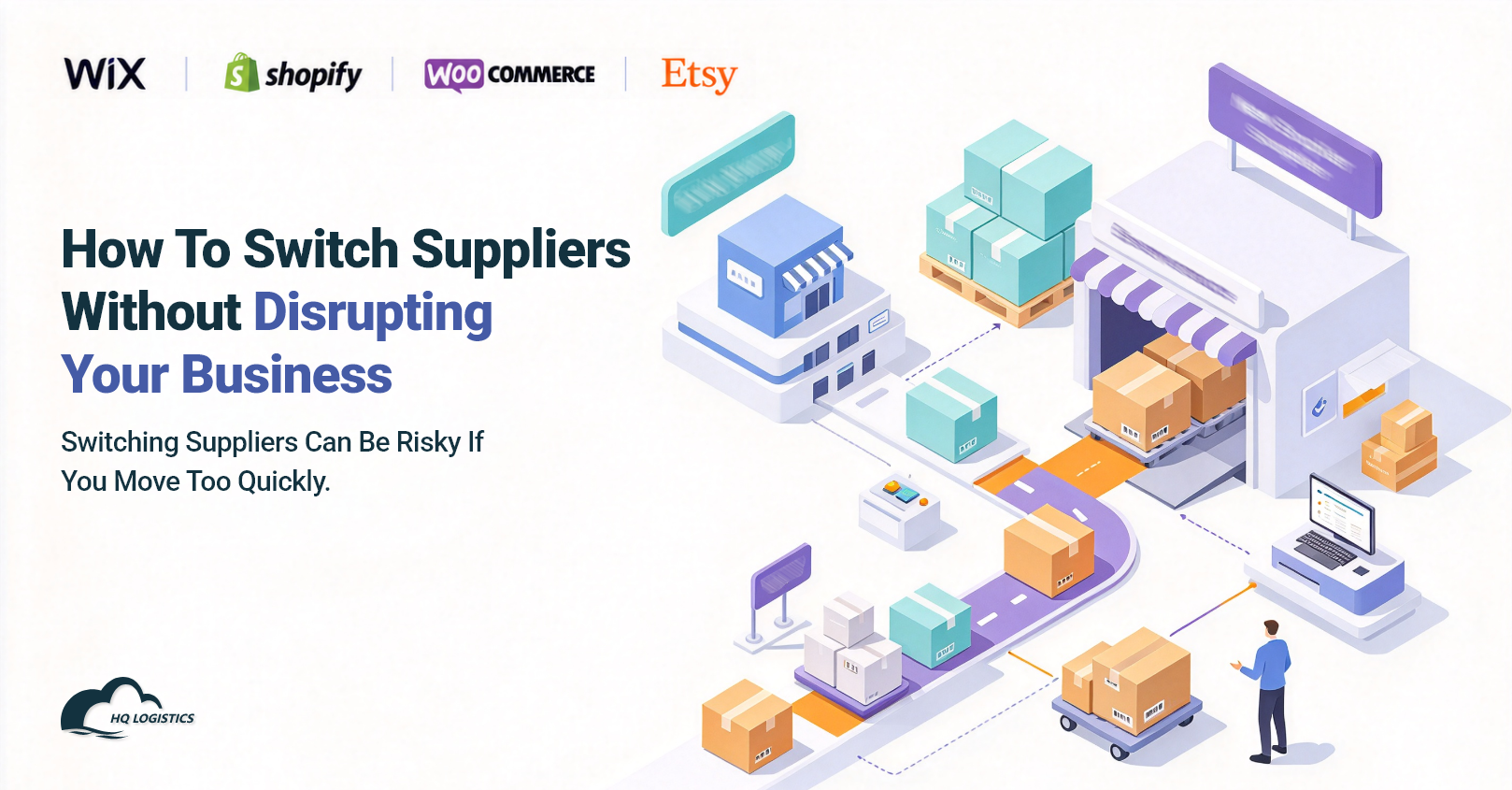
Switching suppliers can be risky if you move too quickly.
A better approach is to use a controlled transition.
Create a detailed specification covering:
Materials | Dimensions | Colors | Sizes | Weight | Packaging | Labels | Quality standards | Product functions
This becomes the standard for comparing suppliers.
Don't immediately choose the cheapest quotation.
Compare:
Product quality | Production capacity | MOQ | Lead time | Pricing | Customization | Communication | Packaging | Shipping support
Compare samples against your current product.
Check the details customers will actually notice.
Start with a controlled quantity rather than moving all production immediately.
Monitor actual performance.
Use quality control to confirm that the supplier is following your approved specifications.
Keep enough existing inventory to cover the transition period.
This reduces the risk of a stockout if the new supplier experiences unexpected delays.
One common mistake is thinking the solution is simply to find a larger factory.
A larger factory may solve production capacity.
But it doesn't automatically solve:
Inventory planning | Quality control | Warehousing | Packaging | Shipping | Supplier coordination | Order fulfillment | Returns | Multi-market logistics
That's why growing ecommerce brands increasingly need an integrated supply chain model.
Instead of asking:
"Which supplier should I use?"
Ask:
"Who can help me manage the entire process as my brand grows?"
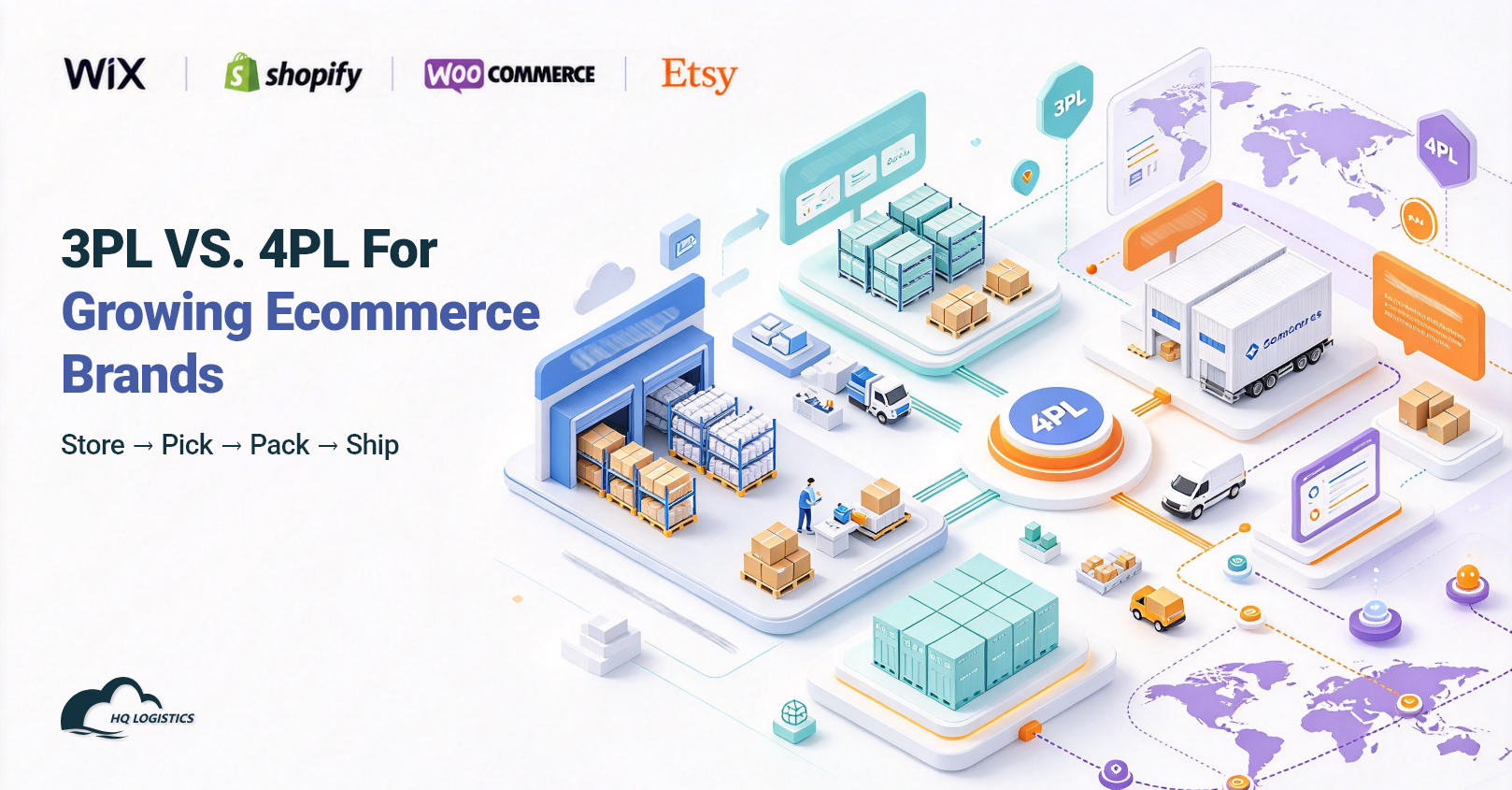
A traditional 3PL typically focuses on fulfillment activities such as:
Store → Pick → Pack → Ship
This is useful when your supply chain is already established.
But growing brands may need support much earlier in the process.
A 4PL approach can connect:
Source → Optimize → Manage → QC → Warehouse → Fulfill → Ship → Scale
This means supplier management and fulfillment are no longer separate problems.
Instead, they become part of one connected supply chain.
For a growing Shopify brand, this can make it easier to:
Add new products | Change suppliers | Compare sourcing options | Improve quality | Move inventory closer to customers | Add custom packaging | Scale order volume | Enter new markets
The goal is not simply to find a bigger supplier.
The goal is to build a supply chain that is bigger than your current problems.
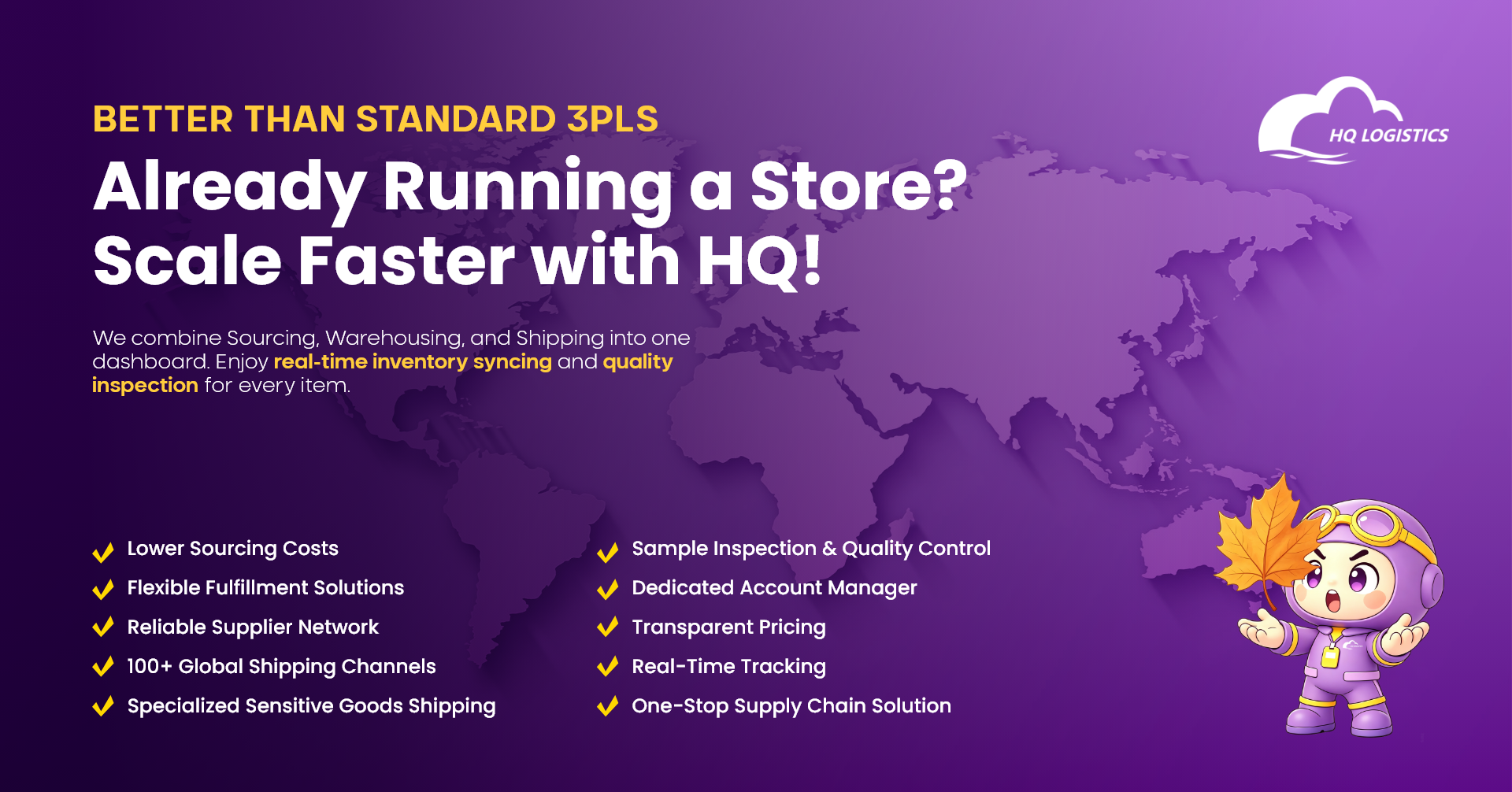
HQ supports brands that need more than basic product sourcing or order fulfillment.
The process can include:
Product Sourcing → Supplier Comparison → Quality Inspection → Inventory Consolidation → Warehousing → Custom Packaging → Order Fulfillment → Global Shipping
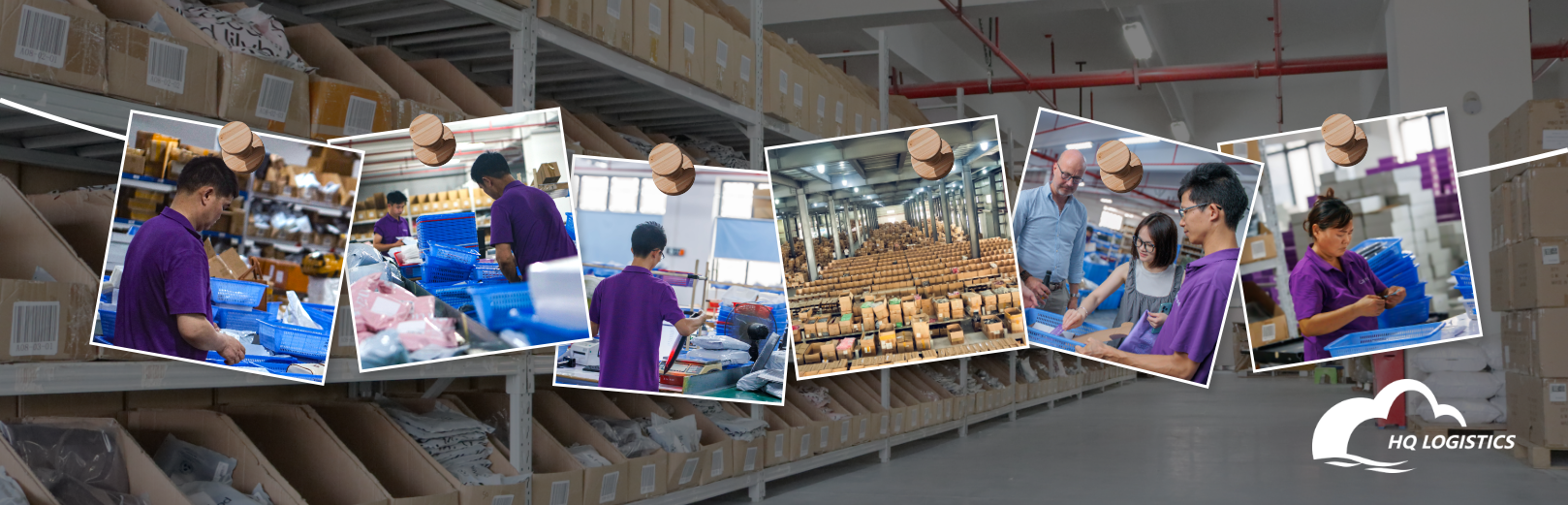
HQ can help brands compare suppliers, coordinate sourcing, inspect products, manage inventory, prepare custom packaging, and fulfill orders across international markets.
For eligible products and shipping routes, HQ offers 3–8 day delivery options.
HQ also provides fulfillment capacity of up to 20,000 orders per day, giving growing brands room to scale without immediately rebuilding their entire fulfillment operation.
For eligible brands processing 50+ orders per day, HQ also provides free custom packaging support, subject to product and service requirements.
Supported ecommerce platforms include Shopify, Wix, WooCommerce, and Etsy.
This integrated approach allows brands to focus on sales and customer growth while their supply chain becomes more structured behind the scenes.
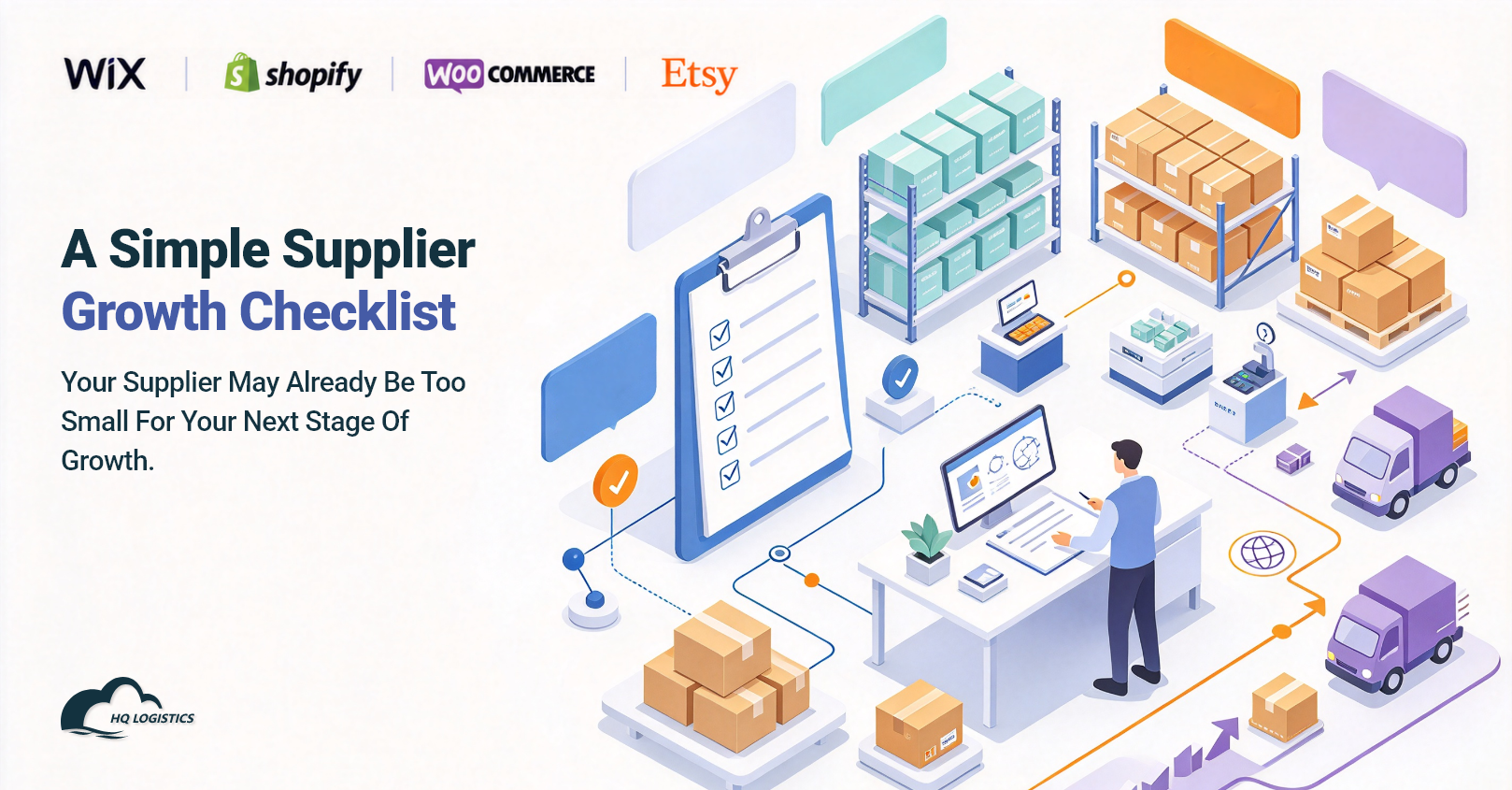
Before your next major sales campaign, ask:
Can my supplier handle 2–3x my current order volume?
Can product quality remain consistent as volume increases?
Can my supplier replenish bestsellers quickly?
Can they support my packaging and branding requirements?
Can I see accurate inventory and inbound stock?
Can orders be processed quickly when volume increases?
Do I have multiple shipping options?
Do I have another supplier or sourcing option if something goes wrong?
Can this supply chain support my brand for the next 12–24 months?
If several answers are no, your supplier may already be too small for your next stage of growth.
Outgrowing a supplier is actually a good problem to have.
It means your brand is growing.
The important thing is recognizing the signs before your supply chain becomes the bottleneck.
If production cannot keep up, quality starts falling, replenishment becomes unpredictable, customization is limited, and you spend too much time managing suppliers, it may be time to upgrade your supply chain.
You don't necessarily need to replace your supplier immediately.
You may need a backup supplier, better quality control, overseas warehousing, improved inventory planning, or a more integrated fulfillment partner.
The right solution depends on where your business is going next.
Your supplier helped you start. Your supply chain needs to help you scale.
Source smarter. Manage better. Fulfill faster. Grow stronger.
Look for repeated capacity problems, longer lead times, quality issues, slow replenishment, limited customization, poor communication, and a lack of scalable shipping or fulfillment options.
Not necessarily. If the supplier still provides good quality and pricing, you may be able to keep them while adding a backup supplier or using a fulfillment partner to manage more of the supply chain.
Consider a second supplier when your current supplier is approaching capacity, your business depends too heavily on one factory, or you need additional sourcing options for new products or markets.
Document your product specifications, test samples, place a controlled trial order, inspect the new inventory, and maintain enough existing stock to cover the transition period.
A larger supplier mainly provides more production capacity. A 4PL partner can coordinate multiple parts of the supply chain, including sourcing, supplier management, quality control, inventory, warehousing, fulfillment, and logistics.
📩Email: zoye@fulfllment-cn.com
PREVIOUS RECOMMENDATIONS


supplier too small for growing brand, ecommerce supplier management, supplier scalability, growing ecommerce brand supplier, Shopify supplier management, scalable supplier, ecommerce supply chain, supplier capacity, supplier fulfillment, China sourcing supplier, ecommerce fulfillment partner, supplier quality control, supplier management for Shopify



Customer's favorable comments is our eternal motivation. We feel grateful for all the support and company.

Lorem ipsum dolor sit amet, consetetur sadipscing elitr, sed diam nonumy eirmod tempor invidunt ut labore et dolore magna aliquyam erat, sed diam voluptua.