
Cheap product costs can look attractive when you're sourcing products for your Shopify store.
You find a supplier offering a lower price. Your product margin looks better. You expect to save money on every order.
But after production, packaging, warehousing, shipping, and returns are included, the final cost may be much higher than expected.
Why?
Because product cost is only one part of your total fulfillment cost.
For growing ecommerce brands, choosing the cheapest supplier doesn't always lead to the highest profit. The real goal is to control the entire supply chain—from sourcing and quality control to inventory, warehousing, and final delivery.
In this guide, we'll explain why low product prices can lead to higher fulfillment costs and how to build a more cost-effective fulfillment strategy for your ecommerce business.
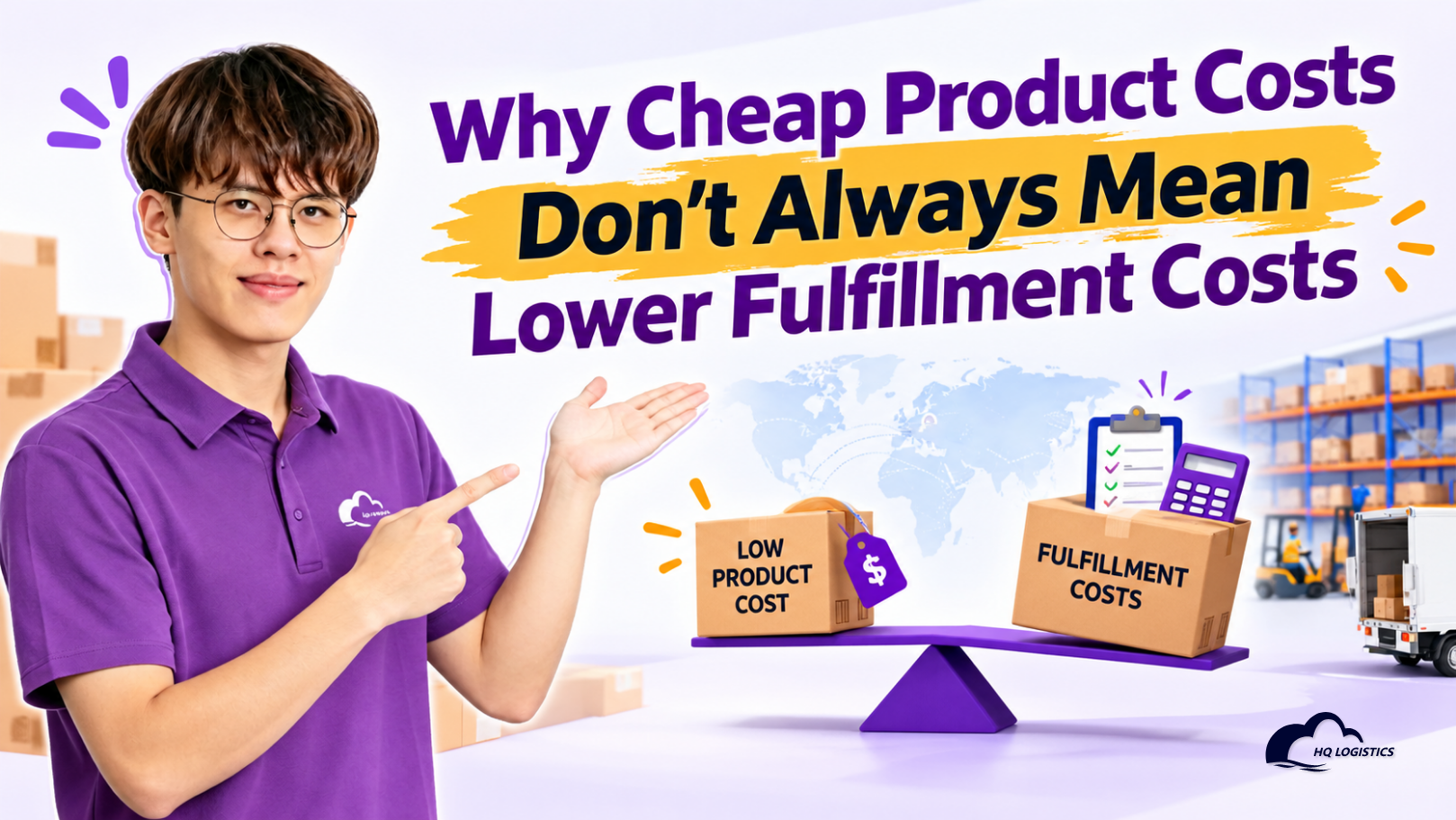
When comparing suppliers, it's easy to focus on the unit price.
Supplier A offers a product for $4.50, while Supplier B offers the same product for $5.00.
At first glance, Supplier A seems like the better choice.
But what happens when you include shipping, packaging, quality inspection, storage, and order processing?
Your total cost may look very different.
Consider these potential cost components:
Product cost | Packaging | Quality inspection | Warehouse storage | Pick and pack | International shipping | Returns and replacements
A supplier with a lower unit price may have higher packaging costs, inconsistent quality, longer lead times, or less flexible shipping options.
Meanwhile, a slightly more expensive supplier may offer better product consistency, more efficient packaging, and a more reliable replenishment process.
The right comparison is not simply price per unit. It's the total cost of getting a sellable product to your customer.
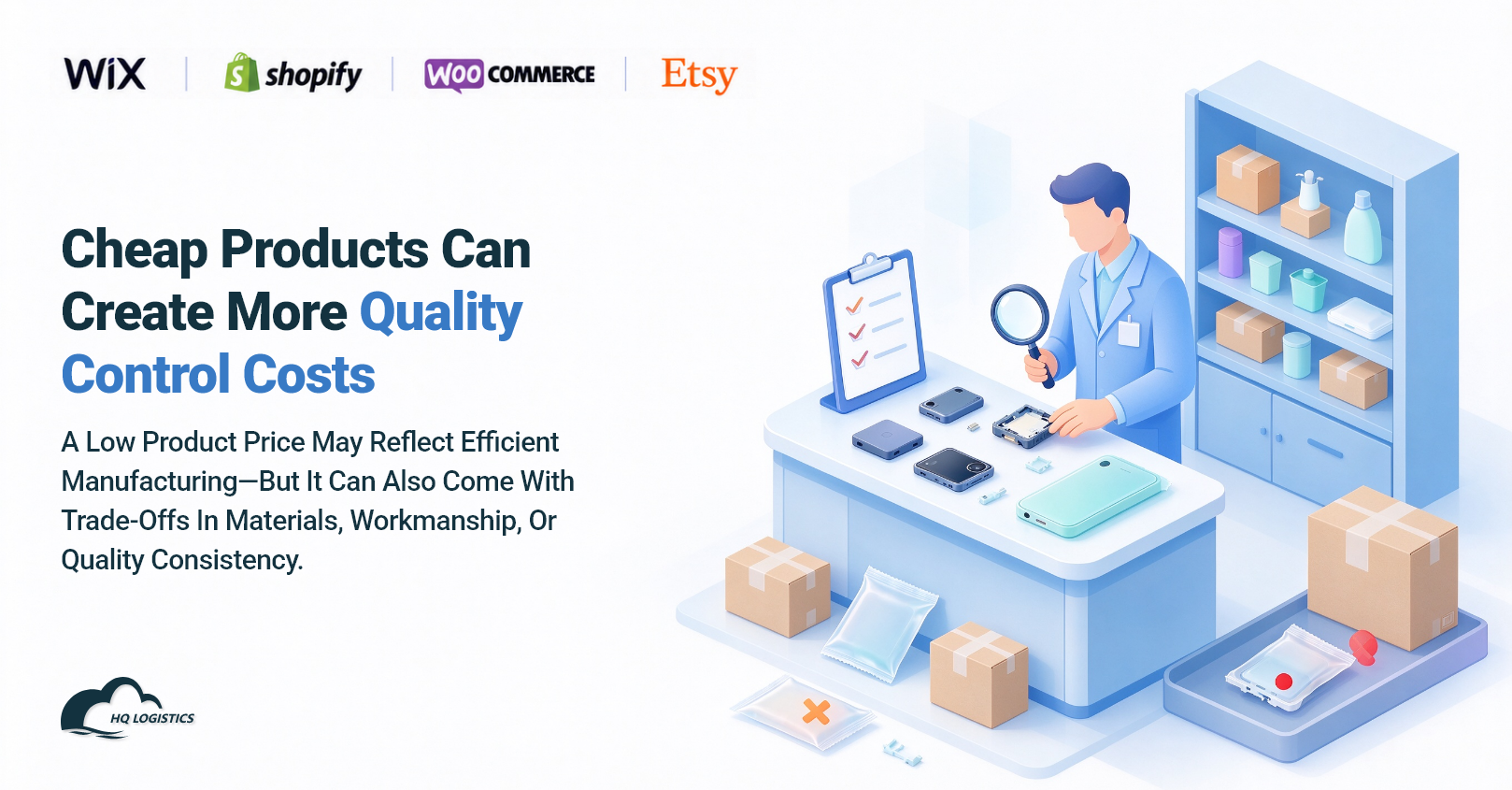
A low product price may reflect efficient manufacturing—but it can also come with trade-offs in materials, workmanship, or quality consistency.
If product quality is inconsistent, you may need to spend more time and money managing defects.
Common problems include:
Incorrect product dimensions | Color differences | Missing components | Poor finishing | Damaged items | Inconsistent packaging
These issues can create additional costs through inspections, rework, replacements, refunds, and customer service.
For example, imagine ordering 5,000 units from a supplier with a low unit price but a higher defect rate.
Even if the initial order is cheaper, the cost of identifying defective products and resolving customer complaints can reduce your savings.
That is why quality inspection should be part of your sourcing and fulfillment strategy.
Before placing a large order, compare product samples, confirm specifications, and establish clear quality standards.
A lower purchase price is only valuable when the product meets your quality requirements.
Two products with similar purchase prices can have very different shipping costs.
The reason is simple: shipping charges may depend on actual weight, dimensional weight, package dimensions, destination, and the selected shipping route.
Consider two products:
Product A:
Compact, lightweight, and easy to pack.
Product B:
Bulky, fragile, or difficult to package efficiently.
Even if Product B costs less to source, its packaging and shipping costs may be much higher.
This is particularly important for products such as home accessories, apparel bundles, pet products, and small household goods.
Before choosing a product, review:
Product weight | Package dimensions | Packaging materials | Shipping method | Destination market | Handling requirements
You should also check whether the product can be packed more efficiently without compromising protection.
A product that is cheap to buy but expensive to ship may not be the most profitable product to sell.
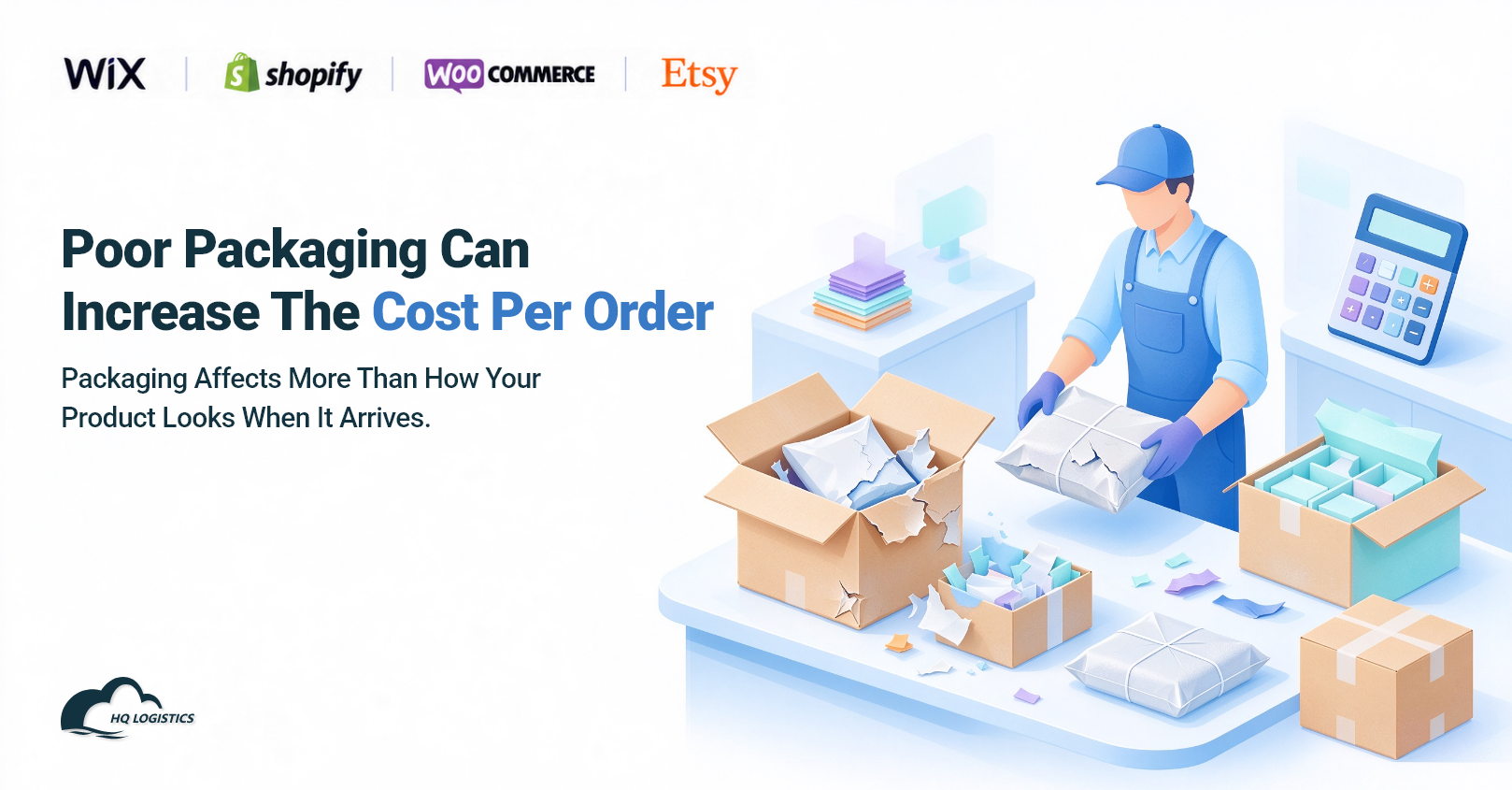
Packaging affects more than how your product looks when it arrives.
It can influence shipping dimensions, product protection, warehouse handling, and customer satisfaction.
Oversized packaging can increase dimensional shipping costs. Insufficient protection can lead to damaged products. Complicated packaging can also make picking and packing slower.
For growing brands, these small differences can add up across thousands of orders.
A more efficient packaging strategy should balance:
Product protection | Package dimensions | Material cost | Packing time | Branding requirements | Shipping efficiency
For example, a custom-sized mailer may be more cost-effective than an unnecessarily large box for a lightweight product.
However, reducing packaging costs should never mean compromising product protection.
The goal is to find the right packaging solution for the product, destination, and fulfillment process.
A supplier with a low price may have longer or less predictable production lead times.
That can create problems when your product starts selling faster than expected.
You may need to place larger orders earlier, hold more safety stock, or pay for expedited transportation to avoid running out of inventory.
Slow replenishment can also make it harder to respond to seasonal demand.
For example, if a product becomes popular during Q4 but your supplier cannot replenish it quickly, you may face two expensive choices:
Option A:
Hold more inventory in advance, tying up working capital.
Option B:
Pay for faster replenishment or risk stockouts and lost sales.
Neither option is automatically wrong, but both affect your overall cost structure.
When evaluating suppliers, compare not only unit prices but also production lead times, replenishment reliability, minimum order quantities, and capacity during peak periods.
A reliable supplier can help you plan inventory more effectively and reduce the need for last-minute decisions.
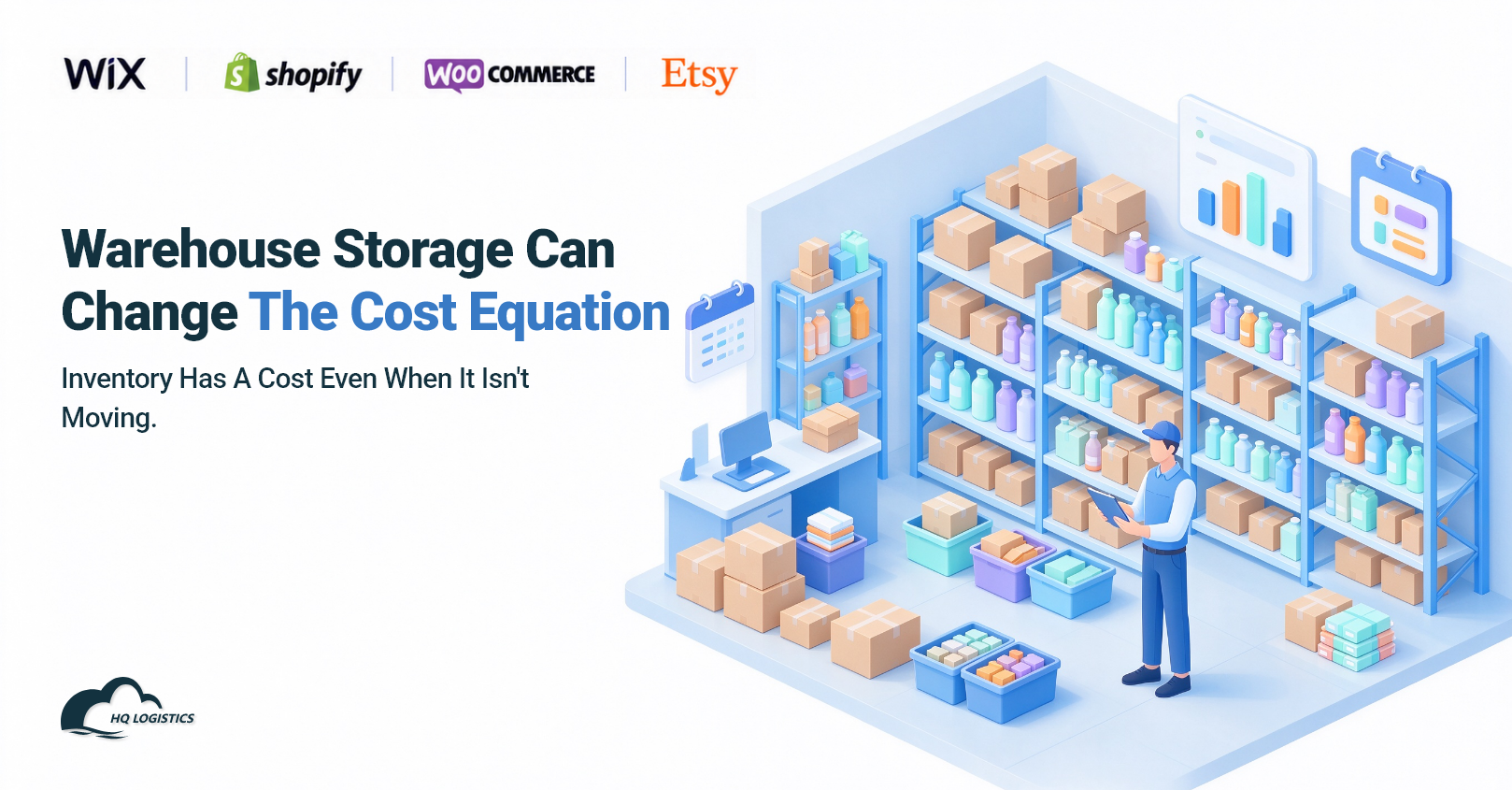
Inventory has a cost even when it isn't moving.
Depending on your fulfillment setup, you may need to account for storage charges, inventory handling, receiving, and the cost of holding products that sell slowly.
Buying large quantities to secure a lower unit price can create a problem if demand is uncertain.
You may save money on purchasing but end up with excess inventory that occupies warehouse space and ties up cash.
Before placing a bulk order, consider:
Expected sales volume | Product selling window | Replenishment lead time | Storage requirements | Inventory turnover | Risk of unsold stock
For proven bestsellers, bulk purchasing may make sense.
For new products, smaller test orders may be a safer approach.
The best purchasing decision balances unit price with inventory risk.
A supplier may offer an attractive product price but have limited shipping options.
If the available shipping route is expensive, slow, or unsuitable for your product, your final fulfillment cost may be higher than expected.
Shipping costs can depend on:
Product weight and dimensions | Destination | Shipping route | Delivery requirements | Product category | Order volume | Packaging
Different products may require different transportation solutions. A route suitable for general goods may not be appropriate for every battery-powered, liquid, or otherwise restricted product.
For this reason, confirm product acceptance, packaging requirements, shipping rates, and estimated transit times before committing to large inventory purchases.
For brands selling to customers in the US, Europe, the UK, Australia, and other international markets, the right shipping strategy should reflect actual customer locations and product requirements.
Choose the product and shipping solution together—not separately.
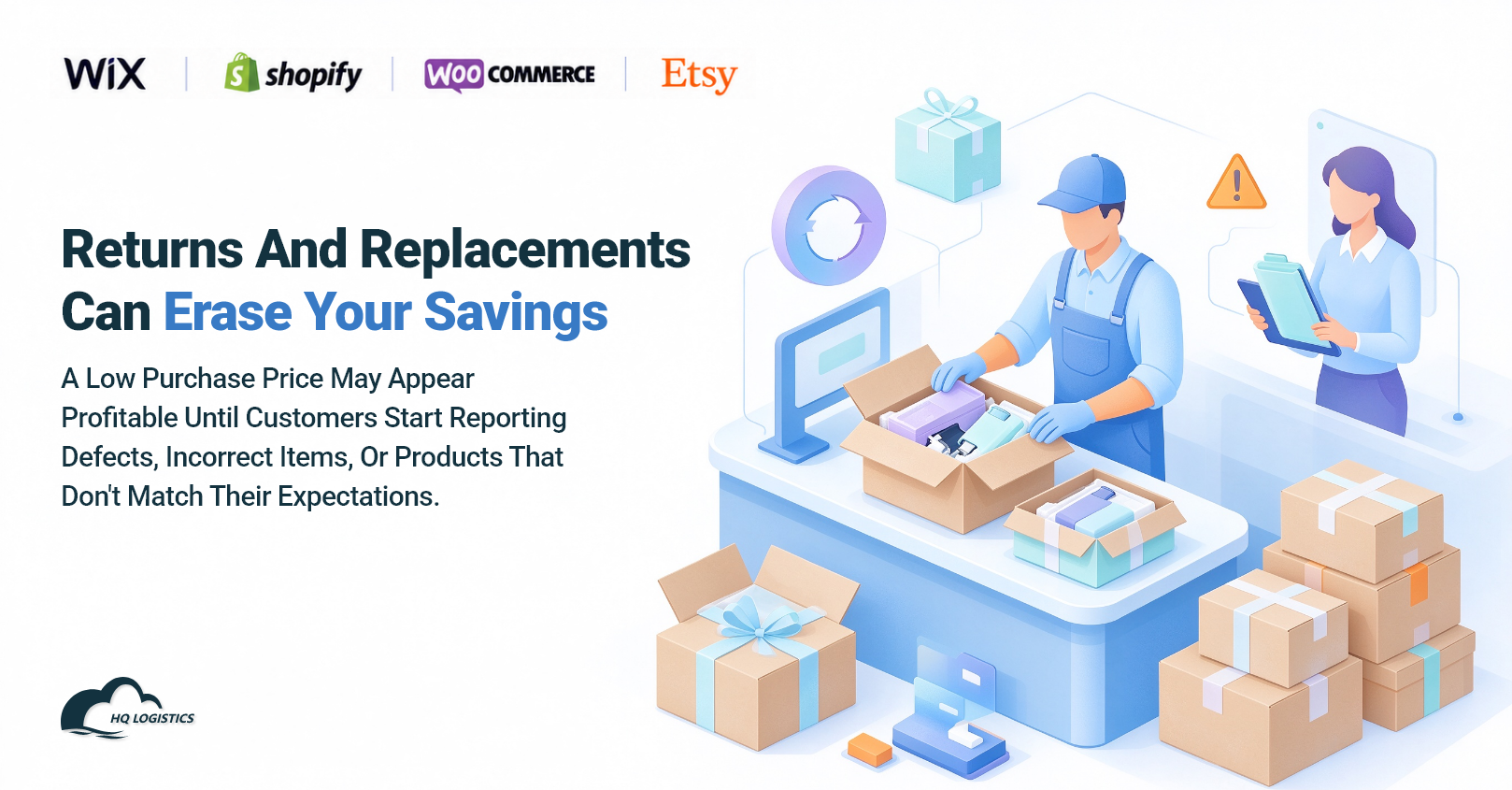
A low purchase price may appear profitable until customers start reporting defects, incorrect items, or products that don't match their expectations.
Returns and replacements can involve several costs:
Replacement products | Reshipping | Refunds | Return handling | Customer service | Lost inventory value
Not every return is caused by poor product quality. Customers may also change their minds or order the wrong size.
However, consistent product specifications, accurate product descriptions, and quality checks can help reduce avoidable problems.
When comparing suppliers, consider their ability to maintain consistent quality and follow approved product specifications.
The cheapest supplier is not necessarily the one that produces the lowest return-related costs.
Some ecommerce brands use separate providers for sourcing, quality inspection, warehousing, packaging, and shipping.
This approach can work, but it also creates more coordination work.
You may need to communicate with several companies, track different schedules, resolve handoff problems, and reconcile separate invoices.
When something goes wrong, it can take time to identify where the problem started.
For a growing brand, management time is also a resource.
An integrated fulfillment partner can help coordinate multiple stages of the supply chain through one workflow:
Sourcing → Quality Inspection → Warehousing → Packaging → Order Fulfillment → Shipping
This doesn't automatically guarantee the lowest cost. The value depends on the services, rates, systems, and operational performance involved.
However, comparing an integrated solution against your current setup can reveal opportunities to reduce duplicated work and improve visibility.
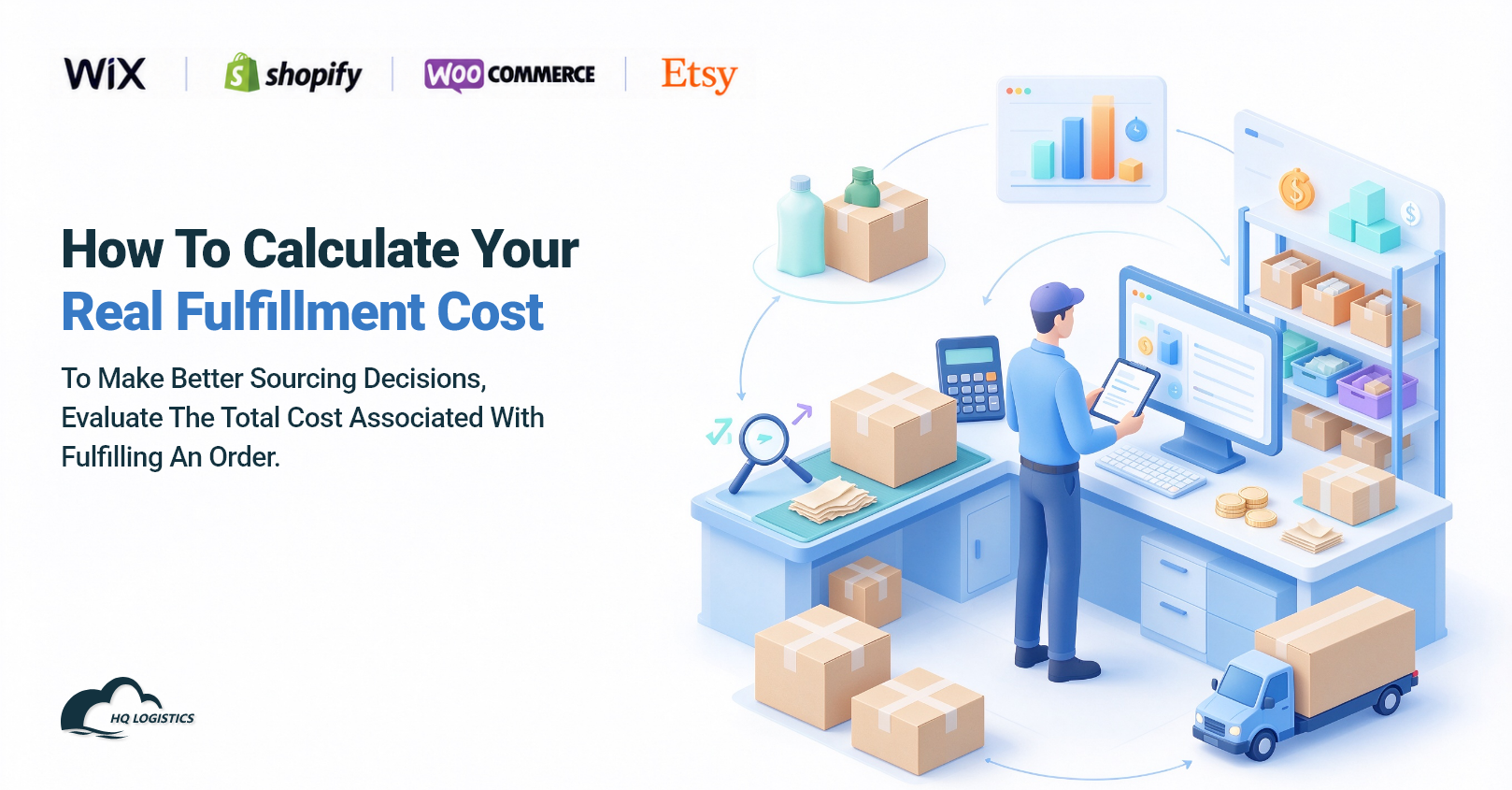
To make better sourcing decisions, evaluate the total cost associated with fulfilling an order.
A useful starting point is:
Total Fulfillment Cost Per Order = Product Cost + Inbound Freight + Inspection + Packaging + Storage Allocation + Pick & Pack + Outbound Shipping + Expected Returns and Replacement Costs
The exact categories will depend on your business model and the services included in each quote. Avoid counting the same charge twice, and distinguish fixed costs from variable costs.
For example, compare two suppliers using the same destination, product specifications, order quantity, and shipping service.
| Cost Component | Supplier A | Supplier B |
|---|---|---|
| Product cost | $4.50 | $5.00 |
| Packaging | $0.60 | $0.30 |
| Quality-related cost allocation | $0.40 | $0.15 |
| Shipping | $3.50 | $2.80 |
| Pick & pack | $0.80 | $0.80 |
| Illustrative total | $9.80 | $9.05 |
Illustrative example only. These figures are assumptions for comparison, not actual supplier quotations or HQ rates.
In this example, Supplier A has the lower product price, but Supplier B has the lower estimated fulfillment cost per order.
The lesson is simple: compare suppliers using the same cost categories and service assumptions.
For a fair comparison, also check delivery performance, product quality, minimum order quantities, and whether any quoted services are excluded.
Lowering fulfillment costs doesn't always mean negotiating a cheaper product price.
A more effective strategy is to examine the whole process.
Review product pricing, quality consistency, lead times, packaging, and shipping options together.
Use packaging that protects the product while minimizing unnecessary size and weight.
Validate demand and product quality before committing too much inventory to a new product.
Use sales history, seasonal forecasts, and replenishment lead times to reduce both stockouts and excess inventory.
Compare available routes based on product eligibility, destination, weight, dimensions, transit time, and total cost.
Evaluate whether coordinating sourcing, quality control, warehousing, and fulfillment through one partner can reduce duplicated effort or improve cost visibility.
Review fulfillment costs as order volume, product mix, packaging, and shipping requirements change.
What worked for a store processing 20 orders per day may not remain optimal at 500 orders per day.
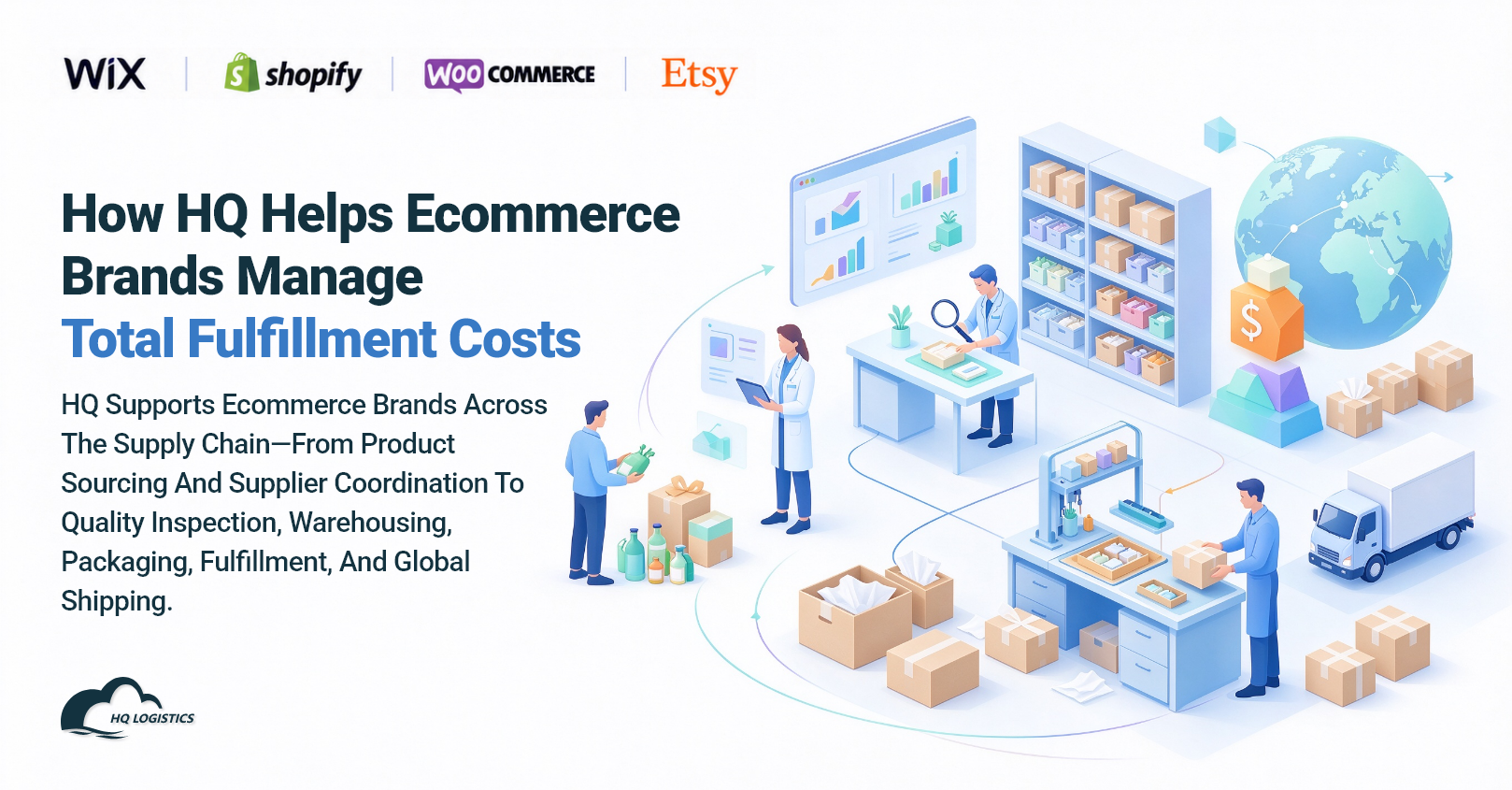
HQ supports ecommerce brands across the supply chain—from product sourcing and supplier coordination to quality inspection, warehousing, packaging, fulfillment, and global shipping.
Depending on your business requirements, services can include:
Product sourcing | Supplier comparison | Quality inspection | Inventory consolidation | Warehouse storage | Custom packaging | Pick & pack | Shopify order integration | Tracking synchronization | International shipping
By coordinating more of these activities, HQ helps brands evaluate their sourcing and fulfillment setup as a connected process rather than a collection of unrelated costs.
For eligible products and shipping routes, HQ offers 3–8 day delivery options. Actual availability and transit time depend on the product, destination, selected service, and shipping requirements.
HQ also supports Shopify, Wix, WooCommerce, and Etsy sellers, with fulfillment capacity of up to 20,000 orders per day.
For eligible brands processing 50 or more orders per day, HQ offers free custom packaging support, subject to applicable product and service requirements.
The best solution depends on your current order volume, product category, target markets, and fulfillment needs. Reviewing these details can help identify whether supplier changes, packaging improvements, inventory adjustments, or a different shipping route could improve your total cost structure.
Cheap product costs can help improve margins—but only when the rest of your supply chain works efficiently.
A low purchase price may be offset by expensive packaging, quality problems, slow replenishment, excess inventory, high shipping charges, or avoidable returns.
That's why growing ecommerce brands should look beyond the supplier's unit price.
Compare the total cost of getting a quality product to the customer, and evaluate every major stage from sourcing to final delivery.
Buy smarter. Control total costs. Fulfill more efficiently. Grow profitably.

Because product price is only one part of the total cost. Packaging, inspection, storage, handling, shipping, returns, and inventory risk can all affect the final cost per order.
Compare product price, minimum order quantity, production lead time, quality, packaging, inbound freight, storage, pick and pack, outbound shipping, and potential return-related costs.
Add the relevant product, inbound freight, inspection, packaging, storage allocation, pick-and-pack, outbound shipping, and expected return or replacement costs. Use consistent assumptions when comparing suppliers.
Yes. A supplier with a higher unit price may still deliver a lower total cost if it provides more consistent quality, better packaging, shorter lead times, or more efficient shipping options.
It may help by coordinating sourcing, quality control, warehousing, packaging, and shipping. Actual savings depend on your products, order volume, current provider costs, and the services included in the proposed plan.
📩Email: zoye@fulfllment-cn.com
PREVIOUS RECOMMENDATIONS


cheap product costs, total fulfillment costs, ecommerce fulfillment costs, product sourcing costs, cost per order ecommerce, Shopify fulfillment costs, ecommerce shipping costs, supplier cost comparison, total landed cost, inventory holding costs, product quality control, packaging optimization, fulfillment cost management




Customer's favorable comments is our eternal motivation. We feel grateful for all the support and company.

Lorem ipsum dolor sit amet, consetetur sadipscing elitr, sed diam nonumy eirmod tempor invidunt ut labore et dolore magna aliquyam erat, sed diam voluptua.