
For US home brands, Q4 is more than the holiday shopping season. It's a critical period for growing sales, attracting new customers, and building momentum for the year ahead.
From cozy blankets and decorative pillows to kitchen accessories, lighting, and home organization products, demand can shift quickly as consumers prepare for Halloween, Thanksgiving, Christmas, and holiday gatherings.
But increased demand brings new challenges.
Suppliers face tighter production schedules. Popular products sell out faster. Warehouses handle more orders. Shipping networks become busier. And even a small delay can affect your ability to deliver orders on time.
For growing home brands, the question isn't simply whether you have enough products.
It's whether your entire supply chain can keep up when Q4 demand increases.
In this guide, we'll explore the biggest supply chain challenges facing US home brands, how to prepare inventory and shipping before peak season, and how an integrated fulfillment strategy can help you scale with greater confidence.
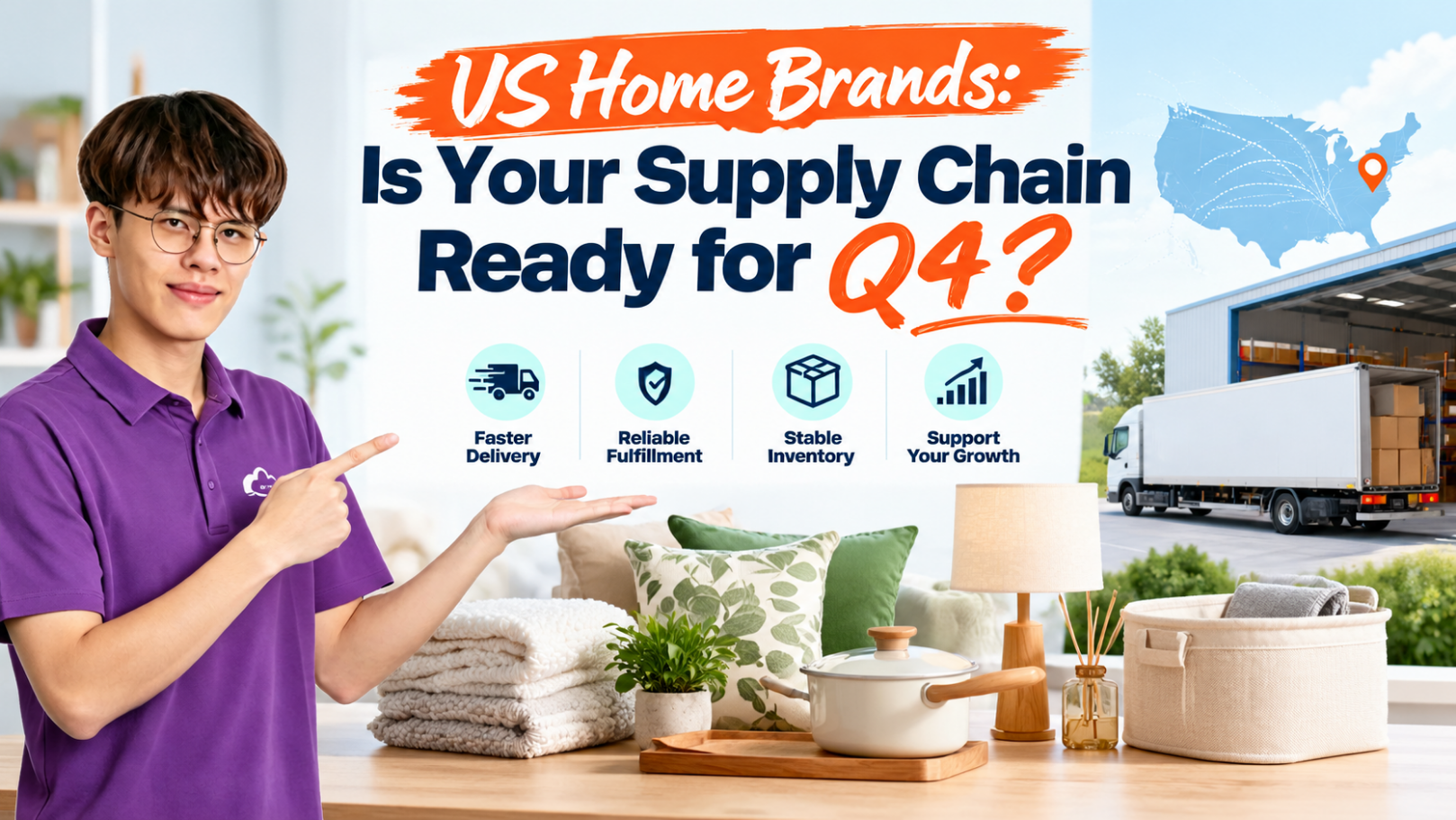
Home products can have different fulfillment requirements depending on their size, weight, fragility, packaging, and destination.
A decorative pillow is relatively easy to handle. A large storage organizer may require more warehouse space. Glass kitchenware needs protective packaging. Electronic home accessories may require additional shipping and product-compliance checks.
When sales increase, these differences become more important.
Common Q4 challenges include:
Supplier delays:
Production schedules become tighter as more brands place orders.
Inventory shortages:
Best-selling products may sell out before replenishment arrives.
Higher shipping costs:
Bulky products, dimensional weight, and packaging can increase transportation expenses.
Warehouse pressure:
More inbound inventory and outbound orders can create operational bottlenecks.
Delivery expectations:
Customers buying holiday gifts or seasonal home products often want clear, reliable delivery estimates.
Quality issues:
Damaged products and inconsistent packaging can lead to returns, replacements, and negative reviews.
For US home brands sourcing products overseas, these challenges can affect multiple stages of the supply chain at once.
The earlier you prepare, the more options you have when demand changes.
Not every product in your catalog needs the same Q4 inventory strategy.
Some products may sell consistently throughout the year. Others may experience stronger demand during the fall and holiday season.
Before placing additional orders, review your product performance and identify which SKUs deserve priority.
Potential Q4 categories include:
Cozy Home Textiles:
Throw blankets, decorative pillows, cushion covers, and bedding accessories.
Kitchen and Dining:
Kitchen organizers, serving accessories, table linens, and practical kitchen tools.
Home Organization:
Drawer organizers, storage bags, closet accessories, and space-saving products.
Seasonal Decorations:
Holiday ornaments, decorative lights, table decorations, and seasonal home accents.
Home Office Accessories:
Desk organizers, laptop stands, cable management products, and workspace accessories.
Small Home Gadgets:
Selected lighting products, compact appliances, and electronic accessories, subject to applicable product and shipping requirements.
These are product categories worth evaluating, not guaranteed bestsellers. Actual demand depends on your audience, pricing, competition, marketing, and historical sales.
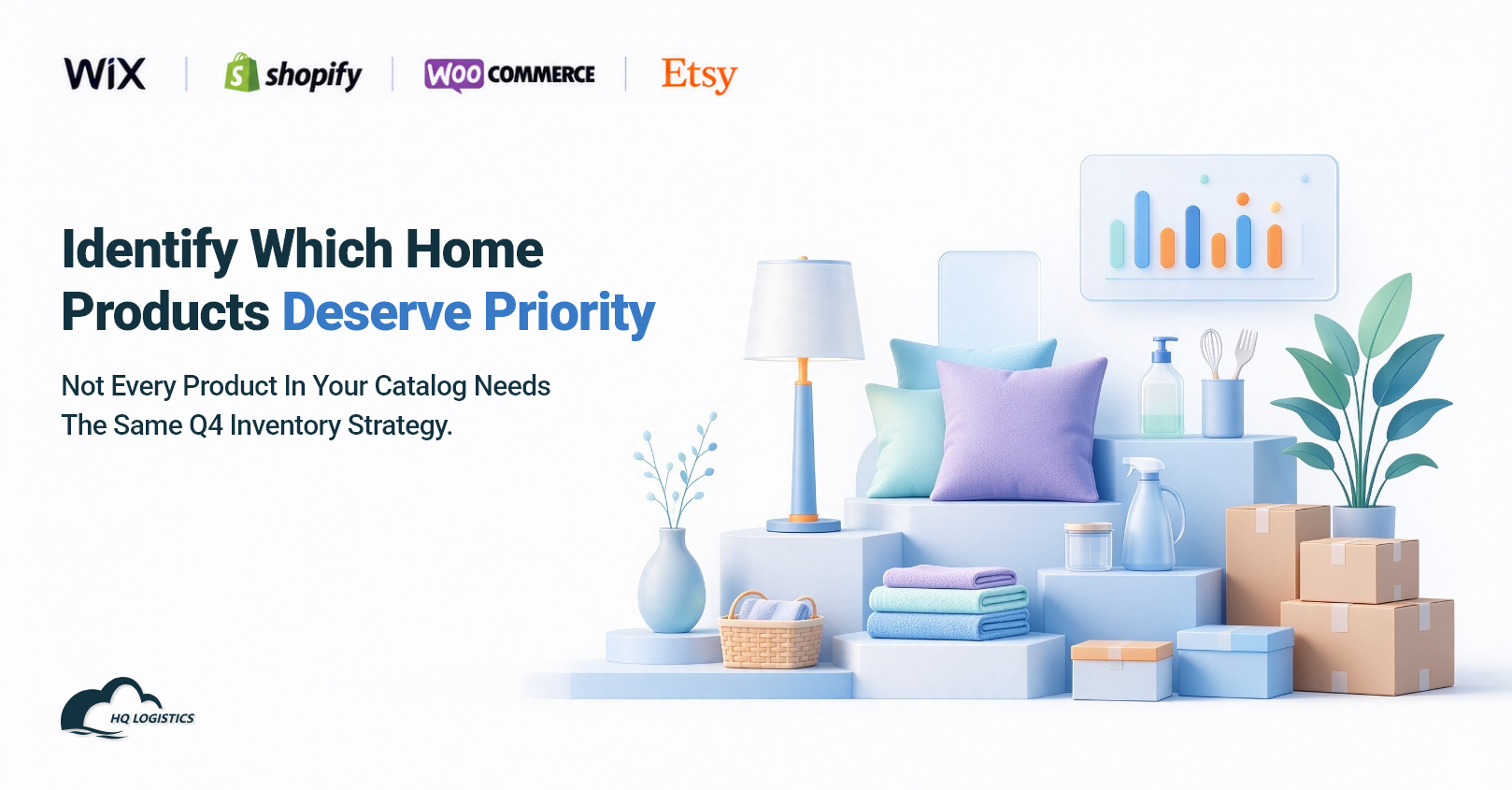
A practical approach is to divide your catalog into three groups.
Core Bestsellers:
Products with consistent sales and reliable demand. Prioritize availability and replenishment.
Seasonal Opportunities:
Products with potential Q4 demand. Stock carefully and monitor performance.
Experimental Products:
New products without reliable sales history. Start with smaller quantities and expand only when results justify it.
This helps protect cash flow while ensuring that your most important products receive enough inventory attention.
A supplier that performs well during normal months may struggle when order quantities increase.
For home brands, supplier capacity matters because products can involve different materials, production processes, packaging requirements, and quality standards.
Before Q4, ask your suppliers:
Can you maintain production capacity when demand increases?
Are material supplies and production schedules confirmed?
How long will replenishment take?
Can you maintain consistent product quality across larger batches?
Can you meet custom packaging and labeling requirements?
What happens if my order quantity increases unexpectedly?
If your supplier cannot provide clear answers, consider evaluating backup suppliers for important SKUs.
A lower product quotation may not represent the best overall value.
For example, a supplier may offer a lower unit price but require a longer production lead time, provide less protective packaging, or struggle with quality consistency.
Compare the full picture:
Product Cost + Quality Control + Packaging + Transportation + Storage + Fulfillment + Potential Returns
Your objective is to reduce the total cost of delivering a satisfactory product to your customer—not simply to purchase the cheapest item.
One of the most expensive Q4 problems is running out of a product while your marketing campaign is still generating demand.
Imagine your best-selling kitchen organizer performs well during a holiday promotion. Orders increase, but your remaining inventory cannot cover demand until the next shipment arrives.
You may lose sales, interrupt advertising campaigns, and disappoint customers who expected prompt delivery.
A more reliable inventory plan should account for:
Historical sales | Expected growth | Planned promotions | Supplier lead time | International transit time | Warehouse receiving time | Safety stock
A useful starting point is the reorder point formula:
Reorder Point = Average Daily Sales × Replenishment Lead Time + Safety Stock
For example, if a product sells 30 units per day and replenishment takes 20 days, expected demand during that lead time is 600 units. You would then add a suitable safety-stock buffer based on demand volatility and supply risk.
The numbers should reflect your actual sales and lead times.
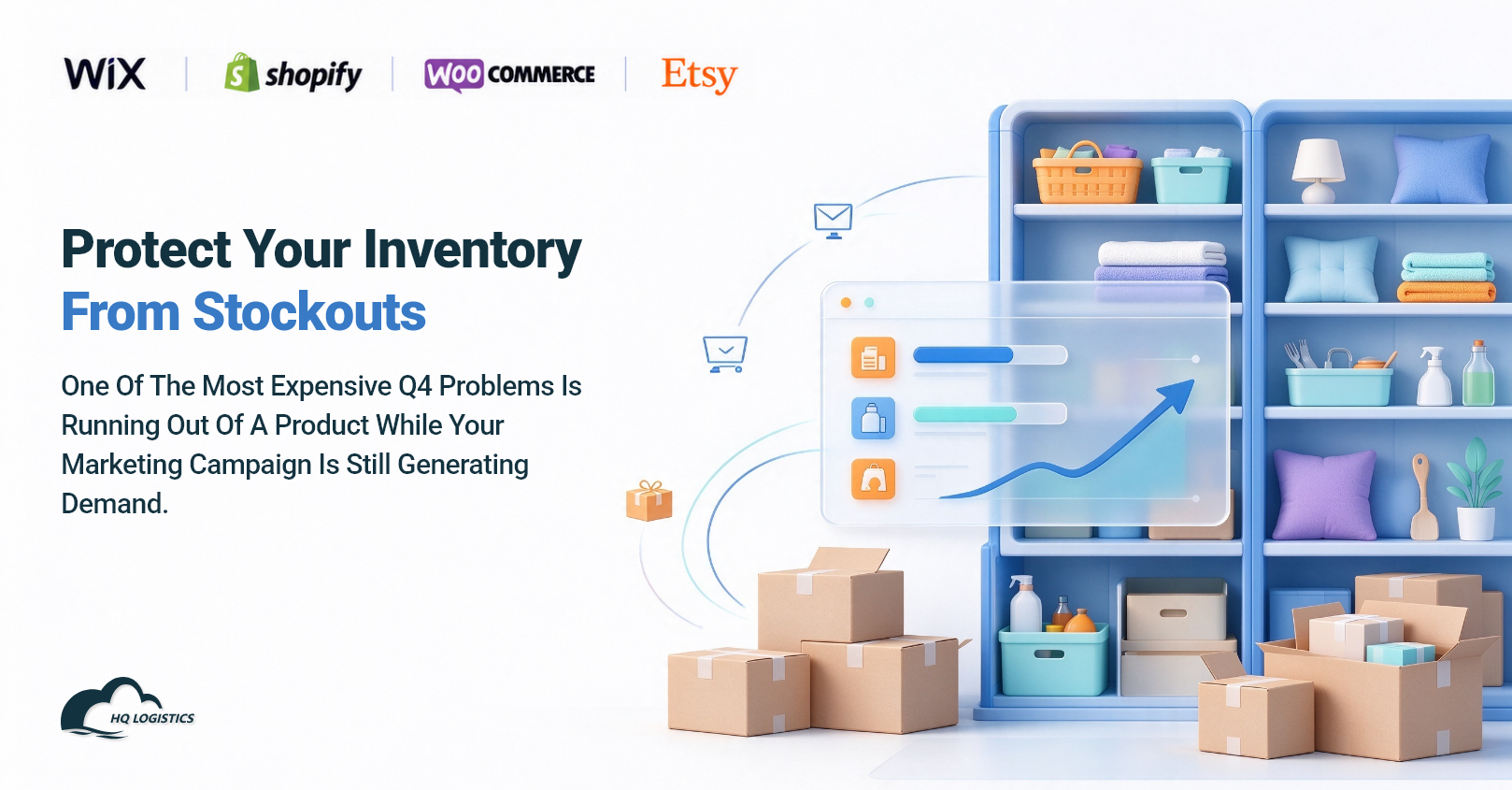
For overseas-sourced home products, replenishment does not end when production finishes.
Your inventory may still need quality inspection, export preparation, international transportation, customs clearance, and warehouse receiving before it becomes available for customer orders.
Calculate when inventory will be ready to sell—not just when the supplier expects to finish production.
Home products can be especially sensitive to shipping costs because some items occupy more space than their actual weight suggests.
Dimensional weight, packaging size, fragility, and the number of units per carton can all influence transportation and fulfillment costs.
Before shipping inventory, review:
Product dimensions and actual weight
Carton dimensions and units per carton
Protective packaging requirements
Whether products can be nested or packed more efficiently
Fragile components and damage risks
Storage space required per unit
Destination-specific shipping restrictions
For example, reducing unnecessary packaging volume may improve carton efficiency. However, packaging should not be reduced to the point where products become more likely to break or arrive damaged.
Soft home textiles may need relatively simple protective packaging. Glass products may require dividers, cushioning, and drop-risk testing. Products with electronic components may need suitable protection against impact and moisture.
The best packaging balances product protection, shipping efficiency, warehouse handling, and customer experience.
If a significant share of your customers is in the United States, storing selected inventory in a US warehouse may help simplify final-mile fulfillment.
Instead of shipping each order internationally after a customer purchases, you can move inventory in bulk and fulfill US orders domestically.
A typical workflow looks like:
Supplier in China → Quality Inspection → Bulk Shipment → US Warehouse → Domestic Fulfillment → Customer
This approach may help reduce individual cross-border shipping delays and make delivery estimates more predictable once inventory is available in the US warehouse.
However, overseas warehousing is not automatically the best option for every home product.
Consider it for products with:
Consistent US sales
Predictable demand
Manageable storage requirements
Suitable shipping dimensions and margins
Stable product quality
A reasonable replenishment plan
Large, bulky, fragile, or slow-moving products may require more careful cost analysis before you commit to overseas inventory.
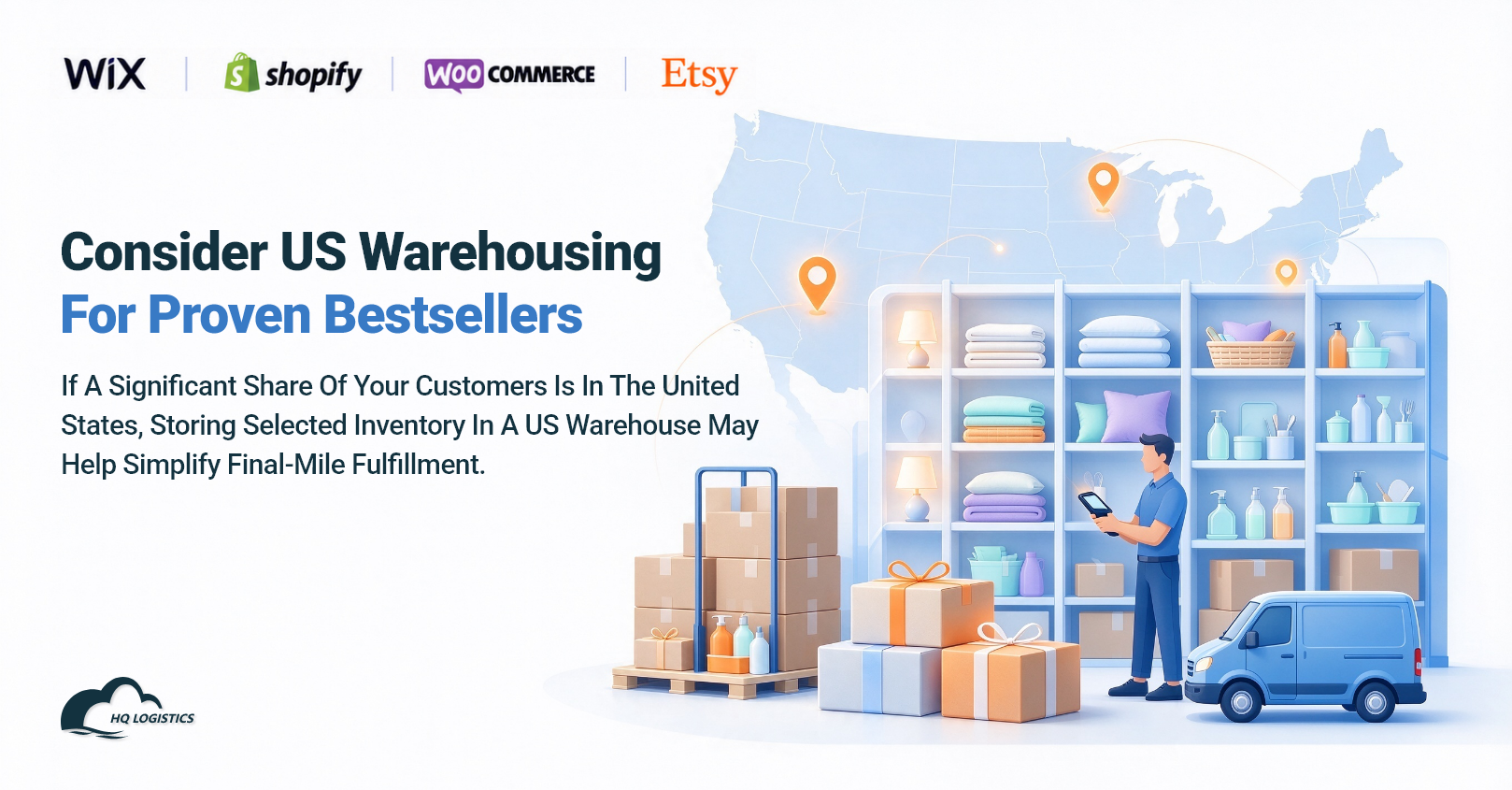
You don't necessarily need to move your entire catalog to the US.
US Warehouse:
Proven bestsellers and selected products with predictable US demand.
China Warehouse:
New products, slower-moving SKUs, backup inventory, and products that require further testing.
This approach can balance delivery speed with inventory investment and storage costs.
When inventory is spread across suppliers, China warehouses, and US fulfillment locations, visibility becomes essential.
Without accurate inventory information, you may sell products that are unavailable, reorder too late, or hold excess stock in the wrong location.
A connected inventory workflow should help you track:
China inventory | US inventory | Available stock | Reserved stock | Incoming shipments | Daily sales velocity | Reorder points | Fulfillment status
For Shopify brands, connecting store orders with fulfillment operations can also reduce manual work.
A typical workflow is:
Shopify Order → Inventory Allocation → Warehouse Picking → Packing → Shipment → Tracking Synchronization
Before Q4, test the entire process. Confirm that orders sync correctly, stock levels update as expected, and tracking information returns to your store.
The goal is to identify operational problems before order volume peaks.
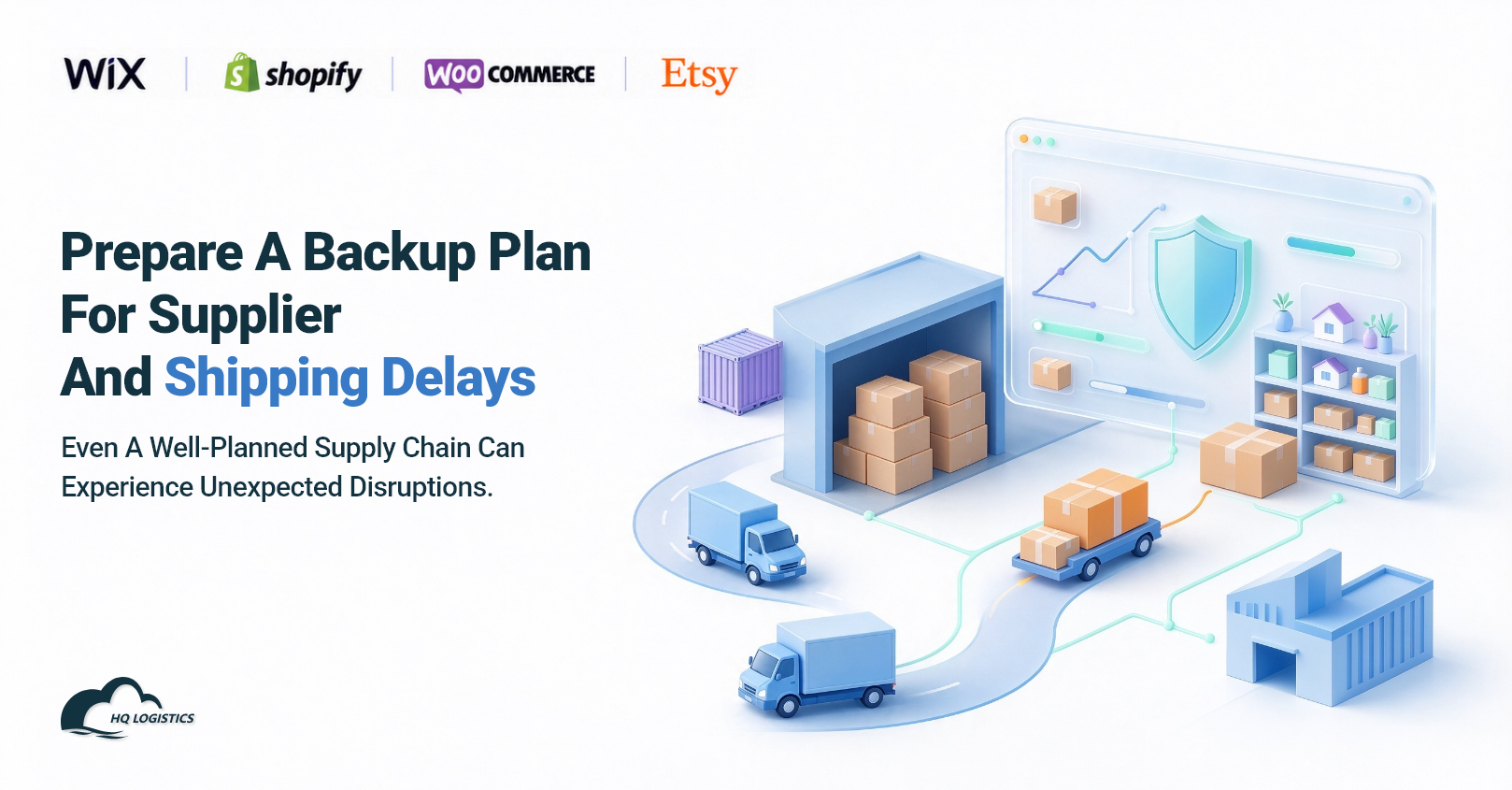
Even a well-planned supply chain can experience unexpected disruptions.
A supplier may miss a production deadline. A shipment may take longer than expected. A warehouse may receive inventory later than planned.
For critical home product SKUs, establish a contingency plan before these issues arise.
Consider:
Backup Suppliers:
Identify alternative sources for products that are essential to your sales.
Safety Stock:
Maintain an appropriate buffer for products with uncertain replenishment.
Alternative Shipping Options:
Understand which backup routes are available and which products they can accept.
Inventory Prioritization:
Allocate available stock to your strongest products and most important markets.
Customer Communication:
Update delivery estimates promptly if an order may be delayed.
A backup plan should be realistic and financially manageable. It doesn't mean buying excessive inventory or paying for the fastest shipping on every order.
It means knowing what actions to take before a small problem becomes a major sales disruption.
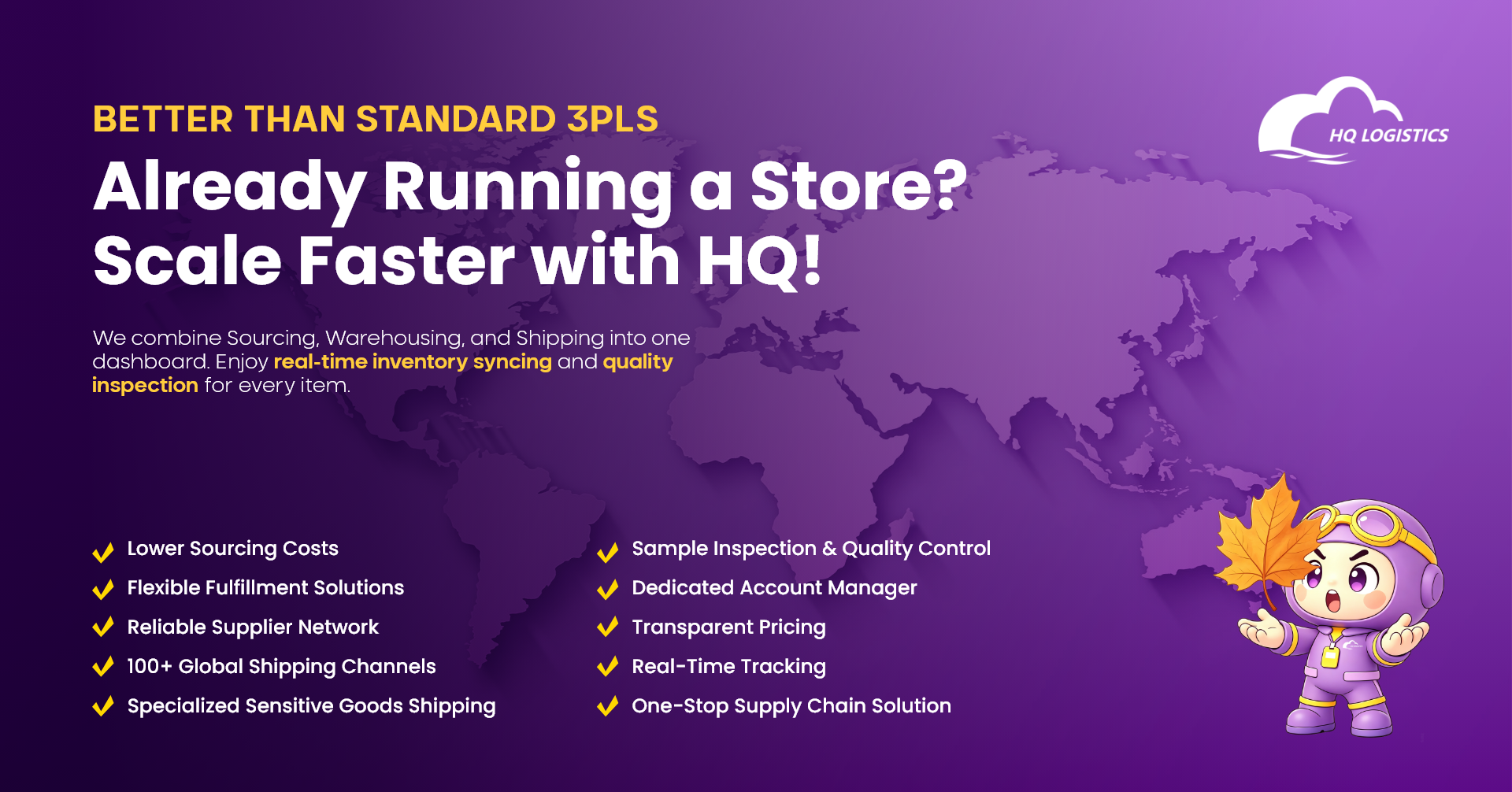
Traditional third-party logistics providers, or 3PLs, generally focus on operational services such as warehousing, picking, packing, and shipping.
These services are essential, but growing home brands may also need support before products reach the warehouse.
For example, a home brand preparing for Q4 may need help with:
Product sourcing | Supplier comparison | Quality inspection | Packaging improvements | Inventory planning | Warehouse allocation | Custom packaging | Order fulfillment | Global shipping
Managing every service independently can create additional communication and coordination work.
A more integrated approach can connect upstream sourcing with downstream fulfillment.
Traditional 3PL:
Store inventory, pick orders, pack products, and ship parcels.
4PL approach:
Coordinate sourcing, suppliers, quality control, inventory planning, warehousing, fulfillment, and transportation across the supply chain.
The right model depends on your business complexity. A 3PL may be sufficient if you already have reliable suppliers and only need warehousing and shipping. An integrated 4PL approach may be worth considering when supplier management, inventory allocation, and logistics coordination are becoming harder to manage separately.
The objective is to create a supply chain that supports growth without adding unnecessary complexity.
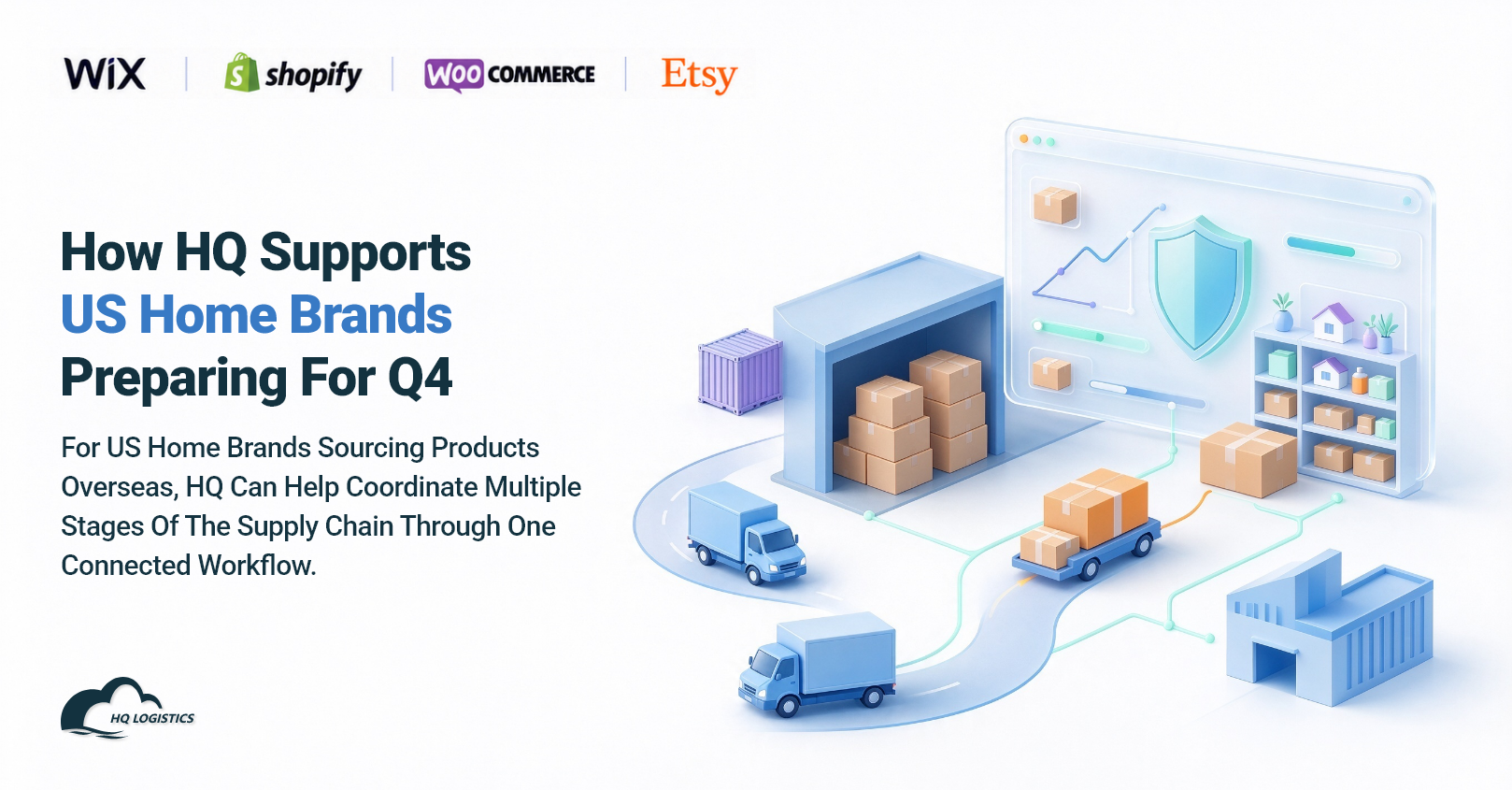
For US home brands sourcing products overseas, HQ can help coordinate multiple stages of the supply chain through one connected workflow.
Depending on your requirements, support can include:
Product Sourcing:
Find suitable suppliers and compare product options.
Quality Inspection:
Check products against agreed specifications before fulfillment.
Product Photography:
Prepare product images for ecommerce listings and marketing campaigns.
Custom Packaging:
Coordinate branded packaging, labels, inserts, and other approved packaging requirements.
Warehousing:
Manage inventory in China and explore suitable overseas warehouse options.
Shopify Integration:
Connect store orders with fulfillment workflows.
Order Fulfillment:
Coordinate picking, packing, dispatch, and tracking updates.
Global Shipping:
Compare available shipping options based on destination, product characteristics, delivery requirements, and cost.
For eligible products and service plans, HQ may also provide warehouse storage offers. Confirm current eligibility, fees, product restrictions, and warehouse terms before sending inventory.
The aim is to help home brands connect sourcing, inventory, packaging, and fulfillment rather than managing every stage as a separate project.
Before your next seasonal campaign, review the following areas.
☐ Have I identified my priority Q4 SKUs?
☐ Have I confirmed production capacity and lead times?
☐ Are product specifications and quality standards documented?
☐ Do I have alternatives for critical products?
☐ Have I forecast demand using sales data and planned promotions?
☐ Have I calculated replenishment lead times and safety stock?
☐ Are bestsellers prioritized over uncertain products?
☐ Do I know which inventory should remain in China and which should move to the US?
☐ Have I checked product and carton dimensions?
☐ Is protective packaging suitable for fragile products?
☐ Is there enough warehouse capacity for inbound and outbound volume?
☐ Have I tested order and inventory synchronization?
☐ Are shipping options suitable for each product type?
☐ Have I confirmed current rates and delivery estimates?
☐ Do I have a contingency plan for delays?
☐ Can my fulfillment operation handle higher order volumes?
If several answers are “no,” prioritize the highest-risk products and processes first rather than attempting to overhaul the entire supply chain at once.
For US home brands, Q4 success depends on more than product selection and marketing.
It depends on whether your suppliers can produce consistently, your inventory is available when customers need it, your packaging protects products in transit, and your fulfillment operation can handle the increase in orders.
Start with your best-selling products. Review supplier performance. Calculate realistic replenishment lead times. Check packaging and shipping costs. Then determine whether selected inventory should be positioned closer to US customers.
Source smarter. Protect your inventory. Fulfill with confidence.
Your home brand is preparing for Q4. Make sure your supply chain is ready, too.
Start by identifying priority products, confirming supplier capacity, forecasting demand, reviewing packaging, calculating replenishment lead times, and testing warehouse and fulfillment workflows.
Potential categories include home textiles, kitchen accessories, storage and organization products, seasonal decorations, home office accessories, and selected small home gadgets. Validate demand against your own sales data before placing large orders.
US warehousing may be suitable for proven products with consistent US demand. Evaluate storage costs, product dimensions, shipping economics, inventory turnover, and replenishment time before committing stock.
Review product and carton dimensions, improve packaging efficiency without compromising protection, compare available shipping options, consolidate inventory where appropriate, and evaluate total delivered cost rather than shipping price alone.
A 3PL typically focuses on warehousing and order fulfillment. A 4PL approach can coordinate a broader set of activities, including sourcing, supplier management, inventory planning, warehousing, and logistics. The best fit depends on how much of the supply chain your business needs help managing.
📩Email: zoye@fulfllment-cn.com
PREVIOUS RECOMMENDATIONS


US home brands, Q4 supply chain, home products fulfillment, Shopify home goods fulfillment, home decor sourcing, home goods supplier, US warehouse for ecommerce, Q4 inventory planning, home products shipping, ecommerce supply chain management, 3PL vs 4PL, overseas warehousing, home goods quality inspection, custom packaging for home brands, global fulfillment for Shopify




Customer's favorable comments is our eternal motivation. We feel grateful for all the support and company.

Lorem ipsum dolor sit amet, consetetur sadipscing elitr, sed diam nonumy eirmod tempor invidunt ut labore et dolore magna aliquyam erat, sed diam voluptua.