
Q4 is the biggest growth opportunity of the year for many Shopify brands.
But higher demand also means higher supply chain pressure.
More orders. Faster inventory turnover. Tighter supplier lead times. Higher shipping volumes. More customer expectations.
A product can be a bestseller, but if your supplier cannot keep up, your warehouse runs out of stock, or your shipping route becomes too slow, Q4 growth can quickly turn into lost sales.
That’s why Q4 preparation should start long before Black Friday.
A Q4-ready supply chain connects every step—from sourcing and supplier management to inventory, warehousing, fulfillment, and global shipping—into one coordinated process.
In this guide, we’ll break down 7 key steps to build a Q4-ready supply chain for your Shopify store.
A strong Q4 supply chain starts before the first product enters your warehouse.
The first step is choosing products that have enough demand potential and suppliers that can support your expected sales volume.
Look at:
· Previous Q4 sales data
· Current product trends
· Product margins
· Supplier production capacity
· Minimum order quantities
· Production lead times
· Quality consistency
· Replenishment speed
· Custom packaging capabilities
Shopify also recommends using historical sales, seasonality, promotions, supplier lead times, and other market factors when forecasting demand.
If one supplier suddenly faces production delays during peak season, your entire sales plan can be affected.
For important SKUs, consider having:
· A primary supplier
· A backup supplier
· Approved product specifications
· Quality control standards
· A clear replenishment plan
This gives your business more flexibility when demand changes.
One of the biggest Q4 mistakes is waiting until sales increase before preparing inventory.
By then, it may already be too late.
Demand forecasting helps you estimate how much inventory you need and when you need it.
Start with your previous sales data, then adjust for:
· Expected year-over-year growth
· New product launches
· Black Friday promotions
· Cyber Monday campaigns
· Christmas demand
· Paid advertising plans
· Seasonal product trends
· Supplier lead times
A simple approach is to divide products into three groups:
These are your highest-priority products.
Maintain higher safety stock and monitor inventory frequently.
These products have strong potential but less predictable demand.
Keep enough inventory for your expected sales while leaving room for replenishment.
New products should be tested with smaller quantities before committing too much capital.
This approach helps reduce both stockouts and overstock.
Shopify notes that effective inventory planning should balance demand forecasts, reorder points, safety stock, and supplier lead times.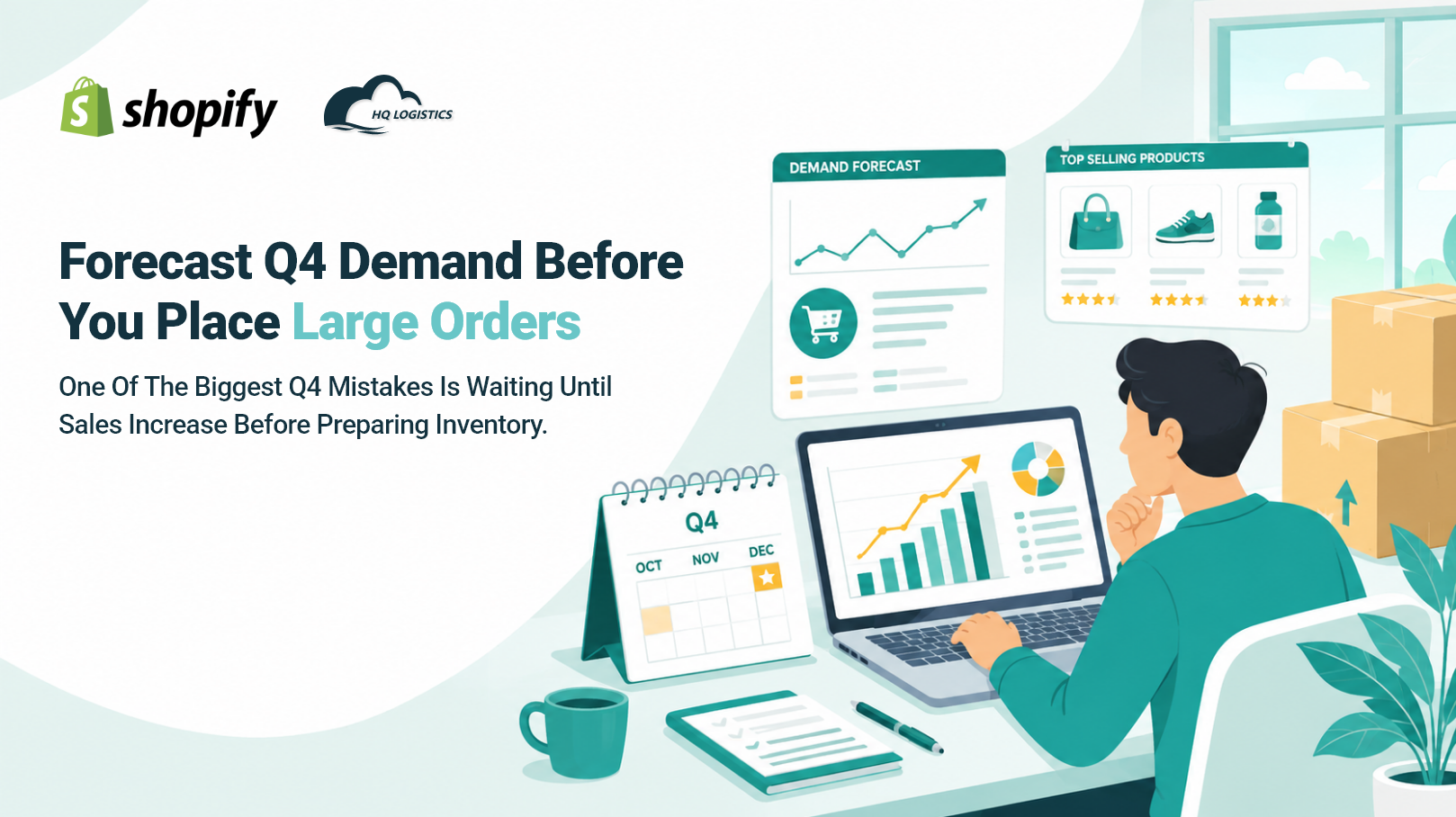
Your Q4 inventory plan should not only answer:
“How much will we sell?”
It should also answer:
“What happens if demand is higher than expected?”
That’s where safety stock becomes important.
Your inventory buffer should account for potential:
· Supplier delays
· Production issues
· Unexpected sales spikes
· Transportation delays
· Customs delays
· Warehouse receiving delays
· Carrier capacity constraints
For example, if a product normally sells 100 units per day but your Black Friday campaign could increase demand significantly, you need enough stock to cover the expected spike plus a reasonable buffer.
Shopify's holiday guidance similarly recommends protecting bestsellers with safety stock and preparing backup options for potential shortages.
Inventory location matters, too.
Having 5,000 units in stock doesn't help much if all 5,000 units are sitting far away from your largest customer market.
That leads to the next step.
As your Shopify store grows, shipping every order directly from the same origin may become less efficient.
Instead, consider a multi-location fulfillment strategy.
For example:
China Warehouse → Overseas Warehouse → Local Fulfillment → Customer
This can help you balance:
· Shipping speed
· Shipping cost
· Inventory availability
· Customer location
· Order volume
For brands selling heavily into the US or Europe, placing selected bestsellers closer to customers can reduce the distance between inventory and demand.
Shopify also highlights that inventory location and fulfillment routing become increasingly important as merchants sell across more channels and locations.
You don't necessarily need to move all your inventory overseas.
A better approach may be:
China inventory:
For new products, long-tail SKUs, and products with uncertain demand.
Overseas inventory:
For proven bestsellers and high-volume Q4 products.
This gives you flexibility without unnecessarily tying up too much capital in overseas stock.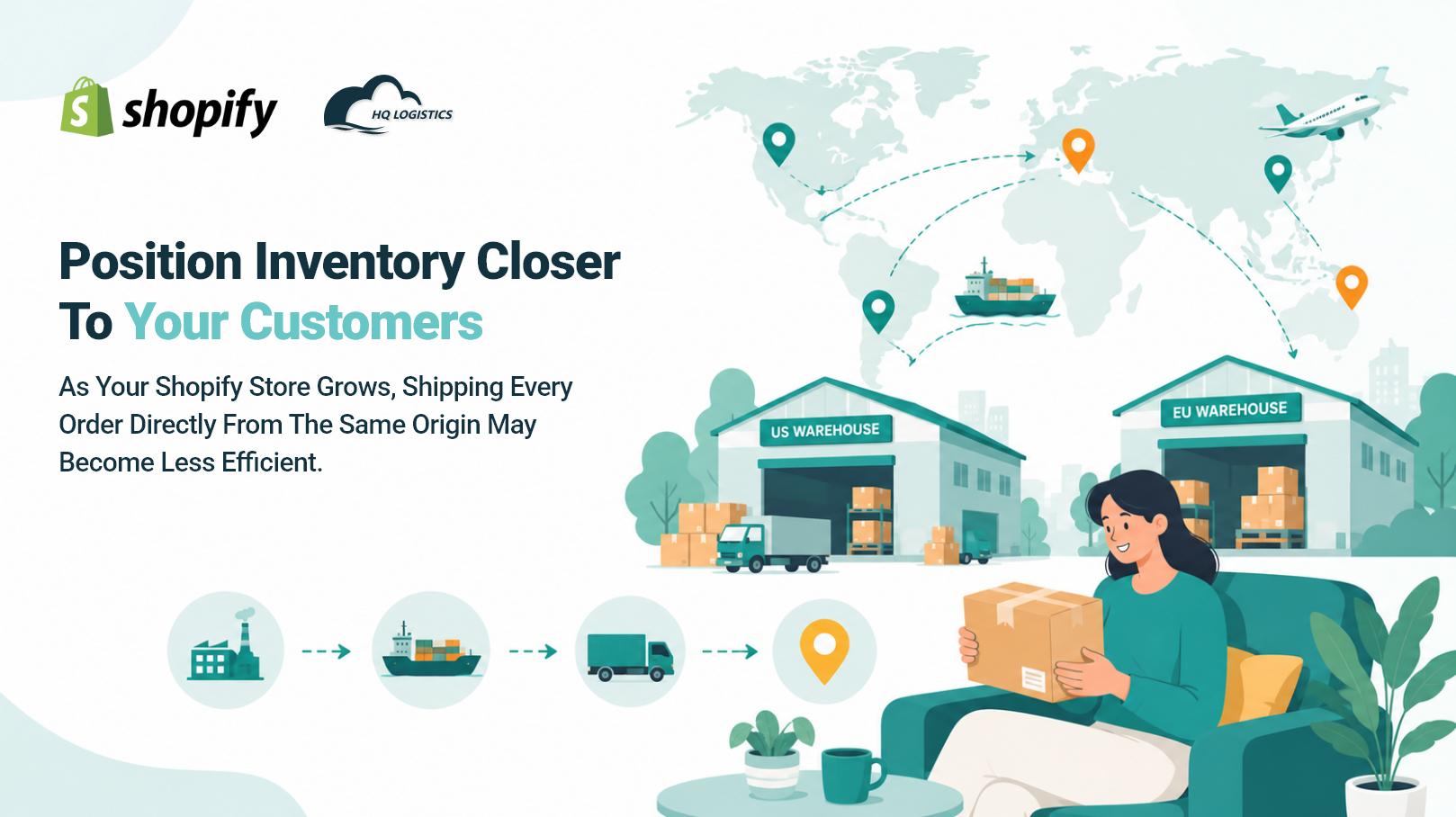
Inventory is only one part of the equation.
Once Q4 orders start coming in, your warehouse needs to process them quickly and accurately.
A Q4-ready fulfillment operation should have:
· Clear SKU management
· Organized warehouse locations
· Accurate inventory counts
· Fast picking and packing
· Quality inspection
· Standardized packaging
· Custom packaging options
· Automated order processing
· Real-time tracking updates
· A clear returns process
Ecommerce fulfillment covers much more than simply shipping a package. It includes receiving, warehousing, inventory management, picking, packing, shipping, and returns.
Manual spreadsheets become increasingly risky as order volume grows.
Connecting your Shopify store with your fulfillment system can help automate:
Shopify Order → Order Sync → Warehouse Allocation → Pick & Pack → Shipment → Tracking Sync
This reduces repetitive work and gives your team more visibility during peak season.
Your Q4 shipping strategy should not depend on just one shipping method.
Different products, destinations, and order volumes may require different solutions.
Consider preparing:
Suitable for regular orders where delivery speed is less urgent.
Useful for high-value orders or customers who need faster delivery.
Ideal for bestsellers with predictable demand in specific markets.
Important during Q4 when capacity and transit times can change quickly.
You should also establish clear shipping cutoffs.
For example:
Order Cutoff → Processing Time → Transit Time → Estimated Delivery Date
Work backward from your customer's expected delivery date to determine when inventory must be available and when orders must leave your warehouse.
Shopify recommends working backward from carrier shipping cutoffs and placing supplier orders early enough to account for potential delays.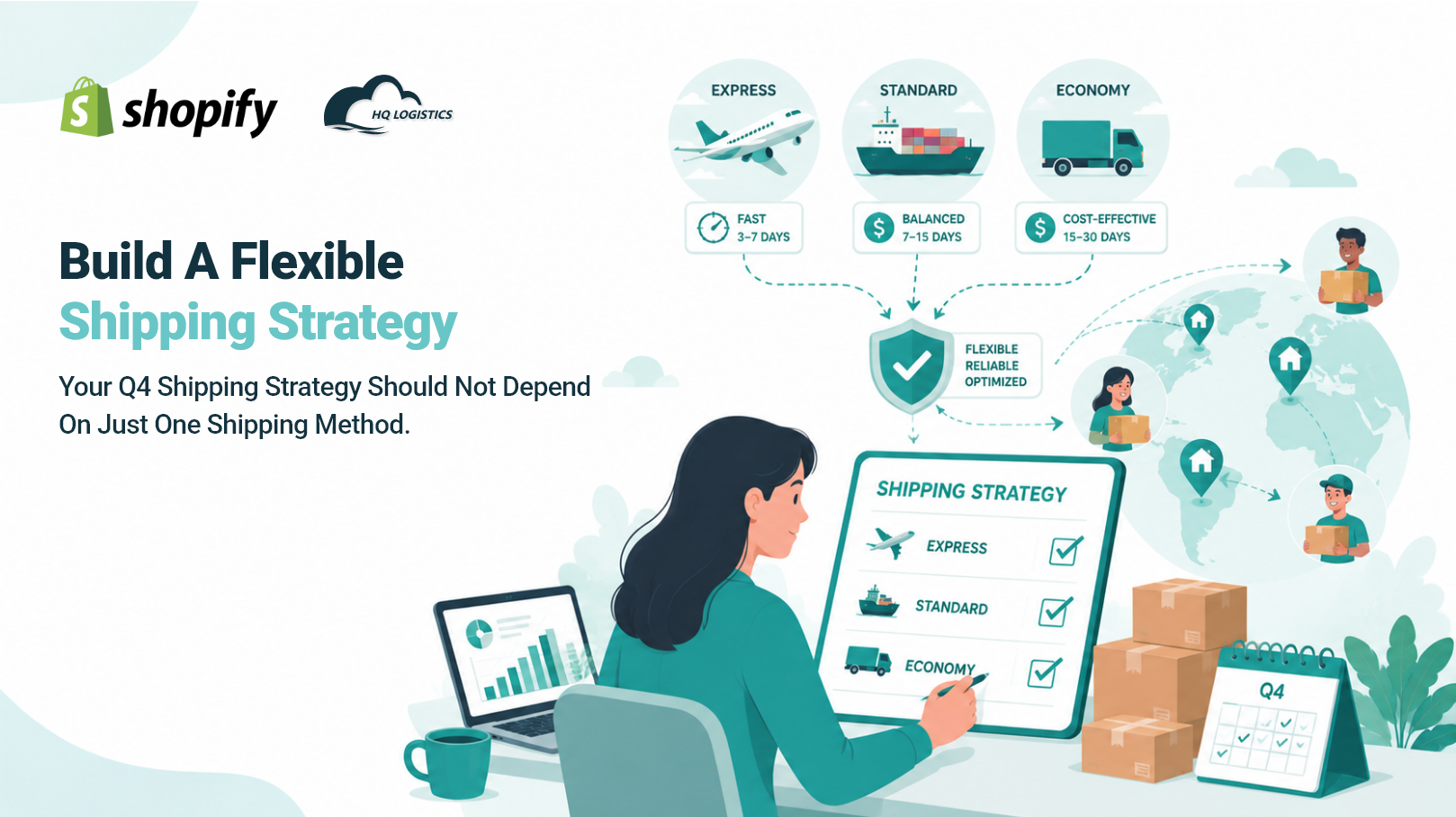
Traditional 3PL services typically focus on operational fulfillment:
Store → Pick → Pack → Ship
That can work well for straightforward operations.
But as a Shopify brand grows, supply chain problems often happen before the order reaches the warehouse.
You may need help with:
· Supplier sourcing
· Supplier comparison
· Product development
· Quality control
· Inventory forecasting
· Purchase planning
· Warehouse allocation
· Overseas warehousing
· Custom packaging
· Fulfillment
· Shipping route optimization
· Tracking
· Returns
This is where a 4PL approach can provide additional value.
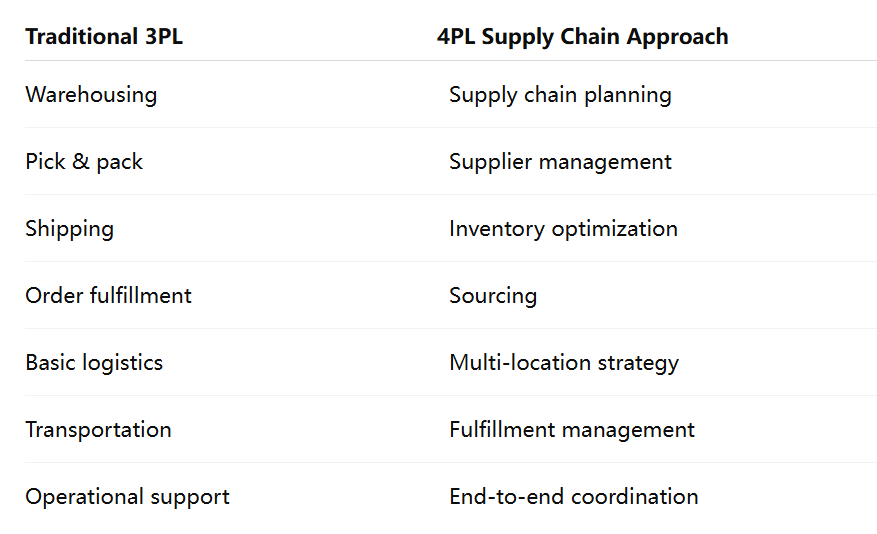
The goal isn't simply to ship more orders.
The goal is to build a supply chain that can handle more orders without creating more complexity.
Don't wait until November to prepare.
A simple timeline can help your team stay ahead.
· Review last year's Q4 data
· Identify potential bestsellers
· Evaluate suppliers
· Confirm production capacity
· Forecast demand
· Calculate safety stock
· Review shipping routes
· Plan warehouse allocation
· Place inventory orders
· Complete product quality checks
· Prepare custom packaging
· Move selected inventory closer to customers
· Test fulfillment workflows
· Confirm shipping cutoff dates
· Prepare backup suppliers and shipping routes
· Monitor inventory daily
· Track order volume
· Replenish fast-moving SKUs
· Prioritize bestsellers
· Monitor warehouse capacity
· Watch shipping performance
· Keep customers updated on delivery times
· Protect holiday inventory
· Prioritize urgent orders
· Monitor shipping deadlines
· Process returns efficiently
· Review fulfillment performance
· Identify inventory that needs to be repositioned
After the peak period, analyze what worked and what didn't.
Your Q4 data can become the foundation for next year's demand planning.
Before peak season begins, ask yourself:
· Do I have reliable suppliers?
· Do I have backup suppliers for critical products?
· Are product specifications standardized?
· Have I confirmed production lead times?
· Have I forecast Q4 demand?
· Do I have safety stock?
· Are my bestsellers prioritized?
· Is inventory positioned near major customer markets?
· Is my warehouse ready for higher volumes?
· Is inventory accurately tracked?
· Can the warehouse handle peak order volume?
· Is Shopify connected to my fulfillment system?
· Are orders automatically synced?
· Can my warehouse scale during peak periods?
· Is custom packaging ready?
· Do I have multiple shipping options?
· Are shipping routes confirmed?
· Do I know the holiday cutoff dates?
· Do I have backup logistics solutions?
· Can one partner coordinate sourcing, warehousing, fulfillment, and shipping?
· Do I have real-time visibility across inventory and orders?
· Can I quickly adjust inventory when demand changes?
If several answers are “no,” your supply chain may not be fully Q4-ready yet.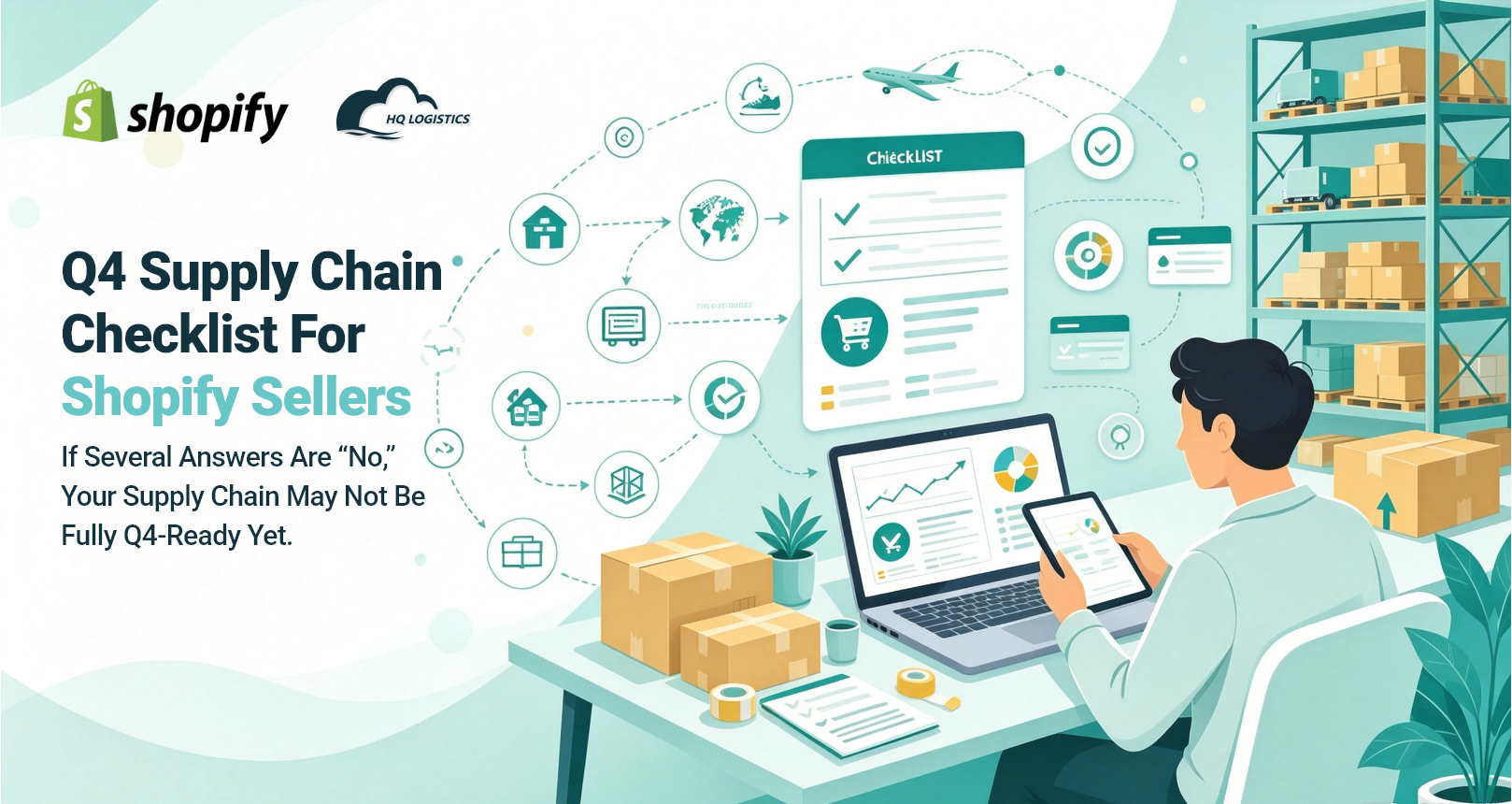
Preparing for Q4 doesn't have to mean managing dozens of separate suppliers and logistics partners.
HQ can support Shopify brands across the supply chain—from product sourcing and supplier management to warehousing, fulfillment, and global shipping.
Depending on your business needs, support can include:
· Product sourcing and supplier comparison
· Quality inspection
· Product photography
· Custom packaging
· Inventory consolidation
· Free warehousing
· Overseas warehouse solutions
· Shopify order integration
· Automated order fulfillment
· Real-time tracking synchronization
· Global shipping solutions
· Peak-season fulfillment support
The advantage of an integrated supply chain is simple:
One product. One inventory strategy. One connected fulfillment process.
Instead of reacting to Q4 problems after they happen, you can prepare for them before the peak begins.
Q4 success isn't only about finding winning products.
It's about making sure those products can move smoothly from supplier to warehouse, warehouse to fulfillment, and fulfillment to customer.
A Q4-ready supply chain should connect:
Sourcing → Supplier Management → Inventory Planning → Warehousing → Fulfillment → Shipping → Customer
When these stages work together, your Shopify store can respond faster to demand, reduce operational bottlenecks, and scale more confidently during the busiest season of the year.
Source smarter. Stock earlier. Fulfill faster. Ship better. Scale stronger.
Build your Q4-ready supply chain before the rush begins.
Ideally, Q4 preparation should begin several months before peak sales. By September, sellers should already be reviewing suppliers, forecasting demand, planning inventory, and evaluating fulfillment capacity.
There is no universal number. Start with historical sales, expected growth, promotions, product trends, supplier lead times, and safety stock requirements. Your bestsellers generally deserve the highest inventory priority.
For brands with strong demand in a specific market, overseas warehousing can help position inventory closer to customers and support faster local fulfillment. A hybrid model can be useful when you don't want to move your entire catalog overseas.
A 3PL typically focuses on logistics operations such as warehousing, picking, packing, and shipping. A 4PL approach goes further by coordinating areas such as sourcing, supplier management, inventory planning, warehousing, fulfillment, and logistics.
Start early. Forecast demand, protect bestsellers with safety stock, test your fulfillment workflow, prepare backup suppliers and shipping routes, automate order and inventory synchronization, and monitor supply chain performance throughout the season.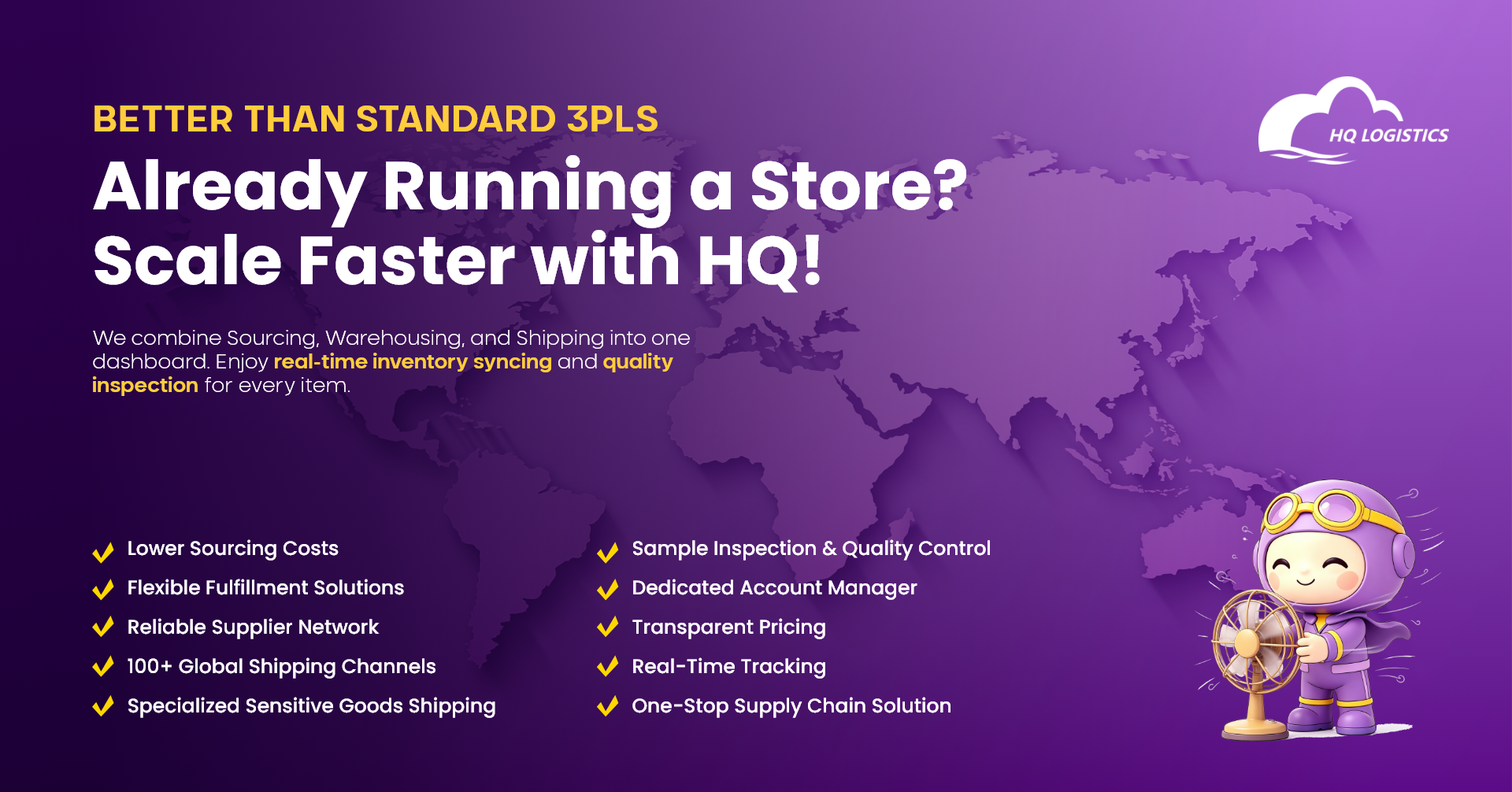
📩Email: zoye@fulfllment-cn.com
PREVIOUS RECOMMENDATIONS


Q4 supply chain, Q4 fulfillment, Shopify supply chain, Q4 ecommerce preparation, Q4 inventory planning, Q4-ready supply chain, Shopify fulfillment, ecommerce supply chain management, Q4 inventory management, holiday fulfillment, peak season fulfillment, Shopify inventory planning, supplier management, overseas warehousing, 3PL vs 4PL, 4PL supply chain, global fulfillment, how to prepare a Shopify supply chain for Q4, how to build a Q4-ready supply chain, Q4 inventory planning for Shopify sellers, how to prepare fulfillment for peak season, Shopify Q4 fulfillment strategy, 3PL vs 4PL for Shopify brands




Customer's favorable comments is our eternal motivation. We feel grateful for all the support and company.

Lorem ipsum dolor sit amet, consetetur sadipscing elitr, sed diam nonumy eirmod tempor invidunt ut labore et dolore magna aliquyam erat, sed diam voluptua.