
Christmas is one of the busiest shopping periods of the year for ecommerce businesses. As order volumes increase, customers expect products to arrive on time, while sellers need to keep popular items in stock and avoid unnecessary inventory costs.
A successful Christmas season starts long before the first holiday order comes in. Without proper inventory planning, businesses may face stockouts, delayed shipments, excess inventory, and rising fulfillment costs.
So, how can you prepare your inventory for the Christmas shipping rush? Here are six practical steps to help your ecommerce business get ready.

The first step is understanding what your customers are likely to buy.
Instead of relying on guesswork, review your previous sales data and current market trends to estimate demand.
Pay attention to:
Previous holiday sales:
Identify products that performed well during previous Christmas seasons.
Current sales trends:
Check which products are gaining attention and generating more orders.
Customer preferences:
Review customer feedback, popular searches, and frequently purchased items.
Marketing plans:
Consider upcoming promotions, advertising campaigns, and seasonal product launches.
You should also classify products based on their sales performance.
For example, fast-moving products may need larger inventory reserves, while new or slow-moving products should be stocked more cautiously.
Accurate demand forecasting helps you balance product availability with inventory investment.
One of the biggest inventory risks during Christmas is running out of best-selling products when demand is highest.
Once you identify your key products, create a replenishment plan based on supplier lead times, production schedules, and expected sales.
Consider these actions:
Prioritize restocking your best-selling SKUs.
Confirm supplier production capacity and delivery schedules.
Maintain safety stock for products with unpredictable demand.
Prepare alternative suppliers for important products.
Avoid placing all replenishment orders at the last minute.
If you source products from China, remember that production, quality inspection, domestic transportation, and international shipping all require time.
Starting early gives you more flexibility to handle unexpected delays.

When order volumes increase, poor inventory organization can slow down warehouse operations and create picking errors.
A clear SKU management system helps you identify products, track stock levels, and prepare orders more efficiently.
A practical approach is to divide your inventory into three groups:
High-Priority Products
These are your best-selling or seasonal products. Keep them easy to locate and monitor their stock levels frequently.
Regular Products
These products have stable sales throughout the year. Maintain sufficient stock based on normal demand and replenishment schedules.
Slow-Moving Products
Avoid overstocking products with limited demand. Consider smaller replenishment quantities and promotional strategies to manage existing inventory.
You should also make sure product variations, such as sizes, colors, and styles, are clearly labeled. This helps warehouse staff pick the correct items during busy periods.
Inventory preparation is not only about purchasing enough products. You also need to make sure incoming stock meets your requirements and reaches the warehouse on schedule.
Before confirming bulk purchases, review supplier performance and product specifications.
Important checks include:
Confirm product materials, sizes, colors, and packaging.
Review samples before large-scale purchasing.
Inspect incoming products for defects or inconsistencies.
Verify quantities against purchase orders.
Update inventory records after goods are received.
For businesses working with multiple suppliers, coordinating different production schedules can be challenging.
A centralized sourcing and warehouse partner can help organize supplier communication, sample inspection, incoming inventory, and stock updates in one workflow.
This reduces unnecessary coordination and helps you prepare products for fulfillment more efficiently.

Having enough inventory does not guarantee successful Christmas deliveries. Your warehouse and shipping arrangements also need to handle increased order volumes.
Before the holiday rush, review your fulfillment capacity and shipping options.
Check Warehouse Capacity
Make sure your warehouse has sufficient space for seasonal inventory. Organize popular products in accessible locations to reduce picking and packing time.
Prepare Packaging Materials
Check your supply of cartons, mailers, labels, protective materials, and branded packaging. Running out of packaging supplies can delay otherwise ready-to-ship orders.
Review Shipping Routes
Compare available shipping channels based on destination, delivery time, cost, and product restrictions. Different products and countries may require different shipping solutions.
Set Clear Order Cutoff Dates
Communicate realistic order processing and delivery expectations to customers. International shipping schedules can change during peak season, so avoid promising delivery dates without checking the available routes.
HQ LOGISTICS supports ecommerce sellers with warehousing, pick-and-pack services, custom packaging, and international shipping options to help manage seasonal order fulfillment.
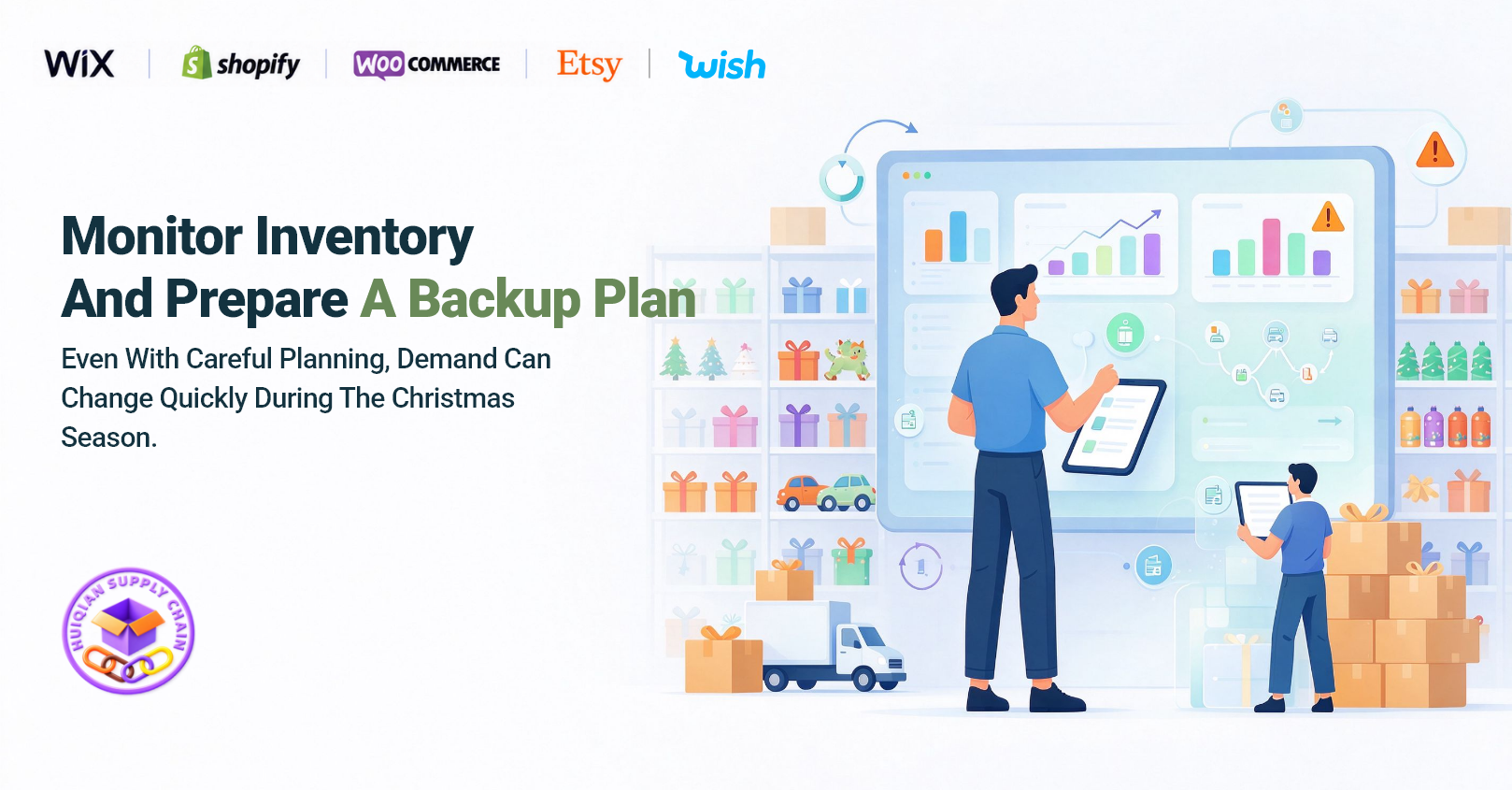
Even with careful planning, demand can change quickly during the Christmas season.
A product featured in a successful advertising campaign may sell faster than expected. Meanwhile, unexpected supplier or shipping delays may affect replenishment.
Monitor these indicators regularly:
Daily sales volume by SKU.
Available inventory and reserved stock.
Incoming purchase orders.
Supplier production progress.
Warehouse processing capacity.
Shipping performance and delivery updates.
It is also useful to prepare backup plans.
For example, identify alternative suppliers for key products, reserve additional shipping options where available, and communicate promptly if a product becomes unavailable.
Regular inventory reviews help you respond to changes before they affect customer orders.
Managing Christmas inventory involves more than stocking products. It requires coordination across sourcing, quality control, warehousing, and delivery.
HQ LOGISTICS provides integrated supply chain support to help ecommerce sellers prepare for seasonal demand.
Our services include:
Product Sourcing:
Find products and coordinate purchasing with suitable suppliers.
Quality Inspection:
Check product condition, specifications, and quantities before fulfillment.
Warehousing:
Receive, organize, and manage inventory from different suppliers.
SKU Management:
Keep product information and inventory records organized.
Order Fulfillment:
Handle picking, packing, and order processing.
Custom Packaging:
Prepare branded boxes, inserts, thank-you cards, and other packaging materials.
Global Shipping:
Arrange suitable shipping solutions for different destinations.
By connecting these operations, HQ helps reduce the complexity of managing multiple suppliers and fulfillment tasks during busy seasons.
Ideally, begin planning several months before Christmas. This gives you time to review sales trends, confirm suppliers, purchase inventory, inspect products, and arrange shipping.
There is no fixed quantity for every business. Use previous sales data, current demand, supplier lead times, and planned promotions to estimate your stock requirements. Maintain additional safety stock for important products where appropriate.
Start with best-selling products, seasonal items, and products with reliable demand. Pay particular attention to items that have longer production or replenishment lead times.
Monitor inventory regularly, set reorder points, maintain safety stock, and communicate with suppliers about production schedules. Having qualified backup suppliers can also reduce supply risks.
Yes. A fulfillment partner can help with inventory receiving, SKU organization, storage, picking, packing, and shipping. Some partners also support sourcing and quality inspection, making it easier to coordinate the entire process.

Preparing inventory for the Christmas shipping rush requires early planning and consistent coordination. From forecasting demand and replenishing popular products to organizing SKUs and arranging shipping, every step contributes to a smoother holiday season.
Don't wait until orders start increasing to review your inventory strategy. Prepare your products, suppliers, warehouse, and shipping plans in advance.
Getting ready for Christmas orders?
Explore HQ LOGISTICS for product sourcing, quality control, warehousing, and fulfillment solutions that help your ecommerce business stay prepared throughout the holiday season.
📩Email: zoye@fulfllment-cn.com
Our website:
https://www.cnfulfillment.com/
PREVIOUS RECOMMENDATIONS


Christmas Shipping Rush| Holiday Inventory Management| Christmas Stock Planning| Ecommerce Inventory Management| Holiday Order Fulfillment| Christmas Shipping Preparation




Customer's favorable comments is our eternal motivation. We feel grateful for all the support and company.

Lorem ipsum dolor sit amet, consetetur sadipscing elitr, sed diam nonumy eirmod tempor invidunt ut labore et dolore magna aliquyam erat, sed diam voluptua.