
International ecommerce opens the door to customers around the world, but handling returns can be much more complicated than delivering orders.
For sellers shipping from China to the United States and Europe, a returned product may need to travel thousands of miles, pass through customs procedures, and go through additional inspection before it can be sold again.
High return shipping costs, unclear return policies, and slow processing can all affect customer satisfaction and profit margins.
So, how can ecommerce businesses manage international returns more efficiently? Let's explore practical strategies for handling returns across US and European markets.
Unlike domestic returns, international returns involve multiple parties, shipping routes, and customs requirements.
Here are some common challenges ecommerce sellers face:
High Return Shipping Costs:
Sending individual products back to China can cost more than the product itself.
Complex Customs Procedures:
Returned goods may require specific documentation and customs handling.
Long Processing Times:
International transportation can delay refunds, exchanges, and inventory updates.
Product Quality Uncertainty:
Returned products may be damaged, used, incomplete, or still suitable for resale.
Inventory Management Issues:
Without proper tracking, returned products can become difficult to locate or restock.
For growing ecommerce businesses, an inefficient returns process can quickly become a financial and operational burden.
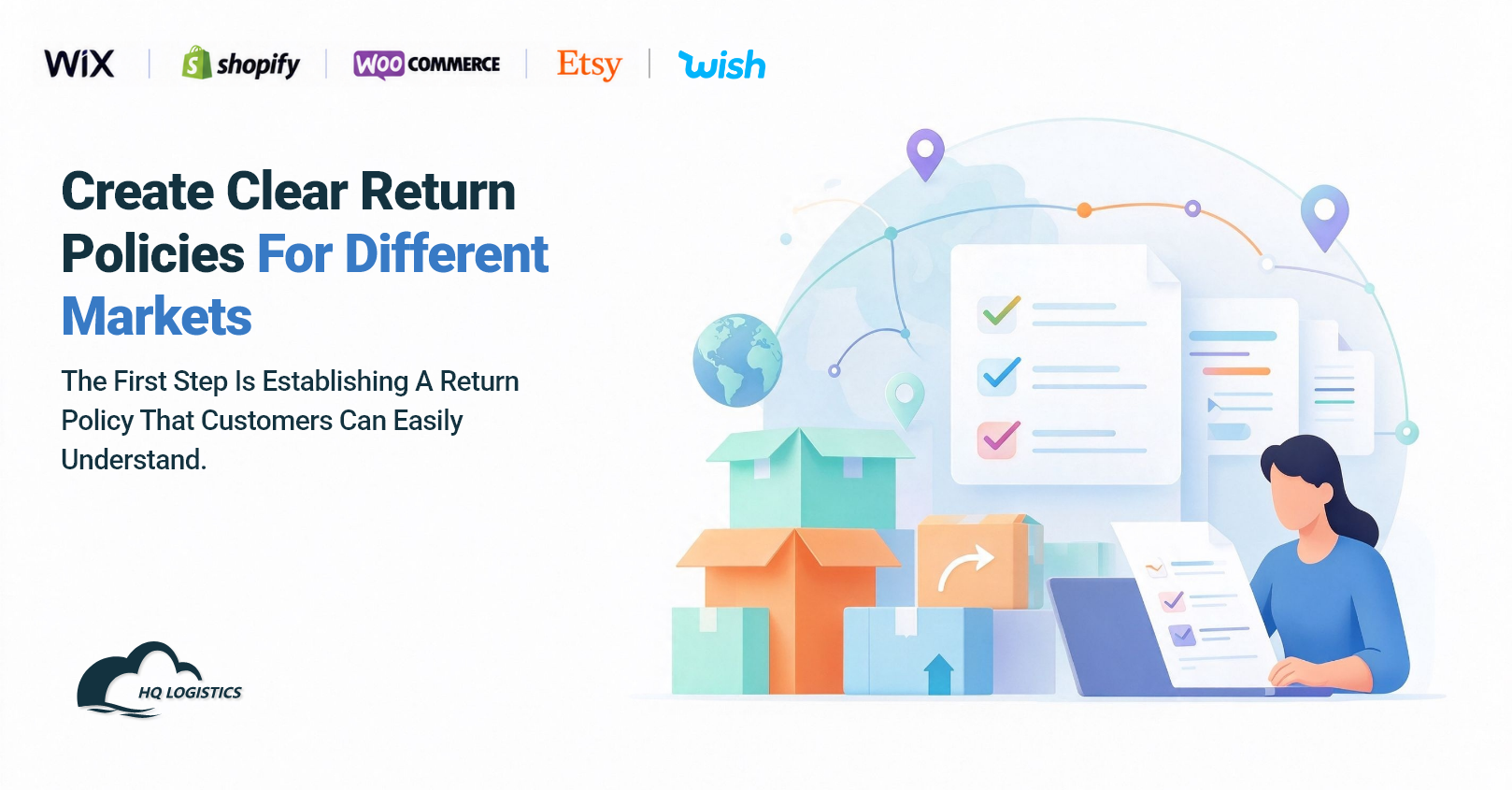
The first step is establishing a return policy that customers can easily understand.
US and European customers may have different expectations and legal rights regarding returns, refunds, and exchanges. Sellers should review the requirements applicable to each destination market.
Your return policy should clearly explain:
The return eligibility period
Which products can or cannot be returned
Conditions for refunds and exchanges
Who pays for return shipping
How customers should request a return
Expected processing and refund timelines
For example, EU consumers generally have a 14-day withdrawal right for many distance purchases, subject to certain exceptions. US return requirements vary depending on applicable federal and state laws, as well as the seller's stated policy.
Avoid using one generic return policy for every country. Make sure your policies reflect local consumer protection requirements.
One of the biggest challenges for international sellers is deciding where returned products should go.
Requiring every US or European customer to ship a product back to China can create high costs and long waiting times.
A local return address can make the process more convenient.
For example:
US Orders:
Returned products can be directed to a suitable US return location for receiving, inspection, and sorting.
European Orders:
Sellers can consider an appropriate local or regional return location based on their sales volume and target countries.
Local return handling can help businesses:
Reduce unnecessary international return shipments
Speed up product inspection
Simplify customer communication
Consolidate returned goods before further processing
Identify products that can be resold
However, local return locations should be selected based on storage costs, return volume, product categories, and available services.
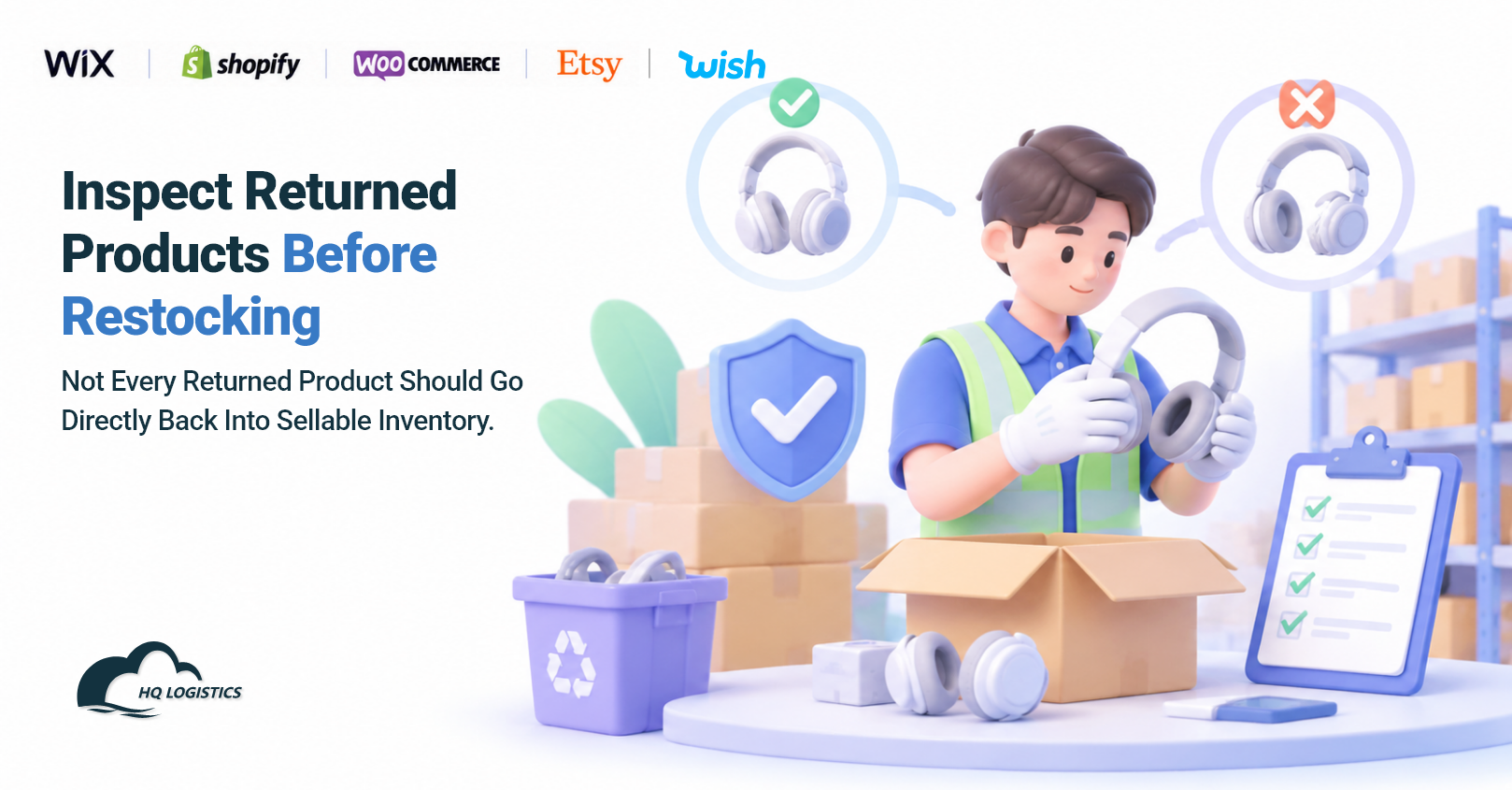
Not every returned product should go directly back into sellable inventory.
A customer may return an item because of a size issue, damaged packaging, missing accessories, or a product defect.
Without proper inspection, reselling a defective or incomplete product can lead to additional complaints and returns.
A practical return inspection process should include:
Look for scratches, stains, dents, broken components, or signs of excessive use.
Check whether the original packaging, instructions, cables, and other accessories are included.
For electronic products or items with working components, perform appropriate functional checks.
Determine whether the original packaging is still suitable for resale or needs replacement.
Keep photos, inspection notes, SKU information, and return reasons for future reference.
Based on the inspection results, products can be classified into different categories:
Resellable:
Products in good condition that can return to regular inventory.
Repackaging Required:
Products that need new packaging or missing accessories replaced.
Repair Required:
Products that may be restored to sellable condition.
Unsellable:
Damaged or defective products that should not return to normal inventory.
This process helps sellers recover more value from returned inventory.
Different markets may require different return strategies.
The best solution depends on your order volume, product value, shipping costs, and inventory distribution.
For sellers with consistent US sales, local return handling may be more practical than sending every returned order back to China.
Consider these options:
Use a local return address for receiving returned products.
Inspect products before deciding whether to restock them.
Consolidate multiple returns when international transportation is necessary.
Reship suitable products from available local inventory.
Track return reasons to identify recurring product issues.
For lower-value products, it may sometimes be more economical to offer a refund or replacement without requiring the customer to ship the item internationally.
European returns require additional attention because sellers may serve customers across multiple countries with different languages, delivery networks, and national consumer protection requirements.
Consider these strategies:
Establish clear return instructions for each target market.
Evaluate local or regional return handling options.
Confirm applicable VAT and customs procedures when goods move across borders.
Organize returned inventory by SKU and condition.
Provide clear communication about refunds and exchanges.
For EU consumer sales, sellers should also understand the applicable withdrawal and refund rules. A local return solution does not remove the seller's legal obligations.
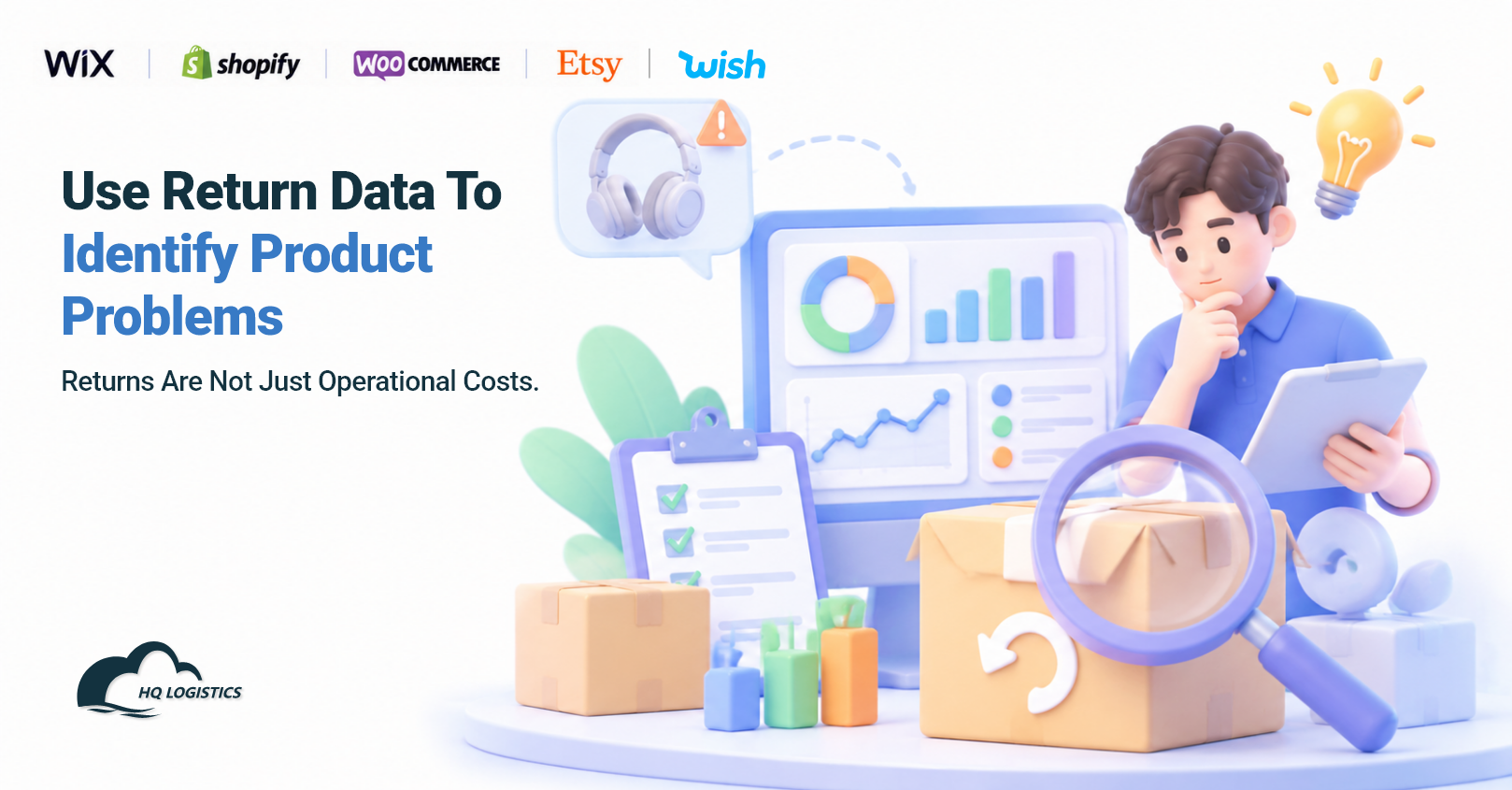
Returns are not just operational costs. They can also provide valuable information about product quality and customer expectations.
If the same SKU receives repeated returns, investigate the underlying reason.
Common return reasons include:
Product descriptions that do not match the actual item
Incorrect product dimensions or specifications
Poor material quality
Damaged packaging during transportation
Missing accessories
Manufacturing defects
For example, if customers repeatedly report that a small electronic device does not work as advertised, sellers should review supplier quality, product specifications, and pre-shipment inspection procedures.
Tracking return reasons by SKU can help you identify recurring problems and make better purchasing decisions.
An effective returns process should be connected to your inventory system.
When a returned product arrives, its status should be updated instead of being treated as regular available stock.
A well-organized process looks like this:
Return Request → Return Receiving → Product Inspection → Inventory Update → Resale, Repackaging, or Disposal
SKU management is especially important for businesses selling multiple products across different stores and marketplaces.
With organized inventory records, sellers can:
Track returned quantities by SKU
Identify products with high return rates
Separate sellable and unsellable inventory
Monitor returned stock across different locations
Make more informed purchasing decisions
Connecting returns and inventory management helps reduce stock discrepancies and unnecessary product losses.
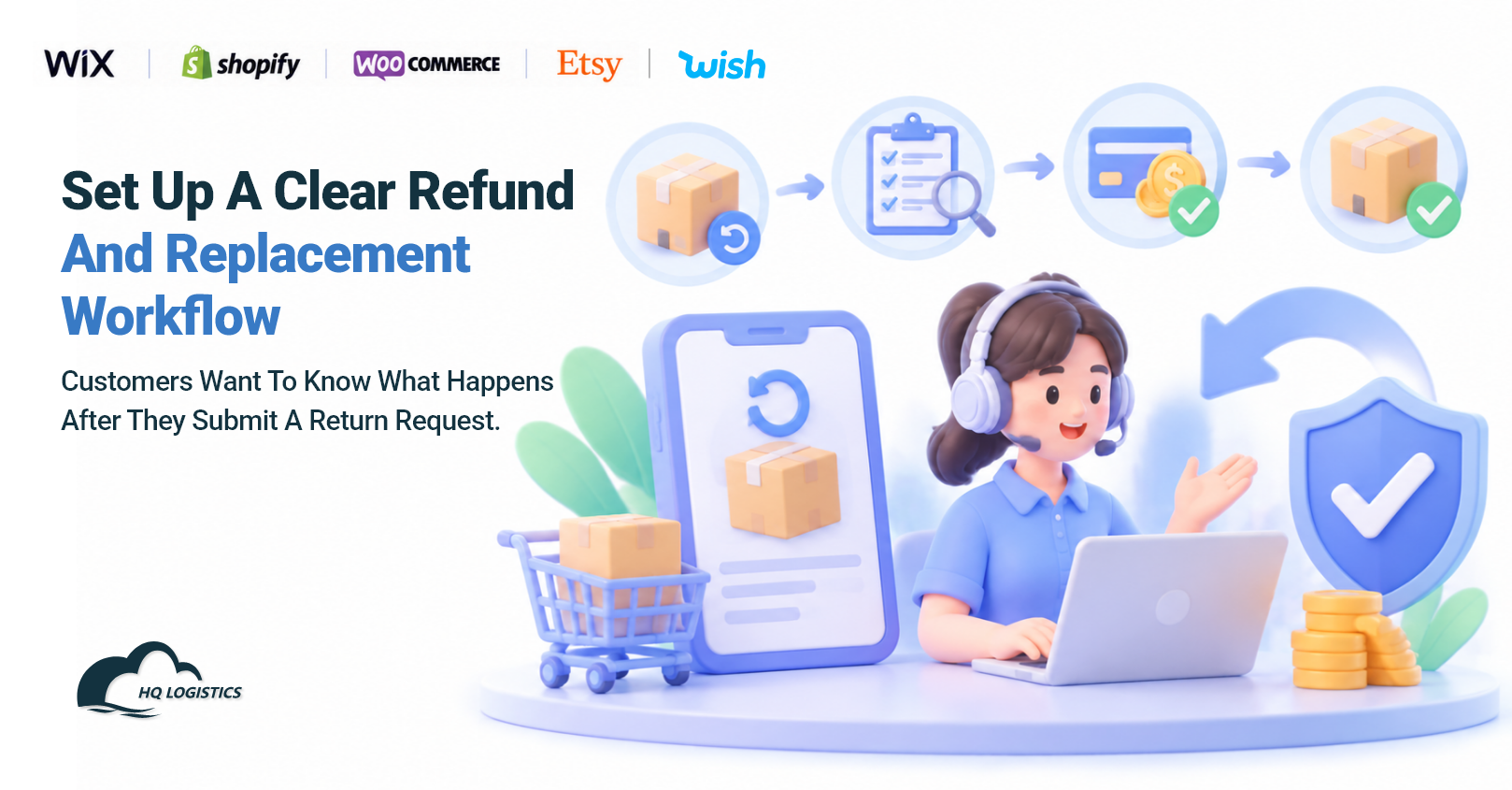
Customers want to know what happens after they submit a return request.
A slow or confusing refund process can damage customer trust, even when the original product issue is relatively minor.
Create a clear workflow for handling return requests:
Receive the customer's return request.
Confirm the return reason and eligibility.
Provide return instructions or an appropriate alternative.
Receive and inspect the returned product when required.
Approve the refund, exchange, or replacement according to the applicable policy.
Update the order and inventory records.
Notify the customer of the result.
Where legally permitted and operationally practical, sellers can also consider partial refunds, replacement shipments, or refunds without physical returns for low-value items.
The key is to balance customer satisfaction, operational costs, and applicable legal requirements.
Managing international returns becomes increasingly difficult as order volume grows.
Instead of coordinating every return independently, ecommerce sellers can work with a fulfillment partner that provides receiving, inspection, inventory management, and shipping support.
HQ Supply Chain offers returns and inspection solutions to help businesses manage returned products as part of their wider supply chain operations.
With HQ, sellers can explore support for:
Return Receiving:
Coordinate the receiving of returned products.
Product Inspection:
Check product condition and identify potential quality issues.
SKU Management:
Organize returned inventory and update stock information.
Inventory Coordination:
Separate products based on their inspection results.
Shipping Support:
Coordinate suitable shipping arrangements for eligible products.
By connecting returns with inventory and fulfillment operations, sellers can build a more organized process and reduce unnecessary handling.
Explore HQ Returns & Inspection Services to learn more.
Not always. For low-value products, international return shipping may not be economical. Sellers can consider local return addresses, regional return facilities, or alternative refund and replacement solutions where appropriate.
Use clear product descriptions, conduct quality inspections before shipping, analyze return reasons, and evaluate local return handling or consolidated shipping options.
Yes. EU consumers generally have a 14-day withdrawal right for many online purchases, with specific exceptions. US return requirements vary depending on federal and state laws and the seller's policy. Sellers should review the rules applicable to each market.
Check product appearance, functionality, accessories, packaging, and SKU information. Record inspection results before deciding whether products can be resold, repackaged, repaired, or removed from inventory.
Yes, if the products meet applicable safety, quality, labeling, and resale requirements. Products should be inspected and classified before returning them to available inventory.

International returns don't have to become a major obstacle to ecommerce growth.
With clear return policies, local handling options, consistent product inspections, and organized inventory records, sellers can reduce unnecessary costs while providing a better customer experience.
Whether you sell in the United States or across European markets, managing returns should be part of your overall fulfillment strategy, not an isolated after-sales task.
HQ Supply Chain helps connect returns, product inspection, SKU management, and global fulfillment to support more efficient ecommerce operations.
Ready to improve your returns process? Explore
HQ Returns & Inspection Services and build a more organized international supply chain.
📩Email: zoye@fulfllment-cn.com
Our website:
https://www.cnfulfillment.com/
PREVIOUS RECOMMENDATIONS


Ecommerce Returns Management| International Ecommerce Returns| US Ecommerce Returns| European Ecommerce Returns| Cross-Border Returns| Returns and Inspection




Customer's favorable comments is our eternal motivation. We feel grateful for all the support and company.

Lorem ipsum dolor sit amet, consetetur sadipscing elitr, sed diam nonumy eirmod tempor invidunt ut labore et dolore magna aliquyam erat, sed diam voluptua.